
Baking Soda and Vinegar Balloon Experiment Made Easy

The baking soda and vinegar balloon experiment works because the reaction makes carbon dioxide gas that inflates the balloon. It works best when the balloon seals tightly, the ingredients are measured, and you change only one variable at a time.
The baking soda and vinegar balloon experiment is a simple way to show how a gas-forming chemical reaction can inflate a balloon without any pumps or tricks. It is easy to set up, but the result is much more reliable when you use the right amounts, a good seal, and a clean method.
- Reaction lesson: The balloon inflates because carbon dioxide gas is produced inside the bottle.
- Setup matters: A snug balloon fit and measured ingredients make the result more reliable.
- Troubleshooting: Weak inflation usually means leaks, stale baking soda, or an unbalanced ratio.
- Safety first: Use supervision, eye protection, and a stable surface for children or groups.
- Best learning value: Change one variable at a time to turn the demo into a real science.
What the Baking Soda and Vinegar Balloon Experiment Actually Demonstrates
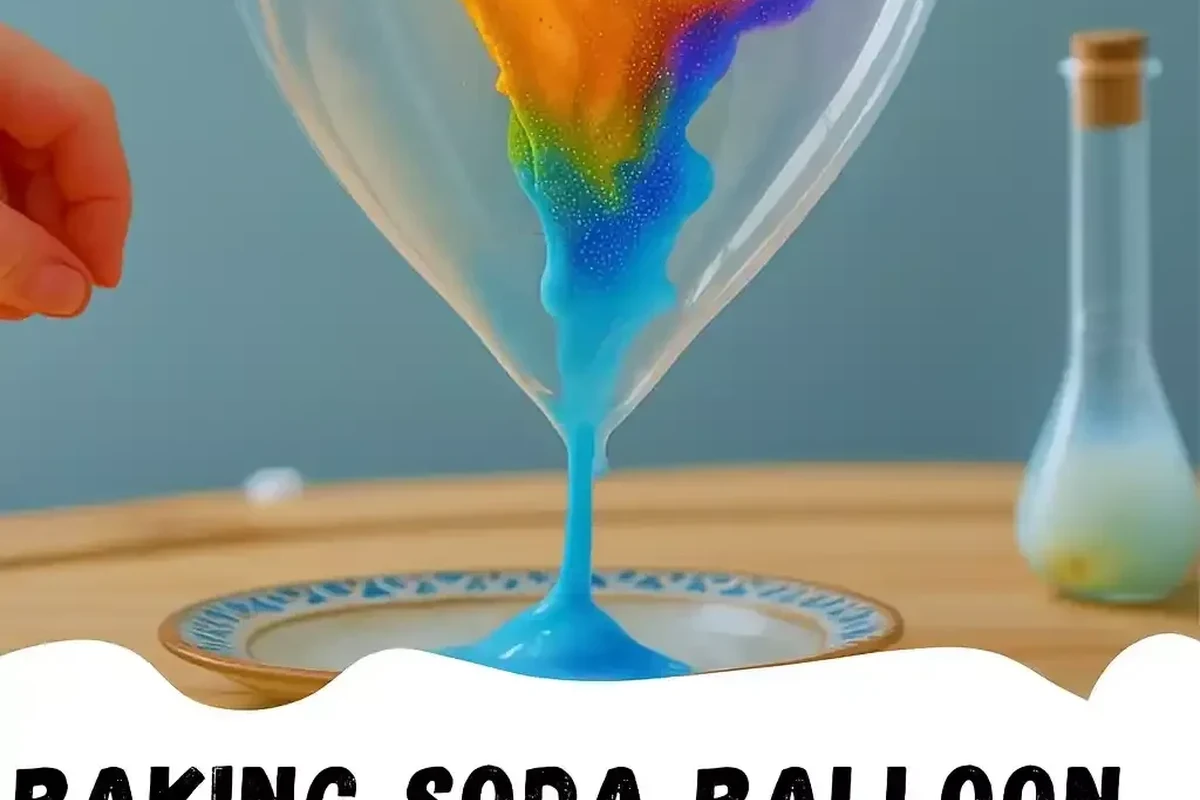
This experiment is more than a party trick. It demonstrates an acid-base reaction that releases carbon dioxide gas, and that gas takes up space in the balloon. If you want a fuller explanation of the chemistry behind the fizz, our baking soda and vinegar reaction explained article is a helpful companion piece.
Why the balloon inflates: carbon dioxide production in a simple acid-base reaction
Vinegar contains acetic acid, and baking soda is sodium bicarbonate. When they touch, they react and produce carbon dioxide, water, and a salt called sodium acetate. The carbon dioxide is the part that matters for the balloon, because a gas expands to fill available space.
In a bottle, that gas has only one easy escape route: up into the balloon. As the gas collects, pressure builds and the balloon stretches outward. The reaction is not “air” entering the balloon from outside; it is gas being made inside the bottle.
What kids and beginners should observe beyond “the balloon got bigger”
Look for the fizzing at the moment the ingredients mix. Notice whether the inflation is fast or slow, whether the balloon starts to rise before it fully expands, and whether the bottle feels cooler afterward. Those details help explain that a chemical change is happening, not just a visual trick.
Beginners should also compare the amount of foam, the speed of inflation, and the final balloon size. Those observations become useful later when you change one variable at a time. That is the same habit used in baking tests, where small ingredient changes can alter rise, texture, and timing.
Fresh baking soda usually performs better in this experiment than an old box that has been open for a long time, because moisture and odors can reduce consistency over time.
Materials, Measurements, and Setup That Make the Experiment Work
Good results depend on simple setup details. A balloon that seals well, a bottle with a narrow opening, and a measured amount of each ingredient all matter more than most people expect.
Choosing the right balloon, bottle, vinegar strength, and baking soda amount
A standard small plastic bottle works well because the neck helps hold the balloon in place. A balloon with a stretchy neck and no visible holes is easier to inflate. Regular household vinegar is usually enough for this demonstration, though the exact strength can vary by brand and region.
For baking soda, a small measured amount is usually more controllable than a heaping spoonful. Too much powder can clump in the balloon neck and slow the reaction. Too little may not create enough gas to make the balloon noticeably expand.
Simple measurement guide for small, medium, and larger balloon results
Because balloon size, bottle shape, and vinegar strength vary, there is no single perfect formula. As a practical starting point, use a modest amount of vinegar in the bottle and a smaller measured amount of baking soda in the balloon. If the balloon barely moves, increase one ingredient slightly on the next trial, not both at once.
For classroom comparison, keep the bottle size the same and change only one variable. That makes the results easier to interpret. If you want the largest possible balloon, the goal is not simply “more of everything,” but a balanced ratio that produces enough gas without wasting material.
If you are comparing results across groups, use the same bottle type, the same vinegar brand if possible, and the same measuring spoon. Small differences in container shape can change the final balloon size.
What happens if the bottle opening, funnel, or balloon fit is off
A loose balloon fit lets gas escape before it can inflate the balloon. A narrow funnel helps transfer baking soda into the balloon, but if powder sticks in the funnel or neck, the reaction may start late or unevenly. If the balloon slips off the bottle, the gas will go into the room instead of the balloon.
The fit should be snug but not forced. Stretch the balloon neck slightly before attaching it, and make sure the bottle rim is dry. Even a small leak can make the result weak.
Step-by-Step Method for a Clean, Repeatable Balloon Reaction
Repeatability matters if you want a clear demonstration. The best setup keeps the ingredients separate until you are ready, then mixes them in one quick motion.
Pour vinegar into the bottle first. Measure the baking soda into the balloon using a funnel or a folded paper chute, and keep the powder away from the bottle opening until you are ready.
Stretch the balloon neck over the bottle opening carefully. Keep the powder lifted above the opening so it does not fall in early.
Lift the balloon so the baking soda drops into the vinegar. Watch the fizzing begin and hold the bottle steady while the balloon inflates.
Preparing the bottle and loading the balloon without triggering the reaction too early
Work over a tray or sink if possible. Fill the bottle before attaching the balloon so you do not spill vinegar while handling the powder. If using a funnel, make sure the baking soda stays dry until the moment you want the reaction to begin.
A dry work surface also helps. Moisture in the balloon neck or funnel can cause the powder to stick, which makes the reaction uneven. That is a common reason the experiment seems to “stall.”
Combining the ingredients safely and timing the inflation
Once the balloon is secure, raise it so the baking soda drops into the vinegar. The reaction usually starts right away, but the balloon may take a few seconds to show obvious movement. Keep faces back from the bottle opening in case the balloon shifts suddenly.
For the clearest demonstration, do not shake the bottle aggressively. A gentle swirl is enough if you need to move liquid around. Too much shaking can push foam into the balloon neck and make cleanup messier.
How to run a second trial for comparison or classroom demonstration
For a second trial, rinse and dry the bottle if you are comparing variables. Then change only one factor, such as the vinegar amount or balloon size. This is the easiest way to show cause and effect.
A second trial also helps students see that a weak result is not always a failed reaction. Sometimes the setup, not the chemistry, is the problem. That is a useful lesson in both science and baking, where technique often matters as much as ingredients.
Keep the balloon away from the face, and never aim the bottle at eyes or at another person. Vinegar can irritate eyes and skin, and a stretched balloon can snap unexpectedly.
Why the Reaction Sometimes Fails or Produces a Weak Balloon
Weak inflation usually comes from a small set of problems: poor measuring, leaks, stale ingredients, or a balloon that is too tight. The chemistry is simple, but the setup still needs care.
Common mistakes with ingredient ratios, leaks, and stale baking soda
If there is too little baking soda, not enough carbon dioxide is produced. If there is too much, some powder may remain unused because the vinegar runs out first. Leaks at the bottle neck or balloon opening can also release gas before the balloon fills.
Old or damp baking soda can behave inconsistently. If you are unsure about freshness, it is reasonable to replace it rather than guess. For more on storage and freshness, see our guide on whether baking soda expires.
The balloon barely inflates or stays flat.
Check for leaks, use a snugger balloon fit, and try a fresh measured amount of baking soda with a known amount of vinegar.
How temperature, vinegar concentration, and balloon size affect the result
Warmer ingredients often react a little faster than cold ones, though you should not use hot liquids. Vinegar concentration also matters because stronger vinegar contains more acid per volume, which can change how much gas is produced. Balloon size matters too: a small balloon may inflate quickly, while a larger one needs more gas to look impressive.
These factors explain why one group may get a dramatic result while another gets only a modest puff. The setup is sensitive to details. That is normal, not a sign that the experiment is faulty.
The balloon inflates slowly or unevenly.
Make sure the powder is not stuck in the neck, then try a gentler transfer and a more secure seal on the bottle.
Fixes for slow inflation, no inflation, or balloon pop failures
If inflation is slow, check whether the balloon neck is blocking the powder. If there is no inflation at all, confirm that the vinegar and baking soda actually came into contact. If the balloon pops, it may be too small for the gas volume or stretched too tightly at the start.
For a better result, use a balloon with a little more stretch and avoid overfilling the bottle. A moderate reaction is easier to observe and safer to manage than a forceful one. If you want to compare cleaning uses of the same ingredients, our baking soda vinegar cleaning ovens article shows a different practical application.
Safety, Cleanup, and Age-Appropriate Supervision for Home or Classroom Use
This is a low-risk activity when handled properly, but it still deserves supervision. The main concerns are splashes, broken balloons, and spills on floors or clothing.
Protecting eyes, clothing, and surfaces during the experiment
Use a tray, baking sheet, or sink to contain spills. Eye protection is a smart choice for children and for any group setting where bottles may be handled quickly. Keep towels nearby so you can wipe vinegar off surfaces before it spreads.
Avoid using glass bottles with young children. A lightweight plastic bottle is usually a better classroom choice because it is less likely to break if dropped. This is especially important when several students are working at once.
Do not let children taste the mixture, and do not use this experiment near food prep surfaces unless they are cleaned afterward. This is a science activity, not a food ingredient test.
Safe handling for younger children and group demonstrations
Younger children can help measure, pour, and observe, but an adult should control the moment the ingredients combine. That keeps the reaction predictable and reduces spills. For classrooms, it helps to demonstrate once before letting students try their own versions.
Keep the group at a short viewing distance so everyone can see the balloon without crowding the bottle. Crowding often leads to bumps, leaks, and accidental knocks. A calm setup makes the science easier to see.
Easy cleanup after the fizzing stops
Once the fizzing ends, the mixture is mostly liquid with some foam. Pour it down the sink with plenty of water if local rules allow, then rinse the bottle and wash hands. Wipe the work area so dried vinegar does not leave residue or odor.
If a balloon breaks, pick up the pieces promptly and keep them away from small children and pets. Latex can be a choking hazard. If anyone has latex sensitivity, use appropriate alternatives and check product labels carefully.
How to Turn the Balloon Experiment Into a Real Science Lesson
This activity becomes much more valuable when students document what changed and why. Treat it like a mini lab, not just a quick stunt.
Connecting the experiment to gas formation, pressure, and chemical change
The core lesson is that a chemical reaction can create a gas. That gas increases pressure inside the closed bottle and moves into the balloon, which stretches to hold it. The setup gives a visible example of matter changing form and occupying space.
It also shows why containers matter. In an open bowl, the gas would escape into the air. In a closed system with a balloon, you can see the result immediately.
Simple variables to test: vinegar amount, baking soda amount, and bottle size
Change only one variable per trial. If you increase vinegar, keep baking soda and the bottle the same. If you change bottle size, keep the ingredients the same so you can see whether container volume affects the balloon shape or speed.
This approach helps students understand fair testing. It also mirrors the way bakers isolate variables when they compare leavening, hydration, or pan size. A controlled test teaches more than a random one.
Recording observations like a baking or science school student would
Write down the amount of each ingredient, the bottle type, the balloon size, and how long inflation took to become visible. Note whether the balloon felt tight, soft, or only partially filled. Those observations are more useful than a vague “it worked” note.
If you are teaching in a baking or culinary setting, this is a good chance to reinforce measurement habits. Careful measuring is as important in science as it is in pastry work, where small differences can affect rise and texture.
Practical Examples, Classroom Extensions, and At-Home Variations
Once the basic experiment is working, you can use the same setup for simple comparisons. That turns a one-time reaction into a repeatable lesson.
Using the same setup to compare different acids or powder amounts
You can compare white vinegar with another safe household acid, but keep the experiment simple and supervised. Different acids have different strengths, so the result may change even if the liquid looks similar. If you compare powder amounts, measure carefully so the test stays fair.
A small change in powder can make a noticeable difference. That makes the experiment useful for showing why exact amounts matter. It also reinforces the idea that ingredient choice can change performance, whether you are mixing a science demo or a batter.
Use the same bottle and vinegar amount, then change the baking soda amount in small steps to see how inflation changes.
Keep the ingredients constant and swap bottle sizes to show how space and shape affect the visual result.
Creating a balloon race or volume comparison activity
For a classroom race, prepare identical bottles and balloons, then start them one at a time with the same measured ingredients. The goal is not speed alone, but consistency. Students can compare which setup inflates fastest and which reaches the largest size.
For a volume comparison, mark the balloon with tape or use visual checkpoints. That makes the results easier to discuss afterward. Keep the rules simple so the lesson stays focused on measurement and observation.
When to use this experiment for homeschool, STEM club, or introductory lab lessons
This experiment works well for homeschool science, beginner STEM clubs, and introductory lab lessons because it is inexpensive, visual, and easy to repeat. It also fits well when you want a short lesson that still teaches reaction, gas formation, and measurement discipline.
It is less useful if you need highly precise data or if the group cannot handle small messes. For that reason, it is best as an early lesson rather than an advanced lab. If you are exploring other household uses of the same ingredients, you may also like our guide on apple cider vinegar and baking soda uses.
Final Verdict: When the Baking Soda and Vinegar Balloon Experiment Is Worth Trying
The baking soda and vinegar balloon experiment is worth trying when you want a clear, low-cost demonstration of gas production and chemical change. It is especially useful for beginners because the result is visible quickly, but the setup still teaches real measurement and troubleshooting skills.
Best use cases for beginners, students, and family science activities
It works best for home science time, classroom demonstrations, and simple STEM lessons where the goal is observation rather than precision. It is also a good choice when you want a hands-on activity that can be repeated with small changes. Families and teachers can use it to show how one ingredient change affects the outcome.
If you are looking for a quick, practical science activity, this is a strong option. If you want a bigger or more dramatic result, focus on fit, freshness, and measured ratios before increasing ingredient amounts.
What success looks like and what to remember for the next trial
Success does not always mean the balloon becomes huge. A good run shows clear fizzing, a secure seal, and visible inflation that matches the ingredients you used. If the result is weak, adjust one factor at a time and keep notes.
That careful approach will give you better results on the next try and help you understand what the reaction is really doing. For a baking-minded learner, that is the most valuable part of the experiment: not just watching the balloon rise, but learning how small changes shape the outcome.
Use this experiment when you want an easy, visual lesson in gas formation and chemical change. The best results come from fresh ingredients, a snug balloon fit, and one variable changed at a time.
Frequently Asked Questions
There is no single perfect amount because bottle size and balloon size vary. Start with a modest measured amount of each ingredient, then change only one variable at a time if you want a larger result.
The most common reasons are leaks, a loose balloon fit, stale baking soda, or an uneven transfer that keeps the ingredients from mixing well. Check the seal first, then review the ingredient amounts and freshness.
Warm ingredients may react a little faster, but do not use hot vinegar. Temperature can change the speed of the reaction, but a good seal and proper measuring usually matter more.
It can be safe with close adult supervision, eye protection, and a stable work surface. Keep the mixture away from the face and avoid glass bottles for young children.
Stop the experiment, clean up the pieces, and start again with a more stretchy balloon or a smaller gas-producing setup. A pop usually means the balloon was too tight, too small, or overfilled.
Yes, as long as you rinse and dry it before the next trial. Reusing the same bottle is helpful for fair comparisons because it keeps the container size consistent.