
Baking Soda for Clothes 7 Smart Ways to Clean and Freshen

Baking soda can help freshen clothes, reduce odors, and support a regular wash when used in the right amount. It works best as a laundry booster, not a full replacement for detergent or stain remover.
Baking soda for clothes is a simple laundry helper that can reduce odor, support stain removal, and make everyday washing feel fresher. Used the right way, it works best as a booster, pre-soak aid, and deodorizer—not as a full replacement for detergent.
- Best use: Baking soda is most helpful for odor control and routine freshening.
- Measure carefully: Too much can leave residue or dull dark fabrics.
- Match the problem: Use targeted treatments for grease, rust, ink, or dye transfer.
- Protect fabric: Spot-test delicate or colored garments before treating them.
- Use with detergent: Baking soda supports cleaning, but detergent still does the main job.
What Baking Soda Does on Clothes: How It Works for Odor, Stains, and Fabric Care
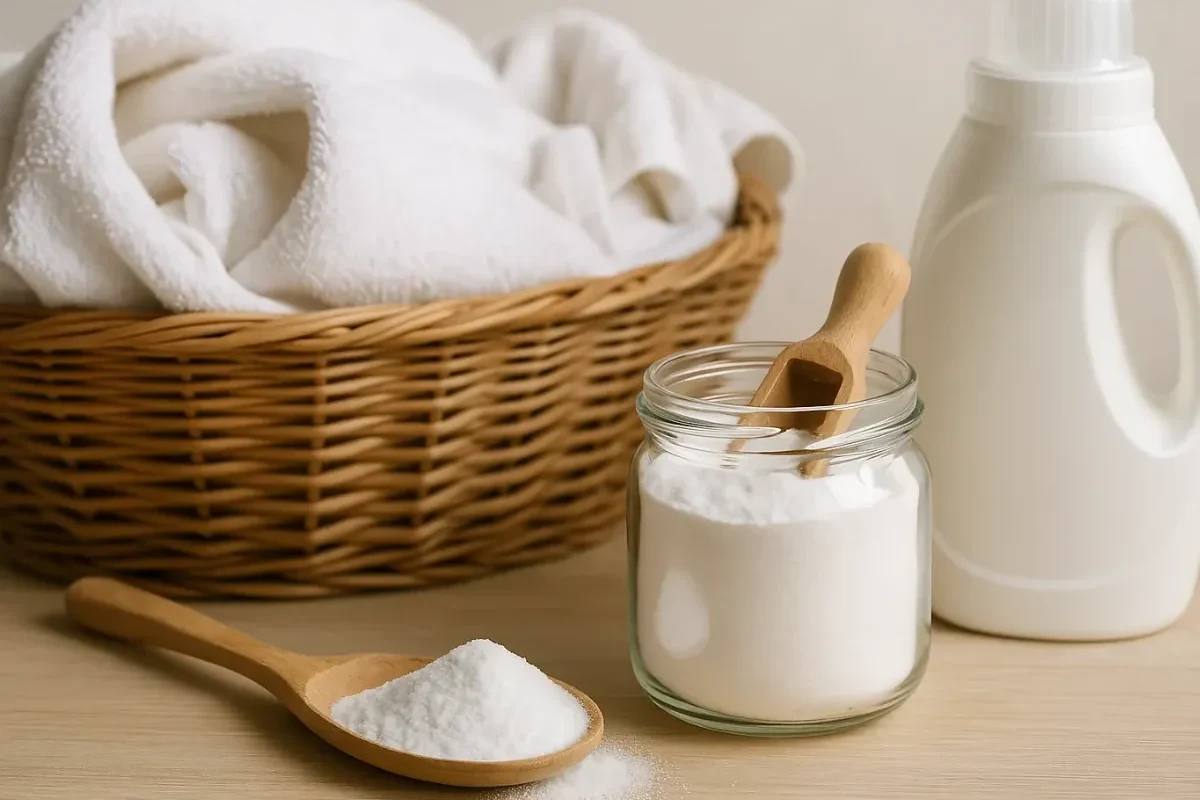
Baking soda, or sodium bicarbonate, is mildly alkaline. In laundry, that matters because it can help neutralize some acidic odors, loosen grime, and make detergent work a little more effectively in certain loads.
It is especially useful for musty towels, sweat smells, and fabrics that have picked up stale storage odors. It can also help lift some light soil, but it does not “erase” every stain, and it will not replace a targeted stain remover for grease, dye, protein, or rust stains.
Baking soda helps with odor because it can change the balance of acidic and basic compounds on fabric surfaces. That is why it often works better on smell than on deep, set-in staining.
7 Smart Ways to Use Baking Soda for Clothes in Everyday Laundry
Think of baking soda as a support ingredient in laundry, similar to how a small amount of salt or acid can adjust a baking formula. It is useful in the right situation, but the best result still depends on fabric type, water temperature, detergent quality, and how dirty the load is.
Boosting a regular wash for musty towels and workout wear
Add baking soda to a normal wash when towels smell stale or workout clothes still carry a sweaty odor after drying. It can help freshen the load without making the fabric feel heavily perfumed.
This works best when the smell is caused by trapped residue, body oils, or damp storage. If the odor is strong and persistent, you may also need a longer wash cycle, warm water if the care label allows it, or a second rinse.
Pre-soaking stained items before washing
A baking soda soak can help loosen light soil before laundering. This is useful for garments with general dinginess, deodorant buildup, or mild food splashes that have not fully set.
Mix it with water and let the item sit for a limited time before washing. For greasy stains, ink, blood, or dye transfer, a different treatment is usually more effective.
Deodorizing shoes, gym bags, and closet-stored garments
Baking soda can also help freshen items that are not ready for a full wash, such as shoes, gym bags, or garments stored in a closet for a long time. In these cases, the goal is odor control rather than deep cleaning.
For shoes and bags, dry application is often more practical than wet washing. Put the baking soda in a breathable pouch or sprinkle a small amount inside, then remove it before use.
Freshening whites and dull fabrics without harsh bleach
When whites look tired but are not heavily stained, baking soda can help restore a cleaner appearance. It may reduce the flat, dingy look caused by detergent buildup and everyday residue.
It is gentler than chlorine bleach, which can weaken some fibers and needs careful handling. That said, baking soda is not a whitening miracle, especially on yellowing caused by age, sweat, or mineral deposits.
Softening hard water laundry loads
In hard water, minerals can interfere with detergent and leave clothes feeling stiff or looking dull. Baking soda may help improve the wash environment a little by supporting better cleaning action.
This is a modest benefit, not a complete hard-water solution. If your water is very mineral-heavy, a detergent designed for hard water or a water softening approach may work better.
Removing lingering detergent or sweat residue
If clothes feel sticky, smell sour, or seem to hold onto detergent residue, baking soda can help in a follow-up wash or soak. It may be useful when too much detergent was used or the load was overloaded.
Residue often builds up when the washer is packed too tightly or when rinsing is not thorough. A smaller load and an extra rinse can make a bigger difference than adding more product.
Using it as a gentle scrub for collars, cuffs, and underarms
A paste made with baking soda and a little water can work as a gentle scrub on collars, cuffs, and underarm areas. Those spots often collect sweat, skin oils, and deodorant marks that regular washing may miss.
Apply lightly, rub with a soft cloth or soft brush, and rinse before washing. Do not scrub aggressively on delicate fibers, because friction can roughen the surface or fade color.
Baking soda is most useful when odor and light residue are the main problems. For heavy grease, protein-based stains, or color transfer, a stain-specific product is usually the better first choice.
How Much Baking Soda to Use for Different Laundry Jobs
More baking soda is not always better. Too much can leave powdery residue, make rinsing harder, or create a false sense that the load is getting a deep clean when the detergent is actually doing most of the work.
Measuring for standard top-load and front-load machines
For a typical laundry booster load, many people use about half to one cup in the drum, depending on load size and soil level. A smaller amount is often enough for odor control in a front-load machine, while a larger top-load load may tolerate a bit more.
Because machine capacity and water level vary, follow your washer manual when possible. If the manufacturer gives a detergent or additive limit, stay within it.
Adjusting amounts for small loads, large loads, and hand-washing
For small loads, use less so the fabric can move freely and rinse well. For large or heavily odored loads, increase only slightly rather than doubling the amount.
For hand-washing, dissolve a small amount in water first. This helps prevent gritty patches on fabric and makes it easier to rinse clean.
When more is not better: avoiding residue and overuse
Excess baking soda can leave white dust on dark clothing or a chalky feel on towels. It can also make you think the load is clean when the real issue is that detergent, agitation, or water temperature needs adjusting.
Always check care labels and washer instructions before adding laundry boosters. Some specialty fabrics and high-efficiency machines need careful dosing to avoid residue or poor rinsing.
Step-by-Step Methods for Washing Clothes with Baking Soda Safely
The safest method depends on the fabric, the washer type, and what you are trying to fix. A simple system usually works best: pre-treat, wash with detergent, then inspect before drying.
Adding it to the drum, dispenser, or pre-soak bucket
You can add baking soda directly to the drum, but only if your washer manual allows loose additives. Some people prefer the detergent compartment or a pre-soak bucket because it helps the powder dissolve more evenly.
For pre-soaking, dissolve it fully before adding clothes. That reduces the chance of gritty patches, especially on darker or smoother fabrics.
Combining with detergent correctly
Baking soda should usually support detergent, not replace it. Detergent is designed to lift soil and oils, while baking soda mainly helps with odor balance and mild cleaning support.
If you use both, do not overload the machine. Clothes need room to tumble so the detergent can reach the fibers and rinse away properly.
Best water temperature and cycle choices for common fabrics
Warm water can help with body oils and odor on sturdy fabrics, while cool water is safer for many colors and everyday garments. The best choice depends on the care label and the stain type.
Use a normal or heavy-duty cycle for towels and workout clothing if the fabric allows it. For lightly soiled items, a standard cycle is usually enough.
What to do for delicate, dark, wool, and performance fabrics
Delicates, wool, and performance fabrics need extra caution. Harsh rubbing, high heat, and overuse of additives can affect texture, stretch, or moisture-wicking performance.
For these fabrics, use a smaller amount, dissolve it well, and choose the gentlest cycle allowed by the care label. Dark garments should be checked carefully for residue before drying.
Common Mistakes That Can Reduce Results or Damage Fabric
Baking soda is simple, but laundry mistakes still happen. Most problems come from using it in the wrong place, expecting it to do too much, or forgetting that fabric care depends on the whole wash process.
Mixing baking soda with the wrong cleaning products
Do not mix laundry additives casually just because they are common household products. Some combinations are unnecessary, and others can reduce cleaning performance or create safety issues if they involve bleach or strong cleaners.
When in doubt, keep the wash routine simple: detergent, one booster if needed, and the right cycle.
Using it on every stain instead of matching the stain type
Not every stain responds to the same treatment. Baking soda may help with odor and light surface soil, but grease, tannin stains, and protein stains usually need a stain remover or specific pretreatment.
Matching the stain type saves time and protects fabric from repeated scrubbing.
Expecting it to replace detergent or stain remover entirely
Baking soda is a helper, not a full laundry system. If the load is dirty, detergent still has to do the main cleaning work.
Think of it as a support ingredient that can improve the result, especially when smell is the main issue.
Leaving garments in soak too long
Long soaks can be useful, but leaving clothes in water for too long may stress some fibers or allow odors to settle back in. This matters more for dyed, delicate, or blended fabrics.
Follow the care label when available, and move the item to the wash once the pre-soak has done its job.
Keep laundry products away from children and pets, and avoid inhaling fine powder when measuring. If you are treating clothing near food-prep areas, clean the surface afterward to prevent cross-contamination of household items.
Fabric Safety, Color Care, and Storage Considerations
Before using baking soda on clothing, think about fabric type, color, and how the item is stored. A small test can prevent a bigger problem later, especially with older garments or special finishes.
Spot-testing before treating colored or delicate garments
Test a hidden area first if the item is brightly colored, vintage, or delicate. Apply a small amount, wait briefly, then rinse and check for fading, texture change, or residue.
This is especially smart for garments with trim, prints, or mixed fabrics, since each material can react differently.
When baking soda is a good fit and when to avoid it
Baking soda is a good fit for odor control, mild refreshment, and light residue. It is also a reasonable choice when you want a gentler option than bleach.
Avoid relying on it for heavily stained items, very delicate fabrics that should not be scrubbed, or any garment whose care label warns against soaking or additive use.
Storing baking soda for laundry use in a dry, sealed container
Store baking soda in a dry, sealed container so it stays free-flowing and easy to measure. Moisture can cause clumping, which makes dosing less accurate and can leave lumps in the wash.
Keep it separate from food ingredients if you use the same brand for both kitchen and laundry tasks. Clear labeling helps prevent mix-ups.
- Read the garment care label
- Check your washer manual for additive guidance
- Decide whether the problem is odor, residue, or a true stain
- Spot-test delicate or colored fabrics
- Measure the baking soda instead of guessing
When Baking Soda Is Worth Using: Best Use Cases, Limits, and Final Verdict
Baking soda for clothes is worth using when the goal is freshness, odor control, and support for everyday washing. It is especially helpful for towels, gym wear, stored clothes, and loads that need a mild boost without harsh bleach.
Best situations for everyday laundry freshness and odor control
Use it when clothes smell stale after storage, when towels feel less fresh than they should, or when workout wear still holds onto odor after a regular wash. It can also help with hard-water laundry that looks dull or feels slightly stiff.
In these cases, the difference is often subtle but useful, especially when combined with proper detergent and enough water movement.
Cases where another cleaner or treatment works better
If the stain is greasy, set-in, rusty, or caused by dye transfer, a targeted product is usually better. If the fabric is delicate, specialty, or labeled for extra care, the gentlest approved method should come first.
When odor keeps returning after repeated washing, the issue may be buildup in the washer, not the clothing itself. In that case, cleaning the machine may help more than adding extra powder.
- Helps reduce odors in everyday laundry
- Can support a regular detergent wash
- Gentler than bleach for many uses
- Useful for towels, gym wear, and stored clothes
- Not a full replacement for detergent
- Limited on heavy or specialty stains
- Can leave residue if overused
- May be unsuitable for some delicate fabrics
Practical recap for choosing the right laundry approach
The best approach is simple: match the method to the problem. Use baking soda when odor, light residue, or general freshness is the main concern, and choose a stain-specific or fabric-specific treatment when the garment needs more than a mild booster.
For most households, the smartest use is occasional, not automatic. Measured carefully and used with the right wash cycle, baking soda can be a low-cost, practical part of a better laundry routine.
Baking soda is a useful laundry helper for odor control, light freshening, and boosting routine washes, but it works best alongside detergent, not instead of it. For the cleanest results, use it selectively, measure it carefully, and let the fabric care label decide when a gentler or more targeted method is better.
Frequently Asked Questions
A common starting point is about half to one cup for a regular load, but the right amount depends on load size, washer type, and odor level. Use less for small loads and always follow your washer manual if it gives additive guidance.
No. Baking soda can help with odor and mild freshening, but detergent does the main job of removing soil and oils from fabric.
It is often safe for many colored fabrics, but spot-testing is smart for bright, delicate, or vintage items. Check the care label first, since some fabrics need gentler handling.
Yes, these are some of the best uses for baking soda for clothes because it can help with sweat and musty odors. For stronger smells, combine it with a proper detergent wash and enough rinsing.
Usually no, unless the fabric care label allows it and the item needs a short pre-soak. Long soaks can be unnecessary and may stress some fabrics or let odors settle back in.
Baking soda works best on odor, light residue, and mild surface soil. For grease, rust, ink, or dye transfer, a targeted stain remover is usually more effective.