
Baking Soda for Stove Cleaning Easy Tips That Work

Baking soda for stove cleaning is a gentle, effective option for removing grease, dried spills, and light burnt-on messes. Use it as a paste on a cool surface, wipe carefully, and dry well for the best finish.
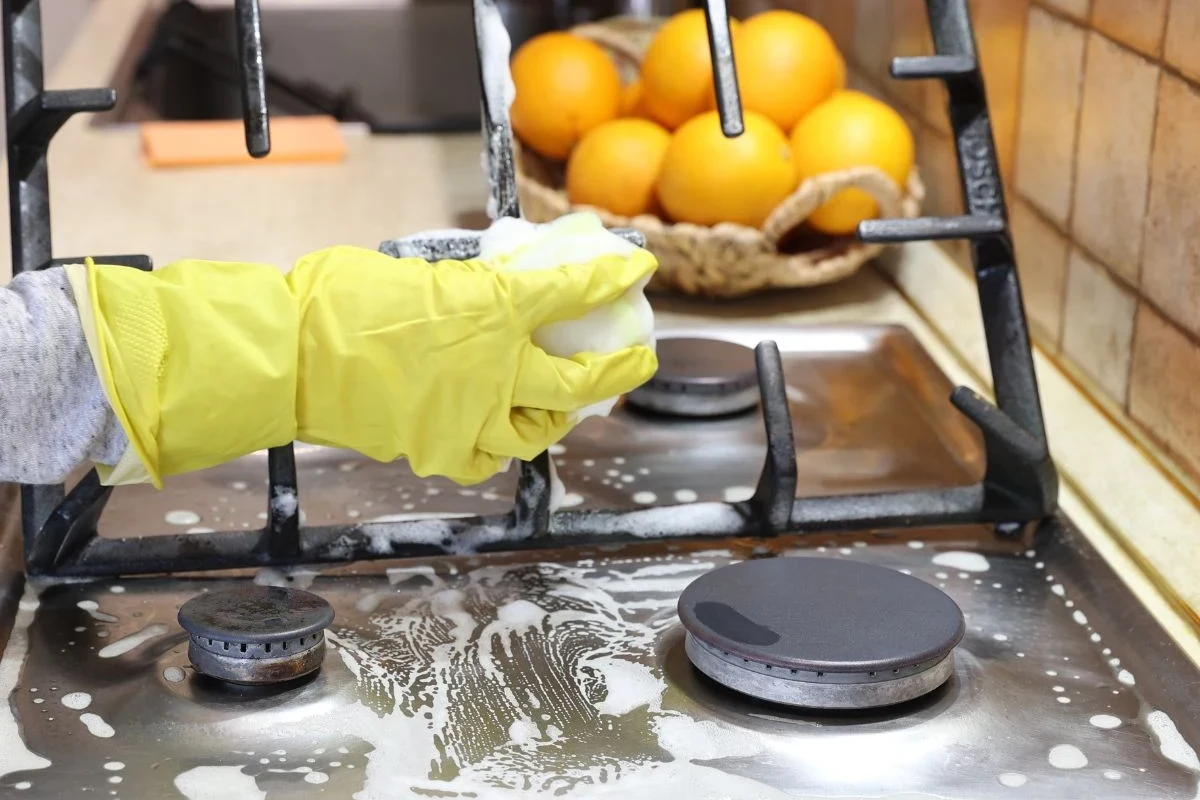
- Gentle cleaning: Baking soda lifts residue without the harshness of stronger cleaners.
- Surface matters: It is usually safe on many stoves, but always check the manual first.
- Better as paste: A thick paste clings to grime and works better than dry powder.
- Use light pressure: Soft tools help prevent scratches and streaks on delicate finishes.
- Prevention helps: Quick wipe-downs after cooking reduce buildup and make future cleaning easier.
Frequently Asked Questions
Yes, baking soda can work on many glass-top stoves when used as a gentle paste and wiped softly. Always check your manufacturer’s care instructions first.
Light buildup usually needs only a short rest, while medium buildup may need a little longer. If the paste starts to dry, mist it lightly with water instead of scrubbing harder.
Baking soda is mild, but it can still cause wear if you scrub too hard or use it on a delicate coating. Use a soft cloth or sponge and light pressure.
You can, but it is not always necessary for routine stove cleaning. Use only when the method fits the surface and never mix products that the manufacturer warns against.
Apply a thicker baking soda paste, let it sit, then wipe gently or use a plastic scraper at a low angle. Repeat the process instead of forcing the spot off with heavy pressure.
Wipe spills after the stove cools, clean grease early, and dry the surface after each cleaning pass. Regular light maintenance prevents heavy buildup later.