
Baking Soda Fridge Tips for Fresher Smelling Food

Baking soda in the fridge helps absorb everyday odors, but it only works well when the source of the smell is cleaned first. Use an open box, keep it dry, and replace it regularly for the best results.
A baking soda fridge setup can help reduce everyday food odors, but it works by absorbing some odor molecules rather than “freshening” the air. Used correctly, it is a simple, low-cost way to support a cleaner-smelling refrigerator between full cleanings.
- Odor control: Baking soda absorbs some fridge odors; it does not sanitize or mask spoilage.
- Best setup: Use an open box or shallow container where air can circulate freely.
- Main limit: Clean spills, leaks, mold, and expired food before relying on baking soda.
- Replacement: Swap it out when it gets damp, contaminated, or stops reducing smells.
- Food storage: Seal strong-smelling foods to protect dairy, butter, and baking ingredients.
Why Baking Soda Works in the Fridge: Odor Absorption, Not “Freshening”
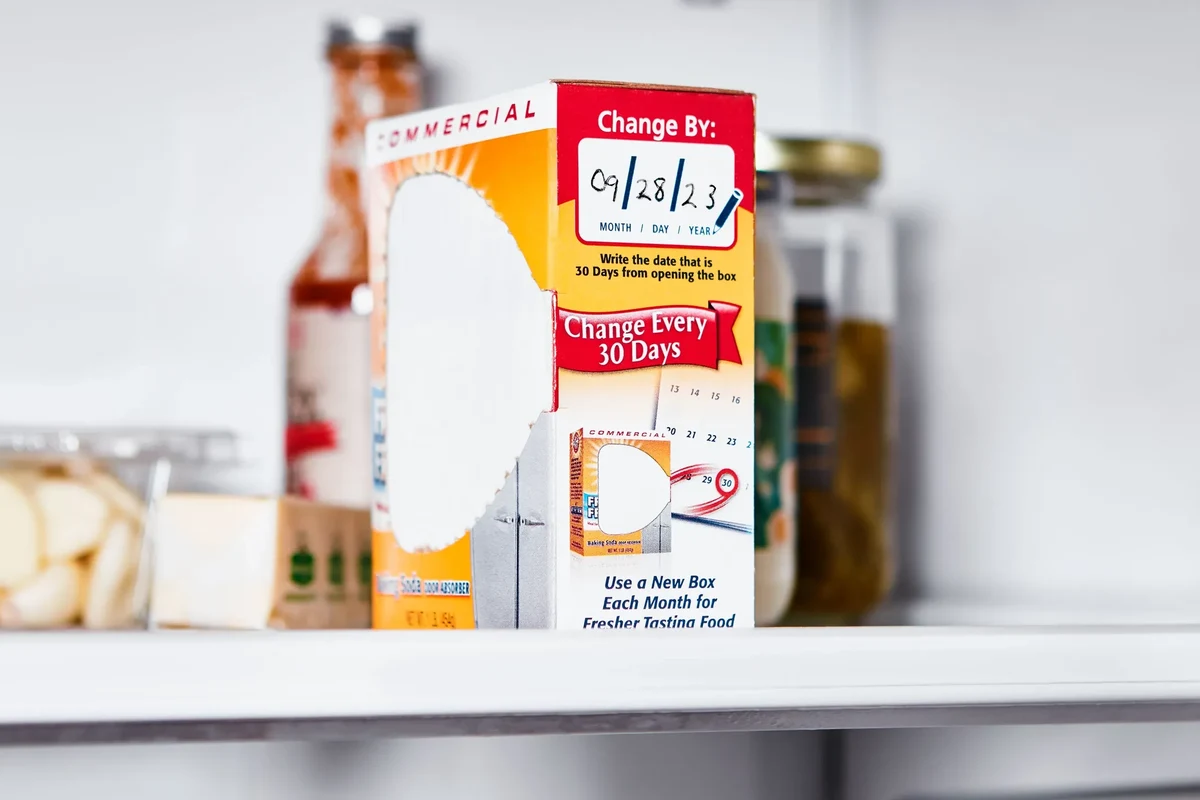
Baking soda, or sodium bicarbonate, is commonly used in refrigerators because it can help trap and neutralize certain odor compounds in the closed space. It does not perfume the fridge, and it does not eliminate the source of a bad smell on its own.
That distinction matters in a baking kitchen, where butter, milk, cream cheese, eggs, vanilla, and dough ingredients can all pick up surrounding odors if they are stored uncovered. If you want a deeper look at how appliance habits affect kitchen safety, our guide on air fryer safety concerns shows the same principle: good results depend on correct use, not just the product itself.
What baking soda can and cannot do for food odors
Baking soda can reduce mild to moderate odors from foods like onions, garlic, leftovers, and some dairy items. It is most useful when odors are floating in the air inside the fridge, not when they are coming from a spill, mold growth, or spoiled food package.
It cannot sanitize shelves, rescue expired food, or remove a strong sour smell that has soaked into plastic liners or gaskets. If the odor is sharp, rotten, or persistent after cleaning, the problem is usually the food source, not the air.
How odor molecules behave in a closed refrigerator
A refrigerator is a small, enclosed space with constant airflow from the cooling system. Odor molecules from food can circulate, settle on surfaces, and move between open containers every time the door opens.
Baking soda helps by interacting with some of those molecules in the air. It works best when the fridge is not overcrowded, because air needs room to move for any odor-control method to be effective.
Why this matters for baking ingredients, leftovers, and dairy
Pastry ingredients are especially sensitive to stray smells because fat carries flavor compounds easily. Butter, cream, custards, and even dough can absorb refrigerator odors if they are stored without a tight lid.
That is why a baking soda fridge routine is useful for home bakers. It supports cleaner storage conditions for ingredients you want to taste neutral, especially after a grocery haul with strong-smelling produce or cooked foods.
How to Use Baking Soda in the Fridge the Right Way in 2026
The basic idea has not changed: place baking soda where air can move around it, keep it dry, and replace it regularly. The details matter more than the brand name or the package design.
Open box vs. shallow container: which setup works best
An open box is the classic option because it exposes more surface area to the air. A shallow container can work just as well if it is wide enough and left uncovered.
The key is surface exposure, not the package itself. A tightly closed box will not absorb much odor because the baking soda cannot interact with the fridge air.
Ideal placement on shelves, drawers, and door areas
Place the baking soda where air circulates, usually on a middle shelf or a back corner that is not blocked by containers. Avoid burying it behind tall jars or packing it into a drawer.
The door is convenient, but it is often warmer and more exposed to temperature swings. A shelf location is usually better for steady odor control, especially in busy kitchens where the door opens often.
If your fridge has strong airflow from vents, keep the baking soda container away from direct spills or condensation. Moisture can reduce its usefulness and turn it into a clumpy mess.
How much baking soda to use for small, medium, and large fridges
There is no universal amount that fits every refrigerator model, because capacity and airflow vary. A small apartment fridge may need only one open box, while a larger family fridge may benefit from more than one odor absorber.
As a general kitchen practice, use enough to expose a meaningful amount of baking soda to the air without crowding the shelves. If your fridge is large, heavily used, or stores many strong-smelling foods, two containers in different zones may work better than one.
Do not place baking soda where it can contact raw food, drip from thawing meat, or absorb standing liquid. Once it becomes wet or contaminated, it should be replaced.
How often to replace it and what signs mean it is time
Many households replace fridge baking soda about every one to three months, but the right schedule depends on how often the fridge is opened and what foods are stored inside. Heavy use, warm weather, and strong-smelling ingredients can shorten that window.
Replace it sooner if the box is damp, clumpy, spilled on, or no longer helping with odors. If the fridge still smells after a fresh replacement, the source probably needs cleaning.
Common Fridge Odor Sources and the Baking Soda Fix
The most effective baking soda fridge routine starts with knowing where smells come from. Baking soda helps with the air, but the food or spill causing the odor still needs attention.
Strong-smelling foods like onions, garlic, fish, and leftovers
Cooked onions, garlic, fish, curry, and heavily seasoned leftovers can release strong odor compounds even when refrigerated. These foods should be covered tightly before they go back into the fridge.
Baking soda can reduce the background smell, but it will not fully mask these foods if they are stored in open containers. For best results, use airtight storage first and odor control second.
Spills, expired dairy, and forgotten produce
Spilled milk, leaking sauces, old yogurt, and forgotten vegetables are common causes of sour or musty refrigerator smells. These odors usually come from bacteria and spoilage, not just from “stale air.”
If you notice a smell near the crisper drawer, check for soft produce, slimy leaves, or hidden liquid in bins. Cleaning the source is the real fix; baking soda is only the support step.
The fridge smells even after you add baking soda.
Look for spoiled food, spilled liquid, or a hidden leak. Remove the source, wash the area, and then place fresh baking soda back inside.
Cross-contamination from uncovered baking supplies and pantry items
Uncovered flour, sugar, spices, buttercream, and proofing dough can pick up odors from the fridge if they are stored there for any length of time. That can affect flavor, especially in delicate pastries where butter and vanilla should taste clean.
Keep baking supplies sealed in food-safe containers. If you store a dough or filling in the refrigerator, cover it well so it does not absorb onion, fish, or leftover odors from nearby foods.
Practical example: setting up a baking soda routine after grocery day
After grocery day, check for leaks before putting foods away. Wipe jar bottoms, inspect produce bags, and place strong-smelling items in sealed containers before they go on the shelf.
Then set one open baking soda box in the fridge and note the date on it. That small habit makes it easier to remember when replacement is due and keeps odor control from becoming an afterthought.
Limitations and Mistakes That Make Baking Soda Less Effective
Baking soda is helpful, but it is not a cure-all. Most failures happen when people expect it to do the job of cleaning, sanitizing, or repairing a refrigerator problem.
Expecting baking soda to remove mold, spoilage, or deep appliance odors
If mold is present, if food has spoiled, or if the inside of the appliance has absorbed a deep sour smell, baking soda alone will not solve it. Those situations need cleaning, inspection, and sometimes professional service.
A lingering burnt, chemical, or electrical smell is also not a baking soda issue. That can point to a maintenance problem and should be treated seriously.
Using a closed box, overcrowding the fridge, or placing it in the wrong spot
A closed box cannot absorb much odor because the baking soda is not exposed to the air. The same is true if the fridge is packed so tightly that air cannot circulate.
Try to keep the container visible and accessible. If it is hidden behind containers or wedged into a corner with no airflow, performance will be weaker.
Baking soda works best on light, airborne odors. Once a smell is embedded in plastic, rubber seals, or spoiled food residue, cleaning becomes the main solution.
Forgetting to clean the source before adding odor absorbers
This is the most common mistake. If a spill is still under a shelf, or a container is leaking in the back of the fridge, baking soda may only reduce the smell temporarily.
Clean first, then use baking soda to help maintain the result. That order matters in any kitchen, especially where dairy and baked fillings are stored.
When a fridge smell signals a maintenance or food-safety problem
If your fridge smells like ammonia, rotten eggs, burning plastic, or something electrical, stop relying on odor absorbers and investigate the cause. Also check whether the appliance is cooling properly, because poor temperature control can lead to spoilage.
For food safety questions, follow recognized guidance from official sources such as USDA or FDA, and check your refrigerator manufacturer’s care instructions. Odor control should never replace safe storage temperatures or proper maintenance.
Cleaning and Safety Tips Before and After Using Baking Soda in the Fridge
A clean fridge makes baking soda more effective and helps prevent odors from coming back quickly. The goal is a routine that supports both freshness and food safety.
Safe cleaning steps for shelves, bins, and gaskets
Remove food, take out removable shelves and bins if your model allows it, and wash them with warm water and mild soap. Wipe the interior walls and door gaskets carefully, since crumbs and spills can hide in seams.
Dry everything before putting food back. Moisture left behind can create a musty smell and make it harder for baking soda to do its job.
Unplug the refrigerator only if your manufacturer’s instructions allow it and you can safely move food to a cold backup space. Never use harsh chemicals near food-contact surfaces without reading the label and rinsing thoroughly.
How to store baking soda away from raw foods and moisture
Keep the baking soda in a dry, open container and away from raw meat juices, thawing packages, or wet produce. It should sit as an odor absorber, not as a food ingredient stored beside a leak risk.
If you also use baking soda for baking, keep a separate box for the fridge so you do not accidentally use contaminated product in recipes.
When to discard baking soda after spills, leaks, or contamination
Throw it out if it gets wet, absorbs a strong spill, or falls into food residue. Once contaminated, it is no longer a good odor absorber and may spread the problem instead of helping.
If the box is only old but still dry, replacement is still a smart habit because odor absorption weakens over time.
Family and food-safety considerations for homes and shared kitchens
In homes with children, roommates, or shared kitchen access, label the container so it is not mistaken for baking ingredient stock. That reduces confusion and helps keep food storage organized.
If anyone in the household has severe food allergies, always check labels and avoid cross-contact between cleaning products, stored ingredients, and food containers. Baking soda itself is common, but the surrounding storage conditions still matter.
Baking Soda Fridge vs. Other Odor-Control Methods
Baking soda is not the only way to control refrigerator smells, but it is one of the easiest. The best choice depends on how strong the odor is and how much maintenance you want to do.
Activated charcoal, commercial odor absorbers, and air purifiers
Activated charcoal and commercial odor absorbers can be stronger options for persistent smells because they are designed for odor capture. Small air purifiers are less common inside fridges and are usually more relevant for the room around the appliance than the appliance interior itself.
These products may help when a fridge has a stubborn odor problem, but they still work best after the source has been cleaned.
Why baking soda is the budget-friendly option for everyday use
Baking soda is inexpensive, easy to find, and simple to replace. For many households, that makes it the most practical everyday option for mild odor control.
It is also familiar to bakers, so it fits naturally into a kitchen that already keeps baking soda on hand for recipes and cleaning tasks.
Best use cases for baking soda versus stronger odor-control products
Use baking soda for routine maintenance, light smells, and general freshness between cleanings. Choose a stronger product when you are dealing with a bigger odor issue, a large fridge, or a space that has been neglected for a while.
If the smell returns quickly after cleaning, that is a clue to look deeper rather than simply adding more baking soda.
Cost, convenience, and maintenance comparison for households
Baking soda wins on convenience because it is easy to place, replace, and understand. More specialized odor-control products may last longer or work harder, but they can cost more and require more attention.
For most home kitchens, the best approach is simple: clean the fridge, store food well, and keep a baking soda box inside as a maintenance tool.
- Low cost and easy to find
- Simple for everyday odor control
- Works well after a proper cleaning
- Cannot fix spoilage or mold
- Less effective in crowded or wet fridges
- Needs regular replacement
Best Practices for a Fresher-Smelling Fridge Over Time
The best baking soda fridge routine is part of a larger cleaning habit, not a stand-alone fix. Small weekly habits usually prevent bigger odor problems later.
Weekly cleaning habits that support baking soda’s effectiveness
Once a week, check for spills, wipe sticky spots, and toss expired leftovers. A quick visual scan is often enough to catch the kind of mess that turns into a lingering smell.
This is also a good time to check your baking soda box and replace it if it is damp, old, or ineffective.
Food storage habits that reduce odor buildup from the start
Use airtight containers for strong-smelling foods, wrap cut produce tightly, and label leftovers with dates. These habits reduce odor transfer and help keep pastry ingredients from picking up unwanted flavors.
If you want to keep the fridge smelling neutral, think of sealing food as the first line of defense and baking soda as the backup.
Seasonal checks for vacation weeks, holiday cooking, and high-traffic kitchens
Before vacations, holiday gatherings, or long baking weekends, clear out old food and make sure the fridge is not overloaded. Busy kitchens tend to create more odors because more containers are opened, moved, and forgotten.
After a big cooking stretch, replace the baking soda sooner rather than later. That is especially helpful when the fridge has held roasted meats, seafood, or rich desserts with dairy fillings.
Final recap: when baking soda is enough and when to escalate to deeper cleaning
Baking soda is enough for routine odor control, light smells, and keeping a clean fridge fresher between washings. It is not enough for spoilage, mold, leaks, or appliance problems.
If the smell remains after you clean the source and replace the box, move to a deeper inspection or maintenance check. For most households, though, a clean fridge, sealed food, and a fresh baking soda box are the simplest reliable combination.
- Keep baking soda open and dry
- Clean spills before adding odor absorbers
- Replace it on a regular schedule
- Using baking soda to hide spoilage
- Overcrowding the fridge
- Leaving strong odors untreated
If you already keep baking soda in your pantry for recipes, buy a separate box for the fridge and label it by date. That makes replacement easier and prevents mix-ups with baking ingredients.
For a fresher-smelling fridge, use baking soda as a maintenance tool, not a cover-up. Clean the source, store food tightly, and replace the box regularly so the fridge stays ready for ingredients, leftovers, and everyday baking.
Frequently Asked Questions
Many households replace it every one to three months, but the right schedule depends on fridge size, how often it is opened, and the foods stored inside. Replace it sooner if it becomes damp, clumpy, or stops helping with odors.
It can help reduce mild odors, but it usually will not fix a strong smell immediately. If the odor is from spoilage, mold, or a spill, clean the source first and then use fresh baking soda.
It works best in an open box or shallow uncovered container because odor absorption depends on air exposure. A closed box will not interact much with the fridge air.
A middle shelf or another spot with good air circulation is usually best. Avoid burying it behind containers or placing it where spills and moisture can reach it.
It is better to keep a separate box for the fridge and another one for recipes. Once baking soda has been exposed to fridge odors or spills, it should not be treated as clean baking ingredient stock.
That usually means the source of the odor is still present or the appliance needs a deeper cleaning. Check for spoiled food, leaks, mold, or maintenance issues, and follow your refrigerator manufacturer’s guidance if the smell seems unusual.