
Can an Air Fryer Trigger a Smoke Alarm? What to Do and How to Prevent It
If your air fryer has ever set off the smoke alarm, the short answer is yes — it can happen. In most cases, the cause is not a dangerous malfunction. It’s usually smoke, grease particles, steam, or a very sensitive detector reacting to what the air fryer is putting into the air.
That said, a repeated alarm is worth paying attention to. Sometimes the issue is the recipe. Sometimes it’s leftover grease inside the appliance. And sometimes the smoke alarm itself is too sensitive, dusty, or poorly placed for a small kitchen.
The good news is that many air fryer alarm problems can be reduced with a few practical changes.
Why an air fryer can set off a smoke alarm
Air fryers cook with fast-moving hot air. That hot air can lift tiny grease particles, food residue, and cooking vapors into the room. If enough of that reaches a smoke detector, the alarm may sound even when you do not see obvious smoke.
A common example is frozen breaded food. As the coating crisps, crumbs and oil can start to smoke a little, especially if the basket already has residue from a previous cook. Bacon, sausage, wings, and other high-fat foods are even more likely to cause trouble.
Another common trigger is preheating. If old oil or food debris is sitting on the basket, tray, or heating area, the first burst of heat can burn it off and create a brief cloud that the detector notices.
Smoke vs. steam vs. grease: what the detector is reacting to
A smoke alarm does not only react to thick, visible smoke. It responds to airborne particles, which can include smoke, but also tiny grease droplets and other cooking byproducts. Steam is different: it is mostly water vapor and may clear differently in the air, while aerosolized grease is made of fine oily particles that can behave more like smoke and be easier for a detector to notice.
Here is the practical difference:
| What’s in the air | What it often looks like | Typical cause | Alarm risk |
|---|---|---|---|
| Smoke | Visible haze or wisps | Burning food, overheated oil, residue on heating parts | High |
| Steam | Clear or white moisture cloud | Frozen food, wet ingredients, condensation | Sometimes, depending on detector sensitivity |
| Grease particles | Usually invisible or faint haze | Fatty foods, oily coatings, splatter inside the basket | Moderate to high |
| Dust or debris in detector | No kitchen smoke needed | Dirty or aging smoke alarm | Moderate |
This matters because “I didn’t see smoke” does not always mean “nothing triggered the alarm.” A detector can still react to tiny particles or vapor-like residue in the air.
Common air fryer causes of smoke alarms
Too much oil
Air fryers usually need less oil than a skillet or deep fryer. If food is already high in fat and you add extra oil on top, the grease can smoke at cooking temperature.
A good example is homemade fries. A light coating can help with browning, but too much oil may pool in the basket and start to smoke before the food is done.
Fatty foods
Bacon, sausage, chicken wings, and some burger-style foods release a lot of fat as they cook. That fat drips into the tray or bottom of the basket and can begin smoking, especially at higher temperatures. Compared with an oven, an air fryer can be just as likely — and sometimes more likely — to trigger a smoke alarm with fatty or breaded foods because the hot air moves particles around so quickly in a smaller space.
Breaded coatings and crumbs
Breading and seasoned coatings can shed crumbs that land near the heating element or on the basket bottom. Those crumbs can scorch and send smoke upward.
Food residue and grease buildup
This is one of the most common reasons for repeat alarms. If the basket, tray, or interior has old grease on it, the residue can burn the next time you preheat or cook.
Overheating or cooking too hot
Higher temperatures can improve crisping, but they also increase the chance of smoke from oil, fat, and residue. If a recipe is already rich or breaded, a lower temperature for a little longer may be the safer trade-off.
Preheating smoke
Preheating itself does not usually create smoke, but it can reveal leftover residue. If you notice the alarm only during preheat, the air fryer may need a more thorough cleaning.
When it’s normal and when it’s a warning sign
A brief puff of smoke from greasy food or a little odor from residue burning off is usually different from heavy, persistent smoke.
A normal nuisance alarm often looks like this:
– the alarm sounds briefly
– the smoke or haze clears after you reduce heat or stop cooking
– the food is not burning badly
– the smell is more like hot oil or toasted crumbs
A warning sign is different:
– smoke keeps building
– the smell is harsh, electrical, or like burning plastic
– the appliance makes unusual noises
– the basket, tray, or cord seems damaged
– the smoke appears even with clean equipment and low-fat food
If the smell is electrical or plastic-like, stop using the air fryer right away and inspect it before another cook.
Quick fixes to stop the alarm right now
If the alarm goes off during cooking, the safest move is to pause and check what is happening rather than trying to “cook through it.”
Here’s the practical sequence I use:
-
Stop the cook cycle or lower the temperature.
If you are crisping something fatty or breaded, dropping the heat a bit can reduce smoke fast. -
Open the basket and check for drips or burnt crumbs.
A small pile of crumbs or a puddle of fat is often the real source. -
Remove excess oil if you can do so safely.
For example, blot greasy food with a paper towel before returning it to the basket. -
Improve airflow around the appliance.
If the air fryer is pressed against a wall or cabinet, move it to a safer, more open spot before the next use. -
Ventilate the room.
A window, range hood, or fan can help clear particles faster, especially in a small apartment kitchen. -
If the smoke is heavy or unusual, stop completely.
Do not keep cooking if the smell is sharp or the smoke is thick.
How to prevent air fryer smoke alarms next time
Use less oil than you think you need
For many air fryer recipes, a light coating is enough. If the food already contains fat, skip extra oil unless the recipe truly benefits from it.
A simple rule: if the food looks glossy and wet before cooking, it probably does not need much more oil.
Match the temperature to the food
Lean foods and delicate coatings usually do better at moderate heat. Very high heat can cause oily foods to smoke before the inside is ready.
For example, frozen breaded chicken may need a slightly lower temperature and a longer cook time than you expected. That often works better than pushing the heat higher for faster browning.
Clean the basket, tray, and heating area regularly
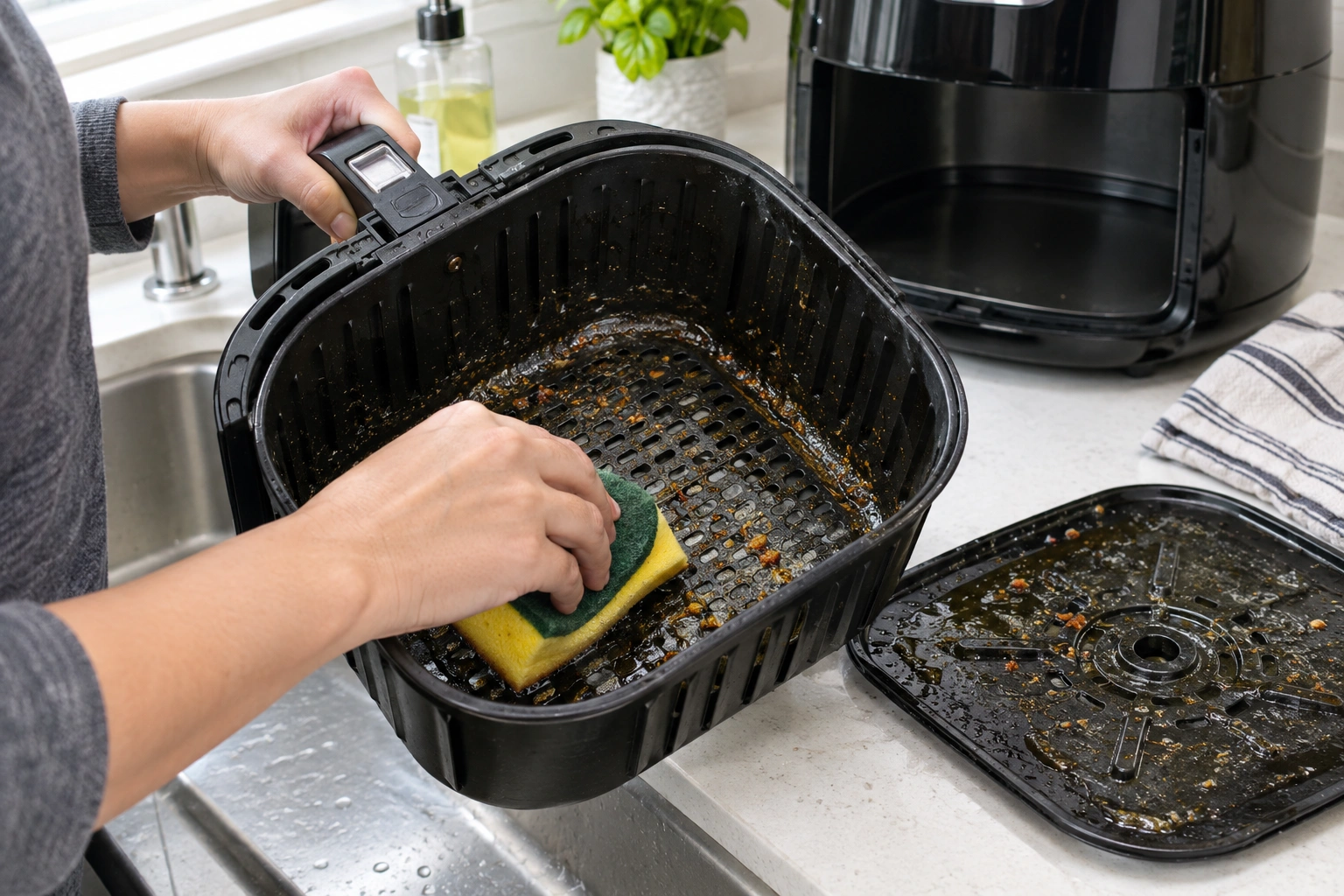
This is the prevention step many people skip. Grease and crumbs build up quietly, then burn the next time the fryer runs.
Clean out:
– the basket
– the tray or crisper plate
– the bottom of the drawer
– any visible residue near the heating element
If your model allows safe access to the heating area, wipe away debris after it cools completely. Always follow the manufacturer’s instructions.
Watch high-smoke recipes more closely
Bacon, sausage, wings, and breaded foods deserve extra attention. These are the recipes most likely to create smoke or trigger a detector in a small kitchen.
If you cook them often, consider lining the basket only if your manufacturer allows it and airflow is not blocked. Even then, check for grease pooling underneath.
Avoid overfilling the basket
When food is packed too tightly, fat and moisture can collect instead of circulating away. That can lead to more smoke, uneven browning, and more residue on the appliance.
If you want a deeper look at how batch size affects airflow, our guide on how much food you can cook in an air fryer is a helpful companion.
Air fryer placement and ventilation in small kitchens or apartments
In a house with a big kitchen, a little smoke may disperse quickly. In an apartment or condo, the same amount can reach the detector much faster.
A few placement habits make a real difference:
- keep the air fryer away from walls, cabinets, and curtains
- leave space around the vents so hot air can move freely
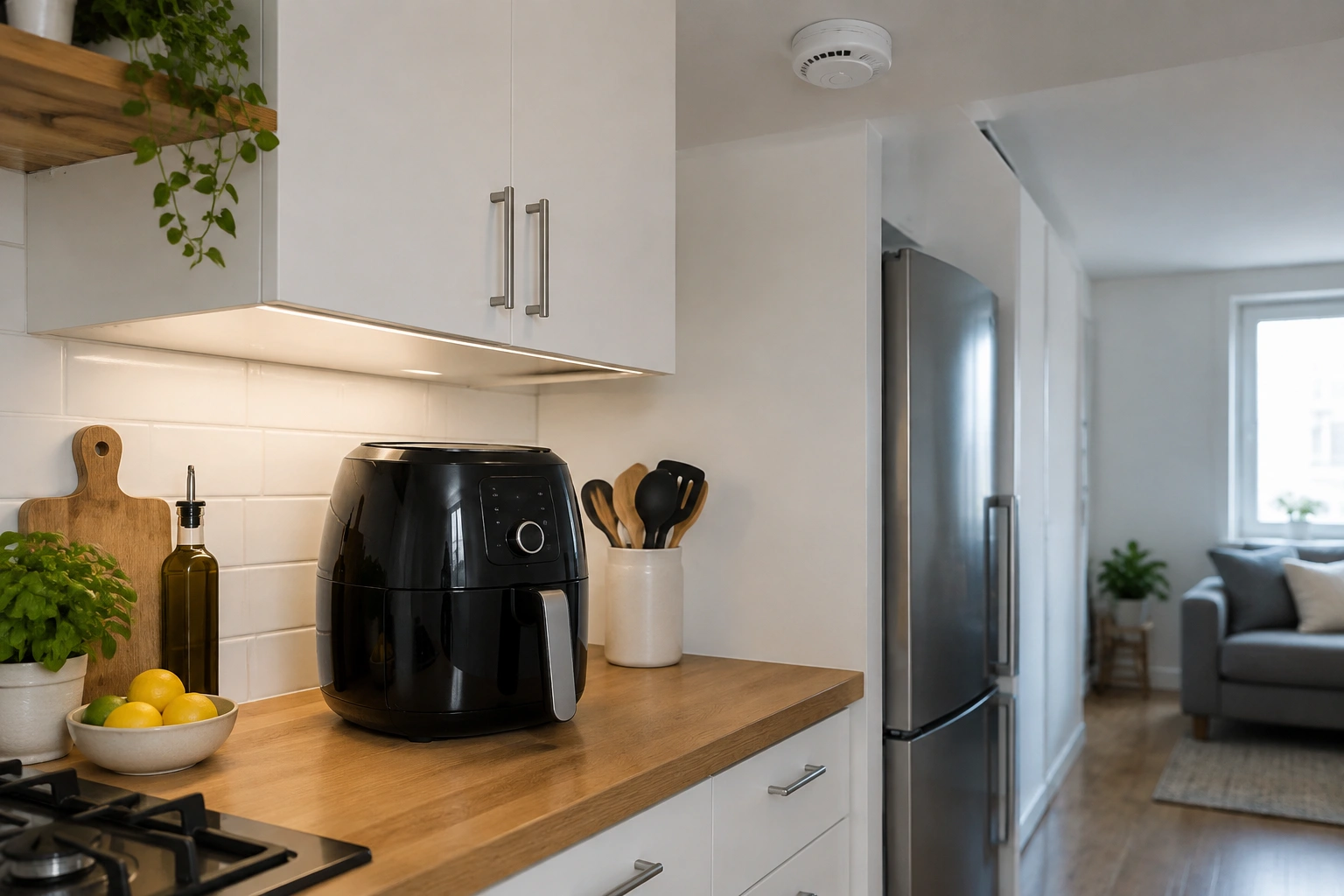
- avoid placing it directly under a smoke detector if possible
- use the range hood or an exhaust fan if your kitchen has one
If your kitchen is small, you may not be able to “solve” the problem with ventilation alone. In that case, the better fix is usually a combination of cleaner cooking, lower oil use, and better appliance placement.
One thing I would not do is move or disable a smoke alarm just to avoid nuisance triggers. If the alarm is too close to the cooking area, it may need maintenance or a better location, but it should still remain active.
Does your smoke alarm need maintenance instead?
Sometimes the air fryer is not the main problem. A detector that is dusty, aging, or overly sensitive can react to normal cooking conditions.
Check for these signs:
– the alarm goes off with very light cooking
– it chirps or behaves oddly even when nothing is cooking
– it is visibly dusty
– it is close to the kitchen and seems to react to every pan, toaster, or air fryer use
If the detector is dusty, clean it according to the manufacturer’s instructions. If the alarm chirps or seems underpowered, replace the batteries first. If false alarms keep happening after cleaning and new batteries, the detector may be old enough to replace outright.
A battery change or cleaning may help if the alarm is simply dirty or underpowered. If it keeps reacting to harmless cooking vapor, the placement may be the issue. In some homes, a heat detector is used in the kitchen instead of a smoke detector, but that choice should be made carefully and in line with local safety guidance, not as a casual swap.
For broader kitchen safety context, the NFPA smoke alarm guidance is a useful reference for understanding how alarms are meant to protect the home.
When to stop using the air fryer and inspect the appliance
Stop using the appliance and inspect it before the next cook if:
– smoke is heavy or persistent
– the smell is burning plastic or electrical
– the alarm happens even with a clean basket and low-fat food
– the unit has visible damage
– the heating area has stubborn buildup you cannot clean safely
A recurring alarm is not just an annoyance if it keeps happening under normal conditions. It can mean grease has built up inside the appliance, the detector is too sensitive for the space, or the air fryer itself has a fault.
If you are already seeing smoke with bacon or fatty foods, our post on why your air fryer smokes with bacon — and how to fix it goes deeper into that specific problem.
When to consult a professional
If the air fryer smells electrical, trips the alarm with clean, simple foods, or shows signs of damage, stop using it and contact the manufacturer or a qualified appliance repair professional. If the smoke alarm itself keeps false-triggering after cleaning and battery replacement, it may need to be replaced or relocated by someone familiar with home safety requirements. A persistent alarm with a clean appliance and normal foods can point to either an appliance fault or a detector problem that needs replacement.
FAQ
Can an air fryer really trigger a smoke alarm?
Yes. It can happen when smoke, grease particles, steam, or residue reaches the detector. In many cases, the issue is preventable.
Why does my air fryer set off the alarm when I can’t see smoke?
The detector may be reacting to tiny grease particles, steam, or residue burning off inside the appliance. Those can trigger an alarm before visible smoke becomes obvious.
Is it the food or the smoke alarm?
Sometimes both. Fatty or breaded foods are more likely to smoke, but a very sensitive or dusty detector can make a normal cook look like a bigger problem than it is.
Does preheating cause smoke?
Preheating can reveal old grease or crumbs already inside the air fryer. If the alarm only happens during preheat, cleaning is often the first thing to check.
Should I move the air fryer or the smoke detector?
Move the air fryer first if it is too close to walls, cabinets, or the detector. If the alarm still reacts to normal cooking, the detector may need cleaning, maintenance, or a better location.
Is smoke from an air fryer always a fire risk?
No, but heavy, persistent, or unusual smoke should be treated seriously. If the smell is electrical or the smoke does not clear quickly, stop cooking and inspect the appliance.
Are some smoke alarms more sensitive than others?
Yes. Some detectors are more likely to react to cooking particles in small kitchens. That is why apartment cooks often have more nuisance alarms than people in larger homes.
What foods are most likely to trigger the alarm?
Bacon, sausage, wings, breaded chicken, and oily homemade fries are common triggers because they release fat, crumbs, or oil vapor during cooking.
Should I clean the air fryer after every use?
Not always a full deep clean, but you should remove crumbs and grease regularly. If you cook fatty foods often, cleaning becomes much more important for preventing smoke.
Is it safe to keep cooking after the alarm goes off?
Only if you quickly identify a minor cause, like a small amount of steam or a little residue burning off. If smoke is heavy or the smell is unusual, stop cooking and inspect the appliance.
An air fryer can absolutely trigger a smoke alarm, but the cause is usually understandable once you separate smoke, steam, grease, and detector sensitivity. In most kitchens, the fix is usually not dramatic: use less oil, clean more often, avoid overfilling the basket, and pay attention to the detector’s placement. If alarms keep happening after cleaning and battery replacement, the detector itself may be the problem and may need replacement.

