
Why Bread Dough Tears and How to Fix It Before It Ruins Your Loaf

If you’ve ever watched a promising dough split instead of stretching, you’re in good company. Dough tearing is one of those bread problems that can feel mysterious at first, but the causes are usually fairly practical: the gluten may not be developed enough, the dough may be too dry, it may need a rest, or it may simply be getting handled more aggressively than it can tolerate.
The good news? Most tearing problems can be diagnosed with a few simple checks before you add more flour, keep kneading blindly, or give up on the batch. As a baker, I like to think of tearing as a message from the dough. It’s telling you something about its strength, hydration, or readiness.
In this guide, we’ll break down what tearing means at different stages, how to tell whether the dough needs more kneading or more rest, and how to rescue it without making the problem worse.
Why Dough Tears and What It Usually Means
When dough tears, it’s usually because the dough can’t stretch far enough to keep up with the way you’re handling it. That may happen for several reasons:
- Gluten is underdeveloped. The dough hasn’t built enough structure yet, so it breaks before it can stretch.
- Hydration is too low. A drier dough is stiffer and less extensible, so it reaches its limit sooner.
- Too much flour was added. Extra flour can dry the dough out and make it more prone to ripping.
- The dough needs rest. Gluten tightens during mixing and shaping; a short rest can let it relax and stretch more easily.
- The dough has been overhandled or overproofed. In either case, the structure may be too weak or too fragile to hold together.
Tearing doesn’t always mean failure. Sometimes it simply means the dough has reached its current limit and needs a pause, not more force. That distinction matters, because the wrong fix can make the issue worse.
For a deeper look at hydration and how it changes dough feel, see this guide to bread dough hydration.
Tools, Ingredients, and Readiness Checks
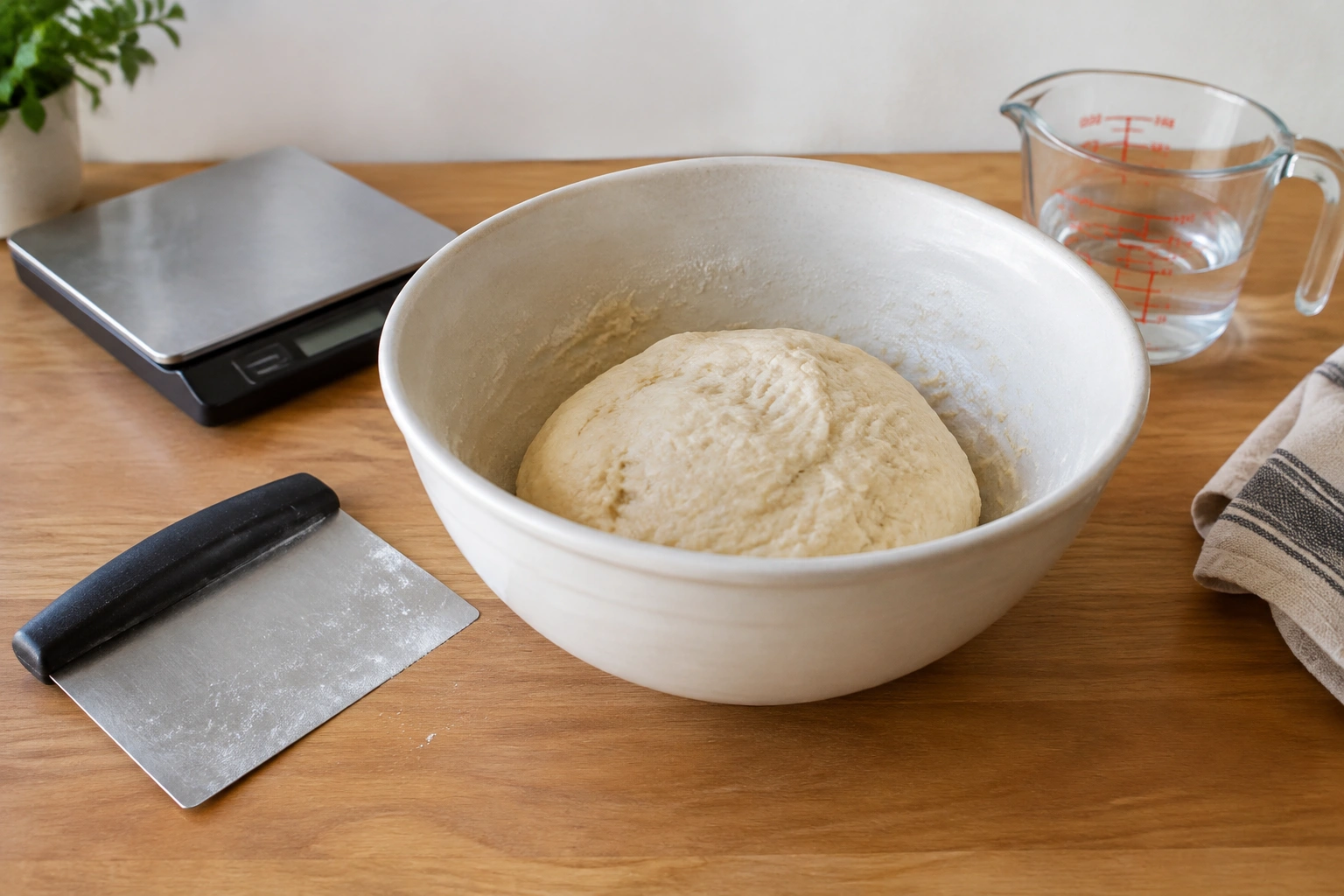
You don’t need fancy equipment to troubleshoot tearing dough, but a few basics help a lot.
Helpful tools
- A mixing bowl
- Bench scraper
- Kitchen scale
- Dough thermometer, if you use one
- Light dusting flour for handling, used sparingly
- A timer for rest periods
Ingredients that affect tearing
- Flour type: Bread flour generally provides more strength than all-purpose flour, so it often tolerates stretching better. All-purpose flour can still work, but with lower protein it usually forms a weaker gluten network, so the same hydration may feel looser or tear sooner.
- Water amount: Higher hydration usually improves extensibility, though wetter dough can be harder to handle.
- Salt: Salt strengthens gluten and helps the dough hold together.
- Fat and sugar: Enriched doughs can feel softer and may behave differently from lean doughs.
Readiness checks that matter most
Before deciding what to fix, check these three things:
- Windowpane test: Stretch a small piece of dough gently. If it tears immediately, it likely needs more development or rest.
- Touch: Properly developed dough should feel smoother, more elastic, and less shaggy than it did early in mixing.
- Look: A ready dough usually looks more cohesive and less rough or patchy on the surface.
How to Diagnose Dough Tearing by Stage
The stage where tearing happens tells you a lot about the cause. A dough that tears during kneading is not usually asking for the same fix as one that tears while shaping.
First check, then do this
Use this order so you don’t chase the wrong problem:
- Check the feel. Is it stiff and cracking, or sticky, shaggy, and weak?
- If it feels tight but cohesive, rest it first.
- If it feels dry and cracks at the surface, hydrate it.
- If it feels weak, shaggy, or tears very early, develop the gluten more.
- Reassess before changing anything else.
That sequence is usually more reliable than guessing from the tear alone.
If the dough tears during mixing or kneading
This usually points to one of two problems:
- The gluten network is still too weak
- The dough is too dry or too heavily floured
If the dough feels stiff, rough, and cracks instead of stretching, check whether you added extra flour too early. If the dough is still shaggy, sticky, and uneven, it may simply need more mixing time to build strength.
If the dough tears during the windowpane test
That means the gluten is not yet strong enough to stretch into a thin membrane. In that case, the dough may need:
– More kneading
– A short rest, then another test
– A little more hydration if it feels dry and tight
A failed windowpane test is not automatically a disaster. Many doughs improve after a short pause because the flour gets more time to absorb water. Autolyse works in a similar way: it gives flour and water time to hydrate, which improves extensibility and can reduce tearing in dough that otherwise feels too tight.
If the dough tears while stretching or shaping
This is often a sign that the dough is too tight and needs to relax. The outer layer may seem smooth, but the interior is still resisting stretch. That’s especially common when shaping happens too quickly.
If the dough snaps back and tears repeatedly, stop forcing it and let it rest before trying again.
If the dough tears during proofing or after proofing
Here the issue may be weaker structure rather than tightness. Overproofed dough can lose strength and become fragile. It may deflate easily, feel overly gassy, or tear when moved.
Quick diagnosis table
| What you see | Likely cause | Best next move |
|---|---|---|
| Tears early during kneading | Underdeveloped gluten, too little water, too much flour | Mix a bit longer or reassess hydration |
| Tears in the windowpane test | Gluten not fully developed yet | Rest briefly, then test again |
| Tears while shaping | Dough is tight and needs relaxation | Let it bench rest before continuing |
| Tears after long proofing | Structure may be weakening | Shape more gently next time; watch proofing closely |
| Cracks, stiffness, and rough feel | Dough may be too dry | Adjust hydration in the next batch |
Step-by-Step Fixes for Dough That Tears
The right fix depends on what your dough is telling you. Use this sequence instead of reaching automatically for more flour.
1) Stop and assess the texture
Ask three questions:
– Does the dough feel dry and stiff?
– Does it feel elastic but tight?
– Does it feel weak and fragile?
That answer matters more than the tear itself.
2) If the dough is dry, add water carefully
If the dough is obviously stiff and crumbly, a small amount of water may help. Add it gradually, then mix just until absorbed. Don’t pour in a large splash and expect the dough to fix itself instantly.
This is where trade-offs matter. More water can improve stretch, but too much can make the dough sticky and harder to shape. Add only enough to bring the dough into a more supple, cohesive state.
If dryness is the recurring issue in your bakes, this article on bread dough too dry can help you troubleshoot the underlying cause.
3) If the dough is tight, give it a rest
When dough resists stretching but doesn’t seem dry, rest is often the smartest move. A short bench rest can relax the gluten so the dough stretches more evenly.
4) If the dough is underdeveloped, continue kneading in small increments
If the dough tears because it lacks structure, knead in short bursts and retest. Avoid excessive mechanical development or heat buildup from nonstop kneading. You want the dough to become smoother and more elastic, not hot, tight, or damaged.
A practical approach:
– Knead for a short interval
– Rest the dough briefly
– Perform the windowpane test again
– Repeat only if the dough is clearly improving
5) If the dough is overhandled, back off
Sometimes the best rescue is to stop touching the dough. Overworking can make it tighter and harder to stretch. If the dough is already fighting you, more force may only worsen the tearing.
6) If the dough is overproofed, reshape gently and adjust next time
Once dough has gone too far in proofing, you may still bake it, but the structure may be weaker than ideal. Handle it with care and expect a less dramatic oven spring than a healthier dough would give.
If overproofing happens often, shorten the proof or watch the dough rather than the clock alone.
Underkneaded, Overkneaded, or Just Dry?
These problems can look similar from a distance, but the dough’s feel gives you the clue.
| Problem | What it feels like | What it does when stretched | Best fix |
|---|---|---|---|
| Underkneaded | Shaggy, uneven, weak | Tears early and lacks stretch | More kneading, then retest |
| Overkneaded | Very tight, sometimes warm, resistant | May tear after being pushed too far | Stop mixing; rest the dough |
| Too dry | Stiff, rough, crumbly, hard to smooth | Cracks instead of stretching | Add water next time, or very carefully if needed |
| Overproofed | Fragile, inflated, weak, delicate | Tears or collapses easily | Bake carefully; adjust proofing next batch |
One common mistake is assuming every tearing dough needs more flour. In reality, extra flour often makes the problem worse by drying the dough out further.
Another common mistake is assuming every tear means more kneading. If the dough is already tight and springy, more kneading may just make it harder to shape.
Common Mistakes That Make Dough Tear
Adding too much flour during shaping
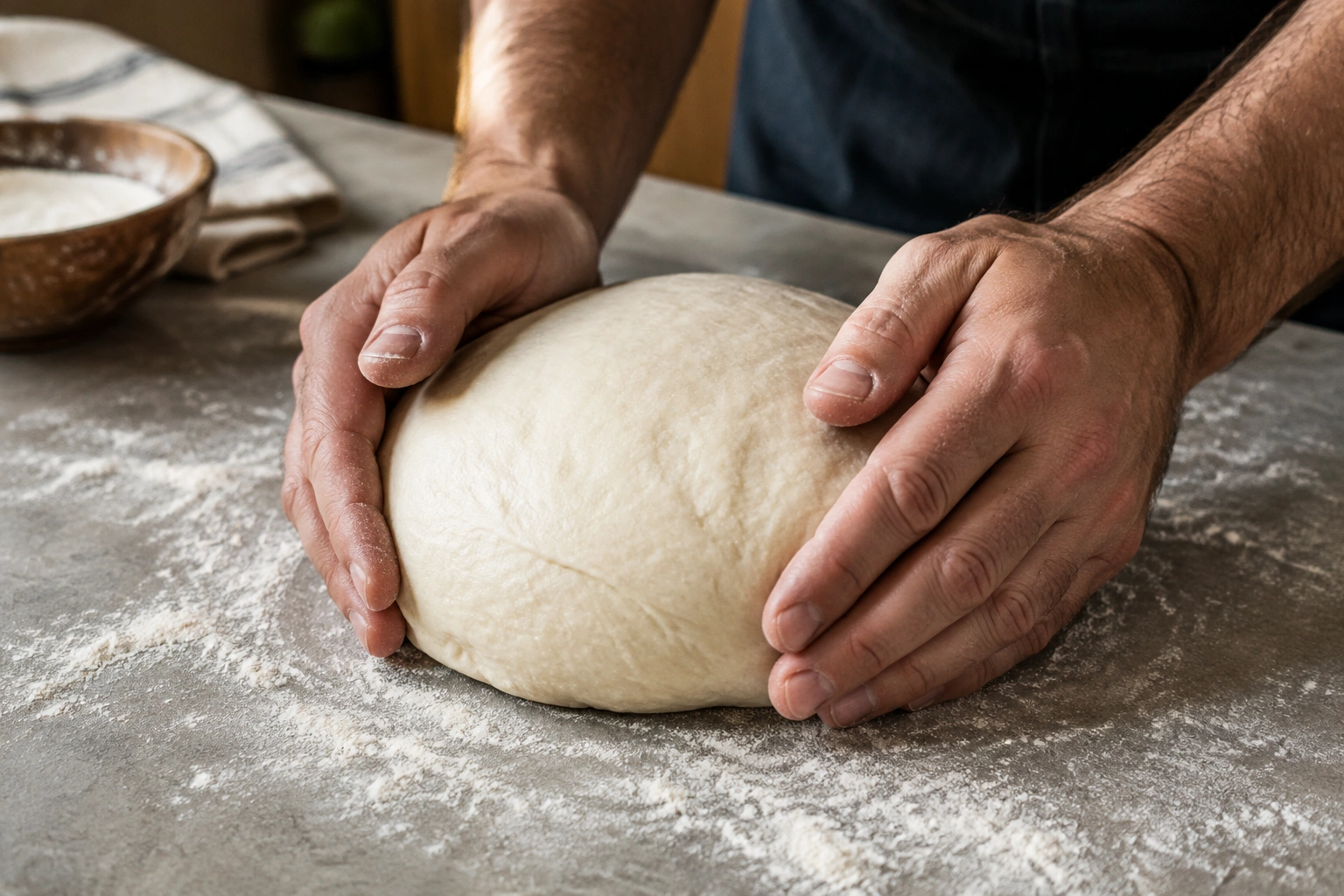
A dusting of flour is useful. A heavy layer is not. Too much flour can dry the surface and prevent the dough from stretching smoothly.
Skipping rest periods
If the dough keeps shrinking back, it’s asking for relaxation, not force. A short rest often gives better results than another round of aggressive shaping.
Using the wrong flour for the job
All-purpose flour can work well in many breads, but some doughs need the added strength of bread flour. If a recipe is built for stronger flour and you swap in a weaker one, tearing becomes more likely.
Mixing too aggressively
Strong dough is good, but the problem is usually excessive mechanical development or heat buildup rather than time itself. Overmixing can make the dough feel tight and fragile rather than supple.
Handling delicate dough too roughly
High-hydration doughs and enriched doughs often need a gentler touch. If you pull or stretch too hard, they can tear even when the recipe is sound.
Ignoring fermentation stage
Sometimes the issue isn’t the mix at all. If the dough has overproofed, the structure may be too fragile to support shaping.
Practical Examples: What to Do in Real Baking Situations
Pizza dough tears when you stretch it
If the dough keeps ripping as you open it, check whether it has had enough rest. Pizza dough often benefits from a pause before stretching, especially if it keeps snapping back. If it also feels stiff, the hydration may be too low for the flour you used.
Sandwich bread tears during kneading
That usually means the gluten is still underdeveloped or the dough is too dry. Give it a little more mixing, but keep the kneading in short intervals so you can check progress without overworking it.
Shaped loaf tears on the bench
This often means the dough is too tight. Stop shaping and let it rest. A relaxed dough is easier to tighten into a final shape without ripping the surface.
Dough looks smooth but tears inside
That can happen when the exterior seems ready before the interior has settled. A short rest after mixing can help the hydration equalize and improve extensibility.
For readers who want to compare dryness and stickiness side by side, this companion article on bread dough too sticky can help you separate those two common troubleshooting paths.
How to Prevent Dough Tearing in Future Batches
The best prevention is to build a dough that matches the bread you want to make.
Choose the right flour
If your dough keeps tearing, try a flour with more protein for better structure. Bread flour often gives more room for stretching before the dough breaks.
Match hydration to the recipe and flour
A dough that is too dry will almost always be less extensible. If your flour absorbs more water than expected, adjust gradually rather than assuming the recipe failed.
Mix enough, but not endlessly
You want gluten development, not brute force. Mix until the dough becomes smoother and more cohesive, then let time do some of the work through rest.
Use rest as a tool, not an afterthought
Rest periods can transform a tight dough into one that stretches more willingly. That’s especially valuable before shaping.
Handle gently during shaping
Use enough tension to build structure, but not so much that you rip the surface. If the dough resists, pause and let it relax.
Watch the dough, not just the clock
Proofing times vary with room temperature, dough temperature, flour, and yeast activity. A dough that looks ready is more useful than one that simply hit a scheduled time.
When Dough Tearing Is Normal or Not Worth Fixing
Some tearing is expected in very delicate doughs, especially wetter or more fragile ones. A little resistance doesn’t mean something is wrong. What matters is whether the dough can still be shaped and baked into a reasonable loaf.
Tearing may be hard to avoid when:
– The dough is very high hydration
– The formula is delicate or enriched
– The dough has been pushed too far in proofing
– The structure has already been damaged by rough handling
There are also times when restarting is the better choice. If the dough is severely dry, badly overworked, or clearly spoiled, it may not be worth trying to rescue. Any sign of mold, a rotten smell, or unusual discoloration means the dough should be discarded.
A Simple Decision Rule for Tearing Dough
If you want one quick framework, use this:
- Tight and springy? Let it rest.
- Dry and cracking? Add water next time, or very carefully now.
- Shaggy and weak? Knead a bit more.
- Fragile after long proofing? It may be overproofed.
- Tears even after several fixes? Adjust flour choice or recipe hydration for the next batch.
That approach will solve more tearing problems than random extra flour ever will.
FAQs
Why does dough tear instead of stretching?
Usually because the dough’s gluten network is not developed enough, the dough is too dry, or it needs time to relax before being stretched again.
How do I know if my dough needs more kneading or just a rest?
If it feels weak, shaggy, and breaks early, it likely needs more kneading. If it feels elastic but keeps shrinking back, it probably needs a rest.
Can too much flour cause dough tearing?
Yes. Extra flour can dry out the dough and make it less flexible, which can lead to tearing during mixing or shaping.
Does low hydration make dough tear?
It can. A dry dough is often stiffer and less extensible, so it reaches its stretch limit sooner.
What should I do if dough tears while shaping?
Stop shaping, let it rest, and try again more gently. If it keeps tearing, the dough may be too tight or too weak for the amount of handling it’s getting.
Is some tearing normal?
Yes, especially with delicate, wet, or enriched doughs. Small tears can happen, but repeated tearing usually means the dough needs a different fix.
When is tearing a sign of overproofing?
If the dough feels fragile, inflated, and weak rather than tight, tearing may point to overproofing or a loss of structure.
Final Thoughts
Bread dough should feel like it can stretch with you, not fight you. When it tears, the answer is usually hidden in one of four places: gluten development, hydration, rest, or handling. Once you learn to read the dough at each stage, the fix becomes much easier to choose.
That’s the real skill here: not forcing dough to behave, but understanding what it needs before you push it too far.