
Enriched Dough vs Lean Dough: A Baker’s Guide to Choosing the Right Bread Style

If you’ve ever wondered why one bread bakes up crackly and chewy while another turns soft, pillowy, and rich, the answer usually starts with the dough category. In bread baking, enriched dough vs lean dough is one of the most useful distinctions you can learn because it affects flavor, structure, fermentation, and even how you shape and bake the loaf.
As a baker, I like to think of this as a practical fork in the road. Lean dough gives you a more direct, bread-forward result. Enriched dough gives you softness, tenderness, and a richer crumb. Neither is “better” in every situation; they simply serve different baking goals.
Quick Comparison: Enriched Dough vs. Lean Dough
Here’s the fast side-by-side view before we dig deeper.
| Feature | Lean Dough | Enriched Dough |
|---|---|---|
| Basic ingredients | Flour, water, yeast, salt | Flour, water, yeast, salt plus ingredients like butter, oil, milk, eggs, and sugar |
| Texture | Chewy, crusty, more open or rustic | Soft, tender, richer, often tighter crumb |
| Flavor | Clean, wheaty, bread-focused | More complex, slightly sweet or buttery, richer |
| Fermentation | Usually more straightforward and predictable | Often slower or more delicate because enrichment can slow yeast activity |
| Handling | Easier to shape and less sticky | Softer, stickier, and can feel more delicate |
| Crust | Typically crisper and more pronounced | Usually softer and browns faster |
| Best uses | Baguettes, country loaves, ciabatta, pizza dough | Sandwich bread, dinner rolls, brioche, babka, sweet breakfast breads |
A useful rule of thumb: if you want a crisp crust and chewy bite, lean dough is usually the better fit. If you want a soft, rich, tender crumb, enriched dough is the better lane.
What Is Lean Dough?
Lean dough is the simplest bread dough category. In its most basic form, it’s made from flour, water, yeast, and salt. Some recipes allow a small amount of oil, but once you start adding enough fat, sugar, milk, or eggs to noticeably change the dough’s character, you’re moving into enriched territory.
A practical rule of thumb: if a recipe adds only a small amount of fat or sugar—say, just enough to slightly soften the crumb or improve handling—it may still behave like a lean dough. Once the formula starts including a meaningful amount of sugar, butter, oil, milk, or eggs that clearly changes the texture, browning, and rise, it’s better to think of it as enriched. Borderline doughs like lightly oiled pizza dough or a barely sweet sandwich loaf sit in the middle, but the more those additions affect the finished bread, the more the dough moves away from lean.
Lean dough is the backbone of many classic breads. The reason it behaves so differently is that there’s little to interfere with gluten development or yeast activity. Water hydrates the flour, gluten forms, yeast ferments, and the dough develops structure in a relatively direct way.
That simplicity shows up in the finished loaf:
- the crust tends to bake up more assertive and crisp
- the crumb is often chewier
- the flavor is more about the grain and fermentation than richness
This is why lean dough is common in breads meant to be dipped, sliced, or served alongside savory food. Think baguettes, rustic country loaves, many pizza doughs, and ciabatta-style breads.
Why lean dough often feels more forgiving
Because there’s less fat and sugar in the way, lean dough usually gives you clearer feedback. The dough tightens as you knead, it stretches more predictably, and it generally browns and sets in a way that’s easier to judge. For a newer baker, that can be a real advantage.
What Is Enriched Dough?
Enriched dough starts as bread dough, then gets “richer” with ingredients such as butter, oil, milk, eggs, and sugar. In other words, enrichment is not a tiny cosmetic change; it changes how the dough behaves and what kind of bread you get.
A simple working rule: when those additions are enough to noticeably soften the crumb, slow fermentation, or change browning and handling, the dough belongs in the enriched category. Very small amounts may only lightly enrich the dough, but once the formula clearly shifts toward softness, richness, and tenderness, you’re no longer dealing with a lean bread.
Enrichment usually does a few things at once:
- softens the crumb
- adds flavor and aroma
- encourages browning
- makes the dough feel more supple or sticky
- can slow fermentation, especially when sugar and fat are present in higher amounts
That’s why enriched dough is the go-to choice for soft sandwich loaves, dinner rolls, breakfast breads, and many sweet breads. It’s designed for tenderness, not crust.
If you want a bread that feels plush and rich when you tear into it, you are probably looking at an enriched formula.
How Enrichment Changes Dough Behavior
This is where the comparison gets practical. The ingredients in enriched dough don’t just add flavor; they change the dough’s structure and timing.
Fat softens gluten
Butter and oil coat flour particles and gluten strands, which makes the dough feel softer and less elastic. In practical baking terms, that means enriched dough usually develops a weaker, more tender structure than lean dough. You still want gluten development, but you’re aiming for softness and extensibility rather than maximum chew.
The trade-off is that the dough may not develop the same strong, chewy structure you expect from lean bread.
In simple terms: fat makes bread feel more luxurious, but it also makes the dough less “tight.”
Sugar affects sweetness, browning, and fermentation
Sugar does more than sweeten. It helps with browning and contributes to a softer texture. But in higher amounts, it can slow yeast activity because yeast has to work through a more concentrated environment. That’s why enriched dough often needs more patience during proofing.
This is one of the most common mistakes home bakers make: they expect an enriched dough to rise on the same schedule as a lean one. Often, it won’t.
Milk adds moisture and tenderness
Milk brings both liquid and richness. Whole milk also adds some fat, sugar, and protein, which can contribute to a softer crumb. That’s one reason milk breads often taste softer and richer than breads made with water alone.
Milk also helps with browning, which is useful in soft breads but can be a problem if you bake at the same high heat you’d use for a lean loaf.
Eggs add richness and structure
Eggs bring fat, protein, and moisture. They can improve color, richness, and tenderness while also contributing to structure. That’s why egg-enriched breads can feel both soft and substantial.
The overall effect on gluten and handling
Because enrichment changes how gluten develops, enriched dough often feels softer and more delicate during mixing and shaping. It may be stickier than lean dough, but that doesn’t automatically mean it needs more flour. Adding too much flour can make the bread dense and dry, which defeats the purpose of enrichment.
A better instinct is to handle enriched dough with patience: mix until it becomes smooth and elastic, then work with lightly oiled or lightly floured hands if needed rather than dumping in extra flour.
Common Bread Examples for Each Dough Type
One of the easiest ways to classify a dough is to ask: what kind of bread is this meant to become?
Lean dough examples
These are classic lean or mostly lean breads:
- baguette
- country-style artisan loaf
- ciabatta
- many pizza doughs
- basic sourdough breads
- pita
- simple dinner rolls made with very little fat
A small amount of olive oil in pizza dough doesn’t automatically make it a fully enriched dough. Context matters. If the formula is still mostly flour, water, yeast, and salt, it usually behaves like a lean dough.
Enriched dough examples
These breads clearly lean rich:
- brioche
- challah
- babka
- sandwich bread made with milk, butter, and sugar
- dinner rolls with egg and butter
- sweet breakfast breads
These formulas are built for softness and richness, not a hard crust.
Gray-area recipes
Some breads sit in the middle. Pizza dough with a little oil, or a rustic loaf with a touch of milk, may not be “fully” enriched in the same way as brioche. That’s why it helps to think in degrees rather than absolutes.
If the added ingredients change the dough’s feel, rise, browning, and finished texture in a noticeable way, it’s moving toward enriched territory.
How to Handle, Mix, Knead, and Proof Each Dough
The technique changes more than many bakers expect.
Mixing and kneading lean dough
Lean dough usually develops gluten efficiently. It often starts rough, then becomes smoother and more elastic with kneading or folds. Because there’s less fat interfering, you can judge development by feel more easily.
If you’re making a lean dough, watch for:
- a smoother surface
- improved stretch
- better structure after kneading
- a dough that holds shape well during fermentation
Mixing and kneading enriched dough
Enriched dough often feels softer from the start. A practical approach is to mix the flour, liquid, yeast, and salt first so the dough starts building gluten, then add butter or oil gradually once the dough has some strength. Sugar and eggs are often mixed in early, but the key is still to avoid dumping in all the fat at once if the dough seems weak.
The practical lesson: don’t panic if enriched dough seems slack at first. It often needs more time to become smooth and elastic. It may also take longer to reach the same level of strength as a lean dough, so expect a softer, less rigid dough even when it is properly developed.
Proofing differences
Lean dough generally ferments more predictably. A lean dough is usually ready when it has visibly expanded, feels airy, and springs back slowly when gently pressed. Enriched dough often needs longer proofing because sugar and fat can slow yeast activity. For enriched dough, look for a dough that has become noticeably puffy, lighter in the pan or basket, and slightly jiggly rather than relying on the clock alone.
A good way to avoid disappointment is to judge proofing by the dough itself rather than the time alone. If you want a deeper refresher on that, our guide to how to tell when bread dough is ready can help you read the signs more confidently.
Shaping and scoring
Lean dough usually holds sharper shapes and scores cleanly, which is why it works so well for artisan loaves. Enriched dough can be more delicate and may not score with the same dramatic opening. For many enriched breads, a gentler shape and a softer bake are the goal.
If you’re still building confidence with dough structure, the windowpane test is a useful companion skill for both dough types.
How to Choose the Right Dough for Your Recipe Goal
This is the decision framework I’d give a home baker or culinary student.
Choose lean dough when you want:
- a crusty exterior
- a chewy bite
- a bread that pairs with soups, cheeses, and savory meals
- a more rustic or artisan-style loaf
- a simpler fermentation process
Lean dough is usually the better choice if the bread should feel bold, structured, and bread-forward.
Choose enriched dough when you want:
- a soft sandwich texture
- a tender crumb
- a richer flavor
- a bread that stays soft longer
- rolls, breakfast breads, or celebratory loaves
Enriched dough makes sense when tenderness matters more than crust.
Choose based on your skill level and time
If you’re still learning how dough should feel, lean dough is often the best starting point because it teaches fermentation and gluten development with fewer variables. Enriched dough is still absolutely manageable, but it asks for more patience and a little more judgment.
If you only have time for one bake and want a straightforward result, lean dough is usually the safer bet. If you want a softer loaf and are willing to watch the dough more closely, enriched dough is worth the effort.
Common Mistakes When Switching Between Dough Types
A lot of bread frustration comes from applying the wrong expectations.
Overflouring enriched dough
This is probably the biggest mistake. Enriched dough often feels stickier than lean dough, but adding too much flour can make it heavy and dry. A sticky feel does not automatically mean the dough is wrong.
Using lean-dough timing for enriched dough
If you proof an enriched dough as quickly as a lean one, you may end up with a dense loaf. Sugar and fat often slow fermentation, so the dough may need more time to rise and relax.
Baking enriched dough too hot
Because enriched dough browns more readily, a lean-bread oven temperature can cause the crust to darken before the interior is fully baked. That’s why many rich breads bake at lower temperatures than crusty lean loaves.
Expecting the same crust
Lean dough and enriched dough are designed for different finishes. A soft, milk-rich loaf should not be judged against a baguette crust. That comparison only creates unnecessary disappointment.
Troubleshooting Lean and Enriched Dough Problems
Here are the most common issues and the most practical fixes.
If enriched dough is browning too fast
Lower the oven temperature and check the loaf earlier. Sugar and milk can accelerate browning, so the crust may color before the center is done.
If enriched dough is rising slowly
Give it more time and keep the dough in a warm, draft-free spot. Slow rise is often a feature of the formula, not a mistake.
If lean dough feels too stiff
You may need a little more water, especially if your flour is thirsty. Lean dough should still feel extensible, not dry and resistant.
If the crumb is dense
A dense crumb can come from underproofing, overflouring, or weak gluten development. With enriched dough, the most common culprits are rushing the rise or adding too much flour during shaping.
If shaping is difficult
For lean dough, let it rest briefly so the gluten relaxes. For enriched dough, handle it more gently and avoid aggressive bench flouring unless the dough is truly sticking uncontrollably.

Practical Examples and Recipe Adaptation Tips
Let’s make this concrete.
If you’re baking soup bread
Choose a lean dough. A crusty loaf gives you contrast against a soft soup or stew, and the chewy crumb stands up well to dipping.
If you’re baking sandwich bread
Choose an enriched dough with milk, butter, or both. The softer crumb slices neatly and stays tender longer.
If you want dinner rolls
Enriched dough is usually the better choice. Butter, milk, and eggs help create the soft pull-apart texture people expect from rolls.
If you want to convert a lean dough into a richer loaf
You can add enrichment, but do it thoughtfully. More fat and sugar will change fermentation, handling, browning, and final texture. That means you should expect:
- slower rise
- softer dough
- more browning
- less crustiness
- a more tender crumb
In other words, you’re not just “improving” the dough; you’re changing the bread style.
If you want a bread with both structure and softness
Aim for moderate enrichment rather than a very rich formula. Many sandwich loaves and soft rolls live in that middle ground. They’re tender, but not as delicate as brioche.
The Baker’s Bottom Line
The real difference between these two dough types is not just ingredient lists. It’s the whole baking personality of the dough.
Lean dough gives you structure, crust, chew, and a more direct bread flavor. Enriched dough gives you softness, tenderness, richer flavor, and a more delicate rise. Once you understand that trade-off, choosing the right dough becomes much easier.
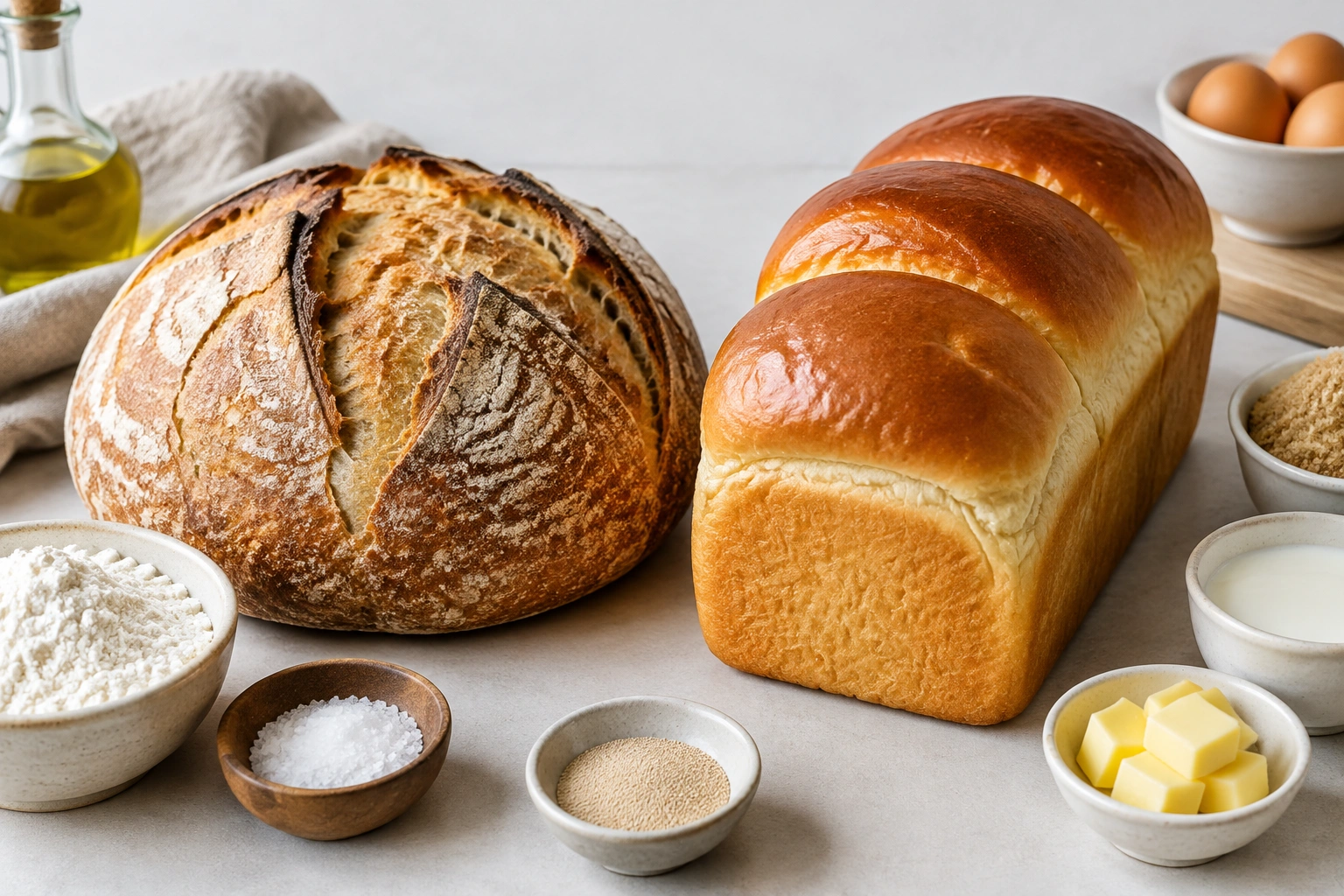
If you’re baking for a crisp loaf to serve with dinner, lean dough is usually the answer. If you want a soft, luxurious bread for toast, sandwiches, or rolls, enriched dough is the better tool.
Either way, the dough is telling you what it wants. Learn to read it, and your bread gets better very quickly.
FAQ
Is pizza dough lean or enriched?
Most pizza doughs are lean or only lightly enriched. A small amount of oil may be included, but many pizza formulas still behave like lean dough.
Does enriched dough always contain butter?
No. Enriched dough can include butter, but it may also use oil, milk, eggs, sugar, or a combination of those ingredients.
Which dough is easier for beginners?
Lean dough is usually easier to learn first because it has fewer variables and tends to behave more predictably.
Why does enriched dough take longer to rise?
Fat and sugar can slow yeast activity, so enriched dough often needs more proofing time than lean dough.
Can I make bread softer without fully enriching it?
Yes. A small amount of milk, oil, or butter can soften a dough somewhat, but the more you add, the more the dough shifts toward an enriched style.