
Equation for Vinegar and Baking Soda Explained Simply

Vinegar and baking soda react to form carbon dioxide, water, and sodium acetate, which is why the mixture fizzes and foams. The reaction is useful for simple demonstrations and some baking uses, but it works best when measured carefully and kept open to the air.
The equation for vinegar and baking soda is a simple acid-base reaction that produces carbon dioxide gas, water, and sodium acetate. It is easy to see in a bowl or cup, but the same chemistry also matters in baking, cleaning, and classroom demonstrations.
- Balanced reaction: Acetic acid and sodium bicarbonate produce carbon dioxide, water, and sodium acetate.
- Why it fizzes: The foam comes from gas released during the acid-base reaction.
- Baking limit: It can help with quick lift, but it is not a direct substitute for.
- Safety first: Never seal the mixture in a closed container.
- Best use: Use it for demos, quick experiments, and recipes that are designed for immediate reaction.
What the Equation for Vinegar and Baking Soda Actually Represents
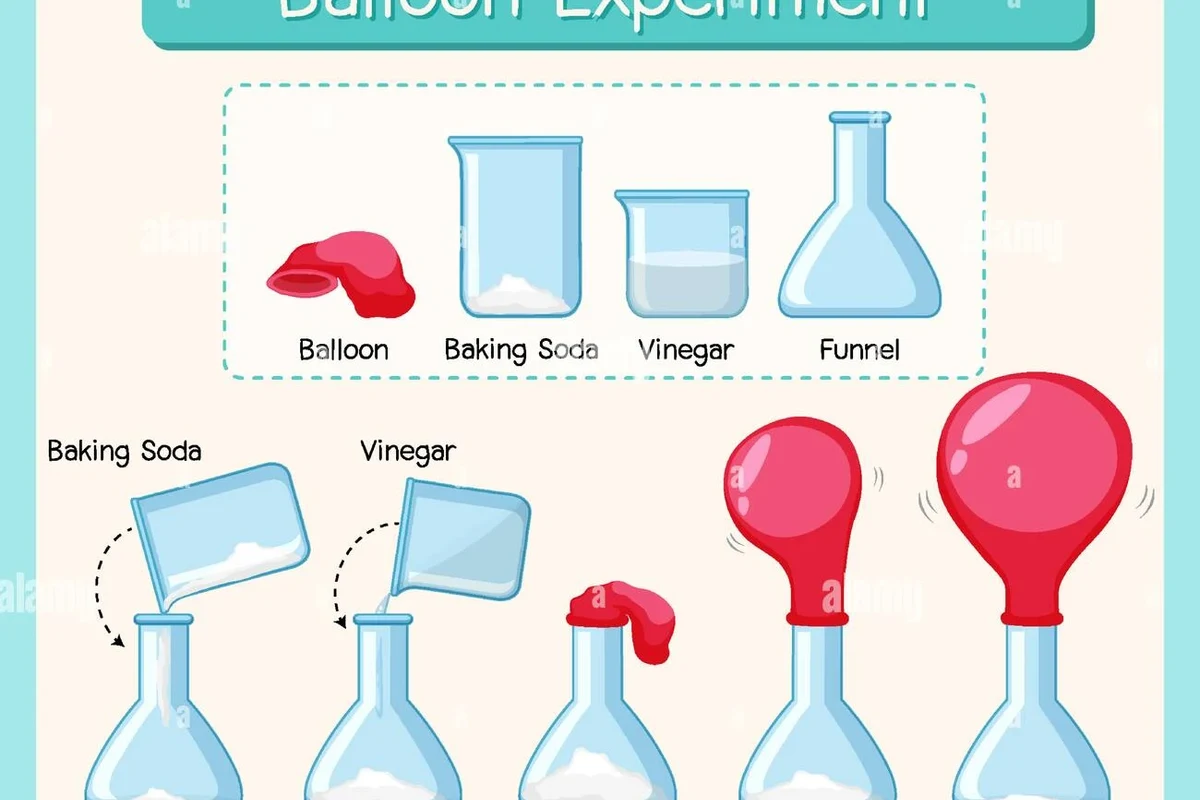
At its core, the equation for vinegar and baking soda shows what happens when an acid meets a base. Vinegar contains acetic acid, and baking soda is sodium bicarbonate, a base that reacts quickly once the two are mixed.
Why this reaction is more than a classroom demo
People often think of this reaction as a volcano-style science fair trick, but it is really a useful example of how ingredients behave when they meet in the right proportions. In the kitchen, that same idea helps explain why some batters rise quickly and why some mixtures foam, settle, or fail if the timing is off.
If you are comparing it with other kitchen reactions, it can help to read a broader explanation of the baking soda and vinegar reaction before moving into the balanced equation. That gives you the basic visual effect first, then the chemistry behind it.
The simple chemistry behind carbon dioxide, water, and sodium acetate
When vinegar and baking soda combine, the acid donates hydrogen ions and the bicarbonate reacts to form carbon dioxide gas. That gas is what creates the fizz and foam you see rising through the liquid.
The other products are water and sodium acetate, which stay behind in the mixture as a liquid residue. In plain English, the bubbling is not the main result; it is the visible sign that a new set of substances has formed.
Balanced Equation for Vinegar and Baking Soda, Explained in Plain English
The balanced equation is usually written as: acetic acid + sodium bicarbonate → sodium acetate + carbon dioxide + water. In chemical form, it is often shown as CH3COOH + NaHCO3 → CH3COONa + CO2 + H2O.
The reactants: acetic acid and sodium bicarbonate
Vinegar is mostly water with a small amount of acetic acid, while baking soda is sodium bicarbonate. These ingredients are stable on their own, which is why they sit safely in your pantry until something triggers the reaction.
The strength of the reaction depends on how much acid and base are present, how concentrated the vinegar is, and how well the ingredients are mixed. If you are using baking soda in recipes, it also helps to understand the difference between baking soda and baking powder, because they do not behave the same way in batter.
The products: gas release, liquid residue, and why the mixture foams
The carbon dioxide gas forms tiny bubbles that get trapped in the liquid, which is why the mixture looks foamy. If the container is narrow or the liquid is stirred hard, the foam can rise very fast and overflow.
The leftover sodium acetate and water do not keep bubbling forever. Once one ingredient is used up, the reaction slows or stops, even if some liquid remains.
How to read the equation without a chemistry background
You do not need advanced chemistry to understand the equation. Read it as “vinegar and baking soda react to make a gas, water, and a salt-like leftover liquid.”
That simple reading is enough for most baking and kitchen decisions. It tells you that the visible fizz is temporary, and it also explains why this reaction is not a magic solution for every task.
The fizz happens because carbon dioxide gas forms inside the liquid, not because the mixture is boiling or heating up in the usual sense.
Why the Reaction Happens So Fast in Baking and Kitchen Experiments
This reaction feels fast because acid-base chemistry can begin as soon as the two ingredients touch. In a kitchen setting, the speed is easy to notice because the gas forms right away and the bubbles are visible almost immediately.
Acid-base reactions and what triggers the fizz
Acid-base reactions happen when an acid and a base exchange ions in a way that forms new compounds. In this case, the reaction releases carbon dioxide, and that gas is what creates the instant bubbling effect.
The fizz starts as soon as enough surface contact occurs between the vinegar and baking soda. That is why a quick stir often makes the reaction look more dramatic.
How concentration, temperature, and surface area affect the reaction
More concentrated vinegar usually reacts more noticeably than very diluted vinegar, because there is more acid available. Temperature can also matter, since warmer liquids often move molecules faster and may make the reaction seem quicker.
Surface area matters too. Fine baking soda mixed through liquid reacts differently from a clump sitting at the bottom of a cup, because the liquid can reach more particles at once.
Practical example: what changes when you use more vinegar or more baking soda
If you add extra vinegar after the baking soda has already reacted, you may not get much more fizz. If you add extra baking soda after the acid is used up, the leftover powder may just sit there with little visible change.
That is why more of both ingredients does not automatically mean a bigger reaction. The result depends on whether the ingredients are balanced enough to keep reacting.
In baking, ingredient brands, measuring method, humidity, and batter thickness can change how fast a reaction seems to happen. A thick batter may trap gas differently than a thin liquid.
Common Mistakes People Make When Using Vinegar and Baking Soda
Most problems come from expecting the reaction to do more than chemistry allows. It can create gas and foam, but it cannot fix every recipe, clean every surface, or replace the right leavening method.
Assuming more of both ingredients creates a stronger result
It is tempting to think that doubling both ingredients will always make a bigger reaction. In practice, the reaction only goes as far as the limiting ingredient allows.
That means one ingredient can be used up before the other, leaving extra liquid or extra powder behind. For a more practical household comparison, some readers also review apple cider vinegar and baking soda uses to see how ingredient choice changes the result.
Using the reaction for leavening without understanding timing
In baking, gas helps lift batter, but timing matters. If the carbon dioxide is produced too early and the batter sits too long, much of the gas can escape before the pan goes into the oven.
That is why recipes using baking soda usually rely on an acid in the batter and a fast move from mixing to baking. If you need a more detailed look at ingredient balance, see whether baking soda can replace baking powder safely.
Confusing cleaning power with chemical balance
People sometimes assume the fizz means the mixture is cleaning more effectively. The visible foam does not automatically mean better cleaning, especially if the surface needs scrubbing, rinsing, or a different cleaner entirely.
For example, the reaction may help loosen some messes, but it is not a universal cleaner. If your goal is oven maintenance, a dedicated guide like baking soda vinegar cleaning ovens is a better fit than relying on the reaction alone.
Safety issues from sealed containers, splashing, and overmixing
Never seal vinegar and baking soda in a rigid container unless the setup is designed to vent gas safely. Carbon dioxide builds pressure quickly, and that can force liquid out or even burst a container.
Overmixing can also cause splashing, especially in a narrow cup. Keep the container in a sink, tray, or other easy-to-clean spot if you expect a strong foam rise.
Do not use this reaction in a closed jar, bottle, or any container that cannot release pressure. The gas can build fast enough to cause spills or injury.
How the Vinegar-and-Baking-Soda Equation Applies in Baking and Food Science
The equation matters in baking because leavening is really about gas production and gas retention. Once you understand that, it becomes easier to see why some recipes rise well and others do not.
When an acid and base can help dough or batter rise
When a batter contains baking soda and an acidic ingredient, carbon dioxide can help create lift. This works best in cakes, muffins, quick breads, and similar batters that go into the oven soon after mixing.
The gas needs to be trapped by the batter structure long enough to expand in the heat of the oven. That is why texture, mixing method, and oven readiness all matter.
Why the reaction is not a substitute for yeast or baking powder
Vinegar and baking soda can create a quick burst of gas, but they do not behave like yeast, which ferments slowly and adds flavor as it rises. They also do not behave exactly like baking powder, which is formulated to provide acid and base in one ingredient.
For many recipes, the choice depends on the desired crumb, flavor, and timing. Yeast gives a different structure and taste, while baking soda plus acid gives a faster, more immediate lift.
- Fast gas release
- Simple ingredients
- Useful for quick visual demonstrations
- Short reaction window
- Easy to mismeasure
- Not a full replacement for yeast or baking powder
Ingredient roles, measurement, and method considerations for home bakers
Measuring accurately matters because too much baking soda can leave a soapy or metallic taste, while too little acid can leave some soda unreacted. The exact balance depends on the recipe, the acidity of the other ingredients, and how the batter is mixed.
Home bakers should also remember that oven calibration, pan size, and rack position can affect how well a batter sets after the gas is released. In other words, the chemistry starts the rise, but the oven has to finish it.
If a recipe relies on baking soda, mix the batter and bake promptly unless the recipe clearly says otherwise. Waiting too long can reduce the lift.
How to Test the Reaction Safely at Home or in a Classroom
A simple test can help students and beginners observe the equation in action without special equipment. The goal is to watch the foam, not to create a mess.
Simple materials, measuring amounts, and setup
Use a small bowl or cup set inside a tray or sink. Add a measured spoonful of baking soda first, then pour in a measured amount of vinegar slowly so you can watch the reaction instead of rushing it.
Exact amounts are flexible for a demonstration, but smaller quantities are easier to control. If you need a stronger or weaker effect, change one variable at a time so the result is easier to understand.
- Work in a clear, washable area
- Keep the container open and unsealed
- Wear eye protection if you are doing a classroom demo
- Measure small amounts first
What to observe: foam height, speed, and duration
Watch how quickly the foam begins, how high it rises, and how long it lasts. Those three details tell you a lot about how the ingredients are interacting.
You may also notice that the bubbling slows as the reactants are used up. That slowing is normal and shows the reaction is nearing completion.
Cleanup, disposal, and ventilation basics
After the reaction finishes, the leftover liquid can usually be rinsed away with plenty of water in a sink, unless local rules or the container material call for different disposal. Wipe the area dry so it does not become slippery.
Good ventilation is usually enough for a small home experiment. If you are doing repeated classroom demonstrations, keep the area open and avoid crowding around the container.
Keep the experiment away from your face and never lean directly over the container, especially if you are using a narrow cup or a larger quantity.
When to Use This Reaction and When to Choose a Different Method
The equation for vinegar and baking soda is useful, but only in the right setting. It works best when you want a quick, visible reaction or a short-lived rise from an acid-base pair.
Best use cases for demonstrations, science lessons, and quick visual effects
This reaction is ideal for school demonstrations, simple science lessons, and visual kitchen experiments. It is also helpful when teaching how acids and bases interact, because the foam makes the chemistry easy to see.
For cleaning or odor-related topics, some readers prefer to compare it with other household uses first, such as cleaning drains with vinegar and baking soda, before deciding whether the reaction is the right tool.
Limitations in baking, cleaning, and household problem-solving
This reaction is not strong enough to replace proper scrubbing, a well-formulated recipe, or a method designed for a specific appliance or surface. It can help in some situations, but it is not a cure-all.
For example, if a recipe needs steady lift over time, yeast may be the better choice. If a surface needs a specific cleaner, the chemistry of the reaction may not match the job.
Choosing the right approach based on the goal
Start by asking what you need: lift, cleaning, a classroom demo, or odor control. Then choose the method that matches the task instead of assuming one reaction solves everything.
If your goal is baking, use the recipe’s leavening system as written unless you fully understand how to adjust it. If your goal is a science lesson, keep the setup simple and safe so the chemistry remains the focus.
Best for showing gas release, foam, and visible reaction speed.
Best for recipes that need immediate lift from an acid-base reaction.
Best only when the surface and mess actually suit this type of reaction.
Final Recap: What Students, Bakers, and Curious Readers Should Remember
The equation for vinegar and baking soda is a straightforward example of an acid-base reaction that makes carbon dioxide, water, and sodium acetate. The foam is the visible sign of gas release, but the chemistry continues only as long as both ingredients are available.
The equation in everyday terms
In simple words, vinegar and baking soda react to make bubbles, liquid, and a leftover salt-like compound. That is the whole story in one sentence, and it is enough to explain most kitchen and classroom uses.
Most useful takeaways for safe, accurate use
Measure carefully, keep the container open, and do not expect more ingredients to always mean a better result. The reaction is fast, useful, and easy to observe, but it has limits.
If you are using it in baking, remember that timing and balance matter just as much as the ingredients themselves. If you are using it for a demo, focus on safety and clear observation.
Simple decision guide for applying the reaction correctly
Choose vinegar and baking soda when you want a quick reaction, a visible foam, or a basic acid-base lesson. Choose a different method when you need long-lasting rise, strong cleaning power, or a formula designed for a specific kitchen task.
That practical approach will save time, reduce mistakes, and help you use the reaction with confidence.
Frequently Asked Questions
The balanced equation is acetic acid plus sodium bicarbonate produces sodium acetate, carbon dioxide, and water. In formula form, it is CH3COOH + NaHCO3 → CH3COONa + CO2 + H2O.
The fizz is carbon dioxide gas forming during the acid-base reaction. The gas makes bubbles that rise through the liquid and create foam.
Not always. Baking soda and vinegar can create lift, but they do not behave exactly like baking powder, so recipe balance and timing matter.
If one ingredient is in excess, the reaction may stop early and leave leftover liquid or powder behind. Too much baking soda can also affect flavor in baked goods.
No. The reaction releases carbon dioxide gas, which can build pressure quickly in a sealed container and cause spills or injury.
Use a small open cup or bowl, place it in a sink or tray, and measure small amounts first. Keep your face away from the container and clean up with plenty of water after the reaction stops.