
How to Bake Bread Rolls in an Air Fryer: A Simple, Reliable Guide
If you want warm, lightly browned bread rolls without turning on a full oven, an air fryer can do the job well. The key is not treating it like a miniature conventional oven. Air fryers move hot air quickly, so rolls can brown faster than they bake through if the temperature is too high or the basket is crowded.
For most bread rolls, a moderate temperature and close attention to size are the safest starting points. Small rolls usually need less time than large ones, frozen rolls need more time than already baked rolls, and dough that starts out cold often benefits from a slightly gentler cook so the center catches up before the top darkens.
If you want the shortest practical answer: use a moderate air fryer setting, give the rolls space, and check them early. You are looking for evenly browned tops, firm sides, and a soft interior that is baked through rather than gummy.
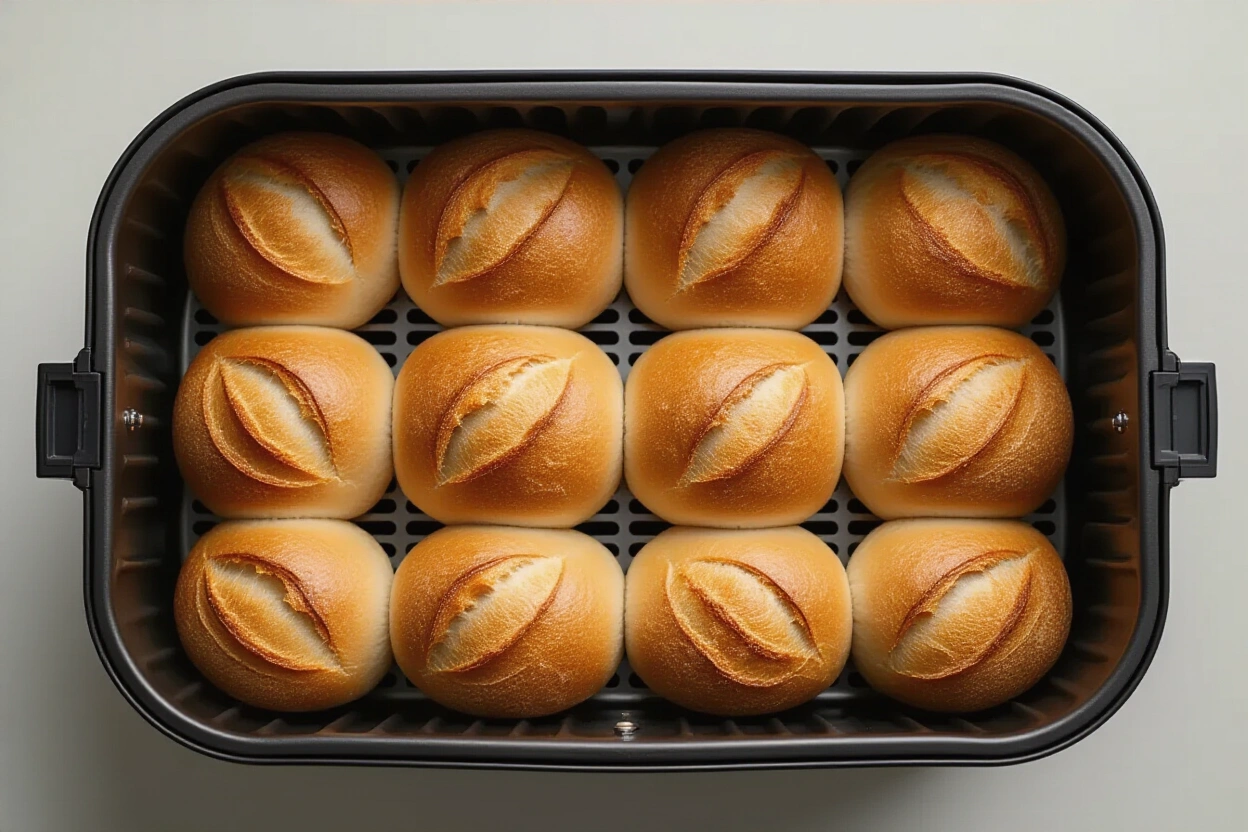
Quick Answer: Best Air Fryer Method for Bread Rolls
The most dependable method is to air fry bread rolls at a moderate temperature, in a single layer, with space between them.
A useful rule of thumb is this: if the tops are browning too quickly while the centers still feel soft or dense, lower the temperature a little and give them a few more minutes. That trade-off usually works better than pushing the heat higher.
For a fast weeknight side, small rolls or dinner rolls are the easiest starting point. Larger rolls, enriched rolls, or rolls that begin frozen may need a lower temperature and a longer finish so the crust does not outpace the crumb.
What Kind of Bread Rolls Work Best in an Air Fryer?
Three kinds of rolls work especially well in an air fryer: fresh dough rolls, frozen rolls, and already baked store-bought rolls you want to warm or refresh.
Fresh dough rolls
Fresh dough gives you the softest texture and the most control over the final result. This is the best choice if the rolls are already shaped and proofed. Because the dough starts raw, the main challenge is making sure the center cooks before the tops color too much.
Fresh dough is a good fit when you want rolls that feel homemade and you have a little more time to monitor them.
Frozen rolls
Frozen rolls are convenient and often the easiest option for beginners. They usually need more time than fresh dough, and they often benefit from a slightly lower temperature so the outside does not brown before the middle thaws and bakes.
This is the right choice when speed and convenience matter more than a from-scratch texture.
Store-bought baked rolls
Already baked rolls are best for reheating or reviving. They do not need to “bake” in the same sense as raw dough; they mostly need warming and a little surface refresh. If you overcook them, they can dry out quickly.
These are ideal when you want dinner rolls to taste freshly warmed with very little effort.
Air Fryer Temperature and Cook Time for Bread Rolls
Because air fryer models vary, think in ranges rather than fixed rules. Basket size, wattage, and airflow all affect how quickly rolls brown.
Here are practical starting ranges:
- Fresh dough rolls: 325°F to 350°F for about 8 to 12 minutes for small dinner rolls, or 10 to 15 minutes for larger rolls.
- Frozen rolls: 300°F to 325°F for about 10 to 16 minutes, depending on size and how frozen they are.
- Already baked rolls for reheating: 300°F to 325°F for about 2 to 5 minutes, just until warmed through.
- Large rolls or very soft enriched rolls: start closer to 300°F to 325°F and add time as needed.
For fully baked bread rolls, a good internal temperature target is 190°F to 200°F in the center of the largest roll.
A few practical decision rules help more than memorizing a single number:
- Smaller rolls brown faster and usually need less time.
- Larger rolls need gentler heat so the center does not stay doughy.
- Frozen rolls usually need the most patience.
- If your air fryer runs hot, reduce the temperature slightly on the first try.
If you are testing a new air fryer, begin conservatively. You can always add a little more time, but you cannot undo over-browned tops.
Do You Need to Preheat the Air Fryer?
Preheating is usually worth it for fresh dough and frozen rolls, especially in basket-style air fryers that can vary from batch to batch. A hot basket helps the rolls start baking right away, which can improve rise and browning.
For already baked rolls, preheating is less important if you are only warming them briefly. If you are reheating a larger batch or want a more even finish, preheating still helps.
The trade-off is simple: preheating improves consistency, while skipping it may slightly lengthen the cook and make browning less even. If your first batch comes out pale or uneven, preheating the next round is often the easiest fix.
How to Arrange Rolls for Even Baking
Air circulation is the real advantage of an air fryer, so spacing matters. Rolls should sit in a single layer with enough room around them for hot air to move. If they touch, the sides that meet will stay softer and may bake unevenly.
For basket-style air fryers, leave visible space between rolls instead of packing the basket full. For oven-style air fryers with trays, use the tray space carefully and avoid crowding the corners, where airflow can be less even.
A practical example: if you are baking six small rolls and they fit comfortably with gaps between them, that batch will usually bake more evenly than eight rolls squeezed together. If you need to make more, cook them in batches rather than forcing them all in at once.
Basket, Tray, Parchment, or Pan: Which Setup Should You Use?
Each setup has a different balance of airflow and cleanup.
Direct basket cooking
Direct basket cooking gives the best airflow, which usually means the most even browning. It is the strongest choice when you care most about texture, especially for fresh dough rolls or reheating a small batch of already baked rolls.
Parchment or a liner
Parchment can make cleanup easier, but it should not block airflow too much. If you use parchment, keep it weighted down by the rolls so it does not lift during cooking.
This is helpful for sticky dough or softer rolls, but too much coverage can reduce browning underneath.
Small pan or tray
A pan can be useful for delicate dough or when you want to move several rolls at once. It can also make handling easier in an oven-style air fryer.
The trade-off is less direct airflow under the rolls, so the bottoms may brown more slowly. A pan or liner is worth it when cleanup or handling matters more than maximum browning.
If you are unsure, begin with the setup that allows the most airflow. You can always add a liner later if cleanup becomes the bigger concern.
Step-by-Step: How to Bake Bread Rolls in an Air Fryer
Here is a simple process you can repeat.
- Choose the roll type. Decide whether you are baking fresh dough, frozen rolls, or warming already baked rolls.
- Preheat if needed. If your air fryer usually runs unevenly, preheat it for more consistent results.
- Arrange the rolls in a single layer. Leave space between them so hot air can move around each roll.
- Use a basket, tray, or liner that fits the job. Direct airflow gives the best browning; a liner or pan may be better for cleanup or delicate dough.
- Bake at a moderate setting. Begin conservatively and check early rather than waiting until the end of a guesswork timer.
- Watch the color and feel. The tops should turn golden, and the sides should feel set rather than soft and wet.
- Finish with butter if desired. Brush or dab on melted butter after cooking for a softer crust and richer flavor.
- Rest briefly before serving. A short rest helps steam settle inside the crumb.
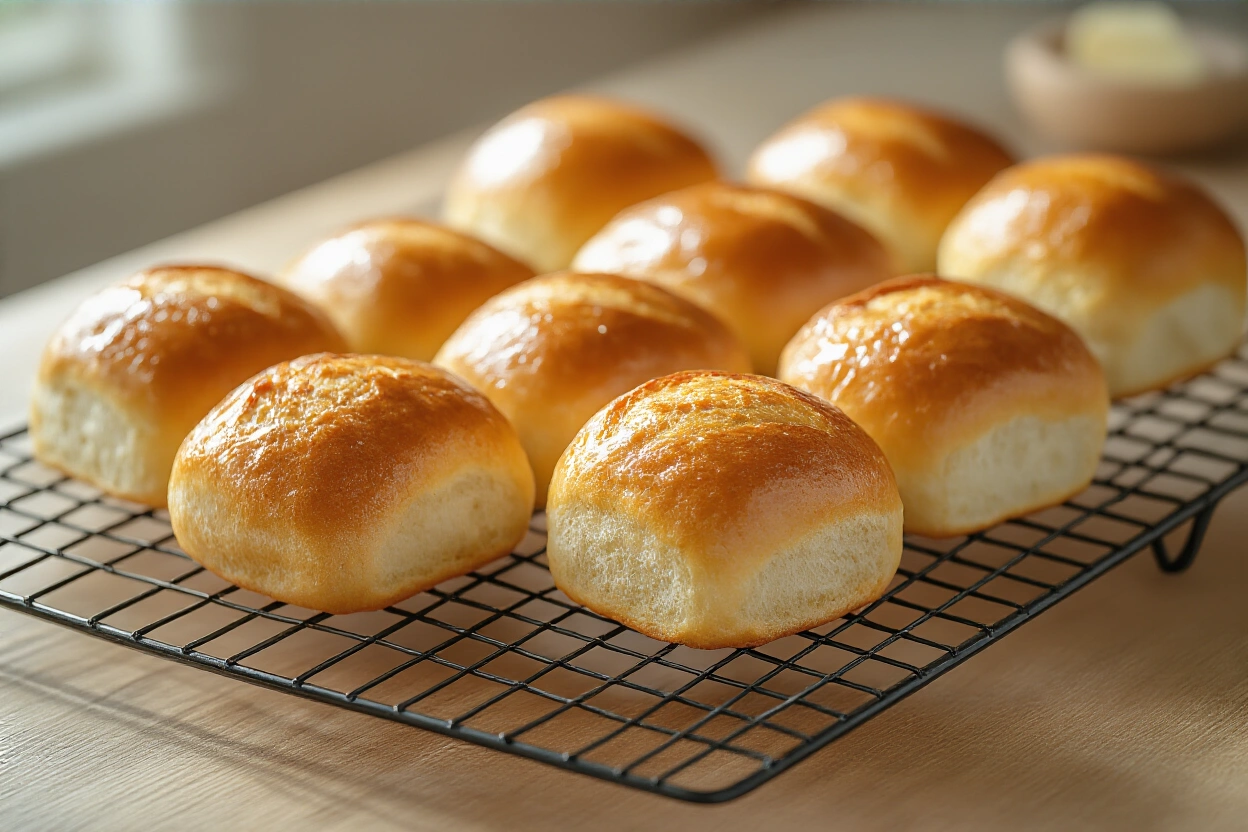
How to Prevent Burnt Tops and Doughy Centers
This is the most common air fryer problem with rolls. The top gets color quickly, but the inside still needs time.
Here are the fixes that usually work best:
- Lower the temperature slightly if the tops brown before the center is done.
- Make the rolls smaller and more uniform so they finish at the same rate.
- Cook in batches instead of crowding the basket.
- Use a gentler finish after baking rather than brushing heavily with butter at the start if browning is already fast.
If the rolls are dark on top but still feel underdone inside, do not assume the answer is more heat. Usually the answer is less heat and a little more time.
How to Tell When Bread Rolls Are Done
Time alone is not enough. Look for a combination of cues.
A finished roll should have:
– a golden to deep golden top, depending on the finish you used,
– sides that feel set when lightly pressed,
– and a center that no longer feels wet or gummy.
For a more exact check, use an instant-read thermometer in the center of the largest roll. Bread rolls are typically done when the internal temperature reaches 190°F to 200°F.
For beginners, the safest habit is to test one roll first, especially when making a new size or using a different air fryer model.
Should You Brush Rolls with Butter, Egg Wash, or Milk?
The finish changes both appearance and texture.
Butter
Butter is the easiest finishing option. Brushed on after cooking, it softens the crust slightly and adds flavor without risking extra browning during the bake.
This is the best choice if you want warm, tender rolls with a classic bakery-style finish.
Egg wash
Egg wash gives a shinier, deeper browned surface. It is best for raw dough rolls when you want a more polished look.
The trade-off is that egg wash can brown quickly, so it is less forgiving in air fryers that run hot.
Milk wash
Milk gives a softer, lighter finish than egg wash. It can help with browning, but it is usually more subtle.
If your air fryer tends to darken the tops quickly, milk is often a gentler choice than egg wash.
As a general rule, apply washes before cooking only if you want that finish baked into the crust. If your main goal is softness, save the butter for after cooking.
How to Reheat Leftover Bread Rolls in an Air Fryer
Already baked rolls do not need much time. They are usually best warmed briefly at 300°F to 325°F for about 2 to 5 minutes, until the outside feels revived and the center is soft again.
If the rolls are a little stale, a light brush of butter before reheating can help the surface stay more pleasant. For very dry rolls, wrap them loosely for part of the reheating time, then uncover them briefly to restore a little texture.
The goal is warmth, not a second bake. If you leave them in too long, they can turn dry fast.
For more storage ideas when you have leftovers, see how to keep bread rolls soft overnight.
Troubleshooting Common Air Fryer Roll Problems
The tops brown too fast
Lower the temperature slightly, move the rolls farther from the top heating area if your model allows it, and check them earlier next time.
The bottoms stay pale
Use a setup with better airflow, such as direct basket cooking, or move away from a thick liner or heavy pan.
The rolls cook unevenly
This usually means the basket is crowded or the rolls are different sizes. Bake fewer at a time and keep the batch more uniform.
The rolls taste dry
They were likely left in too long. Reduce the cook time next batch and brush with butter after baking instead of before.
The centers are still doughy
Give them more time at a lower temperature rather than more heat. That helps the inside catch up without burning the crust.
The parchment lifts or shifts
Make sure the rolls are holding it down securely before cooking. Loose parchment can interfere with airflow and safety.
If you are working with dough that has already fermented and proofed, it helps to understand why that stage matters before baking. This guide on why yeast needs time to ferment bread dough is a useful companion read.
Final Thoughts
Air frying bread rolls works best when you think in terms of airflow, size, and browning speed. Keep the batch small enough for circulation, use moderate heat, and check the rolls before they look fully finished from the outside. Once you learn how your air fryer behaves, the method becomes repeatable and very practical for quick bread at home.
FAQ
Can you bake bread rolls directly in the air fryer basket?
Yes, and that is often the best option for even browning. Direct basket cooking gives the strongest airflow. Use a liner or small pan only when cleanup, sticky dough, or delicate handling matters more than maximum browning.
What temperature is best for bread rolls in an air fryer?
A moderate range is usually best. For fresh dough, start around 325°F to 350°F. For frozen rolls or reheating, 300°F to 325°F is often a better starting point.
How long do bread rolls take in an air fryer?
Small fresh rolls may take about 8 to 12 minutes, frozen rolls about 10 to 16 minutes, and already baked rolls about 2 to 5 minutes for reheating. Size and air fryer style can change the timing, so check early.
How do I know when bread rolls are fully baked?
Look for a golden top, set sides, and a center that is no longer gummy. For a more exact check, the internal temperature should reach 190°F to 200°F.

