
How to Cook Chicken Wings in an Air Fryer for Crispy, Juicy Results
Air fryer wings are one of the easiest ways to get crisp skin without a big pot of oil or a long cleanup. The method is simple, but a few small choices make a noticeable difference: drying the wings well, keeping them in a single layer, and checking doneness with a thermometer instead of guessing.
If you want a reliable first attempt, think in this order: prep for dryness, cook with good airflow, then sauce after the wings are fully cooked. That sequence gives you the best chance of crisp skin and juicy meat.
Quick answer: air fryer chicken wings at a glance
For a good starting point, cook chicken wings in a preheated air fryer at 390°F to 400°F (199°C to 204°C). Most basket-style air fryers do well with a short preheat, usually about 3 to 5 minutes, unless your model’s manual says otherwise.
Use these starting time ranges:
- Fresh wings: about 18 to 22 minutes
- Thawed wings: about 18 to 22 minutes
- Frozen wings: about 24 to 30 minutes
Flip or shake the basket about halfway through, then check the thickest part of the wings for 165°F (74°C). Exact timing depends on wing size, how crowded the basket is, and how your specific air fryer runs.
Here’s the practical version:
- Fresh or thawed wings: usually cook faster and brown more evenly.
- Frozen wings: need more time and a careful doneness check in the center.
- Flipping or shaking: helps the wings brown more evenly on both sides.
- Sauce: add it after cooking if you want the skin to stay crisp.
For food safety guidance, the USDA recommends cooking poultry to 165°F (74°C) at the thickest part. USDA food safety guidance is worth keeping in mind any time you cook chicken.
What you need
A simple wing setup is enough. You do not need a long marinade or a complicated breading station.
Basic ingredients
- Chicken wings, split into flats and drumettes if possible
- Salt
- Black pepper
- A little oil or cooking spray
- Optional: garlic powder, paprika, or other dry seasonings
- Optional: a light dusting of baking powder for extra crispness
- Optional: buffalo sauce or another finishing sauce
Helpful tools
- Air fryer
- Tongs
- Meat thermometer
- Paper towels
- Large bowl for tossing the wings
If you are choosing between fresh and frozen wings, fresh wings usually give you the most predictable texture. Frozen wings are convenient, but they need more time and tend to release more moisture, which can slow browning.
How to prep chicken wings for the crispiest result
Crisp skin starts before the wings ever go into the basket. Moisture is the main thing working against you. If the surface is wet, the skin steams before it browns.
Dry the wings well
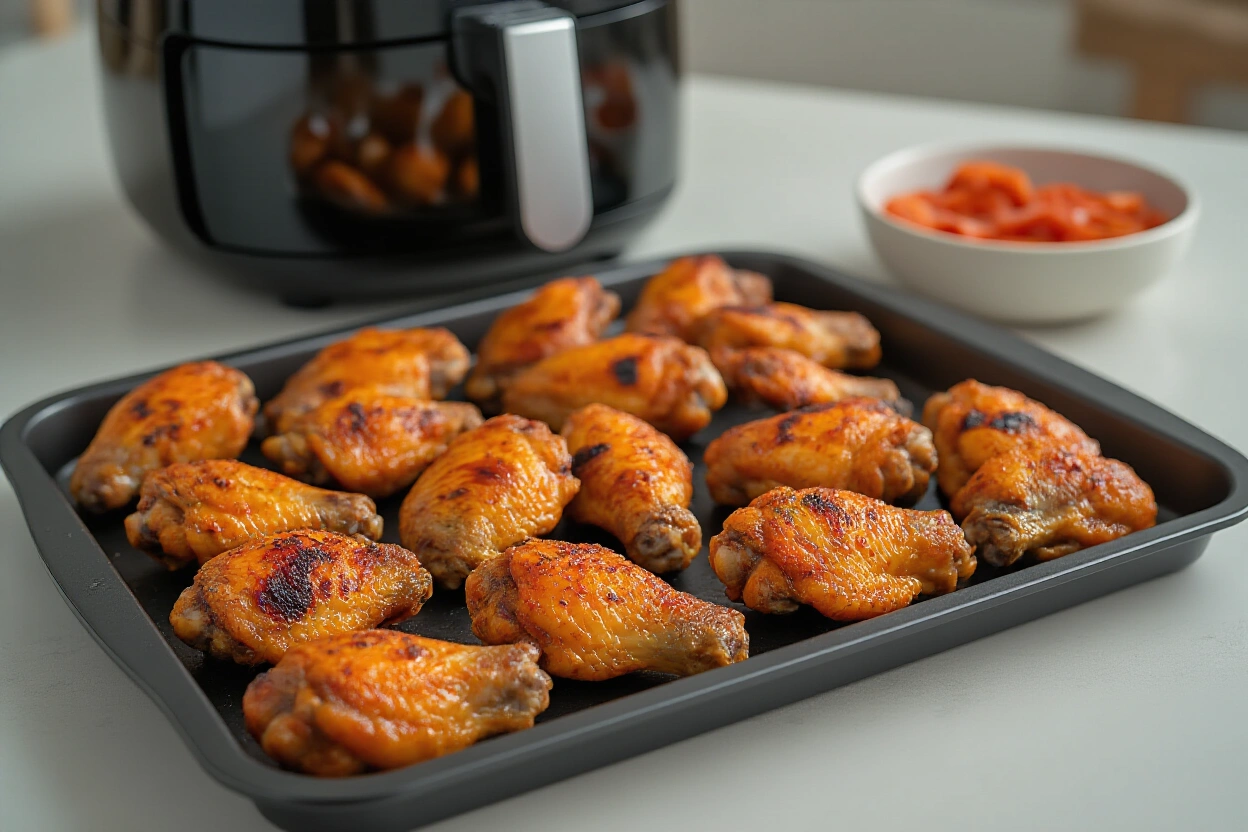
Pat the wings dry with paper towels on all sides. If you have time, let them sit uncovered in the refrigerator for a short while after drying. Even a brief air-dry helps the skin cook up better than wings that go straight from package to basket.
Keep the seasoning light and even
A small amount of oil helps seasonings cling to the skin and encourages browning. You want a thin coating, not a slick surface. Too much oil can make the wings feel greasy instead of crisp.
A simple seasoning mix works well:
- Salt
- Black pepper
- Garlic powder
- Paprika
If you want extra crisp skin, a light dusting of baking powder can help in some air fryer models, especially when the wings are dry enough to brown well. It is optional, and results can vary depending on the air fryer model and how moist the wings are. Use only a small amount and mix it evenly with the dry seasonings. Too much can leave an off taste, so this is a “little goes a long way” ingredient.
Separate the pieces if needed
If your package includes whole wings, cutting them into flats and drumettes makes them cook more evenly. The wing tip can be saved for stock. Flats and drumettes cook at slightly different rates, so a thermometer is still the best way to confirm doneness.
Step-by-step: how to cook chicken wings in an air fryer
This is the method I’d give a beginner who wants a dependable result without a lot of guesswork.
1) Preheat the air fryer if your model benefits from it
For a simple default, preheat a common basket-style air fryer for 3 to 5 minutes at 390°F to 400°F (199°C to 204°C) if your model allows it. Some air fryers heat quickly and hold temperature well; others brown more evenly with a short preheat. If your model has a preheat setting, use it. If not, a brief empty preheat can help the wings start crisping sooner.
2) Arrange the wings in a single layer
Place the wings in the basket with space between them. Air fryers work by moving hot air around the food, so crowding slows down browning and can leave you with soft skin.
If your basket is small, cook the wings in batches. That is usually better than forcing everything in at once.
3) Cook, then flip or shake partway through
For fresh or thawed wings, cook at 390°F to 400°F (199°C to 204°C) for about 18 to 22 minutes, flipping or shaking the basket halfway through. For frozen wings, plan on 24 to 30 minutes at the same temperature, with a flip or shake halfway through and a thermometer check near the end.
Midway through cooking, turn the wings over or shake the basket. This helps both sides brown more evenly and reduces the chance of pale spots where the wings were touching the basket.
4) Check the temperature near the end
Use a meat thermometer in the thickest part of the wing, avoiding the bone. The wings are done when they reach 165°F (74°C). If they are close but not there yet, give them a little more time and check again.
5) Rest briefly, then sauce if you want
A short rest helps the juices settle. If you want sauced wings, toss them after cooking, not before. That keeps the skin from softening too early.
Cook time and temperature guide for fresh vs frozen wings
Exact timing changes with wing size, air fryer model, and basket capacity, so treat these as practical starting points rather than a universal rule.
| Wing type | Best starting approach | What to watch for |
|---|---|---|
| Fresh wings | 390°F to 400°F (199°C to 204°C) for about 18 to 22 minutes | Browning, even cooking, 165°F internal temperature |
| Thawed wings | 390°F to 400°F (199°C to 204°C) for about 18 to 22 minutes | Browning, even cooking, 165°F internal temperature |
| Frozen wings | 390°F to 400°F (199°C to 204°C) for about 24 to 30 minutes | Center temperature and moisture release |
| Larger wings | Add a few extra minutes as needed | Bone-adjacent meat can lag behind the surface |
| Small or thin wings | Check earlier to avoid overcooking | Skin can brown faster than the meat finishes |
Fresh wings vs frozen wings
Fresh wings are the easier path if you want crisp skin and predictable timing. They dry better, season more evenly, and usually brown more reliably.
Frozen wings are convenient when time matters more than perfect texture. They can still work well, but you should expect a longer cook and a more careful thermometer check. If the wings are frozen together in a block, separate them as soon as they loosen enough to do so safely.
Basket size matters
A full basket slows airflow. If you are cooking for a crowd, batch cooking is often the better choice. It takes a little longer overall, but the texture is usually better than trying to cram everything into one round.
How to tell when chicken wings are fully cooked
Color is not enough. Wings can look browned on the outside and still be undercooked near the bone. The safest and most reliable check is temperature.
Insert a meat thermometer into the thickest part of the wing, taking care not to touch bone. When the reading reaches 165°F (74°C), the chicken is safe to eat according to USDA guidance.
If you are cooking frozen wings, this check matters even more. The outside can brown before the center has finished cooking, especially in a smaller basket or with larger pieces.
How to make air fryer wings extra crispy
A few technique choices have the biggest impact.
Keep the surface dry
Dry wings brown better. If you skip this step, the skin often turns out softer than expected, even if the wings are fully cooked.
Avoid crowding
This is the most common reason air fryer wings disappoint. When pieces are stacked or packed too tightly, they steam instead of crisp.
Use baking powder carefully
A light coating of baking powder can help the skin crisp, especially on plain wings. It is optional, not required. If you use it, mix it evenly with the dry seasonings so no one bite tastes powdery.
Give the wings a final minute or two if needed
If the wings are done internally but the skin still looks a little pale, a short extra burst of heat can help. Watch closely at this stage. A minute or two can make the difference between crisp and dry.
If you want a broader look at why spacing and airflow matter in this appliance, this guide on why air fryer food cooks unevenly is a helpful companion read.
When and how to sauce wings without losing crispiness
Sauce changes texture quickly. If you coat the wings before cooking, the skin usually softens. That is why most cooks finish air fryer wings with sauce after they are done.
Best timing for sauce
Toss the wings in sauce after they come out of the air fryer and after they have been checked for doneness. If you want a stronger glaze, you can return them to the air fryer briefly after saucing, but that works best with light coatings rather than thick, sticky ones.
Plain wings vs sauced wings
Plain wings stay crisp longer. Sauced wings bring more flavor and are often the goal for buffalo-style wings, but the coating softens the skin sooner. If texture matters most, serve the sauce on the side or toss lightly just before serving.
A simple buffalo finish
A classic buffalo sauce works well because it coats without needing a long simmer or a heavy glaze. Toss gently so you do not strip the skin. Serve right away for the best texture.
Fresh vs frozen wings: which should you choose?
Here is the simplest decision rule.
Choose fresh wings if you want:
– Better crisping
– More predictable timing
– Easier seasoning control
Choose frozen wings if you want:
– Less prep
– A faster decision at the store or in the freezer
– A workable weeknight option
For a first attempt, fresh wings are the safer bet. Frozen wings are still practical, but they ask for a little more patience and a thermometer check.
Common mistakes to avoid
A few avoidable errors cause most of the disappointing batches.
Not drying the wings
Wet wings cook, but they rarely crisp well. Drying is a small step with a big payoff.
Overcrowding the basket
If the wings are stacked, the hot air cannot circulate properly. That leads to uneven browning and softer skin.
Saucing too early
Sauce before cooking and you lose crispness. Sauce after cooking and you keep more texture.
Trusting appearance alone
Golden skin is encouraging, but it is not a guarantee of doneness. Temperature is the final check that matters.
Forgetting that air fryer models vary
Some baskets run hotter, some circulate air more aggressively, and some need more shaking than others. If your first batch cooks faster or slower than expected, adjust the next one rather than forcing a fixed timing.
If your wings brown unevenly, this article on fixing uneven air fryer cooking can help you troubleshoot the airflow side of the problem.
Serving and storage basics
Air fryer wings are best served right away, while the skin is still crisp. If you need to hold them briefly, place them on a rack rather than sealing them in a covered container, which traps steam.
For leftovers, cool the wings promptly and store them in the refrigerator in a covered container. Reheat in the air fryer if you want to bring back some of the texture. A microwave will warm them, but it usually softens the skin.
If you use parchment or liners in your basket, make sure they do not block airflow. This guide on air fryer liner safety explains the trade-offs clearly.
A simple way to think about the whole process
If you remember only four things, make them these:
- Dry the wings well.
- Cook them in a single layer.
- Flip or shake partway through.
- Confirm 165°F (74°C) before saucing.
That sequence is what turns a basic batch into wings that are crisp on the outside and properly cooked inside.
Frequently asked questions
Do I need to preheat the air fryer?
Preheating is often helpful, especially if your model tends to brown unevenly or you want a more consistent start. A short preheat of about 3 to 5 minutes is a good default for many basket-style air fryers, but follow your model’s manual if it gives a different recommendation.
Can I cook breaded wings this way?
Yes, but breaded wings behave differently from plain wings. The coating can brown faster and may need a more careful watch so it does not over-darken before the chicken is fully cooked.
Should I use oil or cooking spray?
A light coating helps the seasonings stick and can improve browning. Heavy oil is not necessary and can work against crispness.
Why are my wings soggy?
The usual causes are moisture, overcrowding, or sauce added too early. If you fix those three things, the texture usually improves right away.
Can I cook flats and drumettes together?
Yes. They can cook at slightly different rates, so check the thickest part of each piece rather than assuming they all finish at the same time.
What if my wings are frozen together?
Let them cook just enough to separate safely, then arrange them in a single layer. Once they loosen, separating them helps them cook more evenly.
Do air fryer wings taste like oven-baked wings?
They can be similar, but the air fryer usually gives a faster route to browned skin with less cleanup. Oven baking can still work well, but it generally takes longer to get the same level of crispness.
What’s the safest way to know they’re done?
Use a meat thermometer and check the thickest part of the wing. The safe target is 165°F (74°C).
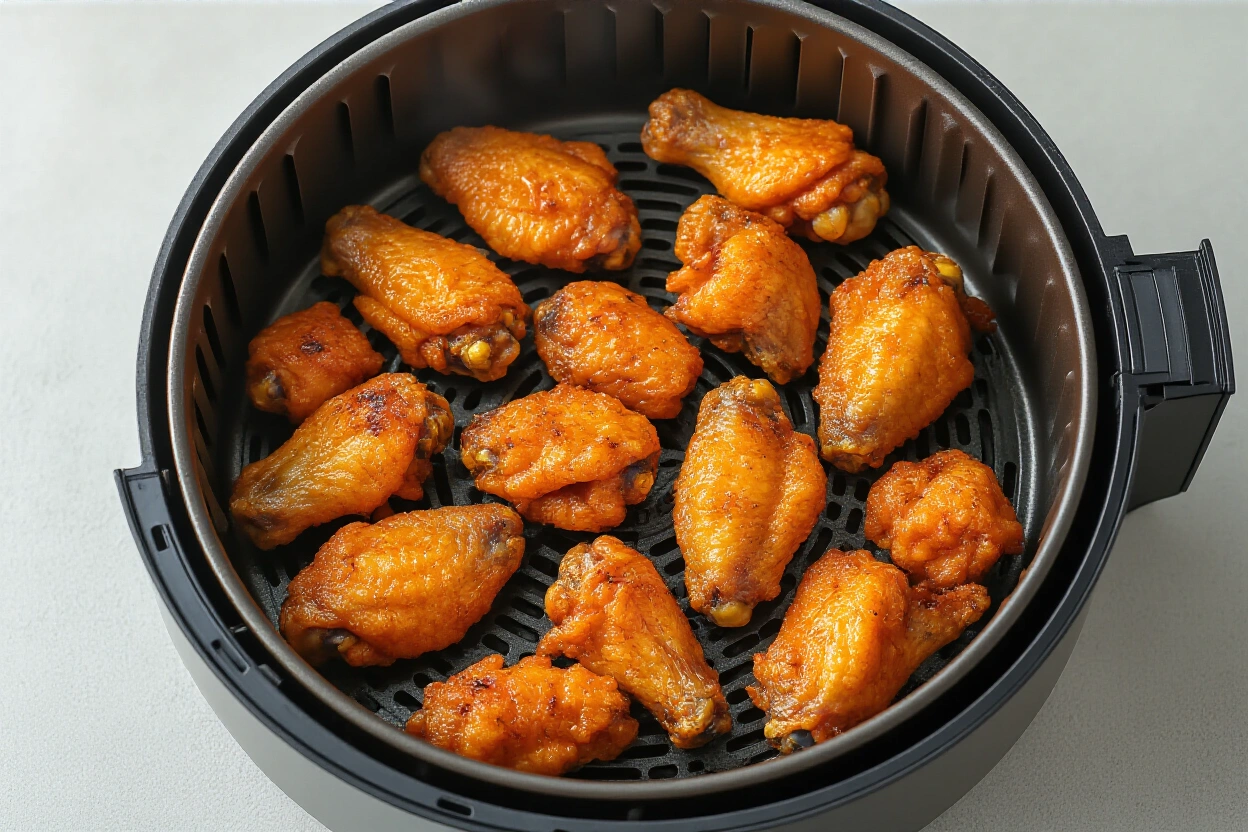
Can I add sauce and put them back in the air fryer?
Yes, briefly, if you want a set glaze. Keep the second pass short so the sauce does not burn or make the skin too soft.
Is baking powder necessary?
No. It is optional. Used lightly, it can help with crispness, but dry wings, good spacing, and proper airflow matter more.
When should I consult a pastry chef?
If you are cooking for a large group and want to scale the method without losing texture, a chef can help you plan batch sizes, finishing times, and holding methods so the wings stay crisp when served.

