
How to Fix Cookie Dough That’s Too Sticky Before You Bake
Sticky cookie dough can be frustrating, especially when you’re ready to scoop, roll, or cut it and it clings to everything in the bowl. The good news is that sticky dough is often fixable without starting over. In many cases, the dough simply needs time to firm up. In others, it needs a small adjustment because the ingredient balance is off.

The key is to diagnose the cause before changing the dough. If you add flour too quickly, you can turn a soft, workable dough into something dry and dense. If you chill a dough that is truly too wet, it may still be messy afterward. The goal is not to make cookie dough dry. The goal is to make it manageable enough to portion and bake with the texture the recipe was meant to deliver.
Why Cookie Dough Gets Too Sticky
Sticky cookie dough usually comes from one of five things: warm fat, too much moisture, an ingredient imbalance, under-chilling, or mixing that changed the dough’s structure.
Warm butter or melted fat
Butter that is too soft can make dough feel greasy and loose. Melted butter makes that effect stronger. The dough may look glossy, slump in the bowl, or stick to your hands in a way that feels more like paste than dough. This is common in chocolate chip cookie dough and other drop cookies when the butter sat out too long.
Too much liquid or not enough dry ingredients
A recipe can also become sticky if the wet-to-dry ratio is off. That can happen from measuring flour loosely, using a large egg, or adding a liquid ingredient a little too generously. Cookie dough from a mix can do this too if the mix was not measured carefully or if extra liquid was added.
Under-chilling
Some doughs are sticky simply because they are warm. After mixing, the butter may be soft, the sugars may be dissolved enough to make the dough loose, and the whole batch may need a rest in the refrigerator before it behaves properly.
Overmixing
Once flour is added, overmixing can make dough feel tighter and more elastic, but it can also make it awkward to handle. In some recipes, the dough may seem sticky because the structure is not fully developed yet. In others, it may be sticky because the mixer warmed the dough more than expected.
Humidity and room temperature
Warm, humid kitchens can make dough feel softer than usual, especially if the recipe already leans tender. This does not always mean the recipe is wrong. Sometimes the dough just needs a little help from the refrigerator or a better handling method.
How to Tell Whether Sticky Dough Is a Problem or Just Soft
Not every sticky dough needs a fix. Some cookie dough is supposed to be soft and tacky before baking. That is especially true for many drop cookies.
A practical rule of thumb is to match the dough to the cookie style: if it is meant to be scooped or dropped, it can usually stay softer as long as it holds a mound on the spoon or scoop. If it is meant to be rolled or cut, it should feel firmer and release cleanly from your hands and the counter after chilling.
Here is a simple handling test:
- Soft but workable: you can scoop it, it holds shape in the scoop, and it only lightly clings to your fingers
- Too sticky: it smears on the bowl, sticks heavily to the scoop or your hands, and won’t release cleanly
- Too wet: it spreads flat, slumps, or won’t form even a rough mound
If you can scoop it and portion it with minimal mess, the dough may be soft rather than problematic. If you cannot scoop or roll it without it dragging and sticking badly, it likely needs chilling or a small adjustment.
A dough can be soft and still bake well. Softness is not the problem. The problem is when the dough stops being easy to portion or shape.
First Fix: Chill the Dough Before Adding Anything
If the dough feels warm, greasy, or overly loose but otherwise looks balanced, chilling is usually the safest first move. Cold butter firms up the dough and often makes it much easier to handle without changing the recipe.
Wrap the bowl or cover the dough tightly with plastic wrap and refrigerate it. Then check it again after a short rest. If it feels more manageable, you can shape or scoop it from there. This is especially useful for chocolate chip cookie dough and many mix-based doughs that were simply mixed when too warm.
Chilling is the better first choice when:
- the dough feels soft because the butter was warm
- the dough was mixed in a warm kitchen
- the dough is sticky but still holds together
- the recipe is meant to be scoop-and-bake rather than rolled
Chilling is not the same as fixing an ingredient imbalance. If the dough is still very wet after resting, you may need a small flour adjustment. But chilling first avoids overcorrecting a dough that only needed time to firm up.
For more on how chilling affects cookie texture and spread, see how long to chill chocolate chip cookie dough.
When to Add Flour and How Much to Add
If the dough is still too sticky after chilling, add flour cautiously. A small adjustment can help, but too much flour can make cookies dry, dense, or dull in flavor.
Start with 1 tablespoon at a time for small batches or 1 to 2 tablespoons at a time for larger batches. Mix just until incorporated, then pause and reassess before adding more. The safest approach is to make one small addition, stop mixing as soon as the flour disappears, and test the texture again. That way, you avoid turning a fixable dough into an overfloured one.
Signs flour may help
Use a small flour adjustment if the dough:
- still smears after chilling
- feels wet rather than just soft
- won’t hold a scoop or rough ball shape
- sticks to the bowl even when cold
Signs not to keep adding flour
Stop adding flour if the dough starts to:
- feel stiff or crumbly
- lose its smooth, cohesive look
- crack when you try to portion it
- bake into a dry or heavy cookie
That trade-off matters. Flour makes dough easier to handle, but every addition changes the final texture. If you are making a delicate cookie, even a little extra flour can shift the result more than you expect.
If you suspect the batch is already overfloured, this guide on why too much flour makes cookies dry can help you spot the warning signs before baking.
How to Handle Sticky Dough Without Changing the Recipe
Sometimes the best fix is not changing the dough at all. If the dough is close to right but annoying to work with, handling tools can solve the problem without affecting texture.
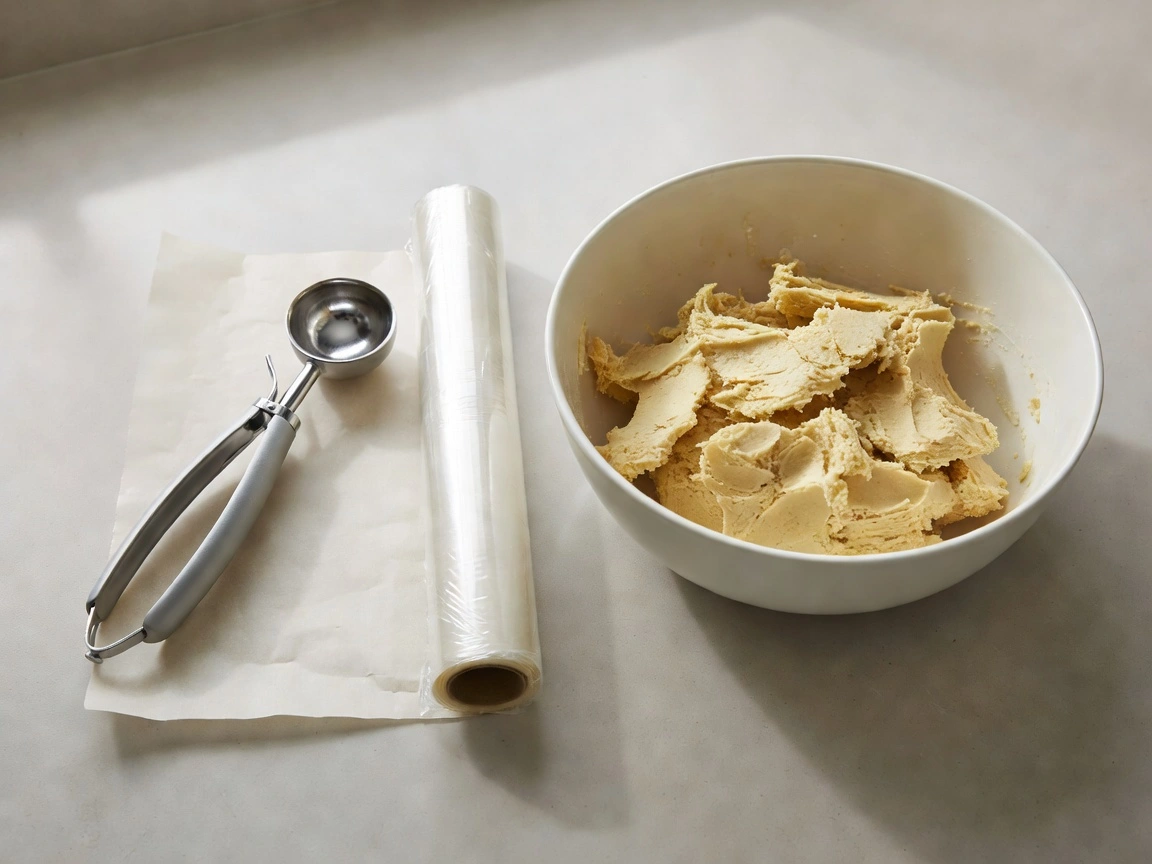
Use a cookie scoop
A cookie scoop is one of the easiest ways to portion sticky dough. It reduces contact with your hands and gives you more consistent portions. For drop cookies, this often solves the problem completely.
Line your tray with parchment paper
Parchment keeps sticky dough from grabbing the pan and makes cleanup easier. It also helps if the dough softens slightly while you work, because the portions can be transferred more cleanly.
Lightly grease your hands
If you need to roll dough into balls, a very light coating of neutral oil or softened butter on your hands can help. Use just enough to reduce sticking. Too much can make the dough greasy.
Use plastic wrap for rolling
For cut-out cookies, place the dough between sheets of plastic wrap or parchment and roll it there. This keeps the rolling pin from sticking and helps you avoid adding extra flour just to manage the surface.
These handling methods are especially useful when the dough is supposed to stay tender. They let you preserve the recipe while still making the dough easier to portion.
How the Fix Changes by Cookie Type
Different cookie styles tolerate stickiness differently. A dough that works well for one style may be a poor fit for another.
| Cookie type | What sticky dough means | Best first fix | What to watch for |
|---|---|---|---|
| Drop cookies | Often still usable if it is soft and scoopable | Chill briefly, then use a scoop | Too much flour can make them thick and dry |
| Cut-out cookies | Usually need a firmer dough to roll cleanly | Chill longer before adding flour | Sticky dough can stick to the rolling pin and tear during transfer |
| Chilled cookie dough | Often improves with rest in the refrigerator | Chill first, then reassess | If it still spreads or smears, the ratio may need adjustment |
Drop cookies
Drop cookie dough is often meant to be softer than rolled dough. If it’s sticky but holds a mound, you may only need a scoop and a tray lined with parchment. Chilling can make the biggest difference here.
Cut-out cookies
Cut-out dough needs structure. If it sticks to the counter or rolling pin, a longer chill is usually more helpful than extra flour at first. If the dough remains tacky after resting, a very small flour adjustment may be necessary.
Chilled dough recipes
Some recipes are designed to be refrigerated before baking. If those doughs are sticky right after mixing, that may be normal. A rest in the refrigerator often brings them into range.
Signs You’ve Overcorrected the Dough
The most common mistake is solving stickiness by adding too much flour. Once that happens, the dough changes from sticky to dry, and the cookies usually lose tenderness.
Watch for these signs:
- the dough feels rough or sandy
- it cracks when shaped
- it refuses to come together smoothly
- the baked cookies look thick, pale, or dry
If you reach that point, stop adjusting. More flour will not restore the original texture. At that stage, the dough is usually better baked as-is if it is still workable, or remade if it has become too dry or crumbly to portion cleanly.
What to Do If the Dough Is Still Sticky After Chilling
If chilling helps but does not fully solve the problem, use this decision path:
- Check the texture again. If the dough is now scoopable or rollable, proceed with handling aids.
- If it is still too wet, add a very small amount of flour. Mix minimally and reassess.
- If the dough is close but sticky only on the surface, use parchment, scoops, or lightly greased hands.
- If the dough still seems loose after a second chill and a small flour adjustment, stop trying to “fix” it. Bake it as-is if it will hold a portion, or remake the batch if it is still too wet to scoop, roll, or shape without falling apart.
That last step is not failure. It is simply the point where repeated fixes start damaging the texture more than they help. If the dough keeps changing from sticky to dry as you adjust it, the recipe may have been measured incorrectly or the ingredients may have been too warm from the start.
Can Sticky Cookie Dough Still Bake Well?
Yes, often it can. Sticky dough is not automatically bad dough. If it is only slightly tacky and still holds its shape, it may bake into a perfectly good cookie.
What stickiness affects most is spread and handling. Softer dough can spread more in the oven, especially if baked right away. That can be useful for thin, chewy cookies, but it can also flatten cookies that were meant to stay thicker.
If the dough is close to right, baking it after a brief chill may be enough. If it is truly too sticky, the cookies may bake unevenly or lose definition. The aim is to get the dough into a workable state before it goes on the tray.
Quick Decision Guide
If you need the fastest possible fix, use this order:
- Dough feels warm or greasy: chill first
- Dough is still wet after chilling: add a small amount of flour
- Dough is sticky but holds shape: use a scoop, parchment, or lightly greased hands
- Cut-out dough won’t roll cleanly: chill longer before changing the recipe
- Dough has become dry from overcorrection: stop adjusting and reassess whether to bake or remake
That sequence protects texture. It keeps you from adding flour too soon and helps you choose the least disruptive fix first.
Final Takeaway
The best way to fix sticky cookie dough is to match the fix to the cause. Warm dough usually needs chilling. Wet dough may need a small flour adjustment. Soft but workable dough often just needs better handling tools. Once you know the difference, the problem becomes much easier to solve without ruining the batch.
FAQ
Should sticky cookie dough be chilled before baking?
Usually, yes. If the dough feels warm, greasy, or too soft to scoop cleanly, chilling is the safest first step. It often firms the butter and makes the dough easier to handle without changing the recipe.
How much flour should I add to sticky cookie dough?
Start small: about 1 tablespoon at a time for small batches or 1 to 2 tablespoons for larger batches. Mix minimally between additions and stop as soon as the dough becomes workable.
How do I know if cookie dough is too sticky or just soft?
Soft dough can still be scooped or rolled with only light sticking. If it smears on the bowl, clings heavily to your hands, or won’t hold a mound, it is likely too sticky and may need chilling or a small adjustment.
When should I remake sticky cookie dough instead of fixing it?
Remake it if the dough stays loose after chilling and a small flour adjustment, or if it becomes too dry, crumbly, or cracked from repeated fixes. If it can still be portioned, baking it as-is is often better than overcorrecting it.