
How to Fix Cookies That Spread Too Much: Practical Baking Fixes for Thicker, Better-Shaped Cookies
Flat, thin, misshapen cookies usually come from a few predictable places: butter that is too warm, dough that is too loose, too little flour, too much sugar, or a baking setup that lets the dough melt before it sets. Once you know which part of the process is failing, the fix becomes much simpler.
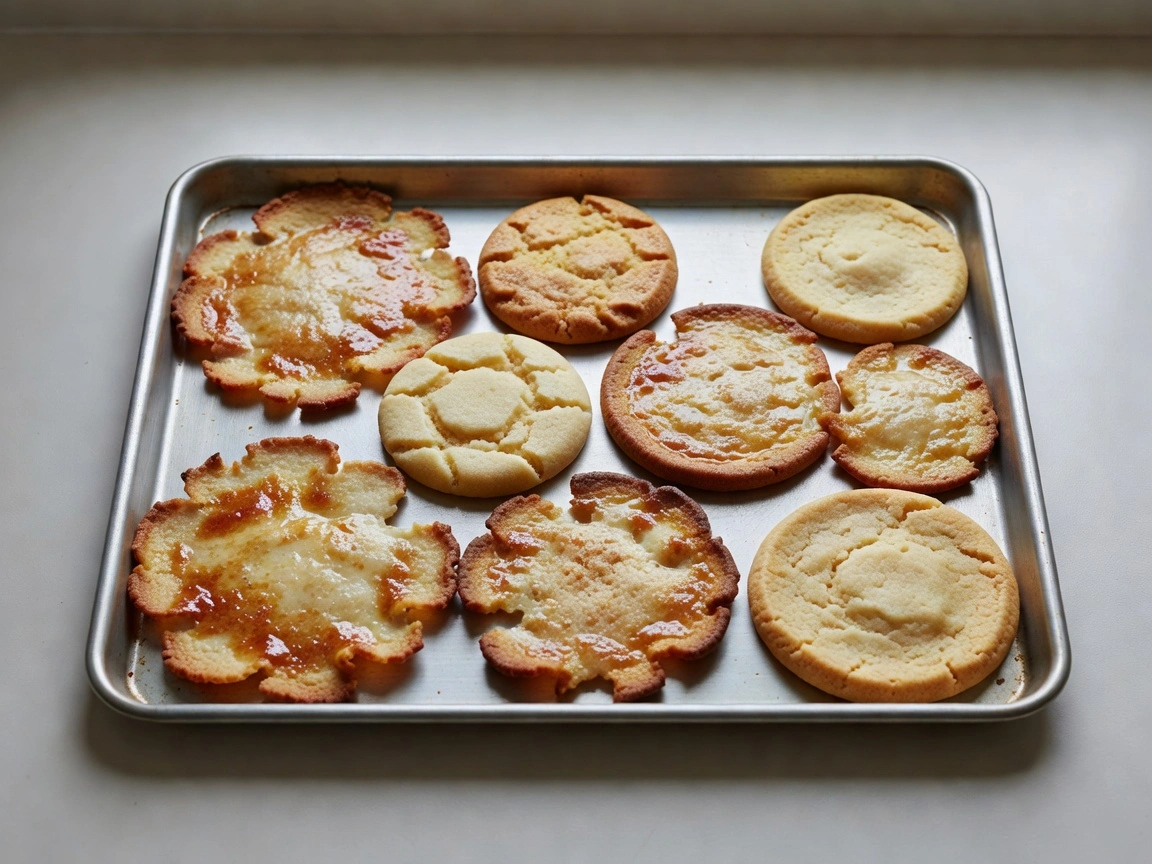
If you want the fastest path, use this order:
- Warm dough? Chill it first.
- Still loose after chilling? Add flour gradually.
- Spread keeps happening across batches? Check the recipe balance and oven temperature.
That simple sequence solves a lot of cookie problems without guesswork.
Why Cookies Spread Too Much
Cookie spread happens when the fat melts faster than the dough structure can set. Butter softens and melts in the oven. Sugar dissolves and encourages spread. Flour, eggs, and leavening help the dough hold shape long enough to bake into something thicker.
When one of those parts is out of balance, cookies flatten. The most common signs are easy to spot:
- Dough feels greasy or very soft before baking
- Scooped dough slumps on the tray
- Cookies bake into wide, thin rounds with crisp edges
- Different trays bake differently, especially if one sheet pan is warm
The key is not to guess. A warm dough problem needs a different fix than a flour problem.
A quick troubleshooting table
| What you see | Most likely cause | Best first fix |
|---|---|---|
| Dough feels soft, shiny, or greasy | Butter is too warm or partially melted | Chill the dough before baking |
| Cookies spread fast in the oven | Dough is under-chilled or the pan is warm | Chill portions and use a cool sheet pan |
| Cookies are flat and fragile | Not enough flour or dough was measured too lightly | Add a small amount of flour, gradually |
| Cookies spread unevenly | Oven heat or pan temperature is inconsistent | Rotate trays and test with a cool pan |
| Cookies are thin but not greasy | Recipe may be high in sugar or low in flour | Adjust the recipe next time |
Start With the Fastest Fixes
If you already have dough mixed, do the simplest things first. These changes often improve spread without changing the recipe.
Chill the dough before baking
If the dough is soft, portion it first and chill the scoops on a tray. Cold dough holds its shape longer in the oven, which often gives the flour and eggs enough time to set before the butter fully melts.
For practical timing, try this:
- Short chill: about 15 to 30 minutes for dough that is only slightly soft
- Longer chill: about 1 to 2 hours when the dough is noticeably loose or the kitchen is warm
- Overnight chill: useful for some recipes when you want the dough very firm and easier to portion
If the dough still feels too soft after chilling, freeze the portioned dough briefly and test one cookie. That can be a useful next step when you need a faster fix than a long refrigerator rest.
This is especially useful for chocolate chip cookies, sugar cookies, and any dough that feels sticky or greasy after mixing. If the dough has been sitting on the counter while you preheated the oven, it may already be too warm to bake well.
Use a cool sheet pan
A hot pan starts melting the dough before the cookie has a chance to rise and set. If you are baking several batches, let the pan cool between rounds or use a second sheet pan so one can rest while the other bakes.
That small step can make a noticeable difference, especially with buttery doughs.
Make the cookies slightly smaller
Large portions spread more simply because they take longer to set. If your recipe is giving you trouble, try baking a smaller test batch. A modest size reduction can improve shape without changing the dough itself.
Check the baking surface
Parchment paper and silicone mats do not always behave the same way. Parchment often gives cookies a little more grip, which can help them hold shape better. Silicone mats can be useful for even baking, but some cookie formulas may spread more on them.
If your cookies flatten on silicone but look better on parchment, that is useful information for future batches.
Check the Dough: Butter, Flour, Sugar, and Eggs
When cookie spread becomes a pattern, the ingredients are usually telling the story.
Butter: room temperature is not the same as warm
Butter should be pliable for creaming, but not greasy or partially melted. If it is too soft, it blends into the dough too easily and the cookies may spread before the structure sets.
A useful visual test: if the butter looks glossy, oily, or slumps immediately when pressed, it may be too warm. Properly softened butter should still hold some shape.
Melted butter creates a different texture entirely. It can work in some recipes, but it usually leads to denser, flatter cookies unless the formula was designed for it.
Flour: too little can make cookies collapse
Flour provides structure. If the dough was measured lightly, especially by volume, the recipe may contain less flour than intended. That is one reason a cookie recipe can work beautifully for one baker and spread too much for another.
Measuring by weight is more reliable than scooping cups, because it reduces the chance of under-measuring. If you want to understand why flour quantity matters so much, I also explain the opposite problem in why too much flour makes cookies dry.
If your dough seems loose even after chilling, add flour in very small amounts. Mix briefly, then test one or two cookies before changing the whole batch. Too much flour can make cookies dry, cakey, or tough.
Sugar: more sugar usually means more spread
Sugar melts and liquefies as cookies bake. A dough with a high sugar ratio often spreads more than one with a more balanced formula. Granulated sugar tends to encourage spread and crispness, while brown sugar usually brings more moisture and chew, which can help cookies hold shape a little better.
That does not mean brown sugar automatically fixes spread. Too much of any sugar can still weaken the structure. But if a recipe uses mostly granulated sugar and the cookies are coming out very flat, the sugar balance may be part of the reason.
Eggs: helpful, but not a cure-all
Eggs add moisture and structure. If a recipe is low in egg relative to the amount of butter and sugar, the dough may not have enough support. On the other hand, adding an extra egg without adjusting the rest of the recipe can make the dough softer, so this is usually a recipe-design issue rather than a quick rescue move.
If the dough already feels loose, I would usually chill or adjust flour before trying to change the egg balance.
How Mixing and Chilling Affect Spread
Mixing and resting seem simple, but they have a big effect on cookie shape.
Overmixing after adding flour can weaken the dough
Once flour goes in, the goal is to mix just until combined. Heavy mixing at that stage can make the dough warmer and can also develop the gluten more than the recipe needs. That can lead to cookies that spread unpredictably or bake with a tougher texture.
A better habit is to stop mixing as soon as no dry streaks remain.
Chilling gives the dough time to firm up
Chilling is one of the most reliable ways to reduce spread because it firms the butter and helps the dough hydrate more evenly. That extra rest often makes the dough easier to portion and helps the cookies bake thicker.
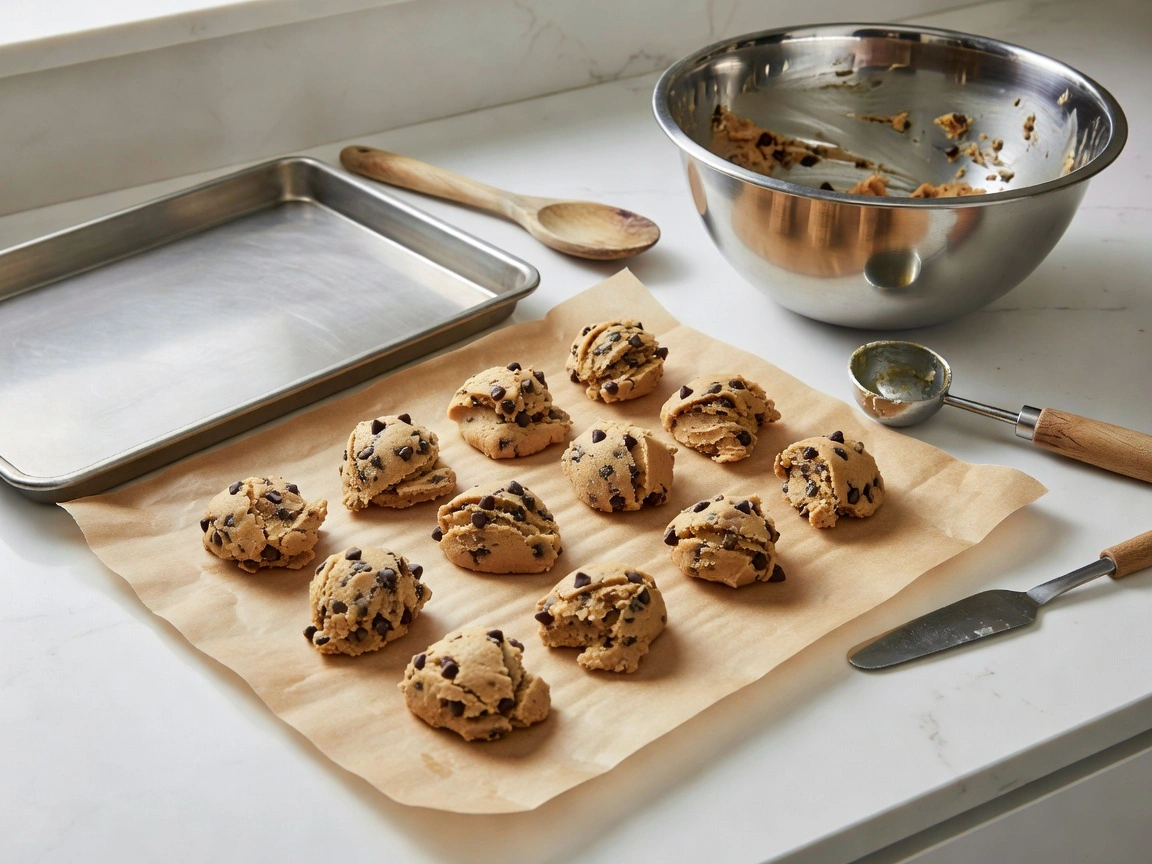
If a recipe keeps spreading, chill a small test batch first. If the chilled dough bakes better, you have learned something important without rewriting the recipe.
Freezing can help in a pinch
If you need to bake soon, freezing the portioned dough briefly can help it hold shape better than baking it warm. This is especially useful when the kitchen is hot or the dough has become soft during mixing.
The trade-off is convenience: freezing takes more planning, but it can rescue a dough that is too warm to bake well.
Bake on the Right Pan at the Right Temperature
Even a well-made dough can spread too much if the pan and oven are working against it.
Sheet pan temperature matters more than many bakers realize
A warm pan starts the melt too soon. If you bake one tray after another, the second tray may spread more simply because the metal is hotter. Letting the pan cool between batches is a practical fix that does not require changing the recipe.
Oven temperature accuracy matters
If your oven runs cooler than the dial suggests, cookies may stay soft too long before they set. That extra time can lead to more spread. If your cookies are consistently flatter than expected, an oven thermometer is worth using so you can see whether the actual heat matches the setting.
I would not raise the temperature blindly, though. Higher heat can help cookies set faster, but too much heat may brown the edges before the center finishes baking.
Parchment paper vs. silicone baking mats
Parchment often gives a little more control over spread because it tends to behave differently than silicone under the dough. Silicone mats can encourage more spread in some formulas because the surface is very slick and insulates the pan differently.
If your cookies are thin on silicone, try parchment for the next batch. That comparison tells you whether the surface is part of the problem.
When the Recipe Itself Is the Problem
Sometimes the issue is not your technique. Some cookie formulas are simply designed to spread more.
Recipes with a high butter content, a lot of sugar, or very little flour will naturally bake flatter than sturdier formulas. Thin lace-style cookies, some shortbread variations, and certain chewy cookies are meant to spread more than a tall bakery-style cookie.
Here is how to tell whether you are dealing with a recipe issue or a technique issue:
- Likely technique problem: the cookies spread only on one batch, one tray, or one baking day
- Likely technique problem: the dough was warm, sticky, or greasy before baking
- Likely technique problem: the cookies improved after chilling or using a cool pan
- Likely recipe problem: the cookies spread the same way every time, even after chilling and using a cool pan
- Likely recipe problem: the dough feels very soft even when measured and mixed carefully
- Likely recipe problem: the recipe is very high in butter or sugar and low in flour for the style you want
A small adjustment can help, but there is a point where a different recipe is the better choice. If you keep fighting the same formula, it may not be built for the shape you want.
How to Rescue Dough That Is Already Too Soft
If the dough is already mixed and looks too loose, rescue it carefully.
Step 1: Chill before changing ingredients
This is the safest first move. Many doughs that seem too soft after mixing improve once the butter firms up. Start with a short chill of 15 to 30 minutes. If the dough is still slack, give it a longer chill of 1 to 2 hours before changing the formula.
Step 2: Bake one test cookie
Portion one cookie and bake it on a cool sheet pan. If it still spreads too much after chilling, you know the problem is likely in the formula, not just the temperature.
Step 3: Add flour in small amounts if needed
If the dough remains loose even after chilling, add a little flour at a time. Mix only until combined, then test again. The goal is to strengthen the dough without making it dry or heavy.
This is where many bakers go too far. A dough that needs a small correction can become dense if too much flour is added at once.
Step 4: Stop and remake the dough if the spread keeps happening
If chilling, a test cookie, and a small flour adjustment still do not help, the recipe may simply be too spread-prone for the result you want. At that point, it is usually better to remake the batch or choose a sturdier formula than to keep adding flour and risking a dry cookie.
Step 5: Keep notes for the next batch
Write down what helped: longer chilling, more flour, parchment instead of silicone, or a cooler pan. That turns one frustrating batch into useful information.
How to Prevent Cookie Spread Next Time
Prevention is easier than repair. These habits make the biggest difference over time:
- Measure flour carefully, ideally by weight
- Keep butter softened, not greasy or melted
- Chill soft dough before baking
- Use a cool sheet pan for each batch
- Bake on parchment if silicone mats seem to encourage spread
- Check whether your oven temperature is accurate
- Match the recipe to the cookie style you want
If you want a related troubleshooting guide, my post on how to fix cookie dough that’s too sticky pairs well with this one, because sticky dough and spreading dough often overlap.
For bakers who keep running into rich, soft doughs, it also helps to understand why too much flour makes cookies dry. That balance is the heart of good cookie texture: enough flour to hold shape, but not so much that the cookies turn dry.
FAQs
Why are my cookies spreading so much in the oven?
The most common reasons are butter that is too warm, too little flour, too much sugar, under-chilled dough, or a pan that is already hot. In many cases, chilling the dough and baking on a cool sheet pan improves the shape right away.
Is melted butter the reason my cookies are flat?
It often is. Melted butter behaves differently from properly softened butter and usually leads to more spread unless the recipe was written for it.
Do I need to chill cookie dough?
If your cookies are spreading too much, chilling usually helps. It firms the butter and gives the dough more structure before baking. A short chill can help in some cases, while a longer chill is better when the dough is very soft.
Should I add more flour if the dough is too loose?
Sometimes, yes, but do it gradually. A small flour adjustment can help a loose dough hold shape, while too much flour can make the cookies dry or dense.
Does parchment paper work better than silicone mats?
Not always, but parchment often helps cookies hold shape a little better. If cookies spread more on silicone, try parchment for the next batch.
What if only one tray spreads too much?
Check the sheet pan temperature. A warm pan can cause the dough to melt faster and spread before it sets.
When to Consult a Pastry Chef
If you have adjusted chilling, flour measurement, pan temperature, and oven heat, but the cookies still spread badly every time, the recipe may need a structural reformulation. That is when a pastry chef can help you evaluate the fat, sugar, flour, and leavening balance more precisely.
A cooler dough, a more accurate flour measure, and a better baking surface solve a surprising number of flat-cookie problems.

