
How to Freeze Bread Dough for Better Make-Ahead Baking

Freezing bread dough is one of the most useful time-saving skills in the baker’s toolkit. Done well, it lets you mix a batch on a calm afternoon, then bake fresh bread later with far less effort. Done poorly, it can leave you with sluggish yeast, a dry skin on the dough, or a loaf that rises unevenly.
The good news: bread dough can absolutely be frozen. The key is choosing the right stage, packaging it tightly, and giving it enough time to thaw and proof before baking. I’m Ethan Baker, and in this guide I’ll walk you through the practical decisions that matter most so you can freeze dough with confidence instead of guesswork.
Can You Freeze Bread Dough? What Freezing Changes
Yes, bread dough can be frozen at several stages: after kneading and before the first rise, after the first rise, or after the second rise. That flexibility is helpful, but each stage has trade-offs.
Freezing slows yeast activity and can weaken part of the dough’s structure. Yeast cells don’t all survive freezing equally well, so the dough may rise a little less aggressively after thawing. That’s why frozen dough usually needs more patience than fresh dough, and sometimes a small recipe adjustment.
A modest yeast increase may help in some recipes, but it is not a universal fix. Any adjustment depends on the dough type, how strong the dough is, and when you freeze it, so treat it as a general guideline rather than a rule for every formula. Kansas State University Extension recommends increasing the yeast by 1/4 to 1/2 teaspoon per 3 cups of flour in a bread recipe to help compensate for freeze damage. They also note that bread flour can help with dough strength, and that recipes high in yeast and sugar, with lower salt, tend to freeze better. Kansas State University Extension
What changes most after freezing?
- Rise: usually slower and sometimes slightly lower
- Texture: can be a bit less airy if the dough was fragile to begin with
- Flavor: often still good, especially if the dough is properly sealed and not stored too long
- Convenience: much better, which is the whole point
If your goal is the absolute best possible loaf, fresh dough usually wins. If your goal is fresh-baked bread on a schedule, freezing is a smart compromise.
Best Types of Bread Dough to Freeze
Not every dough behaves the same in the freezer. Some formulas come through almost unchanged, while others lose structure or become harder to handle.
Doughs that usually freeze well
Lean yeast doughs are the most reliable candidates. Think:
- sandwich bread
- dinner rolls
- pizza-style dough
- basic white or whole wheat loaves
These doughs usually have enough gluten structure to tolerate freezing and thawing without collapsing.
Doughs that can freeze, but need more care
Enriched doughs, such as brioche, challah, and some dinner roll formulas, can still be frozen, but they are more delicate. Fat and sugar soften the dough, which can make it less resilient after freezing. That doesn’t make freezing impossible; it just means you should expect a little more variability in rise and handling.
Doughs that are more temperamental
Sourdough can be frozen, but it often behaves less predictably than commercial yeast dough. The starter culture is living and complex, and the dough’s fermentation schedule matters a lot. If you freeze sourdough too late, or after it has already become very airy and fragile, it may lose more structure during thawing.
A useful decision rule: if the dough is already delicate before freezing, expect it to be more delicate after freezing.
What You Need Before Freezing Dough
You don’t need special equipment, but you do need a plan. Freezing dough works best when you know exactly how you’ll bake it later.
Gather these basics:
- freezer-safe wrap or bags
- airtight container, if you prefer a rigid layer of protection
- marker or label
- baking sheet or tray for flash freezing
- a little oil or flour, depending on the dough style
- a baking plan for the thawed dough
If you want to keep the dough in good condition, airtight packaging matters. Loose wrapping invites freezer burn and dries the outside of the dough, which can create a tough skin that interferes with rise. For best results, wrap the dough tightly, remove as much air as possible, and use a second layer such as a freezer bag or container.
If you already think ahead about storage, the rest of the process becomes much easier. This is especially true if you plan to portion dough for future use, which is where a little organization pays off. For more on choosing the right container style for freezer storage, see how to choose freezer-safe deli containers.
Choose the Best Stage to Freeze the Dough
This is the decision that shapes everything else. There isn’t one perfect stage for every baker, but there is a best default choice for most home bakers.
Best default for most bread dough: freeze after the first rise if you want a practical balance of flavor, structure, and convenience. It usually gives you a better result than freezing very early, while still leaving enough flexibility to shape or finish the dough later.
| Freezing stage | Best for | Pros | Trade-offs |
|---|---|---|---|
| After mixing | Flexible schedules | Easy to freeze early, before fermentation gets away from you | You’ll need to manage the rise later, and the dough may need more hands-on shaping |
| After kneading | Lean doughs you want to shape later | Good for recipes you want to portion by hand | Still requires full fermentation after thawing |
| After first rise | Sandwich loaves, rolls, many home recipes | Saves time and preserves more fermentation progress | Dough can be harder to handle if it is very airy |
| After shaping | Loaves, rolls, and portioned dough | Convenient on baking day; very close to the final form | More fragile; overproofing risk rises if timing is off |
Freezing before the first rise
This gives you the most control later. You can thaw, shape, and proof the dough according to your schedule. The downside is that it pushes more work onto baking day.
Freezing after the first rise
This is often the sweet spot for home bakers. The dough has already developed flavor and structure, but it hasn’t reached its final shape yet. Many sandwich bread and roll formulas fit well here.
Freezing after shaping
This is convenient when you want near-ready dough. It works best when you trust your recipe and can monitor thawing closely. If the dough is already close to full proof, freezing it at this point can be risky because it may overproof or collapse during thawing.
A practical rule
- If you want maximum flexibility, freeze before the first rise.
- If you want a good balance of convenience and quality, freeze after the first rise.
- If you want the least work on baking day, freeze after shaping, but only if the dough is sturdy enough.
How to Freeze Bread Dough Step by Step
Here’s the method I recommend for most home bakers.
1) Finish the dough to the right stage
Decide whether you’re freezing it after kneading, after the first rise, or after shaping. Don’t freeze dough that is already overproofed. Once it has gone too far, freezing will not bring it back.
2) Portion it for the final bake
If you plan to bake rolls, divide the dough into roll-sized pieces. If you want one loaf, shape it as a loaf. Smaller portions thaw more evenly and are easier to manage.
For most dough types, freezing in portions is the most practical choice if you plan to bake only part of a batch later. Whole-batch freezing makes more sense when you know you’ll bake the entire recipe at once, such as one loaf or one full pan of rolls.
King Arthur Baking’s make-ahead guidance for no-knead dough also points toward dividing dough into smaller pieces, wrapping them, labeling them, and freezing them for later use. That approach works well because smaller pieces thaw more predictably. King Arthur Baking
3) Give the dough a protective surface
For shaped dough, a light oiling can help prevent sticking. For drier doughs, a dusting of flour may be enough. The goal is to make wrapping easier without changing the dough’s character.
4) Wrap it tightly
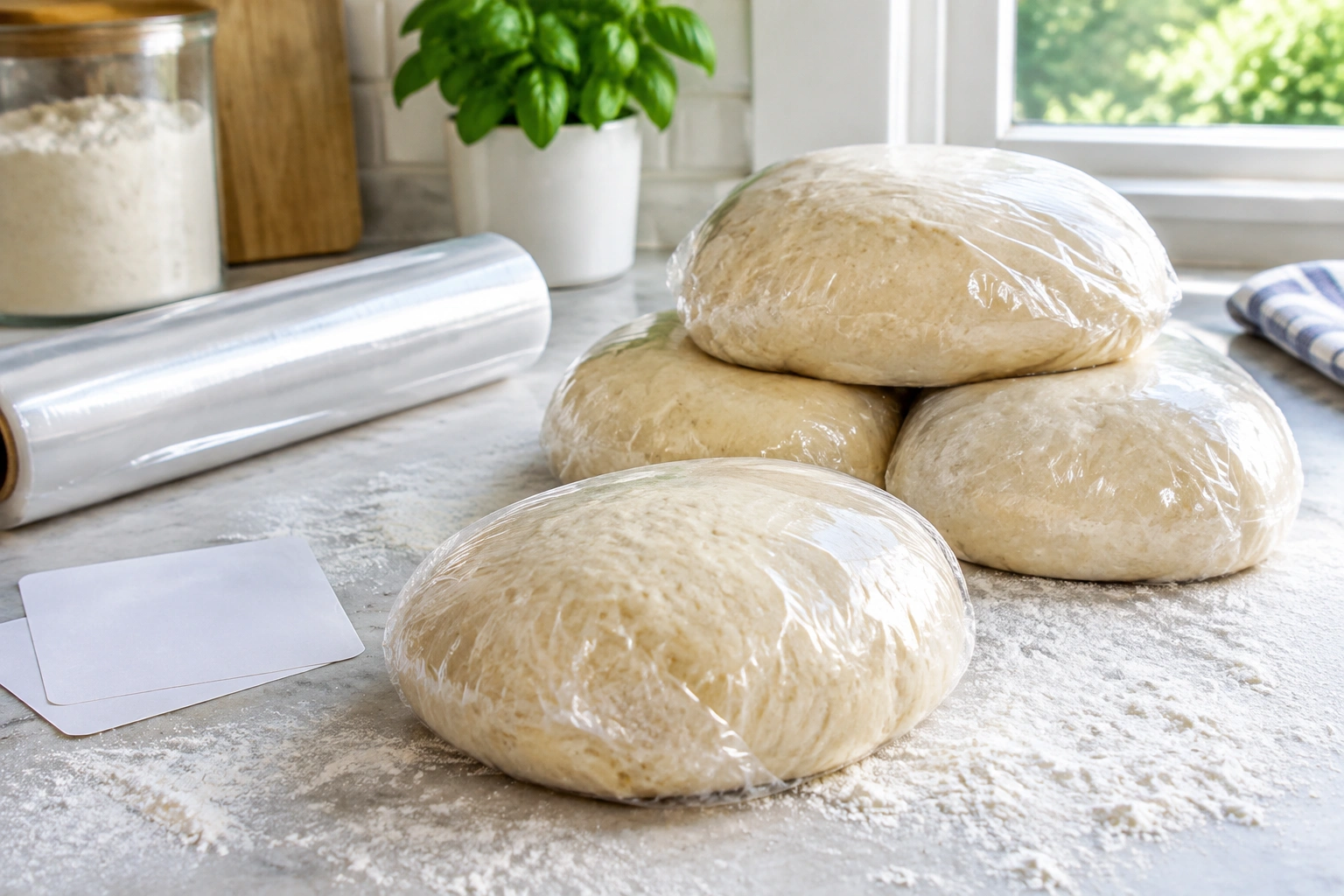
Use freezer-safe wrap and press out as much air as possible. Then place the wrapped dough in a freezer bag or airtight container.
5) Flash freeze if needed
Iowa State University Extension recommends flash freezing dough in the freezer for 1 to 2 hours. During that time, keep the dough covered so the surface does not dry out. Once the outside forms a hard shell, move it to a zipper freezer bag or airtight freezer container and return it to the freezer. Iowa State University Extension
6) Label clearly
Write the date, dough type, and stage of fermentation. “White sandwich loaf, after first rise” is much more useful than a mystery package in the back of the freezer.
7) Freeze promptly
Place it in the coldest part of the freezer if possible. The faster it freezes, the better the texture usually holds up.
How Long Bread Dough Can Stay in the Freezer
For best results, use frozen bread dough sooner rather than later.
- Kansas State University Extension says dough can be frozen up to four weeks
- Iowa State University Extension says dough may be frozen up to 1 month
Those two recommendations line up well: about a month is a sensible quality window for most home bakers. After that, the dough may still be safe if kept frozen continuously, but quality often drops. Yeast strength, gluten structure, and flavor can all suffer.
A practical storage rule: if you want the best rise and texture, plan to bake frozen dough within a month.
How to Thaw Frozen Bread Dough Safely
Thawing is where many bakers accidentally lose the advantage of freezing. The goal is to thaw the dough evenly so the center and surface come back to life at roughly the same pace.
Refrigerator thawing
This is the most controlled method. Move the dough from the freezer to the refrigerator and let it thaw slowly. This works especially well for shaped loaves or dough you don’t want to rush.
Typical fridge thawing timelines:
– Small portions, like dinner rolls or pizza dough balls: about 8 to 12 hours
– Loaf-shaped dough: about 12 to 18 hours
– Very large or dense batches: may need 18 to 24 hours
Why choose this method?
- better control
- less risk of a sticky, over-warm exterior
- easier scheduling for the next day
Room-temperature thawing
This is faster and works well for smaller portions, such as rolls or pizza dough balls. But you need to watch it closely. If the outside warms too quickly, the dough can begin proofing unevenly.
Typical room-temperature thawing timelines:
– Small portions, like rolls: about 1 to 3 hours
– Loaf-shaped dough: about 3 to 5 hours
– Large or heavily enriched dough: may take longer and should be watched carefully
King Arthur Baking’s no-knead dough guidance suggests thawing the dough about 4 hours before you want to bake it. That’s a useful benchmark for smaller portions or simpler doughs, though your actual timing will depend on dough size and room temperature. King Arthur Baking
Keep it covered
Iowa State Extension specifically advises covering dough during flash freezing, thawing, and rising before baking to prevent a dry crust. That’s a simple point, but it matters a lot. A dried surface can restrict oven spring and leave you with a tight, uneven crust.
How to Proof and Bake Dough After Freezing
Once thawed, frozen dough usually needs a final proof before it goes into the oven. Don’t assume thawing alone is enough.
What to look for before baking
The dough should look puffy, not dense and cold in the center. If you press it gently with a fingertip, the indentation should spring back slowly rather than snap back immediately.
If the dough still feels tight or underdeveloped, give it more time. If it feels fragile and overexpanded, move carefully; it may be close to overproofing.
Exact proofing timelines after thawing
These are general ranges, not guarantees, because dough temperature and room conditions matter.
- Small portions, such as rolls or buns
- After fridge thawing: about 30 to 90 minutes at room temperature
-
After room-temperature thawing: often little to no extra proofing, but allow 15 to 45 minutes if the dough still feels tight
-
Loaf-shaped dough
- After fridge thawing: about 1 to 2 hours at room temperature
-
After room-temperature thawing: about 30 to 90 minutes if it still needs to puff up
-
Whole batches or larger shaped loaves
- After fridge thawing: about 1.5 to 3 hours
- After room-temperature thawing: about 1 to 2 hours, depending on dough strength and size
When to bake immediately after thawing
Most bread dough should be thawed and proofed first rather than baked straight from frozen. That is the safest default because frozen dough usually needs time to finish warming, fermenting, and relaxing before it can rise properly in the oven.
A few very small or specially prepared pieces may be close enough to ready after thawing that they need only a short rest, but most bread dough is not baked straight from frozen.
Baking adjustments
Frozen dough often benefits from a little extra patience rather than a hotter oven. Resist the urge to crank the temperature just because the dough came from the freezer. A normal baking temperature usually works best unless your recipe says otherwise.
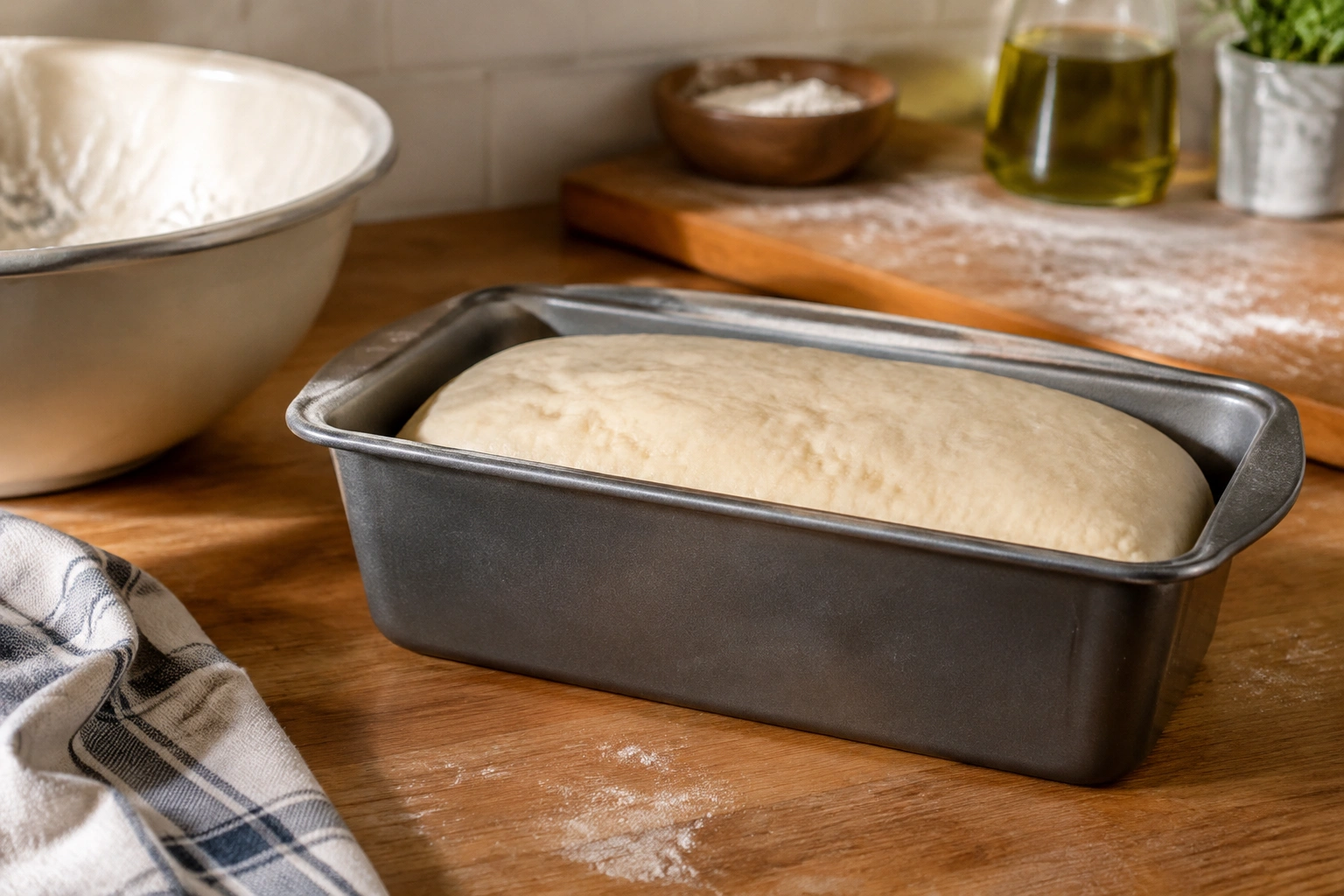
For loaves, use the pan or baking vessel the recipe calls for. For rolls, keep the pieces evenly spaced so they can expand without merging into one another.
A useful cue
If the dough looks ready but still feels cool in the center, give it a bit longer. A fully thawed, properly proofed dough bakes more evenly than one rushed into the oven.
Common Mistakes When Freezing Bread Dough
A few errors show up again and again.
Freezing dough too late
If the dough has already overproofed, freezing won’t restore its strength. It may collapse after thawing or bake up flat.
Oversized portions
Large lumps take longer to thaw and can end up with a warm outer layer and a cold center. Smaller portions are easier to manage and usually bake more evenly.
Skipping the final proof
Frozen dough is not usually ready to bake the moment it thaws. Give it time to finish fermenting.
Assuming all doughs freeze equally well
A lean loaf and a very rich brioche do not behave the same way. Treat each formula according to its structure, not just its shape.
Troubleshooting Frozen Dough That Rises Poorly
If the dough underperforms after freezing, don’t panic. First, figure out whether the problem is recoverable.
If the dough is slow to rise
Give it more time in a warm, draft-free spot. Frozen dough often needs a longer final proof than fresh dough.
If the surface is dry
A dry skin usually means the wrap wasn’t tight enough. You can sometimes soften the problem by covering the dough well during proofing, but severe drying may limit oven spring.
If the loaf is dense
This can happen when the yeast was weakened by freezing or when the dough was overhandled after thawing. The loaf may still bake through, but the crumb will likely be tighter.
If the dough smells off or shows mold
Discard it. Freezing is not a cure for spoilage.
If you regularly struggle with dry dough, it may also help to review your base formula. A dough that is already too dry before freezing is less forgiving afterward. This is where understanding hydration pays off, so it’s worth reading how to calculate and adjust bread dough hydration alongside your freezing plan.
Practical Examples: Loaves, Rolls, Pizza Dough, and Enriched Dough
Sandwich loaf
A sandwich loaf often freezes well after the first rise. Shape it after thawing, then let it proof in the pan until it is ready to bake. This is a good choice if you want fresh bread for weekday sandwiches.
Dinner rolls
Roll dough is often easiest to freeze in portioned pieces. That way, you can thaw only what you need instead of committing to a full batch.
Pizza-style dough
Pizza dough usually freezes well as a lightly oiled ball. Thaw it slowly, let it relax, and then stretch it once it is supple again. If it springs back too much, it needs more resting time.
Brioche or other enriched doughs
These can work, but handle them gently. Their fat and sugar content make them softer and sometimes less resilient. If a recipe is especially rich, freezing baked bread may be the safer quality choice.
Freeze Dough or Freeze Baked Bread?
This is the question that decides whether freezing dough is worth your effort.
Freeze the dough when:
- you want fresh-baked bread later
- the dough is a sturdy yeast formula
- you want to shape or proof it closer to baking time
- you are comfortable managing thawing and final proofing
Freeze baked bread when:
- the dough is delicate or highly enriched
- you want the simplest possible storage method
- you do not want to monitor proofing later
- you value convenience over the last bit of texture
In plain terms: freezing dough gives you fresher bread later, but it asks more of you on baking day. Freezing baked bread is simpler, but it gives up some of that just-baked feel.
When to Consult a Master Baker
If a dough formula is especially rich, highly hydrated, or sourdough-based and you want to freeze it for a production schedule or special event, it can be worth getting advice from an experienced baker before committing a large batch. That is especially true if the dough is for a professional exam, a bakery menu item, or a recipe you need to reproduce consistently.
FAQ
Can you freeze bread dough before the first rise?
Yes. Freezing before the first rise gives you the most flexibility later, but you’ll need to handle shaping and proofing after thawing.
Is it better to freeze bread dough before or after the first rise?
For most home bakers, after the first rise is the best default. It usually offers the best balance of convenience and dough strength.
Can you bake bread dough straight from frozen?
Usually no. Most bread dough should be thawed and proofed first. A few small or specially prepared portions may need only a short rest after thawing, but baking straight from frozen is not the normal approach.
How long does frozen bread dough take to thaw?
Small portions may thaw in 1 to 3 hours at room temperature or 8 to 12 hours in the fridge. Loaf-shaped dough usually takes 3 to 5 hours at room temperature or 12 to 18 hours in the fridge.
How do you know when thawed dough is ready to bake?
It should look puffy, feel relaxed, and spring back slowly when pressed gently. If it still feels cool and tight in the center, it likely needs more proofing time.
Final Takeaway
Freezing bread dough works best when you match the method to the dough. Lean yeast doughs are the easiest to freeze, smaller portions thaw more evenly, and airtight wrapping makes a bigger difference than most bakers expect. If you keep the freeze window to about a month, thaw carefully, and give the dough a real final proof, you can get very solid results from a make-ahead batch.