
How to Keep Air Fryer Cake Moist and Tender Every Time
Air fryer cakes can be excellent, but they dry out fast when the heat is too aggressive or the batter is treated like a standard oven cake. The good news is that dry results usually come from a few fixable habits: too much heat, a pan that is too small or too deep, and checking doneness too late.

If you want a softer cake, think less about “making it bake faster” and more about helping it bake gently and evenly. That shift alone solves a lot of air fryer frustration.
Why Air Fryer Cakes Dry Out Faster Than Oven Cakes
An air fryer moves hot air quickly around the food. That convection-style heat is useful for crisping, but it can be rough on cake batter. The outside sets and browns sooner, while the center is still catching up. By the time the middle is done, the edges may already be dry.
That is different from a conventional oven, where the heat is usually less intense around the surface. In an air fryer, the top can look finished before the crumb inside is fully set. If you keep baking just because the center seems a little soft, the cake may cross from tender to dry very quickly.
Another factor is the smaller cooking chamber. Heat stays concentrated, so there is less room for gentle buffering. That makes timing and pan choice more important than they are in a regular oven.
Use the Right Batter for a Moist Air Fryer Cake
Not every cake batter behaves the same way in an air fryer. Batter with enough fat and sugar tends to stay softer longer because both help with tenderness and moisture retention. A very lean batter can bake up more quickly and dry out sooner.
For better results, look for cakes that are naturally moist and structured enough to handle a quicker bake. Examples include:
– vanilla snack cakes
– butter cakes
– pound-cake-style batters
– boxed mixes adapted with careful timing
Aim for a batter that is smooth, pourable, and slightly thick rather than watery. It should spread in the pan without turning soupy or separating. If it is very thin, it can bake unevenly and dry at the edges before the center sets. If it is extremely thick, it may brown too fast on top and stay underdone inside.
If you are adapting a boxed mix, avoid adding extra flour unless the recipe specifically calls for it. Extra flour usually makes the crumb tighter and drier. Also avoid overmixing once the dry ingredients are added; too much mixing can develop more structure than you want and make the cake less tender. For background on how sugar supports tenderness and moisture, see this guide on why sugar keeps cakes moist.
A practical batter test
Spoon a little batter into the pan and watch how it settles. If it levels out naturally without looking watery, that is usually a better sign than a batter that races to the edges or sits in a stiff mound. You want something that can bake into a tender crumb without needing a long cook time.
Choose the Best Pan Size and Material
Pan choice affects more than convenience. It changes how fast the cake bakes, how much air reaches the batter, and how quickly the sides set.
For most air fryer cake recipes, a pan around 6 to 7 inches across is a practical starting point for many basket-style air fryers, with a shallow depth of about 2 to 2.5 inches. That size usually leaves enough room around the sides for air circulation without crowding the basket. A pan that is too large can block airflow, while one that is too deep can trap the center in a slow-baking pocket.
Metal pans
Metal is usually the most efficient choice for air fryer baking. It conducts heat well, so the cake sets predictably. The trade-off is that it can also brown the edges faster. If your cakes often come out dry at the rim, metal may be part of the reason.
Silicone pans
Silicone insulates more than metal, so it can slow browning. That may help with moisture, but it can also make the center take longer to set. If you use silicone, expect a gentler bake and check doneness earlier than you think you need to, then keep checking in short intervals.
Glass pans
Glass is less common in air fryers and can be tricky because it heats differently from metal. It may work in some setups, but it is not usually the first choice for moisture control. If your air fryer basket is compact, glass can also be awkward to fit safely.
Lower the Temperature and Check Earlier
One of the simplest ways to keep an air fryer cake from drying out is to bake it more gently than you would in a standard oven. Air fryer recipes often need a lower temperature because the circulating air intensifies browning.
A good starting point for many cakes is around 300°F to 325°F, especially if your oven recipe was written for 350°F. For a small 6-inch cake, that often means starting with a bake time about 20% to 30% shorter than the original oven recipe, then adding time in short intervals as needed. For example, if a conventional recipe says 30 minutes, you might begin checking around 20 to 22 minutes in the air fryer.
That does not mean the cake should bake forever. It means you should expect a gentler bake with earlier checks. If a recipe gives you a conventional oven temperature, treat that as a starting point for adjustment rather than a direct one-to-one match.
A useful rule: if the top is coloring quickly but the center still seems loose, reduce the heat before extending the bake too much. Prolonging a hot bake is usually what dries the crumb.
Comparing common baking approaches
| Approach | Moisture Risk | Best Use |
|---|---|---|
| Higher heat, uncovered | Higher | Only when the batter is shallow and browning is slow |
| Lower heat, uncovered | Moderate | Good starting point for most small cakes |
| Lower heat, covered partway | Lower on top | Useful when the top browns before the center sets |
That middle option is often the safest place to begin. It gives the cake time to rise and set without forcing the surface to overbake.
Prevent the Top From Browning Before the Center Sets
If the top is darkening too quickly, the cake is telling you the surface heat is too intense. That is when foil can help.
Use foil as a shield, not a lid. Lay it loosely over the top once the cake has risen enough that the batter is no longer wet on the surface. Do not crimp it tightly around the pan, and make sure it does not interfere with airflow or touch the heating element.
Foil is especially useful when:
– the top is set but still browning too fast
– the center needs more time
– the cake looks done at the edges before the middle is ready
If you find yourself using foil every time, the better long-term fix is usually lower heat or a different pan. Foil is a correction, not a substitute for good bake settings.
Parchment can help with release, but it does not solve browning the way foil does. If you use parchment liners in an air fryer, make sure they are secured by batter or the pan itself so they do not lift during baking. This is especially relevant in compact baskets; our guide on how to keep air fryer parchment paper from flying around covers that in more detail.
How to Tell When the Cake Is Done Without Overbaking It
A toothpick alone is not enough. It can come out clean when the cake is still slightly overbaked, especially in smaller cakes where the crumb sets quickly after removal.
Use several doneness cues together:
Look for edge pull-away
When the cake is ready, the edges often begin to pull slightly from the pan. That does not mean the cake is overdone; it means the structure has set.
Press the center lightly
A properly baked cake should spring back when touched gently in the center. If your finger leaves a deep impression, it usually needs more time. If it springs back but still feels soft and elastic, it may be ready.
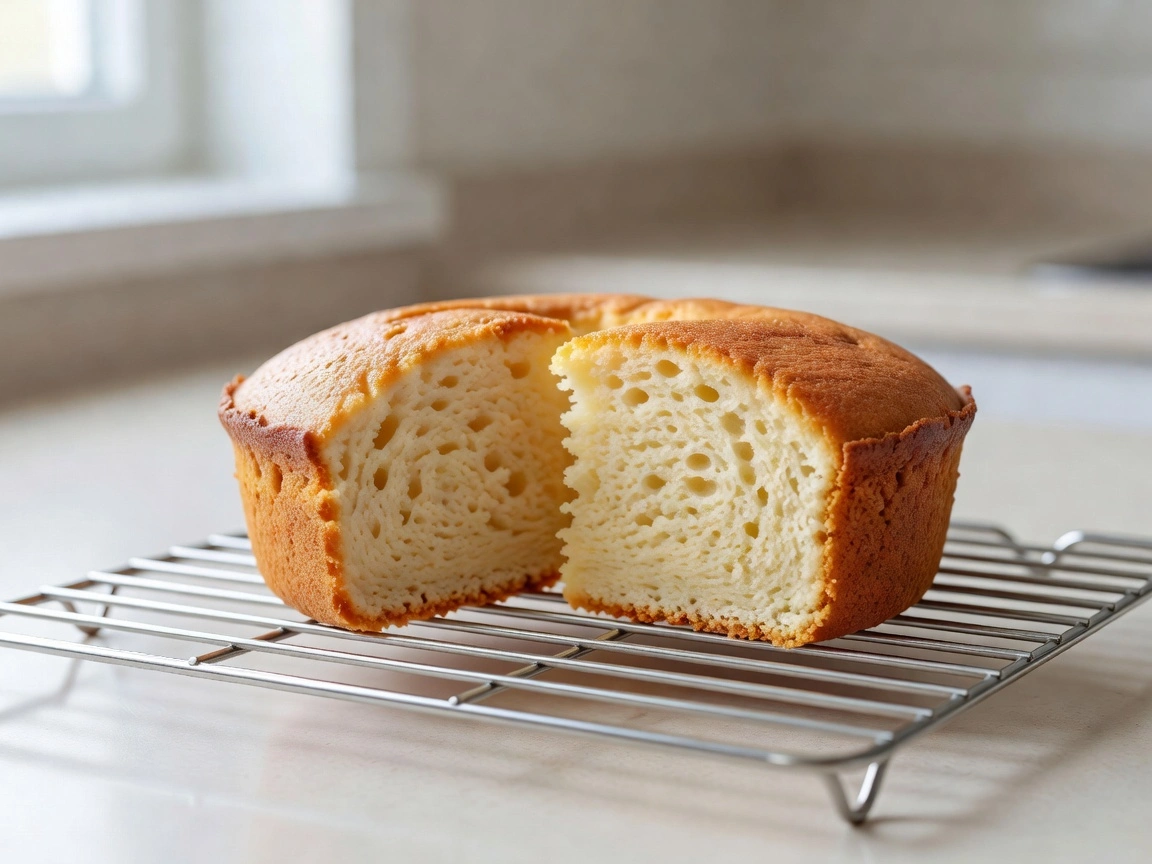
Check the crumb with a toothpick
Use the toothpick test as one clue, not the only one. A few moist crumbs are better than a completely dry pick if the cake is otherwise set.
Use internal temperature if you can
If you have a thermometer, internal temperature gives you another check, especially for dense cakes. A general target for many cakes is around 200°F to 205°F in the center, but cake styles vary, so follow your recipe when it gives a specific range. For general food safety basics on eggs and baked foods, the USDA’s safe handling guidance is a useful reference point.
Cooling and Storing the Cake to Lock in Moisture
A cake can dry out after baking if it cools too long in the wrong conditions. Once it comes out of the air fryer, let it rest briefly in the pan so it can settle. Then turn it out or move it to a rack so trapped steam does not make the bottom gummy.
After the cake is fully cool, wrap it well or store it in an airtight container. This matters more than many bakers expect. Air exposure steals moisture quickly, especially from smaller cakes.
If you plan to serve it later the same day, keep it covered as soon as it is cool. If you are storing it overnight, wrapping the cake before it sits uncovered for long periods helps preserve the crumb.
What to Do If Your Air Fryer Cake Already Turned Out Dry
A dry cake is not always a lost cake. You may not be able to restore the original texture, but you can make it pleasant to eat.
Brush with syrup
A light simple syrup brushed over the layers or surface can add moisture without making the cake soggy. Apply it gradually so the cake absorbs it evenly.
Serve with a moist element
Fresh fruit, whipped cream, custard, or a soft filling can balance a dry crumb. This works well for snack cakes and layered slices.
Slice and repurpose
Dry cake can be turned into trifle, cake pops, or layered dessert cups. Those formats hide dryness better than serving plain slices.
If the cake is only slightly dry, warm it gently before serving. A brief warm-up can soften the crumb enough to improve the eating experience.
Quick Troubleshooting Guide for Common Air Fryer Cake Problems
The top is brown, but the center is still underdone
Lower the heat next time and cover loosely with foil once the top sets.
The cake is dry around the edges
The pan may be too small, too dark, or too close to the heating element. Try a shallower pan and check earlier.
The cake is dry all the way through
It was likely baked too long or at too high a temperature. Shorten the bake and rely on multiple doneness cues.
The cake rises unevenly
Airflow may be blocked, or the pan may be too full. Leave more headspace and make sure the pan fits comfortably in the basket.
The cake looks done, but tastes dry
That usually means it stayed in the air fryer too long after the surface set. Remove it as soon as the center springs back and the crumb is just set.
A Simple Moisture-Saving Method You Can Repeat
If you want a dependable process, use this sequence:
1. Choose a moist, medium-thickness batter.
2. Use a pan that allows air to move around it.
3. Bake at a gentler heat than a standard oven recipe would suggest.
4. Check early and often once the top starts to color.
5. Cover loosely with foil only if the top browns too fast.
6. Remove the cake as soon as the center is set and springy.
7. Cool it properly and store it covered once fully cool.
That approach keeps the focus on the real causes of dryness: heat intensity, timing, and airflow. Once you control those, air fryer cake becomes much more predictable.
Final Troubleshooting Tip: Test One Variable at a Time
If your air fryer cake still comes out dry, change only one thing on the next bake: temperature, pan size, or bake time. That makes it much easier to see what actually fixed the problem instead of guessing. Small adjustments are usually more effective than a full recipe overhaul.

