How to Keep Vegetables Fresh Longer: A Practical Storage Guide for Busy Kitchens

If you want vegetables to last longer, the first rule is simple: store them by what they need, not by what fits in the fridge. Some vegetables stay crisp in cold, humid air. Others keep better in a cool pantry. A few are worth freezing if you know you won’t use them in time.
The fastest way to cut waste is to sort produce into three groups right after shopping: fridge, pantry, and freezer. Then make one more decision for each item: whole or cut, washed or unwashed, sealed or breathable. That small planning step prevents the most common freshness problems—slime, shriveling, and premature spoilage.
Quick Answer: The Best Way to Keep Vegetables Fresh
Use this simple rule set:
- Refrigerate vegetables that are tender, leafy, or already cut.
- Store in a cool, dark pantry vegetables that prefer dryness and ventilation, such as potatoes, onions, garlic, and sweet potatoes.
- Freeze vegetables if you cannot use them before their fridge life runs out.
- Keep fruits and vegetables separate when possible, especially from ethylene-producing fruits like apples and bananas.
- Dry vegetables well before storage unless a specific storage method calls for a little moisture.
If you remember only one thing, remember this: wet produce spoils faster than dry produce. Moisture trapped in a bag or container is one of the quickest ways to turn good vegetables into a slimy cleanup job.
What You Need Before You Store Vegetables
You do not need special equipment, but a few basics make a big difference:
- Produce bags or breathable bags
- Paper towels
- Airtight containers
- Clean containers or jars for herbs
- Space in the crisper drawer
- A dry prep area for sorting and trimming
A clean kitchen towel is also useful for drying washed vegetables. If you meal prep often, keep one shelf or bin in the fridge reserved for vegetables that need to be used soon. That makes rotation easier and helps you avoid forgetting a half-used pepper behind a container of leftovers.
Step 1: Sort Vegetables by Storage Type
Before washing or cutting anything, separate your vegetables into three groups.
Put these in the refrigerator
Cold storage works best for many vegetables that are tender or high in moisture. Common examples include:
- Leafy greens
- Broccoli and cauliflower
- Carrots, beets, and radishes
- Peppers
- Cucumbers
- Eggplant
- Mushrooms
- Celery
- Cabbage
- Herbs
- Cut vegetables of almost any kind
The American Heart Association notes that refrigerator temperature should be at 40°F or below, and that cut or peeled produce should always be refrigerated. That matters because once a vegetable is cut, its exposed surfaces lose moisture faster and become more vulnerable to spoilage. AHA produce storage guidance
A few common fridge vegetables benefit from a little more specific handling:
- Tomatoes: keep whole tomatoes at room temperature until ripe for the best flavor; once they are very ripe, refrigerating them can slow further softening for a short time. Use chilled tomatoes sooner, because the texture may be less firm.
- Celery: refrigerate celery wrapped or in a lined container so it does not dry out and lose crunch.
- Cabbage: whole cabbage usually keeps well in the refrigerator; once cut, wrap the cut side well or store it in a container.
- Mushrooms: keep mushrooms dry and refrigerated in a breathable package or paper bag if possible; avoid sealing them in a wet container.
- Herbs: tender herbs often do best with a little moisture in a jar, while hardier herbs usually prefer a dry wrap and container.
Keep these in the pantry
Some vegetables last longer in a cool, dark, dry place than in the refrigerator:
- Potatoes
- Sweet potatoes
- Onions
- Garlic
- Winter squash
Purdue Extension recommends storing garlic, onions, potatoes, and sweet potatoes in a well-ventilated area and away from direct sunlight. That ventilation helps prevent mold, sprouting, and soft spots.
Freeze these if needed
Freezing is a smart backup when vegetables are close to their limit. It is especially useful for:
- Chopped peppers
- Green beans
- Broccoli florets
- Cauliflower florets
- Blanched carrots
- Extra cooked vegetables you will not use soon
Freezing protects against waste, but it usually changes texture. That is fine for soups, casseroles, stir-fries, and roasted dishes, but not ideal if you want a crisp raw snack later.
Quick Comparison: Fridge vs. Pantry vs. Freezer
| Vegetable | Best Short-Term Storage | Pantry? | Freezer? | Notes |
|---|---|---|---|---|
| Tomatoes | Pantry until ripe, then fridge if needed | Yes | Usually not ideal raw | Best flavor at room temp; refrigerate ripe tomatoes only if needed |
| Celery | Refrigerator | No | Yes, if cooked later | Wrap or container-store to keep crisp |
| Cabbage | Refrigerator | Sometimes whole, cool and dry | Yes, usually cooked use | Whole cabbage keeps longer than cut cabbage |
| Mushrooms | Refrigerator | No | Yes, after cooking for some uses | Keep dry; avoid sealed wet storage |
| Herbs | Refrigerator | No | Some herbs freeze well | Tender herbs often like a little water; hard herbs prefer dry wrap |
| Carrots | Refrigerator | No | Yes, especially blanched | Good for meal prep and snack sticks |
| Potatoes | Pantry | Yes | Not usually whole | Keep cool, dark, and ventilated |
| Onions | Pantry | Yes | Not usually whole | Store dry and ventilated |
| Garlic | Pantry | Yes | Not usually whole | Keep away from heat and moisture |
| Peppers | Refrigerator | No | Yes | Whole peppers keep better than cut peppers |
Step 2: Prep Vegetables the Right Way
How you prep vegetables before storage matters almost as much as where you store them.
Wash only when it helps
For most vegetables, washing right before use is safest and simplest. If you wash too early and do not dry thoroughly, leftover moisture can speed spoilage.
There are exceptions. If a vegetable is very dirty and you plan to refrigerate it, a quick wash followed by complete drying can help. The key is not the wash itself—it is whether the vegetable goes into storage dry.
Dry thoroughly
After washing, dry vegetables well with a towel or salad spinner. This is especially important for leafy greens, herbs, mushrooms, and peppers. Even a little trapped water can lead to sogginess.
Trim with purpose
Remove damaged leaves, soft spots, or bruised ends before storage. Damaged tissue breaks down first and can spread spoilage to the rest of the produce. Do not overtrim, though. Every cut edge is another spot where moisture can escape.
Step 3: Store Leafy Greens, Herbs, Root Vegetables, and Alliums Correctly
Different vegetable families need different storage habits.
Leafy greens
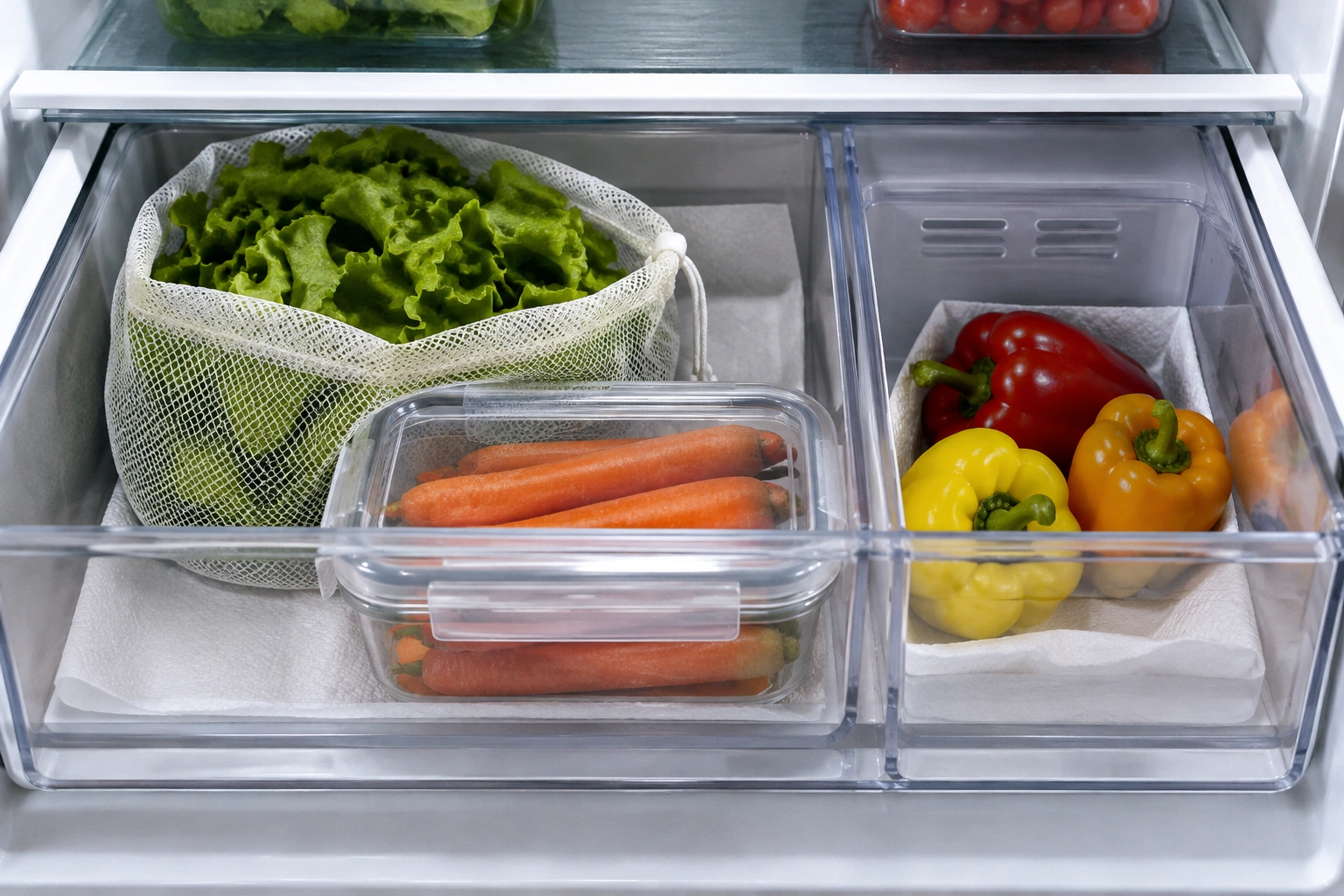
Lettuce, spinach, kale, and similar greens do best with a little humidity but not standing water. A practical method is to line a container or produce bag with paper towels, add the greens, and keep them in the crisper drawer. The paper towel absorbs extra moisture that would otherwise turn the leaves limp.
If the greens came in a clamshell or bag, check for wet leaves. Remove any that are already slimy before they spread damage.
Herbs
Tender herbs like parsley, cilantro, and dill usually last longer when treated like flowers: trim the stems and place them in a jar with a little water, then loosely cover and refrigerate. Hardier herbs such as rosemary and thyme can be wrapped in a paper towel and stored in a breathable container.
Root vegetables
Carrots, beets, and radishes belong in the refrigerator. The American Heart Association specifically lists these root vegetables for cold storage. If your carrots come with tops attached, remove the greens first. The tops pull moisture from the roots and can leave them limp faster.
Alliums
Onions and garlic prefer a dry, ventilated pantry, not a sealed bag in the fridge. Keep them away from direct sunlight and away from potatoes. A dry, airy setup is the simplest way to slow soft spots and sprouting.
Step 4: Use the Refrigerator and Crisper Drawer Effectively
The crisper drawer is not just extra space. It is the part of the fridge designed to manage humidity.
High-humidity vs. low-humidity drawers
In general:
- High-humidity settings suit leafy greens and herbs that wilt easily.
- Low-humidity settings suit vegetables that rot faster when excess moisture builds up, such as peppers.
If your fridge has only one crisper drawer setting, use the drawer for produce that needs protection from drying out, and store drier vegetables in a breathable bin or on a shelf.
Don’t crowd the drawer
Airflow matters. When vegetables are packed too tightly, moisture gets trapped and decay spreads faster. Leave enough room for air to move around the produce. A full drawer may look efficient, but a crowded drawer often shortens storage life.
Keep ethylene-sensitive vegetables away from fruit
Ethylene is a natural gas released by ripening produce. It speeds ripening in nearby fruits and vegetables. Broccoli and cauliflower are ethylene-sensitive, so they should be kept away from ethylene-producing produce such as apples, bananas, and onions when possible.
The practical version: do not store a bag of broccoli beside a bowl of apples and expect it to stay crisp for long.
Step 5: Store Cut Vegetables for Meal Prep Without Sogginess
Meal prep saves time, but cut vegetables need more protection than whole ones.
Use airtight containers for cut pieces
Once vegetables are sliced, peeled, or chopped, store them in airtight containers in the refrigerator. This keeps them from drying out and helps protect them from absorbing odors from other foods.
Airtight containers work especially well for:
– Cut peppers
– Broccoli or cauliflower florets
– Chopped cabbage
– Sliced mushrooms if they are already dry
– Pre-cut onions for cooking
– Mixed meal-prep vegetables you plan to cook, roast, or sauté
Add a dry paper towel when needed
For vegetables that release moisture after cutting—such as cucumber sticks, chopped peppers, or salad greens—a dry paper towel in the container can help absorb condensation. Replace the towel if it becomes damp.
Paper towels are especially useful for:
– Lettuce and salad greens
– Sliced cucumbers
– Celery sticks
– Herb bundles that are already washed and dried
– Cut cabbage or slaw mix that tends to collect moisture
Use water storage only for specific vegetables
A little water can help some cut vegetables stay crisp, but it is not a universal fix.
- Celery sticks: can be stored in a container with a little water for short-term crispness if you change the water regularly and keep the container refrigerated.
- Carrot sticks: can also stay crisp in cold water for meal prep, but they should be refrigerated and the water should be refreshed often.
- Herbs: tender herbs often do better with stems in a jar of water, loosely covered.
- Do not use water for everything: mushrooms, chopped onions, and most mixed cut vegetables usually do better dry in an airtight container with a paper towel.
Keep cut vegetables cold and use them soon
The AHA guidance is clear: cut or peeled produce should always be refrigerated. For meal prep, make only what you can realistically use within a few days unless the vegetable has a longer verified refrigerated life.
For example, cut peppers are best kept in an airtight container and used within a few days. For vegetables like celery or carrot sticks, a refrigerated water method can help them stay crisp a little longer if you are prepping snacks ahead of time.
Step 6: Keep Ethylene-Producing Produce Separate
A lot of vegetable spoilage problems are really ethylene problems in disguise.
Common ethylene producers
Produce that releases a lot of ethylene includes:
- Apples
- Bananas
- Tomatoes
- Onions
These can speed up ripening in nearby sensitive vegetables. That does not mean they cannot share a kitchen, but they should not be piled together in one drawer.
What to separate
Keep ethylene-sensitive vegetables away from these producers, especially:
- Broccoli
- Cauliflower
- Cabbage
- Some squashes
A simple habit helps: give fruit its own bowl or shelf, and keep vegetables in their own drawer or bin. The AHA also recommends storing fruits and vegetables separately, which is a good default for busy households.
Step 7: Freeze Vegetables When You Won’t Use Them in Time
Freezing is the best rescue option when fresh storage will not be enough.
When freezing makes sense
Freeze vegetables when:
- You bought too much
- You cooked too much
- You won’t use them before they soften
- You want to save produce for soups, casseroles, or stir-fries
What to expect
Frozen vegetables usually lose some crispness. That is normal. Use them later in dishes where texture matters less than convenience, such as pasta sauces, frittatas, and stews.
Prep before freezing
For best quality, freeze vegetables in a form that matches how you will cook them later. Chop peppers, trim green beans, or separate broccoli into florets before freezing. If a vegetable needs blanching before freezing for better texture, follow a trusted freezing guide for that specific vegetable.
How Long Common Vegetables Last
Storage life depends on freshness at purchase, temperature, and how well you control moisture. Still, a few practical examples help with planning. These are approximate quality guidelines, not fixed rules:
| Vegetable | Typical Storage Guidance |
|---|---|
| Tomatoes | Best at room temperature until ripe; ripe tomatoes can be refrigerated briefly if needed |
| Celery | About 1 to 2 weeks refrigerated when well wrapped or container-stored |
| Cabbage | About 1 to 2 weeks refrigerated for a whole head; cut cabbage usually less |
| Mushrooms | Often best used within several days refrigerated |
| Cut peppers | About 3 days in an airtight container |
| Whole peppers | Often up to about 1 week refrigerated, depending on freshness at purchase |
| Chopped raw carrots | About 2 to 3 weeks refrigerated |
| Cucumbers | Usually best used soon after purchase; quality can drop quickly in the fridge |
| Herbs | Tender herbs often last several days to about a week with proper storage |
| Potatoes | Several weeks in a cool, dark pantry |
These are quality guidelines, not promises. If a vegetable is moldy, rotten, or slimy, throw it out even if the calendar says it should still be okay.
Common Mistakes That Make Vegetables Spoil Faster
A few habits cause most storage failures:
Storing vegetables wet
Moisture trapped in bags or containers speeds rot.
Using airtight containers for the wrong produce
Airtight storage helps cut vegetables, but whole vegetables that need airflow can rot faster if sealed too tightly.
Washing everything too early
Clean is good. Damp is bad. Wash only when you can dry thoroughly.
Mixing fruits and vegetables
Ethylene-producing fruit can shorten the life of sensitive vegetables.
Storing all vegetables in the fridge
Potatoes, onions, garlic, and sweet potatoes usually do better in a dry pantry than in cold storage.
Troubleshooting: How to Fix Slimy, Wilted, or Soggy Vegetables
Not every tired vegetable is beyond saving.
Limp greens
Soak them briefly in cold water, then dry very well. If they crisp up, use them soon.
Soggy vegetables
Spread them on a dry towel and let excess moisture evaporate before returning them to a clean container.
Slimy mushrooms
If mushrooms are slimy, the safest move is usually to discard them. Mushrooms should be kept unwashed in the refrigerator because moisture makes them slimy.
Soft spots
If spoilage is limited to a small area, trim generously around it. If the rot spreads, the vegetable is no longer worth saving.
Signs Vegetables Have Gone Bad
Use your eyes first, then smell and texture.
Discard vegetables if you notice:
- Mold
- Slime
- Strong bad odor
- Widespread soft rot
- Deep wrinkling combined with collapse
- Discoloration that spreads through the flesh
A small bruise or a dry outer layer is not always a problem. But once spoilage is spreading, trimming is no longer enough.
Practical Examples of Storing Common Vegetables
Lettuce
Wash only if needed, dry thoroughly, then store with paper towels in a breathable bag or container in the crisper drawer.
Celery
Wrap it to protect it from drying out, or store it in a lined container. Celery loses its crunch quickly if left exposed to air. For meal prep, celery sticks can also be stored in cold water for short-term crispness.
Onions
Keep them whole, dry, and well ventilated in a pantry. Do not store them in a sealed bag.
Potatoes
Store in a cool, dark, dry place. Keep them away from onions and direct sunlight.
Carrots
Refrigerate them in a sealed bag or container. If you buy them with greens attached, remove the tops first. For snack prep, carrot sticks can also be stored in cold water for a short time.
Herbs
Store tender herbs in a jar with a little water and a loose cover, or wrap hardier herbs in paper towel.
Peppers
Whole peppers do well in the fridge’s low-humidity drawer. Once cut, move them to an airtight container and use them within a few days.
Green beans
Keep them refrigerated and dry. If you will not use them soon, freezing is usually a better backup than letting them soften in the crisper.
Tomatoes
Keep tomatoes out of the fridge until they are ripe. If you have very ripe tomatoes and need to slow further softening, refrigerate them briefly and use them soon.
Cabbage
Store whole cabbage in the refrigerator and wrap or container-store cut cabbage so the cut surface does not dry out.
Mushrooms
Keep mushrooms dry, refrigerated, and loosely packed. A paper bag or breathable container is usually better than a sealed wet container.
When to Ask a Food Safety Expert
If you are unsure whether cut produce has been left too long at room temperature, or if you see widespread mold, slime, or unusual odors, it is safer to discard it. When in doubt, a local extension office or food safety resource can help you judge storage questions that are outside normal quality loss.
For a deeper look at fridge timing and storage life, see our related guide on how long vegetables last in the fridge. If you also buy a lot of fruit, our guide on how to keep fruit fresh longer covers the other half of the ethylene problem. And if you grow or buy produce in larger quantities, how to store garden vegetables goes deeper on batch handling and storage setup.
The goal is not perfect produce. The goal is vegetables that stay usable long enough for real life: dinner tonight, lunches tomorrow, and one less grocery run next week.
FAQ
Should vegetables be washed before storing?
Usually no. Wash vegetables right before use when possible. If you do wash them first, dry them thoroughly before refrigerating.
What vegetables should not go in the fridge?
Potatoes, onions, garlic, and sweet potatoes usually do better in a cool, dark, ventilated pantry.
Can I store cut vegetables in water?
Yes, for some vegetables. Celery sticks and carrot sticks can stay crisp in cold water for short-term meal prep. Most other cut vegetables do better in airtight containers with a paper towel.
What is the best container for cut vegetables?
An airtight container works best for most cut vegetables. Add a dry paper towel if the vegetables release moisture.
How do I keep herbs fresh longer?
Tender herbs often last longer with stems in a little water and a loose cover in the fridge. Hardier herbs usually do better wrapped in paper towel and stored in a container.