
How to Prepare Cake Batter Ahead of Time Without Ruining the Texture
If you are trying to save time before a birthday, school event, or weekend baking day, the short answer is yes: you can often prepare cake batter ahead of time. The catch is that not every batter behaves the same way. Some formulas hold up well in the refrigerator for a short period. Others lose lift, separate, or bake up dense if they sit too long.
The safest approach is to match the storage method to the recipe. Oil-based batters are generally more forgiving than butter-based batters, though specific formulas can vary. Batters that rely on whipped air or delicate foam are the least cooperative. When in doubt, think about what gives the cake its rise. If the batter depends heavily on trapped air or an active emulsion, the quality trade-off grows the longer it waits.
Can You Prepare Cake Batter Ahead of Time?
Yes, in many cases you can, but “ahead of time” needs a little precision. Cake batter is not like a sauce that simply waits in the fridge unchanged. Once flour is hydrated and leaveners are mixed in, the batter begins changing.
For a busy parent, that might mean mixing a simple snack cake batter after dinner and baking it the next morning. For a more delicate layer cake, it may be better to measure ingredients the night before and mix closer to baking time.
The main question is not just whether the batter can sit. It is whether the recipe can still rise properly and bake with a good crumb after resting. That depends on the formula, the leavening, and how long you plan to hold it.
Which Cake Batters Hold Up Best Overnight or Longer?
Some batters are much more tolerant of advance prep than others. Here is the practical breakdown.
Better candidates for advance prep
Oil-based cakes usually hold up well because oil stays fluid when chilled and does not need to be re-softened the way butter does. Many snack cakes, loaf cakes, and simple sheet cakes fall into this group.
Muffin-style batters can also be decent candidates for a short hold, especially if they are not overly delicate. They may need a little extra bake time if they go into the oven cold.
Sturdy butter cakes can sometimes be made ahead, but they are more likely to thicken or separate in the refrigerator. They usually benefit from gentle re-mixing before baking.
Less reliable candidates
Whipped or sponge-style batters are the most fragile. These depend on air beaten into eggs or egg whites, and that structure can weaken while the batter rests. If a recipe calls for folding carefully to preserve volume, it is usually best baked soon after mixing.
Very light foam cakes are also poor candidates for long holding. The longer they sit, the more likely they are to lose the lift that gives them their texture.
If you want a quick rule: the more a cake depends on trapped air, the less comfortable it is with waiting.
How Long Can Cake Batter Sit Before Baking?
There is no single universal limit that fits every recipe, but a useful decision guide is this:
- If you are baking soon, mix and bake the same day.
- If you need a short delay, refrigeration is the safer choice.
- If you need a longer hold, freezing is usually better for components than for fully mixed batter.
For many standard batters, a short refrigerated rest of about 8 to 24 hours may be workable. That is often the practical answer to “can I make cake batter the night before?” The main cost is usually a small loss in rise or a slightly tighter crumb.
For sturdier formulas, especially some oil-based cakes and simple snack cakes, 24 hours in the refrigerator is often a reasonable target. Some batters may still be usable after 1 to 2 days, but quality usually drops more noticeably as the hold gets longer.
Room temperature is the least forgiving option. Batter with eggs, dairy, or other perishable ingredients should not be left out for long periods. Even when spoilage is not obvious, the texture can still suffer. If you are interrupted during prep, get the batter covered and chilled rather than leaving it on the counter.
Refrigerating vs. Freezing Cake Batter
Both methods can help, but they solve different problems.
| Storage method | Best use | Texture impact | Convenience |
|---|---|---|---|
| Refrigerator | Short delay before baking | Usually mild to moderate impact, depending on recipe | Easy for next-day baking |
| Freezer | Longer hold when you need more flexibility | Greater risk of separation or texture change | Useful when timing is uncertain |
Refrigeration: best for short holds
Refrigeration makes sense when you want to bake later the same day or the next day. It is the more practical choice if you are preparing for a morning event and want the batter ready to go.
For sturdier batters, overnight refrigeration is often the sweet spot. A 24-hour hold is usually more realistic than trying to stretch the batter for several days. After 1 to 2 days, many batters start to lose noticeable lift or develop a denser crumb, even if they still look acceptable.
The trade-off is that chilled batter is thicker and may bake a little more slowly. Some batters also need a gentle stir before going into the pan because the fat and liquid can separate slightly.
Freezing: useful, but less predictable
Freezing is more complicated. Some batters may thaw unevenly, especially if the emulsion is delicate. You may see graininess, separation, or a weaker rise after thawing.
For that reason, freezing full cake batter is usually less reliable than freezing baked layers. If your goal is to get ahead for a special occasion, baking the cake in advance and freezing the layers often gives better results than freezing the batter itself.
How to Store Cake Batter Safely and Prevent Drying or Separation
Good storage is mostly about limiting air exposure and keeping the batter cold enough for food safety.
Use a tight container
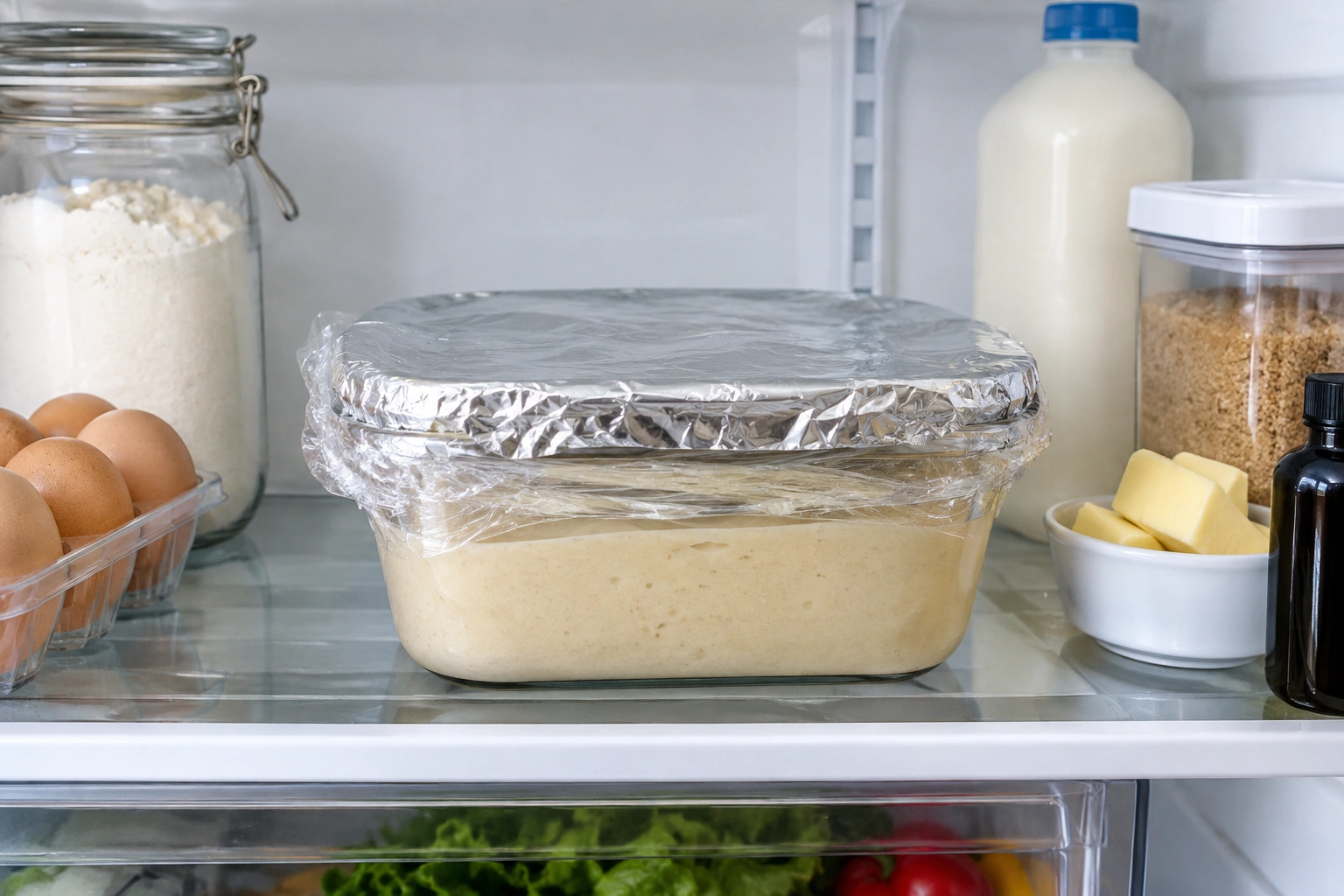
Transfer the batter into an airtight container if it fits without smearing it up the sides. If you are leaving it in the mixing bowl, press plastic wrap directly against the surface and cover the bowl well. A second layer of foil over the wrap can help if the bowl will be jostled in the fridge.
Label it clearly
Write the recipe name and the date on the container. That matters more than people think, especially when you are juggling school lunches, leftovers, and baking prep at the same time.
Keep it cold and undisturbed
Store the batter in the coldest practical part of the refrigerator, not in the door where temperatures tend to swing. Try not to open and close the container repeatedly. Every extra exposure invites drying and can weaken the structure.
Watch for normal separation versus spoilage
Some separation after chilling is normal, especially in butter-based batters. A little liquid pooling or thickening does not automatically mean the batter is ruined. But if it smells off, looks unusually discolored, or has obvious signs of spoilage, do not use it.
What Happens to Leavening, Texture, and Rise When Batter Rests
This is the part that explains most of the quality change.
Baking powder and baking soda do not simply “stop working” the moment batter sits. The practical issue is that some of their lifting power is used up or lost before the batter reaches the oven, so the cake may rise less than it would have if baked right away.
That difference matters more with baking soda in batters that depend on an acid reaction, because part of the gas release begins as soon as the ingredients are mixed. With baking powder, the batter may still have some lift left, but a long rest can reduce the amount of rise available in the oven. In both cases, the result is usually less oven spring, not a complete failure.
At the same time, emulsions can weaken. In a butter cake, fat, liquid, and eggs are held together in a stable mixture. Chilling can tighten the fat and make the batter look broken or curdled. That appearance is not always a problem, but it can lead to a less even crumb if the batter is not handled carefully.
Trapped air also matters. If the recipe depends on creaming butter and sugar or folding in whipped eggs, some of that air will be lost during resting. That is one reason sponge-style cakes are poor candidates for long advance prep.
How to Bake Prepped Batter Successfully
When the batter is ready to bake, do not assume it should be treated exactly like freshly mixed batter.
Check the texture first
If the batter has thickened in the fridge, let it sit briefly so it is easier to portion. For sturdier batters, a short rest at room temperature is usually enough to take the chill off and make scooping or spreading easier. You are not trying to warm it fully to room temperature; you are just making it workable.
Know when to bake cold and when to warm slightly
As a general rule, sturdy batters can usually go into the oven cold or only slightly warmed, especially if the recipe was designed for a refrigerated hold. Delicate foam batters are the exception: they should generally be baked as soon as possible after mixing rather than chilled and rewarmed, because the structure is more likely to collapse.
If the batter is very thick from chilling, a brief rest on the counter can help. If it is a fragile batter that was chilled only because you had to pause, keep the warm-up minimal and bake promptly once it is workable.
Stir only as much as needed
If the batter has separated, give it a gentle stir until it looks cohesive again. Avoid aggressive mixing. Overmixing after a rest can make a cake tougher and can knock out any remaining air.
Expect a slightly longer bake
Cold batter often needs a little more time in the oven. The center starts colder, so the cake may take longer to set. Keep an eye on doneness rather than relying on the clock alone.
If you want a related technique that helps with delicate batters, see our guide on how to fold egg whites into cake batter without losing the air.
When You Should Not Make Cake Batter Ahead
Some recipes are simply poor candidates for advance prep.
Skip ahead-of-time mixing when the batter:
– depends on whipped eggs or whipped egg whites for structure
– is extremely light and airy
– already looks split or unstable before chilling
– contains ingredients that seem questionable or have been left out too long
– is a formula you have never tested in advance before an important event
A first-time recipe is not the best place to gamble. If the cake matters, test the timing on a normal day before you rely on it for a celebration.
If you are already seeing curdling or instability in a butter-based batter, our article on why cake batter curdles and how to fix it can help you decide whether the batter is still salvageable.
Time-Saving Alternatives If Full Batter Cannot Be Made Ahead
If the recipe is too delicate to hold, you still have a few smart shortcuts.
Measure dry ingredients in advance
This is the easiest win. Combine flour, leaveners, salt, and spices in a container or zip-top bag. On baking day, you only need to mix the wet ingredients and bring everything together.
Prep wet and dry separately
Many cakes do well when the wet ingredients are mixed in one bowl and the dry ingredients in another, then combined just before baking. This preserves leavening and reduces the time the batter spends resting.
Bake the cake layers ahead instead
For event baking, this is often the best compromise. Bake the layers, cool them fully, and freeze them well wrapped. That usually protects texture better than freezing raw batter.
Use a recipe that is naturally forgiving
If advance prep matters every week, choose recipes built for flexibility, such as sturdy snack cakes or oil-based loaf cakes. They are more cooperative when life gets busy.
Common Mistakes to Avoid
A few errors cause most of the problems with held batter:
- leaving batter uncovered in the refrigerator
- assuming every cake formula behaves the same way
- freezing a batter that has a fragile emulsion
- overmixing after chilling
- baking very cold batter without allowing for extra time
- using batter that smells off or looks clearly spoiled
- holding delicate foam batters too long before baking
The biggest mistake is treating advance prep as a universal technique. It is a useful tool, but only when the recipe can support it.
Quick Decision Guide: Make It Now, Chill It, Freeze It, or Prep Ingredients Separately
Use this simple filter:
- Bake now if the cake depends on whipped air, the recipe is very delicate, or you want the best possible rise.
- Refrigerate the batter if you need a short delay and the formula is sturdy enough to tolerate chilling.
- Freeze the batter only with caution if the recipe has already been tested and you are comfortable with a possible texture trade-off.
- Prep ingredients separately if you want convenience without risking the final cake.
For most home bakers, that last option is the safest compromise. It saves time, keeps the batter fresher, and avoids many of the problems that show up when mixed batter sits too long.
Final Takeaway
Use this checklist: if the batter is sturdy, refrigerate it for up to a day or so and bake it cold or only slightly warmed; if it is delicate or foam-based, bake it soon after mixing; if you need more than a day, freeze the finished layers instead of the raw batter; and if you are unsure, prep the ingredients separately.
That simple rule helps you save time without sacrificing the cake’s texture, rise, or structure.

