
How to Reheat Homemade Bread Without Drying It Out
Homemade bread is at its best when the crust still has a little life and the crumb is soft, warm, and fragrant. The trouble starts when leftovers are reheated too aggressively. A loaf that was tender yesterday can turn leathery, crumbly, or oddly rubbery in minutes.
If you want the short answer: the oven is usually the best all-around method for reheating homemade bread without drying it out, especially for a whole loaf or crusty artisan bread. Use the microwave only when speed matters more than texture, and keep it very brief. For slices, a toaster or short oven reheat can work well, but the goal is always the same: warm the bread gently enough that moisture stays inside.
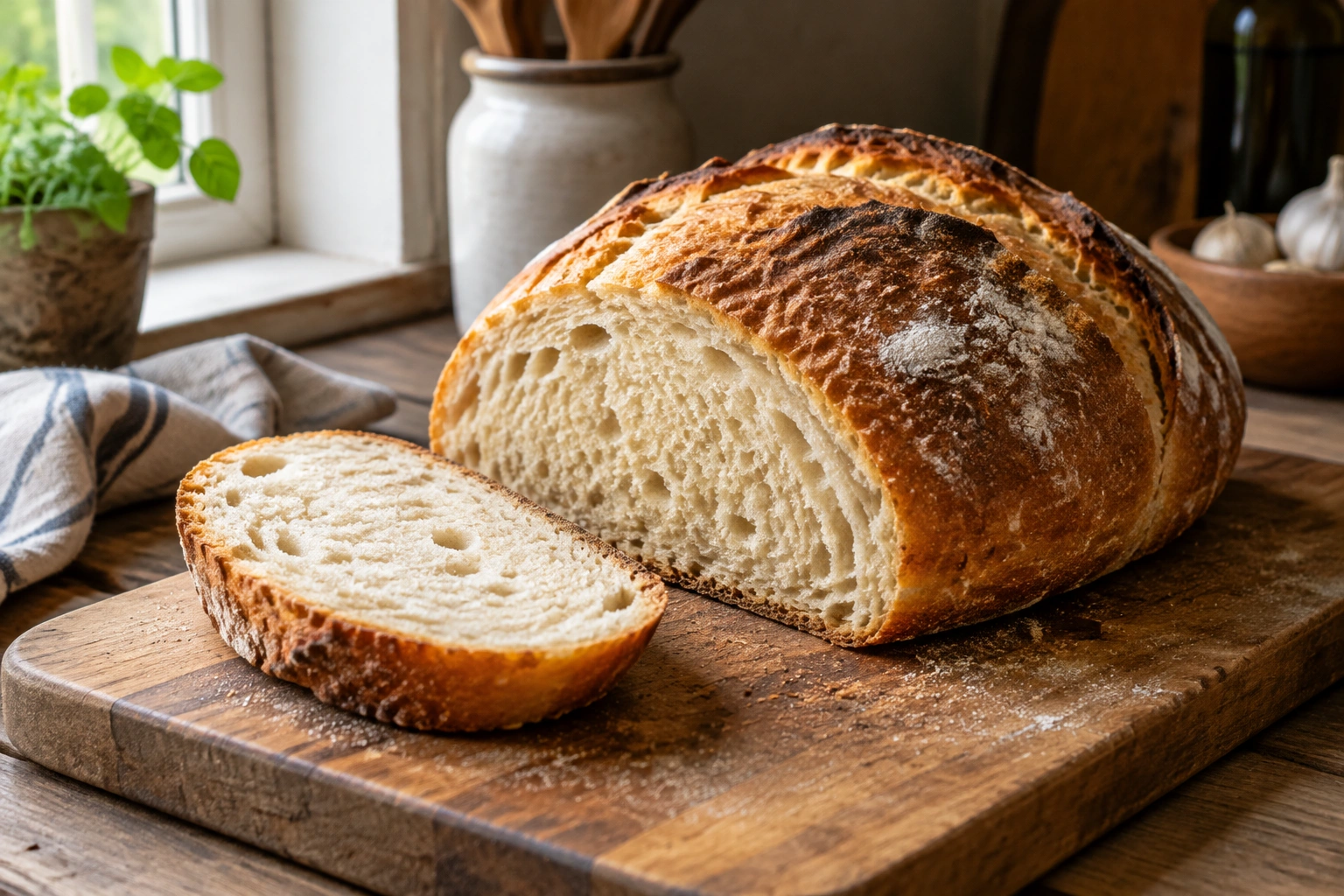
Below, I’ll walk through the best methods, when to use each one, and how to adjust for crusty loaves, soft sandwich bread, rolls, and slightly stale bread.
Quick Answer: The Best Way to Reheat Homemade Bread
If you have:
- A whole loaf: use the oven, wrapped or loosely covered if you want to protect softness.
- Slices: use a toaster for quick warming, or a short oven reheat if you want a softer result.
- Crusty artisan bread: use the oven and keep the reheating brief so the crust stays crisp.
- Soft bread or rolls: use gentle oven heat and some protection from drying, such as foil.
A useful rule is this: the more delicate the bread, the gentler the heat should be. Thin slices dry out quickly. Dense loaves can handle a little more time, but they still should not be blasted with high heat.
[IMAGE]
What Makes Homemade Bread Dry Out When Reheated
Bread dries out for two simple reasons. First, heat drives off moisture from the crumb and crust. Second, the starches in bread change as they cool and reheat, which can make the texture feel firmer than it did when fresh.
That is why reheating is a balancing act. Too much heat pulls out too much moisture. Too little heat leaves the bread warm in the center but not pleasant to eat. The goal is not to “cook” the bread again. It is to warm it just enough to restore softness and aroma.
This is also why time matters more than intensity. A lower, gentler heat usually gives you a better result than a hotter oven or a longer microwave burst.
Choose the Right Reheating Method for Your Bread Type
Different breads behave differently when reheated. A crusty sourdough loaf and a soft dinner roll do not need the same treatment.
Best method by bread type and goal
| Bread type | Best method | Texture goal | Drying risk |
|---|---|---|---|
| Whole crusty loaf | Oven | Warm inside, crisp crust | Low to moderate |
| Soft sandwich bread | Oven or toaster | Soft, tender slices | Moderate |
| Individual slices | Toaster or short oven reheat | Warm quickly, light crispness | Moderate to high |
| Dinner rolls | Oven, lightly covered | Soft and tender | Low if covered |
| Slightly stale bread | Oven with a little moisture | Revive softness | Moderate |
| Bread for immediate serving | Microwave only if needed | Fastest warm-up | Highest |
A simple decision rule helps here:
- Choose the oven when texture matters most.
- Choose the toaster for one or two slices.
- Choose the microwave only when speed matters more than ideal texture.
- Choose the air fryer only if you watch it closely and keep the time short, since it can dry bread faster than people expect.
How to Reheat a Whole Loaf in the Oven
For most homemade bread, the oven gives the best balance of warmth and texture. It heats more evenly than the microwave and is less likely to make the crumb rubbery.
A reliable oven method
- Preheat the oven gently. For a whole loaf, use 325°F to 350°F.
- Wrap the loaf or cover it if softness is the priority. Foil helps hold in moisture.
- Place the bread on a baking sheet or directly on the oven rack, depending on the crust you want. A sheet is easier for softer breads; direct rack heat can help crusty bread stay more crisp.
- Heat until the loaf feels warm through the center. For a whole loaf, start checking at 10 to 15 minutes for a smaller loaf and 15 to 20 minutes for a larger loaf.
- Let it rest briefly before slicing. This helps the heat settle through the loaf instead of escaping all at once.
For a crusty loaf, you may want to unwrap it near the end so the crust can firm back up. For a soft loaf, keep it covered longer so the outside does not dry before the inside warms.
When foil helps
Foil is useful when the bread is already a little stale or when you want to protect a soft crust. It traps some moisture from the bread itself, which keeps the crumb more tender. The trade-off is that foil can soften a crust you may want to keep crisp.
That means foil is best when softness matters more than crunch.
How to Reheat Slices Without Making Them Tough
Slices dry out faster than a whole loaf because they expose more surface area to heat. That makes them easier to overdo.
Best approach for slices
- For quick warmth: use a toaster, but keep the setting light so the edges do not turn hard.
- For softer slices: place them in a low oven for a short time and check them early.
- For sandwich bread: avoid long reheating. A slice only needs enough heat to lose its chill.
If you are warming slices for butter, jam, or a sandwich, a little softness matters more than a crisp crust. If you want toast-like texture, then a toaster makes sense. Just remember that toasted bread is not the same as reheated bread. Toasting dries the surface more aggressively, so it is better for crispness than tenderness.
A practical example: if you have two slices of homemade sandwich bread left from breakfast, a toaster can make them pleasant again in minutes. But if you want those slices soft enough for a warm sandwich, a short oven reheat is usually kinder.
Quick timing guide for slices
- Toaster: usually 1 to 3 minutes, depending on the setting and thickness of the slice.
- Oven: about 5 to 8 minutes at 300°F to 325°F for soft slices.
- Microwave: start with 5 to 10 seconds per slice, then add a few seconds only if needed.
When the Microwave Helps—and When It Ruins the Texture
The microwave is the fastest option, but it is also the easiest way to damage bread texture. Used too long, it can make bread feel rubbery or oddly tough once it cools slightly.
Use the microwave only for small, immediate needs
The microwave works best when:
- you need to warm one serving quickly
- the bread will be eaten right away
- you are not trying to preserve a crisp crust
How to avoid the worst texture problems
- Heat in very short bursts
- Stop as soon as the bread is warm, not hot
- Cover the bread lightly if you want to trap a little steam
- Avoid long heating cycles, which tend to toughen the crumb
If you are reheating a soft roll or a thick slice and only need it warm for the table, the microwave can be acceptable. But for a whole loaf or anything crusty, it is usually the wrong tool.
A practical microwave range is 5 to 10 seconds for a slice and 10 to 20 seconds for a small roll, then check before adding more time. Bread heats fast in the microwave, so it is better to underdo it than to overshoot.
How to Use Foil, Steam, or a Damp Towel to Hold in Moisture
Moisture control is the difference between bread that feels freshly baked and bread that feels tired.
Foil
Foil is best for softening the effect of dry oven heat. It keeps moisture from escaping too quickly and protects the exterior from overbrowning or hardening.
Use foil when:
– the bread is soft to begin with
– you want to keep rolls tender
– the loaf is slightly stale and needs help
Steam
A little steam can help revive bread that has started to lose its softness. In an oven, steam adds humidity so the crust does not dry too quickly.
Use steam when:
– you want to refresh a crusty loaf
– the bread is slightly stale
– you want a better balance between a crisp outside and soft inside
For a crusty loaf, a simple home method is to place a small oven-safe pan of hot water on a lower rack while the bread reheats, or lightly mist the loaf before it goes into the oven. Keep it light—too much moisture can soften the crust more than you want.
Damp towel
A damp towel can help in some microwave or covered-warming situations, but it should be used carefully. Too much moisture can make the crust soggy instead of pleasant.
Use a damp towel when:
– you are warming slices briefly
– the bread is soft and you want to avoid drying
– you can monitor the result closely
The main trade-off is simple: more moisture protects softness, but too much moisture can flatten the crust.
Crusty Artisan Bread vs Soft Sandwich Bread: What Changes
Bread style should guide your method.
Crusty artisan bread
Crusty bread benefits from a reheating method that restores warmth without turning the crust limp. The oven is usually the best choice. If the loaf has gone slightly stale, a little steam or foil early in the process can help the inside soften, then uncovering it near the end can bring back some crust texture.
This is the best approach when you want a loaf to serve with soup, cheese, or olive oil.
Soft sandwich bread
Soft bread needs a gentler touch. It does not need crust revival; it needs protection from drying. Foil or a covered oven method usually works better than dry heat. The goal is to keep the crumb tender rather than crisp.
For example, if you are reheating homemade sandwich bread for grilled cheese, you may want it warm but still pliable. In that case, a toaster is less useful than a gentle oven reheat.
How to Revive Slightly Stale Bread
Reheating can improve bread that is a day or two old, but it cannot fully reverse staleness. Once the crumb has dried out too much, you can make it better, not brand-new.
Best approach for slightly stale bread
- Use the oven rather than the microwave if texture matters.
- Add a little moisture through foil or steam.
- Keep the reheating brief and check the bread early.
This works especially well for:
– dinner rolls
– sandwich loaves
– crusty bread that has lost some freshness
What reheating cannot do is fix bread that is truly dry all the way through. If the loaf is far past its best, warming it may make it more pleasant, but it will not restore the original softness.
For bread that is just starting to stale, though, oven reheating can make a noticeable difference at the table.
How to Reheat Bread in an Air Fryer
An air fryer can work for bread, but it behaves more like a strong convection oven. That means it can dry bread quickly if you are not careful.
Simple air fryer method
- Preheat the air fryer to 300°F to 320°F.
- Place the bread in a single layer. Do not overcrowd the basket.
- Reheat briefly.
- Slices: about 2 to 4 minutes
- Small rolls: about 3 to 5 minutes
- Small pieces of crusty bread: about 3 to 6 minutes
- Check early. If the bread is already warm, stop before it starts to harden.
- Use foil only if needed and if your air fryer allows it safely. Foil can help with softness, but it may also reduce browning.
The air fryer is best when you want a quick warm-up and a little surface crispness. It is not the gentlest option for soft bread.
Common Mistakes That Dry Bread Out
A few mistakes show up again and again:
Using too much heat
High heat dries the outside before the inside has a chance to warm evenly. The crust may become hard while the crumb stays only partly warm.
Microwaving too long
This is the fastest route to rubbery bread. Short bursts are safer.
Reheating everything the same way
A crusty loaf, soft roll, and sliced sandwich bread all need different handling. One method does not fit every loaf.
Adding too much moisture
Steam and damp towels help only in moderation. Too much moisture can leave the crust soggy.
Waiting too long to serve
Bread tastes best soon after reheating. If it sits too long, moisture redistributes and the texture becomes less appealing.
Best Practices for Serving Bread Warm and Fresh-Tasting
The final step matters as much as the reheating itself.
- Slice only what you need if you are working with a whole loaf.
- Serve bread soon after warming so the texture stays pleasant.
- Keep crusty bread uncovered briefly if you want the crust to stay crisp.
- Keep soft bread covered lightly if you want to hold tenderness.
- Use the least aggressive method that gets the job done.
If you are serving bread with dinner, reheat it close to mealtime rather than far in advance. If you are warming a few slices for breakfast, make only what you will eat right away.
Oven, Toaster, Microwave, or Air Fryer: Which Should You Choose?
Here is the simplest way to decide:
- Oven: best for a whole loaf, crusty bread, or when you want the most even texture. It takes longer, but it is usually the most forgiving.
- Toaster: best for reheating bread slices when you want speed and a lightly crisp edge.
- Microwave: best when you need bread warm right now and texture is not the top priority.
- Air fryer: best for a small amount of bread when you want quick warming with a little surface crispness, but it needs close watching.
If you want soft bread, choose the oven or microwave with caution. If you want crisp edges, choose the toaster or air fryer. If you want the best balance for a whole loaf, the oven is usually the safest bet.
FAQ: Reheating Homemade Bread Without Drying It Out
Can I reheat bread that is already a day or two old?
Yes, if it is still in good condition. Slightly stale bread often improves with gentle oven reheating and a little moisture. Very dry bread may improve somewhat, but it will not return to fresh-baked softness.
Is the oven better than the microwave?
Usually, yes. The oven gives better texture and is less likely to make bread rubbery. The microwave is faster, but it is easier to overdo.
Should I wrap bread in foil?
Use foil when you want to protect softness or refresh a loaf that is starting to stale. Skip it if your main goal is a crisp crust.
What about the air fryer?
An air fryer can work for bread, but it behaves more like a strong convection oven. That means it can dry bread quickly if you are not careful. Keep the time short and watch closely.
How do I keep the crust crisp while the inside stays soft?
Use the oven, heat gently, and uncover the bread near the end if needed. That gives the inside time to warm without trapping too much moisture around the crust.
Can I reheat sliced bread and a whole loaf the same way?
Not really. Slices need less time and dry out faster. A whole loaf can handle a gentler, longer warm-up and usually benefits more from oven reheating.
For more bread handling guidance, you may also find these helpful:
– How to Keep Bread Rolls Soft Overnight Without Losing Freshness
– How to Calculate Baker’s Percentages for Bread — and Scale Any Dough Formula
– How to Store Homemade Pastry Cream Safely Without Losing Texture

