
How to Reheat Pizza in an Air Fryer Without Drying It Out
Leftover pizza can go from disappointing to genuinely good again if you reheat it with the right balance of heat and time. An air fryer is often the easiest way to do that because it restores crispness faster than a microwave and with less waiting than an oven.
The main goal is simple: warm the center, melt the cheese, and crisp the crust without driving off too much moisture. That means controlled heat, a short cook, and a quick check before the slice goes from revived to overdone.
Quick Answer: Best Air Fryer Settings for Leftover Pizza
For most leftover pizza, preheat the air fryer to 350°F and reheat the slice for 3 to 5 minutes. Check it at the 3-minute mark, then add 1 minute at a time if needed.
A good starting point by slice type:
- Thin crust: 325°F to 350°F for 2 to 4 minutes
- Regular / hand-tossed: 350°F for 3 to 5 minutes
- Thick crust: 330°F to 350°F for 4 to 6 minutes
- Deep-dish: 320°F to 340°F for 6 to 8 minutes
Practical rule: if the top looks ready but the center still feels cool, lower the temperature a little next time and give it a bit more time instead of blasting it hotter.
If you want the shortest path to good results, place the pizza in a single layer, reheat briefly, and stop as soon as the cheese loosens and the bottom has regained some crispness.
Why Pizza Dries Out in an Air Fryer
Air fryers move hot air quickly, which is great for crisping but easy to overdo on leftovers. Pizza dries out when the heat reaches the cheese and toppings faster than the center warms through. The crust can also lose moisture if it sits in strong heat for too long.
Three things usually cause the problem:
- Heat is too high. The outside crisps before the inside is fully warm.
- Time is too long. Even a good slice can turn leathery if it keeps cooking after it is already hot.
- Airflow is blocked or uneven. Crowding slices or covering too much of the basket can lead to patchy reheating, which tempts you to leave them in longer.
That is why the best method is not “blast it until it looks done.” It is “warm it just enough, then stop.”
Step-by-Step Method for Reheating Pizza Without Drying It Out
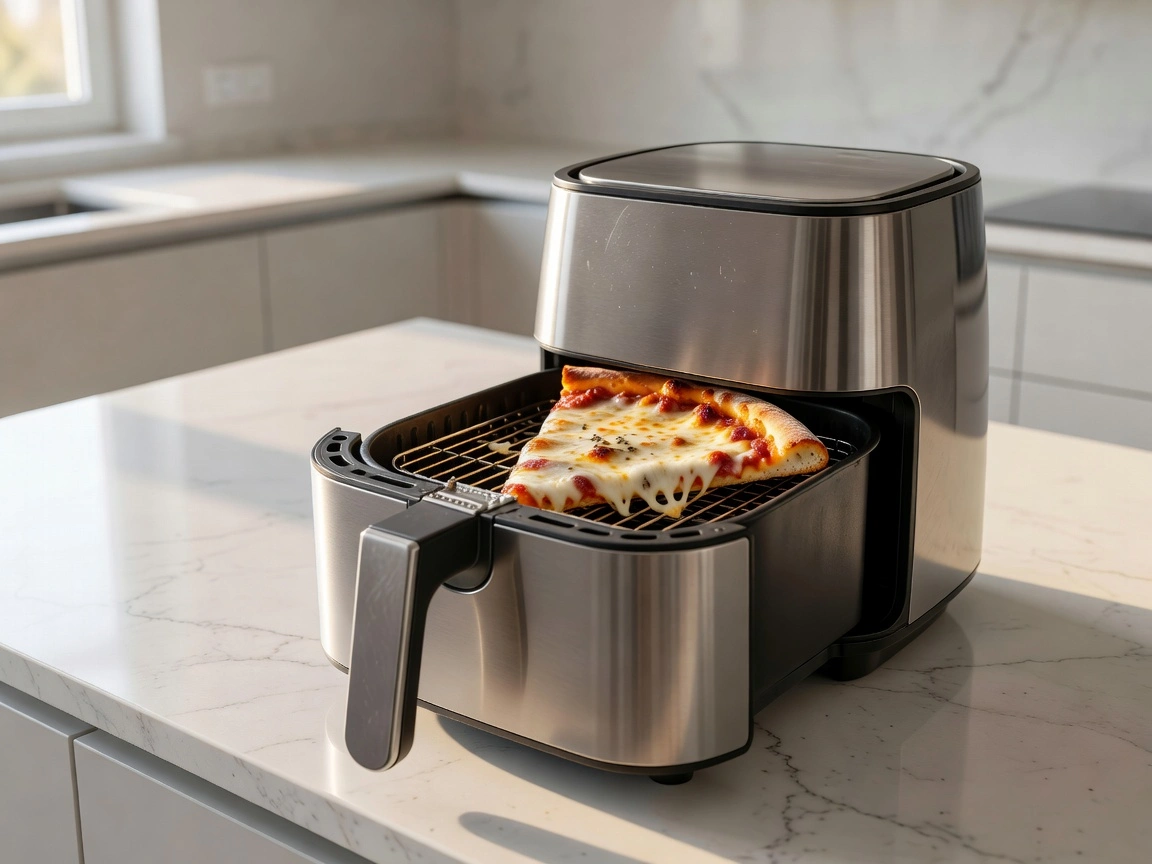
1) Place the slice in a single layer
Set the slice in the basket or tray so air can move around it. If the slice folds or overlaps another piece, the center usually warms unevenly and the edges can dry out before the middle is ready.
A single slice is the easiest to control. Two slices can work if they fit flat with space between them.
2) Preheat by default, and skip it only when speed matters more than crispness
For routine use, preheat the air fryer for about 2 to 3 minutes before adding the pizza. That gives you a more predictable start and usually helps the crust firm up sooner.
Skip preheating if:
- you are only warming one quick slice and do not mind a softer bottom
- convenience matters more than texture
- your air fryer heats very aggressively and tends to brown fast
3) Reheat briefly, then check early
This is the most important habit. Start with a short interval, then look at the cheese and touch the crust edge carefully with tongs or a fork.
You are looking for three signs:
- cheese that has softened or melted again
- a crust that feels hot through the center
- a bottom that is crisped, but not hard or dry
If the slice is close but not quite there, add 30 to 60 seconds more and recheck.
4) Let it rest for a moment before eating
A short rest helps the cheese settle and keeps you from biting into a slice that looks done on top but still steams inside. Even a minute or two can improve the texture.
How Temperature and Time Change by Pizza Type
Different crusts need different treatment because thickness changes how quickly the center heats. Thin slices reheat fast, while thicker slices need more time for the middle to warm.
| Pizza type | Temperature range | Time range | Check interval |
|---|---|---|---|
| Thin crust | 325°F to 350°F | 2 to 4 minutes | Check at 2 minutes |
| Hand-tossed / regular slice | 350°F | 3 to 5 minutes | Check at 3 minutes |
| Thick crust | 330°F to 350°F | 4 to 6 minutes | Check at 4 minutes |
| Deep-dish or very thick slice | 320°F to 340°F | 6 to 8 minutes | Check at 5 minutes |
Thin crust
Thin slices reheat fast, which is both the advantage and the risk. They can become crisp and tasty, but they can also dry out in a hurry. Keep the time short and check early.
Hand-tossed or regular crust
This is the easiest style to reheat well. The crust has enough body to stay pleasant, but it is not so thick that the center lags far behind. A short, moderate reheat usually works best.
Thick crust and deep-dish
Thicker slices need more time for the interior to warm. If the heat is too aggressive, the top can dry before the center is ready. In that case, use the lower end of the temperature range and extend the time in small increments instead of raising the heat.
Should You Preheat the Air Fryer?
Preheating is useful when you want the crust to firm up fast and reduce the total time the pizza spends in the hot chamber. That shorter exposure can help keep the slice from drying out.
Skip preheating if:
- you are only warming one quick slice and do not mind a softer bottom
- convenience matters more than texture
- your air fryer heats very aggressively and tends to brown fast
Preheat if:
- you want a more oven-like crisp finish
- the pizza is thicker and needs a cleaner heat start
- you are reheating a slice that already feels a little soft or limp
The trade-off is simple: preheating usually improves texture, but it adds one more step.
Foil, Parchment, or No Liner: What Works Best
The cleanest crust usually comes from placing the pizza directly in the basket or on the tray. That gives the hot air the best access to the bottom of the slice.
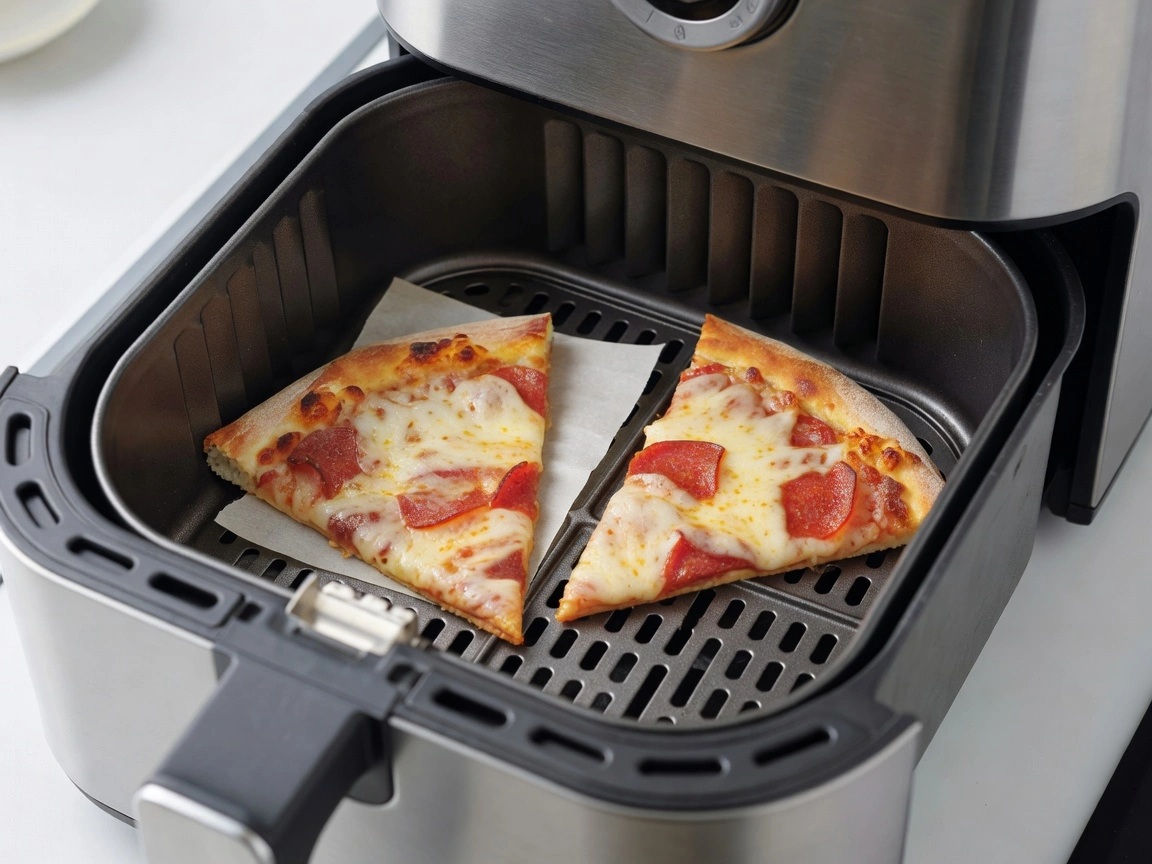
No liner
This is the best choice when crispness matters most. It gives you the most direct airflow and usually the best bottom texture.
Parchment
Parchment can help if the slice is sticky, delicate, or messy with cheese and toppings. Use only air-fryer-safe parchment and keep it from blocking airflow too much. Too much coverage can soften the crust.
Foil
Foil can make cleanup easier, but it can also reduce airflow if it covers too much of the basket. It is best used carefully and only when needed. Keep it secured so it does not move toward the heating element.
A useful rule: use no liner for the best texture, parchment for easier cleanup, and foil only when you truly need it.
How to Reheat Multiple Slices Without Uneven Results
Multiple slices can save time, but only if they fit in one layer with space around them. If slices touch, the edges may stay soft while the exposed parts dry out.
Use this decision rule:
- One slice for the most consistent result
- Two or more slices only if they lie flat and do not overlap
- Avoid stacking unless your air fryer setup specifically allows it and you can still maintain airflow
If you are reheating a mix of slice sizes, put the thicker piece where it gets the most even exposure and check the thinner one first. Thin slices often finish earlier.
How to Tell When the Pizza Is Done
The best cues are visual and tactile, not just the clock.
Look for:
- cheese that is melted again, not dried into a tight skin
- bubbling or softening around the toppings
- edges that feel hot and slightly crisp
- a crust that bends a little but does not feel soggy
If the slice is steaming heavily, it may need a very short rest rather than more time. If the crust is already crisp but the center still feels cool, give it a little more heat in a brief increment.
The goal is warm, supple cheese and a crust that has regained structure without turning hard.
Troubleshooting: Soggy, Dry, or Unevenly Heated Pizza
If the slice is soggy
Soggy pizza usually means too much trapped steam or too much liner coverage. Remove any liner if possible and give the slice a brief finish with better airflow. If it is still soft, lower the temperature a little and extend the time briefly instead of turning the heat up.
If the slice is dry
Dry pizza usually means the heat ran too long or too hot. Next time, shorten the first check interval and use a gentler setting. For the slice in front of you, stop as soon as the cheese loosens and the crust feels hot.
If the top is hot but the center is cold
That is common with thick or heavily topped slices. The fix is not more heat all at once. Instead, use a slightly longer, gentler reheat so the center catches up without overbrowning the top.
If one side is crisp and the other is soft
The slice may have sat at an angle or too close to another piece. Reheat again only briefly after repositioning it flat and with more space around it.
Air Fryer vs Microwave vs Oven for Leftover Pizza
The microwave is the fastest, but it usually softens the crust and can make the cheese rubbery. It works when speed matters most. The oven gives the most even reheating for multiple slices, but it takes longer. The air fryer is the best middle ground for one or two slices because it is faster than the oven and gives better texture than the microwave.
A Simple Rule for Better Leftover Pizza
If you remember only one thing, remember this: use moderate heat, keep the slice in a single layer, and check early. That combination does more to prevent drying out than any complicated trick.
Leftover pizza does not need to be rescued with high heat. It just needs enough warm air to bring the crust, cheese, and toppings back into balance.
For more technique-focused guidance, you may also find it helpful to compare this method with how to reheat homemade bread without drying it out and how to reheat a croissant in an air fryer. The same idea applies in both cases: protect moisture, use controlled heat, and stop as soon as the texture is right.
FAQ
Can I reheat pizza directly in the air fryer basket?
Yes. Direct contact usually gives the best bottom crispness, as long as the slice fits flat and does not block airflow.
Should I add water to the air fryer to keep pizza moist?
That is usually not necessary for pizza and can make the crust soft instead of crisp. Controlled heat and short timing are better tools.
Can I use parchment paper every time?
You can, if it is air-fryer-safe and does not cover too much of the basket. Use it when cleanup matters more than maximum crispness.
Is it safe to use foil in an air fryer?
It can be, if your appliance instructions allow it and the foil is secured so it does not interfere with airflow or touch the heating element. Check your model’s guidance first.
How many slices can I reheat at once?
Only as many as fit in a single layer with space between them. If slices overlap, results are less even and the risk of drying out goes up.
What if my pizza is already a little stale?
Use a gentler reheat and check sooner. Stale leftovers are more likely to dry out, so a shorter first pass is safer than trying to force a crisp finish.

