
How to Store Potatoes and Onions So They Stay Fresh Longer

If you buy potatoes and onions in bulk, the storage setup matters almost as much as the produce itself. The short version: keep them separate, keep them cool, dark, dry, and ventilated, and avoid sealed plastic bags unless the produce has already been cut and needs refrigeration.
That simple approach prevents the most common problems: potatoes sprouting or turning green, onions softening or molding, and both items losing quality faster than they should.
A practical home setup often looks like this:
- Potatoes in a paper bag, basket, or ventilated bin in a dark cupboard or pantry
- Onions in a mesh bag or open basket with good airflow
- Cut or cooked pieces refrigerated in airtight containers and used soon
If you only remember one rule, remember this: whole potatoes and whole onions do best at room temperature in dry, ventilated storage, not in the fridge, and not side by side.
Why Potatoes and Onions Should Usually Be Stored Separately
Potatoes and onions may seem like natural pantry neighbors, but they age badly when stored together. Onions release gases as they sit, and those gases may contribute to faster sprouting in potatoes when they are stored very close together. That matters because sprouting is not just a cosmetic issue; it shortens storage life and often means the potato is already moving past its best stage.
There is also a moisture issue. Onions prefer dry conditions, while potatoes are vulnerable to dampness and rot if condensation builds up. Put them together in a tight bin, and you increase the chance that one bad item affects the rest.
A good rule for a small kitchen is simple: if space is limited, store them in the same room but not in the same container and not pressed tightly together. A shelf across the pantry is better than a shared crate. In very small kitchens, a few feet of separation and separate breathable containers is usually enough for everyday home storage.
Best Storage Conditions for Potatoes
Potatoes keep best when they are protected from three things: light, heat, and excess moisture. Light causes greening, which is a sign the potato has been exposed too long. Heat speeds sprouting. Moisture encourages soft spots and rot.
For home storage, aim for:
- A cool location, ideally around 45°F to 55°F
- A dry location, ideally around 85% to 95% relative humidity
- A dark location
- Some airflow
A pantry, cupboard, or basement shelf can work well if it stays consistently cool and not humid. If your home runs warmer than ideal, a slightly less perfect but still workable fallback is a dry, shaded spot that stays as cool as possible and away from appliances. Avoid placing potatoes near the stove, dishwasher, sunny windows, or the refrigerator exhaust. Those spots warm up quickly and can shorten shelf life.
Choose potatoes that are already in good shape before storing them. Firm skins, no deep bruises, and no wet spots are the signs that matter most. A bruised potato may still be usable, but it should be used first because damage speeds deterioration.
Should Potatoes Be Washed Before Storing?
Usually, no. Washing before storage leaves extra moisture on the skin, and moisture is one of the fastest ways to invite rot. If your potatoes are dirty, brush off loose soil and let them dry fully if they were damp from handling. Wash them right before cooking instead.
Best Storage Conditions for Onions
Onions are a little different from potatoes, but the same broad principle applies: keep them dry and ventilated. Onions rot quickly when air circulation is poor or when they sit in a closed, humid container.
For home storage, aim for:
- A cool location, ideally around 45°F to 55°F
- A dry location, ideally around 60% to 70% relative humidity
- Good airflow
- Low light
The best storage spot for onions is one where air can move around them. That helps the outer layers stay dry and slows mold growth. A basket, mesh bag, or open bin usually works better than a sealed container.
Onions also dislike warmth and direct light. A warm cabinet above the oven is a poor choice. So is a plastic produce bag left bunched on the counter, where condensation can collect.
If an onion has a papery outer layer but feels firm underneath, it is usually still in good storage condition. If it feels soft, damp, or smells off, it should move out of storage and into the discard pile.
Are refrigerated whole onions ever acceptable?
Usually, no, but there are short-term exceptions. In a very hot kitchen or during a brief emergency when a cool, dry, ventilated space is unavailable, refrigeration is better than leaving whole onions in heat and humidity. If you do refrigerate a whole onion, keep it dry, unwrapped, and away from moisture. Expect the texture to soften faster than it would in ideal pantry storage.
Where to Store Them in a Home Kitchen, Pantry, or Small Space
The best storage location is not always the fanciest one. It is the place in your home that stays cool, dark, dry, and out of the way of heat sources.
Pantry or cupboard
This is the easiest option for most home cooks. Use a lower shelf, away from appliances and direct light. If the pantry gets warm in summer, it may still work for short-term storage, but check the produce more often.
Basement or cool utility area
A basement can be excellent if it stays dry and does not get musty. This is often the best space for bulk shoppers because it gives potatoes and onions the cooler environment they prefer.
Small kitchen with limited storage
If you do not have a pantry, use separate breathable containers in the coolest cabinet you have. Keep them away from the stove, sink, and dishwasher. Even a shaded shelf can work better than a sealed bin in a hot cabinet.
Countertop storage
This is the least ideal option, but it can work briefly if the area is cool and shaded. Use it only if you plan to use the produce fairly soon.
Best Containers and Bags for Airflow and Protection
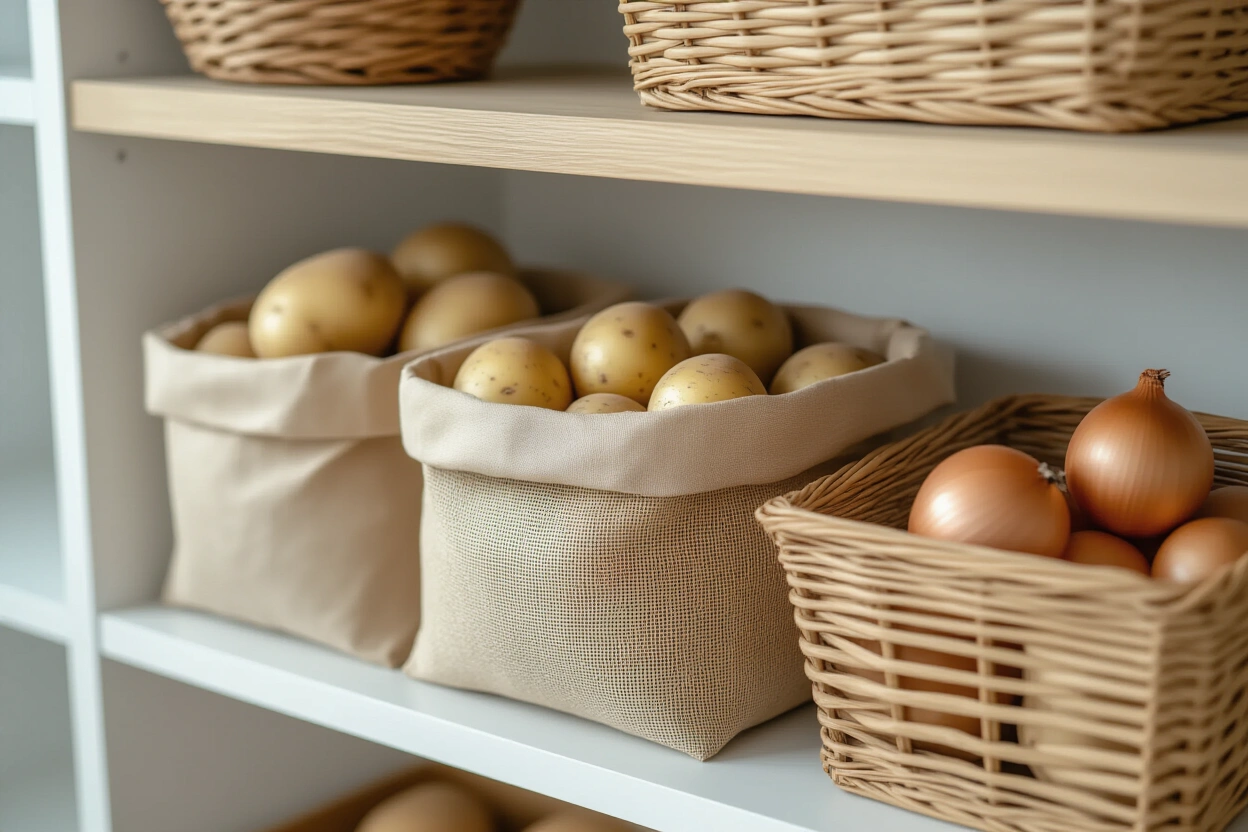
The container matters because it affects both airflow and bruising. You want enough ventilation to prevent moisture buildup, but enough protection that the produce does not get knocked around.
Mesh bags
Mesh bags are one of the best choices for onions and can also work for potatoes if the space is dark enough. They allow strong airflow, which helps reduce moisture problems. The trade-off is that they offer little protection from light, so they are best used inside a pantry or cabinet.
Paper bags
Paper bags are useful for potatoes because they block light better than mesh and still allow some airflow. They are not the best choice for very damp spaces, but they strike a practical balance for many kitchens.
Baskets
Baskets are convenient and breathable. They work well when you need quick access and want to avoid crushing the produce. The downside is that baskets expose the contents to light and dust, so they are best kept in a dark cupboard or pantry.
Open bins
A ventilated bin can be a good bulk-storage solution if it is not sealed tight. Choose one with air holes or leave the lid off. A fully closed plastic bin traps moisture and often causes more problems than it solves.
What to avoid
Avoid sealed plastic bags for whole potatoes or onions. They trap humidity, and trapped humidity leads to mold, softening, and faster spoilage.
Should You Refrigerate, Freeze, or Keep Them at Room Temperature?
This is where many home cooks run into trouble. The best choice depends on whether the produce is whole, cut, or cooked.
Whole potatoes
Whole potatoes usually do better at room temperature in a cool, dark, dry place. Refrigeration is not the first choice for most home storage because it can change texture and quality. A refrigerator can be a temporary fallback in a hot home, but it is not the preferred long-term setup.
Whole onions
Whole onions also usually do better outside the refrigerator, provided the space is dry and ventilated. Refrigeration can make them soft or damp unless they are already cut. For short-term emergency storage, refrigeration is acceptable if the onions are kept dry and used sooner rather than later.
Cut potatoes or onions
Once they are cut, refrigeration becomes the safer short-term option. Keep them in airtight containers and use them promptly.
Freezing
Freezing can help for prepared forms, but it is not the best answer for raw whole potatoes or raw whole onions. Texture changes are common, so freezing is usually better for cooked or partially prepared produce than for fresh whole items.
A simple decision rule helps here: whole produce goes in a cool pantry-style space; cut produce goes in the refrigerator; freezing is for longer-term storage when texture changes are acceptable.
How Long Potatoes and Onions Last in Storage
Shelf life depends on freshness at purchase, storage conditions, and how often you inspect the produce. A firm potato or onion stored correctly will last longer than one that was already damaged or damp when you brought it home.
Use these practical ranges as a general guide:
Potatoes
- Whole, uncooked potatoes: about 2 to 4 weeks in a typical home pantry; often longer in ideal cool, dark, dry storage
- Cut raw potatoes: about 1 to 2 days refrigerated; longer only if stored properly in water or sealed cold storage
- Peeled potatoes: about 1 to 2 days refrigerated, especially if kept submerged in cold water
- Cooked potatoes: about 3 to 5 days refrigerated
Onions
- Whole, uncooked onions: about 1 to 2 months in typical home storage; sometimes longer in very good conditions
- Cut onions: about 7 to 10 days refrigerated in an airtight container
- Peeled onions: about 7 to 10 days refrigerated if kept dry and covered
- Cooked onions: about 3 to 5 days refrigerated
For meal planners, the best habit is rotation: put older produce where you can see it first and use it before the newer batch. That one habit cuts waste more effectively than almost any container upgrade.
How to Store Cut, Peeled, or Cooked Potatoes and Onions
Once potatoes or onions are cut, peeled, or cooked, the storage rules change. The protective skin is gone, which means the exposed flesh dries out faster and picks up odors or moisture more easily.
Cut onions
Store cut onions in an airtight container in the refrigerator. Use them as soon as practical. If the pieces are slimy or smell sour, discard them.
Cut or peeled potatoes
Keep peeled or cut potatoes submerged in cold water in the refrigerator if you plan to use them soon, or store them in an airtight container if they are already cooked. For cut raw potatoes stored in water, use them within 24 hours, and do not leave them out at room temperature for long. If the water turns cloudy, the potatoes smell off, or they sit too long, discard them.
Cooked potatoes or onions
Cooked leftovers should be cooled promptly, covered, and refrigerated. A shallow container helps them cool more evenly than a deep bowl.
The key difference is simple: whole produce wants airflow; cut or cooked produce wants cold, covered storage.
Common Storage Mistakes That Cause Sprouting or Rot
Most spoilage problems come from a few repeat mistakes:
- Storing potatoes and onions together in the same bin
- Using sealed plastic bags for whole produce
- Keeping them near heat, sunlight, or steam
- Washing before storage and leaving moisture on the surface
- Storing damaged produce with good produce
- Ignoring early soft spots, mold, or sprouting
That is why regular checks matter. If you notice one item leaking, molding, or smelling off, remove it right away so it does not sit against the rest of the batch.
How to Tell When Potatoes or Onions Are Still Usable
You do not need a complicated inspection. A few simple checks are enough.
Potatoes
A potato is usually still usable if it is firm and mostly dry. Small sprouts can sometimes be removed if the potato is otherwise sound, but extensive sprouting, strong greening, or a soft, shriveled texture means it is time to discard it.
Onions
An onion is usually still usable if it feels firm and dry and the outer layers are intact. Loose papery skin is normal. Softness throughout, mold, or a leaking center are warning signs that it is no longer worth keeping.
Smell test
A fresh potato should smell earthy, not rotten. A fresh onion should smell like an onion, not sour or musty. When the odor changes, the storage window is usually closing fast.
What to Do With Potatoes or Onions That Are Starting to Spoil
Borderline produce can sometimes be salvaged, but only if the damage is limited.
When trimming may be acceptable
If a potato has a small bad spot but is otherwise firm, you can cut away the damaged area and use the rest soon. The same approach may work for an onion with a dry outer layer that is affected while the inside remains firm.
When to throw it out
Discard the produce if:
- It is soft throughout
- It smells rotten or sour
- There is visible mold
- It is leaking moisture
- The greening or sprouting is extensive
When in doubt, toss it. The cost of one potato or onion is small compared with the waste of storing bad produce alongside good produce and losing the whole batch.
Quick Comparison: Potatoes vs. Onions at a Glance
| Storage question | Potatoes | Onions |
|---|---|---|
| Best environment | Cool, dark, dry, ventilated | Dry, ventilated, low moisture |
| Ideal temp | About 45°F to 55°F | About 45°F to 55°F |
| Ideal humidity | About 85% to 95% relative humidity | About 60% to 70% relative humidity |
| Store together? | Usually no | Usually no |
| Best container | Paper bag, basket, ventilated bin | Mesh bag, basket, ventilated bin |
| Refrigerator for whole produce? | Usually not ideal | Usually not ideal |
| Refrigerator for cut produce? | Yes, short term | Yes, short term |
| Biggest risks | Light, heat, moisture, sprouting | Moisture, poor airflow, mold |
Final Practical Rule
If you want the simplest reliable system, use this:
- Keep whole potatoes in a dark, cool, dry spot with airflow
- Keep whole onions in a separate dry, ventilated spot
- Refrigerate cut or cooked pieces promptly
- Check stored produce regularly and use older items first
That setup is simple, realistic, and works well for home cooks trying to reduce waste without overcomplicating storage.
FAQ
Can potatoes and onions be stored together?
Usually not. They keep better when stored separately because onions may contribute to faster sprouting in potatoes, and shared storage can trap moisture.
Should potatoes and onions be refrigerated?
Whole potatoes and whole onions usually do better outside the refrigerator in a cool, dark, dry space. Cut or peeled pieces should go in the fridge. Refrigeration can be a temporary fallback in hot conditions, but it is not the best long-term setup for whole produce.
What is the best container for potatoes and onions?
Breathable containers work best: paper bags, mesh bags, baskets, or ventilated bins. Avoid sealed plastic bags for whole produce.
Should potatoes be washed before storing?
No, not usually. Extra moisture can speed rot. Brush off loose dirt and wash them right before cooking.
How long do potatoes last?
Whole potatoes often last about 2 to 4 weeks in a typical home pantry, and longer in ideal cool, dark, dry storage. Cut or peeled potatoes should be refrigerated and used within 1 to 2 days, or within about 24 hours if stored in water.
How long do onions last?
Whole onions often last about 1 to 2 months in home storage. Cut or peeled onions usually last about 7 to 10 days refrigerated in an airtight container. Cooked onions usually last about 3 to 5 days.
Can you freeze potatoes or onions?
Freezing is more practical for cooked or prepared forms than for raw whole produce. Raw texture often changes after freezing.
How do I know when to throw them out?
If a potato or onion is soft, moldy, leaking, or smells rotten, discard it. Small surface damage may be trimmed if the rest is still firm and sound.
What if I only have a small kitchen?
Use separate breathable containers in the coolest, darkest cabinet you have. Even a small setup works if you keep them away from heat, moisture, and direct light.
Where should I put older produce?
Place older potatoes and onions in front so they are used first. Rotation is one of the easiest ways to cut waste.
For related storage guidance, you may also find these helpful: how to store buttercream frosting in the fridge without ruining the texture and how to store chocolate ganache for cake decorating.
