
How to Tenderize Meat with Baking Soda Fast and Easy
Baking soda can tenderize meat quickly by changing the surface pH, which helps proteins stay softer during cooking. Use a small amount, keep the rest time short, and rinse and dry the meat before high-heat cooking.
Using baking soda is one of the fastest ways to soften meat at home, especially for quick-cook dishes. When used correctly, it can improve texture without turning the meat mushy or making it taste off.
- Fast method: Baking soda works quicker than most marinades for thin, quick-cooking meat.
- Use lightly: Small amounts prevent a soapy taste and strange texture.
- Best for: Beef strips, chicken pieces, pork slices, and shrimp.
- Cook smart: Stir-frying and quick searing usually give the best results.
- Know the limit: Very tough cuts still need slow cooking or another tenderizing method.
How Baking Soda Tenderizes Meat: The Science Behind the Fastest Home Method
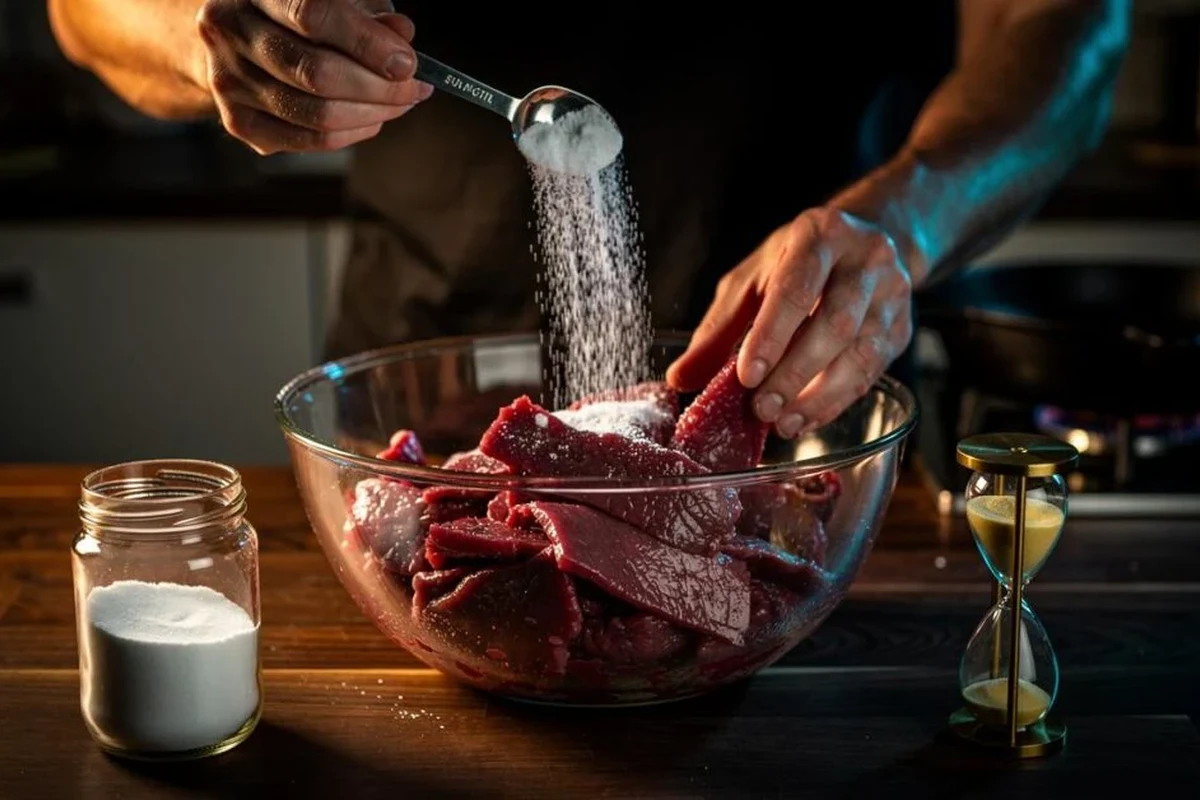
Baking soda raises the surface pH of meat, which changes how proteins behave during cooking. In simple terms, the proteins are less likely to tighten up as aggressively, so the meat stays more tender and juicy.
This works faster than most marinades because you are changing the meat’s surface chemistry directly instead of waiting for flavoring liquids to slowly penetrate. Marinades can add flavor, but they usually do not tenderize as quickly unless they contain acidic ingredients, enzymes, or a long rest time.
Baking soda is especially useful for high-heat cooking because it helps the outside of the meat brown quickly while the inside stays softer.
Why baking soda changes meat texture faster than marinades
Most marinades work slowly because salt, acid, and seasonings need time to move into the meat. Baking soda acts on the outer layer much sooner, which is why it is popular for stir-fries and thin cuts.
It is not magic, though. If the meat is very tough, baking soda can improve the surface texture, but it will not fully replace slow cooking for connective tissue-heavy cuts.
Which cuts benefit most from this technique
This method works best on thin slices, small cubes, and quick-cooking proteins. Beef for stir-fry, chicken breast strips, pork slices, and shrimp all benefit when they need a softer bite.
It is less useful for thick roasts, brisket, chuck, or other cuts that need time and moisture to break down collagen. For those, braising or another slow method is usually a better choice.
How Much Baking Soda to Use for Different Types of Meat
The safest approach is to use a very small amount and apply it evenly. Too much baking soda can leave a slippery texture or a soapy, metallic taste.
General measurement guidelines by weight and cut
A common home guideline is about 1/4 teaspoon of baking soda per 12 ounces of sliced meat, or a light dusting for very small batches. For cubes or thicker pieces, use just enough to coat the surface lightly and evenly.
If you are unsure, start with less. You can always add more next time, but you cannot easily fix an overtreated batch once the texture or flavor changes.
Differences for beef, chicken, pork, and shrimp
Beef usually tolerates this method well, especially for thin strips used in stir-fry. Chicken breast also benefits, but it needs a careful rinse and dry step so the texture stays clean and not chalky.
Pork slices respond similarly to beef, though lean cuts can become unpleasant if overtreated. Shrimp needs the shortest treatment of all because its delicate protein structure changes quickly.
Exact amounts can vary with cut thickness, how finely the meat is sliced, and whether you are using a dry coat or a slurry. A little extra time or too much powder can change the final texture more than many beginners expect.
How to avoid overusing baking soda and creating a soapy taste
Use a light hand and keep the contact time short. The goal is surface tenderizing, not soaking the meat in baking soda.
After treatment, rinse thoroughly if needed, then pat the meat dry before cooking. That step removes excess powder and helps the meat brown instead of steaming.
Step-by-Step Method for Tenderizing Meat with Baking Soda
There are two common ways to apply baking soda: a dry coating or a slurry. Both can work, but the best choice depends on the cut and how much surface coverage you need.
Slice the meat into thin strips, small cubes, or bite-size pieces if possible. Smaller pieces get more even contact and need less time.
Toss the meat with a measured amount of baking soda, or mix it with a small amount of water to make a thin slurry. Coat only the surface, not the entire bowl with powder.
Let the meat sit briefly based on thickness. Keep the rest short so the texture improves without turning soft in a strange way.
Rinse if needed, then pat very dry with paper towels. Dry meat browns better and gives you a cleaner flavor.
Season and cook soon after treatment for the best texture. This is especially important for quick methods like stir-frying and searing.
Dry coating vs. baking soda slurry methods
A dry coating is simple and works well for small pieces when you can toss them evenly. A slurry spreads more easily over irregular shapes, so it can be helpful for shrimp or unevenly cut meat.
If you use a slurry, keep the mixture thin. A heavy paste can cling too much and make rinsing harder later.
Resting times for thin slices, cubes, and larger pieces
Thin slices usually need only a short rest, often around 15 to 20 minutes. Cubes may need a little longer, while larger pieces should still be treated carefully so the surface does not over-soften.
For delicate proteins like shrimp, shorter is safer. If you are not sure, check the texture early rather than waiting longer than necessary.
Rinsing, patting dry, and preparing for cooking
Rinse the meat under cool water if the coating is visible or if the amount used was more than a very light dusting. Then blot it dry thoroughly so excess moisture does not interfere with browning.
This is one of the most important steps for good results. Wet meat tends to steam, while dry meat sears more cleanly and develops better color.
Always wash hands, bowls, and cutting boards after handling raw meat. Follow USDA food safety guidance for refrigeration, cross-contamination, and safe minimum cooking temperatures for the specific protein you are preparing.
Best Cooking Methods After Tenderizing with Baking Soda
Once the meat is treated, cook it using a method that rewards quick browning and short heat exposure. That is where this technique gives the biggest payoff.
Stir-frying and quick searing for the best texture
Stir-frying is the classic use case because the meat cooks fast and stays tender. Quick searing works well too, especially for thin beef or chicken strips that need color without long cooking time.
If you are also interested in other quick-cooking appliances, our guide on does air fryer dry out chicken explains why moisture control matters in fast heat methods.
When to use this method before grilling, roasting, or braising
You can use baking soda before grilling or roasting if the meat is cut small and will cook quickly. It is less helpful for large roasts, where the inside needs more time than the surface treatment can provide.
For braising, the method is usually unnecessary because slow moist heat already helps tough meat become tender. In that case, salt and proper cooking time often matter more than baking soda.
How tenderized meat behaves during browning and doneness
Treated meat often browns a little faster because the surface dries and cooks efficiently. That can be helpful, but it also means you should watch the pan closely so the edges do not overcook.
The finished texture should feel softer, not mushy. If the meat looks pale, wet, or slippery, it probably needs better drying before it hits the heat.
Common Mistakes That Ruin the Result
Most problems with baking soda come from using too much, waiting too long, or skipping the cleanup step. The method is simple, but it still needs restraint.
The meat tastes bitter, slippery, or slightly soapy.
Too much baking soda or too long a rest is the usual cause. Use less next time and shorten the treatment window.
Leaving baking soda on too long
Long contact time can push the texture too far and create an odd mouthfeel. This is especially noticeable on thin chicken or shrimp, where the surface changes quickly.
If a recipe calls for a rest, follow the time closely and do not assume longer is better.
Using too much on delicate proteins
Delicate proteins need less baking soda than firmer cuts. Shrimp and thin chicken slices can become soft in an unpleasant way if you use a heavy hand.
Start with a small amount, especially if you are new to this method.
Skipping the rinse or drying step
Skipping the rinse can leave an obvious baking soda taste on the surface. Skipping the drying step can also reduce browning and make the pan release extra moisture.
If you want a better sear, dry the meat well before it touches the heat.
Expecting baking soda to fix very tough cuts alone
Baking soda helps surface texture, but it does not break down all the connective tissue in a tough roast. For those cuts, time, moisture, and the right cooking method are still essential.
If you want a broader look at high-heat kitchen safety and appliance use, our article on are air fryers dangerous covers practical concerns for fast-cooking equipment.
Food Safety, Storage, and Make-Ahead Tips
Raw meat should always be handled with care, even when you are using a simple pantry ingredient. Baking soda does not make meat safer by itself; proper refrigeration and safe cooking still matter.
How long treated meat can sit before cooking
Treat the meat shortly before cooking when possible. If it sits too long after the baking soda step, the texture can drift too far and the surface may become less appealing.
For best quality, move from treatment to cooking as soon as the rest time is complete.
Refrigeration rules for raw meat after treatment
If you need to make it ahead, keep the treated meat refrigerated in a covered container. Do not leave raw meat at room temperature for extended periods.
Use the same general food safety habits you would use for any raw protein: cold storage, clean tools, and separate prep surfaces.
Safe handling when tenderizing in advance
Label the container if you are preparing multiple items at once, and keep raw meat away from ready-to-eat foods. This is especially important in busy kitchens where cross-contact can happen quickly.
Food safety guidance can vary by protein and local conditions, so check USDA or FDA recommendations for storage time, minimum internal temperatures, and safe handling practices before cooking.
When Baking Soda Is the Right Choice and When It Is Not
This method is best when you need speed, tenderness, and a clean finish in a quick-cooking dish. It is not the right answer for every cut or every style of cooking.
Best use cases for busy home cooks and weeknight meals
Use baking soda when you are making stir-fry, skillet meals, fried rice with meat, or fast noodle dishes. It is especially helpful on weeknights when you do not have time for a long marinade.
If you are interested in other quick kitchen techniques, our guide on do air fryers need to preheat explains how short prep steps can affect final texture in fast cooking.
Situations where salt, marinade, or mechanical tenderizing works better
Salt is often better when flavor is the main goal and you have enough time for a proper rest. Marinades are useful for flavor layering, while mechanical tenderizing can help thicker cuts by physically breaking the surface.
For some recipes, the best answer may be a combination of methods rather than baking soda alone.
Simple recap for choosing the right tenderizing method
Choose baking soda when you want quick surface tenderness on thin or bite-size meat. Choose salt, marinade, or slow cooking when the cut is thick, tough, or meant for deeper flavor development.
The most reliable result comes from matching the method to the cut and the cooking plan. Used carefully, baking soda is a fast, practical tool for home cooks who want softer meat without a long wait.
- Measure baking soda carefully.
- Use thin slices or small pieces for best results.
- Keep the rest time short.
- Rinse and pat dry before cooking if needed.
- Cook the meat soon after treatment.
- Use a light coating and even coverage.
- Dry the meat well before searing.
- Follow USDA-safe handling practices.
- Leaving baking soda on too long.
- Using it as a fix for very tough cuts.
- Skipping cleanup and drying steps.
For most home kitchens, the best approach is simple: use a small amount, keep the timing short, and cook the meat with high heat or another method that matches the cut. That gives you tender texture without the off-flavors that come from overdoing it.
If you want a fast, easy way to improve the texture of thin beef, chicken, pork, or shrimp, baking soda can work very well when used sparingly. If the cut is very tough or the recipe depends on deep flavor, a salt-based marinade or slow cooking is usually the better choice.
Frequently Asked Questions
Use a very small amount, such as about 1/4 teaspoon per 12 ounces of sliced meat, then adjust based on cut thickness. Less is safer than more because too much can affect flavor and texture.
Often yes, especially if you used more than a very light dusting. Rinsing and patting the meat dry helps remove excess baking soda and improves browning.
Thin slices usually need only a short rest, often around 15 to 20 minutes. Delicate proteins like shrimp need even less time.
It can help the surface, but it will not fully tenderize very tough cuts by itself. Slow cooking, braising, or another long-cook method is usually a better choice.
Thin beef, chicken strips, pork slices, and shrimp are the most common choices. These proteins benefit most when you want quick tenderness for fast cooking.
Yes, when used correctly with proper food safety practices. Keep raw meat refrigerated, avoid cross-contamination, and cook to safe internal temperatures recommended by USDA or FDA guidance.

