
Milk Instead of Water in Bread: What Changes, What Works, and How to Adjust

If you’ve ever looked at a bread recipe and wondered whether milk can stand in for water, the short answer is yes — but not always with a straight one-to-one swap and not always with the same results.
Milk can make bread softer, richer, and often more deeply browned, depending on bake time and oven temperature. That’s exactly why it’s welcome in sandwich loaves, dinner rolls, and other enriched doughs. But if you’re aiming for a lean, crusty loaf with a crisp bite and open crumb, water usually does the better job.

The key is understanding what milk adds to dough: not just liquid, but also milk proteins, lactose, and fat. Those extras change hydration, browning, flavor, and even how the dough feels in your hands.
Can You Use Milk Instead of Water in Bread?
Yes, you can use milk instead of water in many bread recipes. The better question is whether the recipe style wants that change.
Milk works especially well in:
– sandwich bread
– dinner rolls
– brioche-style or enriched loaves
– soft buns
– pull-apart breads
Water is usually better for:
– baguettes
– rustic lean loaves
– crusty country bread
– breads where a crisp crust matters more than tenderness
Think of it as a trade-off. Milk usually gives you a softer, more tender loaf, but it can also mute the crispness that many bakers want in lean bread. If your goal is a pillowy crumb and golden top, milk is a smart choice. If your goal is structure, chew, and a crackly crust, water is usually the better fit.
What Changes When Milk Replaces Water
Milk is not just “water with a little flavor.” Cow’s milk is about 90% water, and the rest is made up of fat, protein, sugar, and minerals. That matters in dough.
1) Hydration feels slightly different
Because milk is not pure water, replacing water with milk can make dough feel a little tighter or drier than expected. In practical terms, the dough may need a small splash more liquid to reach the same feel as the original formula.
That doesn’t mean every recipe needs a change. It means you should judge the dough by texture, not by the assumption that the swap is identical.
2) Crumb becomes softer
Milk-enriched bread usually bakes up with a softer, more tender crumb. The fat and proteins help reduce the “lean” quality of a water-only dough, which is why milk bread often feels plush and sliceable.
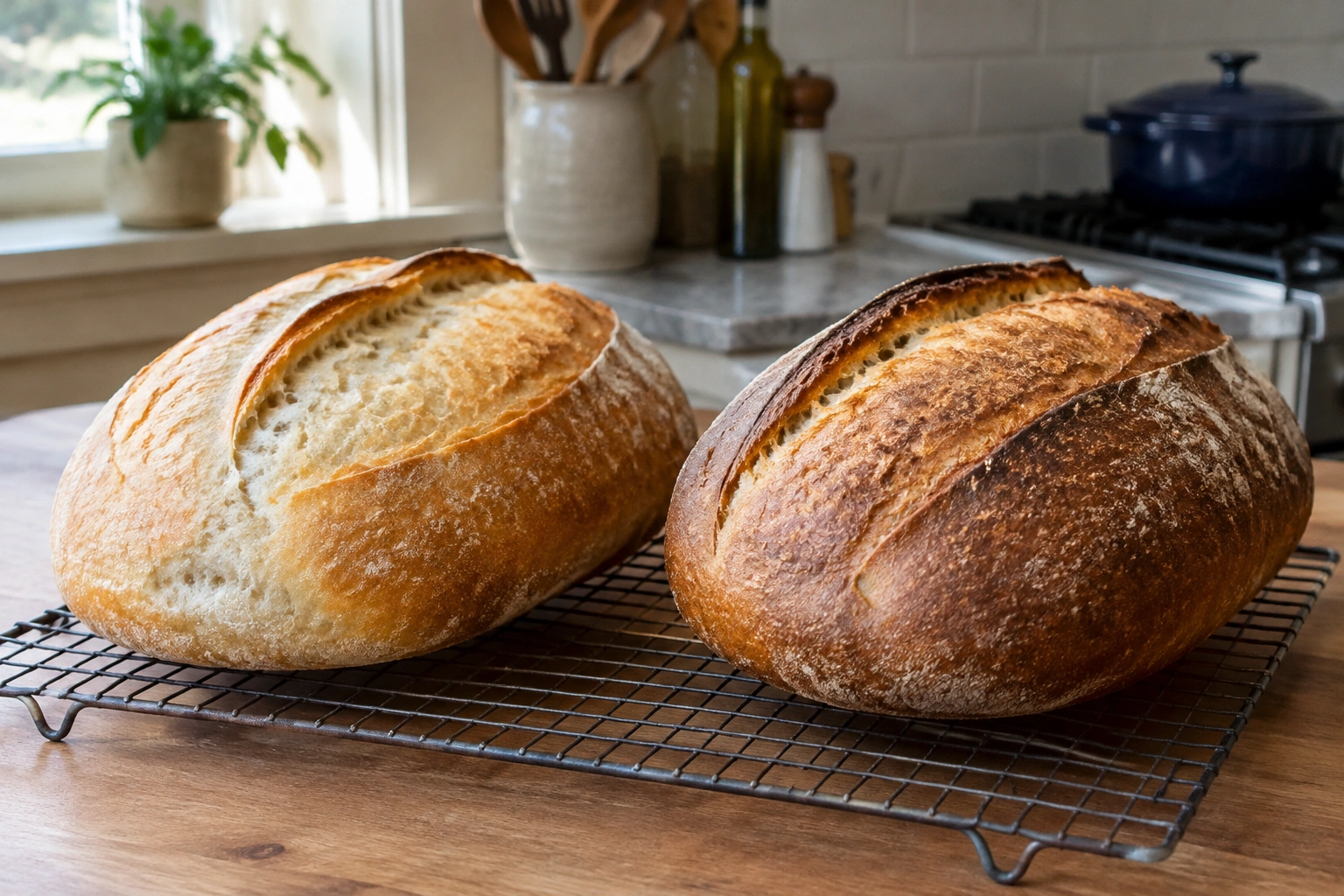
This is one reason milk is so common in sandwich loaves and rolls: the softness holds up well for toast, sandwiches, and breakfast bread.
3) Flavor becomes richer
Milk adds a mild sweetness and a fuller dairy flavor. Even when the bread doesn’t taste overtly “milky,” it usually tastes rounder and less austere than water-based bread.
That richer flavor can be a plus in enriched doughs, but it can also work against a very clean, wheaty profile.
4) Browning happens faster
Milk encourages browning because of lactose and milk proteins, which support the Maillard reaction. In plain language: milk bread tends to color more quickly and more deeply than water bread.
That’s a benefit if you want a beautiful golden crust. It’s a problem if your loaf is still baking inside while the outside is already darkening.
5) Fermentation may feel a little slower or more restrained
Milk can slightly change the dough environment, and enriched doughs often ferment more gently than lean ones. In practice, that can mean proofing takes a bit longer or the dough feels less lively than a water-only dough.
The effect is usually modest, not dramatic. But if you’re used to a lean dough’s speed, milk can make the process feel different.
Best Types of Bread for Milk Substitution
Milk shines in breads where tenderness is the goal.
Best matches for milk
- Sandwich bread: soft crumb, good slicing, gentle flavor
- Dinner rolls: rich flavor and tender bite
- Pull-apart loaves: softness helps the loaf stay pleasant after baking
- Sweet breakfast breads: milk supports richness and browning
Better left with water
- Baguettes: milk softens the crust and changes the character
- Crusty boules: water supports a leaner structure
- Pizza dough: milk can make the dough less crisp and less extensible in the style many bakers want
- Long-fermented artisan loaves: water keeps the formula cleaner and more predictable
A useful rule: if the bread is meant to be soft, milk is usually welcome. If the bread is meant to be crusty, chewy, or lean, water usually wins.
Milk-to-Water Substitution Guide
For many home bakers, the simplest starting point is this:
Use the same volume of milk as the water in the recipe, then hold back a small amount at first and add only if the dough feels too stiff.
A practical rule of thumb:
– start with 1:1 milk for water
– hold back about 1 to 2 teaspoons per cup of liquid if you want to be cautious
– add that reserved liquid only if the dough feels tight, dry, or hard to knead
That said, milk is not a perfect 1:1 substitute because it contains solids. If the dough feels firmer than expected, add a small amount of extra liquid gradually — usually a teaspoon or two at a time for small batches.
Practical decision guide
- Using whole milk: start with the recipe’s water amount, then check dough feel
- Using skim milk: usually closer to water in behavior, but still not identical
- Using a rich dough with butter or eggs already in it: be more cautious with extra milk, because the dough may become too heavy if you add too much enrichment
- Using a lean dough: expect more noticeable changes in handling and crust
A helpful example from bread formula thinking: when a baker wants to keep hydration consistent, they may need a very small amount more milk than the recipe’s water amount because milk is only about 90% water. In other words, if a formula is designed around water, milk may need a small adjustment to reach the same dough consistency, but the adjustment is usually modest.
Tools and Ingredients You’ll Need
You don’t need special equipment, but a few basics make the swap much easier:
- kitchen scale for accuracy
- measuring cups or spoons if the recipe uses volume
- mixing bowl
- dough scraper
- thermometer if you want to control milk temperature
- loaf pan, sheet pan, or Dutch oven, depending on the bread
- fresh milk of your choice
- flour, yeast, salt, and any enrichment ingredients already in the recipe
If the recipe includes sugar, butter, eggs, or honey, pay attention to how rich the formula already is. Milk on top of a heavily enriched dough can push the bread toward very soft, slightly heavy results if the balance is off.
How to Substitute Milk for Water Step by Step
1) Check the bread style
Ask what the bread is supposed to be. Soft sandwich loaf? Milk is a strong candidate. Crusty artisan loaf? Water is probably the better match.
2) Choose the right milk temperature
If the recipe calls for cold or room-temperature liquid, milk can usually go in cold or cool without issue. If the recipe calls for warm liquid, use milk that’s lukewarm, roughly 95°F to 110°F (35°C to 43°C). That’s warm enough to help yeast without risking damage.
If you’re using scalded milk, heat it to just below a simmer, then cool it back down before mixing. Scalding is mostly a legacy step in older formulas; in many modern bread recipes it is not necessary unless the recipe specifically calls for it or you want to change the milk’s effect on the dough.
3) Replace the water with milk
For most home recipes, begin with the same amount of milk as the water listed in the formula.
4) Mix and judge the dough
After mixing, feel the dough. If it seems stiffer than the original recipe usually does, add a little more liquid gradually. Milk dough should be supple, not dry and tight. A good sign is that it feels soft and elastic, but still pulls together cleanly rather than tearing or resisting every stretch.
5) Expect a softer dough finish
Once gluten develops, milk dough often feels smoother and richer. That doesn’t mean it should be slack or sticky beyond reason. You still want enough structure to shape cleanly.
6) Watch proofing carefully
Milk-enriched dough usually does not need a completely different fermentation schedule, but it may proof a bit more slowly than a lean dough. Expect a similar proof time or a slightly longer one, especially if the dough also contains sugar, butter, or eggs. Keep the dough warm and steady rather than hot; a moderate proofing environment usually works best.
7) Bake with browning in mind
Because milk browns faster, keep an eye on the crust. If the top is darkening too quickly before the loaf is done, lower the oven temperature slightly or tent the loaf with foil.
How to Choose the Right Milk
Whole milk
Whole milk gives the richest result. It adds more fat, which usually means a softer crumb and more flavor. It’s a strong choice for sandwich bread, rolls, and sweet doughs.
Skim milk
Skim milk brings some milk solids without as much fat. That makes it a lighter option if you want a touch of tenderness and browning without the full richness of whole milk.
Plant-based milk
Plant milks vary widely, so they do not all behave the same way. For bread, the closest stand-ins for dairy milk are usually unsweetened, higher-protein plant milks with a neutral flavor. These tend to behave more like dairy milk because they contribute more body and less added sweetness.
By contrast, some plant milks can underperform in bread if they are low in protein, very thin, or heavily sweetened. Lower-protein options may give less structure and less browning support, while added sugar can make the crust color too quickly or change the flavor.
If you’re using plant milk, check the ingredient list. A bread-friendly option is one with a neutral flavor and no strong added sweeteners. Even then, expect some variation from dairy milk because protein, fat, and sugar levels are different.
Milk vs Water in Bread Dough: A Quick Comparison
| Factor | Water | Milk |
|---|---|---|
| Crumb texture | Leaner, chewier | Softer, more tender |
| Flavor | Cleaner, more neutral | Richer, slightly sweeter |
| Crust color | Slower browning | Faster, deeper browning |
| Shelf feel | Often less soft over time | Usually stays softer longer |
| Best for | Crusty loaves, lean breads | Sandwich bread, rolls, enriched doughs |
| Dough handling | Predictable, straightforward | Can feel slightly tighter or richer |
| Recipe risk | Lower browning risk | Higher over-browning risk |
That table is the heart of the decision. Water keeps bread lean and crisp. Milk pushes it toward softness, color, and richness.
Adjustments for Sugar, Fat, and Baking Temperature
When you use milk, think about the rest of the formula instead of treating milk as a standalone swap.
Sugar
Milk already contributes lactose, which supports browning and a mild sweetness. If the recipe already has a lot of sugar, adding milk can make the loaf brown too quickly and taste overly sweet. If the recipe is only lightly sweetened, you usually do not need to reduce sugar just because you switched to milk.
Fat
Whole milk brings its own fat. If the dough already contains butter, oil, or eggs, you may not need extra enrichment elsewhere. Too much richness can make the bread feel heavy instead of tender. As a general rule, if the formula already includes several enrichment ingredients, keep the milk swap simple and avoid adding more fat unless the dough clearly needs it.
Baking temperature
Milk breads often benefit from a little more attention in the oven. If the crust darkens too fast, reduce the temperature slightly or cover the loaf partway through baking.
This is especially useful for pan loaves, where the crumb needs time to set before the top gets too dark.
Common Mistakes When Using Milk in Bread
Treating milk like exact water
This is the most common mistake. Milk behaves differently because of its solids, fat, and sugar.
Using milk in a bread that should stay lean
If the bread depends on a crisp crust or rustic chew, milk can push it in the wrong direction.
Overheating the milk
Hot milk can damage yeast. Warm is fine; steaming hot is not.
Adding too much extra enrichment
If the recipe already includes butter, eggs, or sugar, milk may be enough enrichment on its own.
Ignoring browning
A milk loaf can look done on the outside before it is fully baked inside. Watch the oven closely.
Troubleshooting Milk Bread Problems
The dough feels dry or tight
Add a small amount of liquid and mix again. Milk can make a dough feel firmer than expected, especially if the formula was built around water.
The loaf is dense
This often means the dough was under-hydrated, under-proofed, or both. Check whether the dough had enough time to expand and whether the liquid amount was too low.
The crust browns too fast
Lower the oven temperature slightly, tent the loaf with foil, or move the loaf to a lower rack if your oven runs hot.
The bread tastes too rich
Next time, use skim milk or reduce other enrichment ingredients. Whole milk plus butter plus sugar can become heavy fast.
The dough rises slowly
Give it more time and watch the dough, not the clock. Enriched doughs often move more slowly than lean ones, so a slightly longer proof is normal.
Practical Examples: Milk vs Water in Real Bread Recipes
Sandwich bread
This is where milk often shines. The crumb becomes soft and sliceable, which makes it ideal for toast and sandwiches. Whole milk is a strong choice if you want a classic enriched loaf.
Dinner rolls
Milk helps rolls bake up tender and pleasantly browned. If you want a softer dinner roll that stays pleasant after cooling, milk is usually worth using.
Lean crusty loaf
For a rustic loaf, water is usually the better choice. Milk can soften the crust and change the bread’s character enough that it no longer feels like the style you intended.
A lighter compromise
If you want a little softness without full richness, skim milk can be a middle ground. It’s not identical to water, but it can give you some tenderness without as much fat.
For a deeper dive into extra-soft doughs, you may also like our guide to tangzhong milk bread, which shows how milk-based enrichment can be used for an especially plush loaf.
If your goal is a softer crust rather than a fully enriched bread, our article on how to get a soft bread crust is a useful next step.
Quick Decision Checklist
Use milk if:
– you want a softer crumb
– you want richer flavor
– you want better browning
– the recipe is for rolls, sandwich bread, or another enriched loaf
Use water if:
– you want a crisp crust
– you want a lean, chewy loaf
– the bread is meant to be rustic or artisan-style
– you want the simplest, most predictable dough behavior
Choose whole milk if:
– richness matters most
Choose skim milk if:
– you want a lighter milk effect
Choose plant-based milk only if:
– it is unsweetened and neutral enough for bread
Adjust the recipe if:
– the dough feels tight
– the crust darkens too quickly
– the bread already contains a lot of sugar or fat
When to Consult a Master Baker
If you’re working on a formula where texture, oven spring, and crust character all matter at a professional level — for example, a bakery-style sandwich loaf, a laminated dough, or a production recipe you want to scale — a master baker can help you rebalance hydration, enrichment, and bake profile more precisely.
That’s especially useful when you’re converting a formula from water to milk and want the result to be consistent across batches.
FAQ
Can milk replace water in any bread recipe?
Not always. Milk works well in soft, enriched breads, but it is usually not the best choice for lean breads that depend on a crisp crust, strong chew, or a very open artisan crumb.
Do I use the same amount of milk as water?
Usually yes, as a starting point. In most home recipes, a 1:1 volume swap works, but it’s smart to hold back a small amount and add it only if the dough feels too stiff.
Should I use cold, warm, or scalded milk?
Use cold or room-temperature milk when the recipe doesn’t call for warm liquid. Use lukewarm milk, around 95°F to 110°F, when warm liquid is needed. Scalded milk is generally not necessary in modern bread recipes unless the formula specifically calls for it.
Will milk change proofing time?
Usually not dramatically. Expect a similar proof or a slightly longer one, especially in enriched doughs with sugar, fat, or eggs. The best approach is to watch the dough, not just the clock.
Which plant-based milk works best for bread?
Unsweetened, neutral plant milks with more protein tend to behave more like dairy milk. Thin, low-protein, or heavily sweetened versions may underperform or change browning and flavor more noticeably.
Milk can absolutely replace water in bread, but it changes the dough in meaningful ways. Use it when softness, flavor, and browning matter. Stick with water when structure, chew, and a crisp crust are the priority. Once you understand that trade-off, the substitution becomes a useful tool rather than a gamble.