
Overproofed Dough: How to Spot It, Save It, and Keep It from Happening Again

If you’ve ever lifted a banneton, pan, or bowl and thought, “This dough looks puffier than it should,” you’re not alone. Overproofed dough is one of the most common bread-troubleshooting problems, and it can happen to beginners and experienced bakers alike.
The good news: overproofed dough is not automatically ruined. In many cases, you can still bake it, reshape it, or repurpose it into something excellent. The trick is knowing what you’re looking at before you decide what to do next.
Quick Decision Guide
Use this simple path before you do anything else:
- Check the dough’s condition
- If it still looks cohesive and only slightly too far along, it may be worth baking soon.
- If it looks very slack, fragile, or has started to sag, it may need reshaping or repurposing.
-
If it smells spoiled, shows mold, or seems contaminated, discard it.
-
Do the poke test and look at the shape
- A dough that springs back slowly and partially is usually still in the safe zone.
-
A dough that keeps the dent, feels hollow, or starts to deflate is more likely overproofed.
-
Choose the next move
- Bake as-is if it still has enough structure.
- Gently deflate, reshape, and reproof if it has too much gas but still has usable strength.
- Repurpose into pizza, focaccia, flatbread, or pan rolls if it is too fragile for the original loaf shape.
What Overproofed Dough Is
Overproofed dough has fermented too long for its gluten structure to support. During proofing, yeast produces gas and the dough expands. That’s normal. But if fermentation goes too far, the dough’s structure weakens and the gas cells become fragile. At that point, the dough may look very inflated but have less strength left to hold its shape.
A useful way to think about it: properly proofed dough is full of gas, but still resilient. Overproofed dough is full of gas and too fragile to keep it.
That’s why overproofed dough often behaves differently from dough that is merely relaxed. A relaxed dough may spread a little and feel soft. Overproofed dough tends to feel airy, slack, and unstable, and it may even begin to deflate when handled gently.
How to Tell If Dough Is Overproofed
There is no single clue that proves overproofing on its own. You get the best answer by combining appearance, touch, and timing.
One important distinction: a dough can also seem “off” because it is simply slow, cool, or underdeveloped. Cool dough often looks underproofed because fermentation is moving slowly, not because it has gone too far. Weak yeast or poor gluten development can also make dough rise unevenly or spread without actually being overproofed. In other words, a sluggish dough is not automatically an overproofed one.
Visual signs
Overproofed dough often looks overly puffy, fragile, and a little deflated around the edges. In a loaf pan, it may rise well past the rim and then start to sag. In a proofing basket, it can lose definition and look less taut than it did earlier.
Another common sign is a dough surface that looks stretched and thin, almost as if it has little strength left to hold its shape. If the dough has spread outward more than upward, that’s another warning.
Tactile signs
A properly proofed dough still has some bounce. Overproofed dough usually does not. It may feel very airy, weak, and fragile, and a gentle touch can make it feel like it is losing structure.
That “too airy” feel matters. A dough that feels light but stable is different from one that feels hollow and unstable.
The poke test, used carefully
The poke test is helpful, but it is not magic. Press the dough lightly with a floured fingertip:
- Underproofed dough springs back quickly and fills in fast.
- Properly proofed dough springs back slowly and partially.
- Overproofed dough leaves an indentation that stays, or the dough may collapse a bit.
Use the poke test as one clue, not the only clue. If the dough looks very expanded but also feels weak and deflated, trust the whole picture.
Timing clues
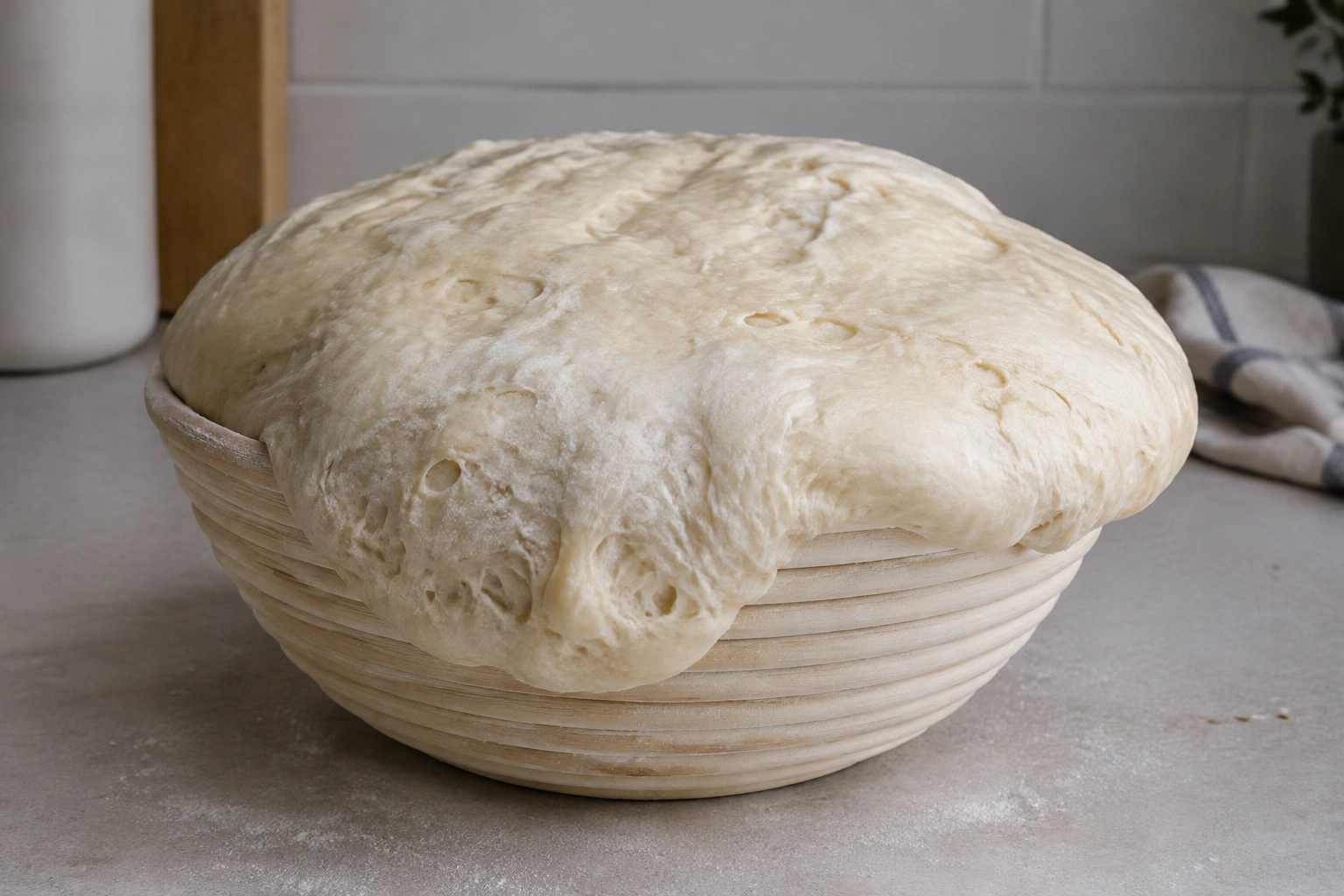
If the dough has sat far longer than the recipe expected, especially in a warm kitchen, overproofing becomes more likely. That said, time alone does not tell the full story. Dough temperature, yeast amount, flour strength, and hydration all change the pace.
A dough that seems “late” may simply be cool and slow. A dough that seems “on time” in the clock sense may still be overproofed if your kitchen is warm and the yeast is moving quickly.
Overproofed, Properly Proofed, or Underproofed?
Here’s a quick comparison that helps separate the three.
| Dough stage | Look | Feel | Poke test | Baking behavior |
|---|---|---|---|---|
| Underproofed | Tight, dense, still expanding | Springy, resistant | Springs back quickly | Usually strong oven spring, but may tear or burst irregularly |
| Properly proofed | Puffy, rounded, still structured | Light but resilient | Springs back slowly and partially | Good oven spring and balanced crumb |
| Overproofed | Very airy, slack, sometimes sagging or deflating | Fragile, weak, overly gassy | Little to no spring back; may hold a deep dent | Limited oven spring, spreading, weaker structure |
This is the key trade-off: underproofed dough still has strength but lacks enough gas expansion; overproofed dough has gas but has lost too much strength.
Why Dough Overproofs
The most common causes are practical, not mysterious.
Too much time
This is the obvious one. If dough sits too long during bulk fermentation or final proof, yeast keeps producing gas and acids continue changing the dough’s structure. Eventually, the dough can pass its best point.
Warm temperature
Heat speeds fermentation. A dough that behaves well at 70°F may move much faster at 78°F or higher. That’s why a recipe’s proofing time is always a range, not a promise.
Excess yeast
Too much yeast can make dough race ahead of your schedule. That can be useful when you need a fast same-day loaf, but it also reduces your margin for error.
Weak gluten structure
If the dough was under-mixed, under-developed, or made with flour that cannot support the hydration level, it may overproof faster because it never had enough structure to begin with. Sometimes what looks like overproofing is actually weak dough that cannot hold gas well in the first place.
Handling issues
Rough handling, poor shaping, or excessive degassing can make a dough more fragile. Once the structure is weakened, the dough may not tolerate a long final proof as well.
For a deeper look at structural problems that can mimic proofing issues, it helps to compare this topic with how to tell if bread dough is over-kneaded. Over-kneading and overproofing are different problems, but both can leave you with dough that behaves badly.
Can Overproofed Dough Still Be Baked?
Sometimes, yes. The decision comes down to how much structure the dough still has.
If the dough is still cohesive and only slightly too far along, bake it or gently reshape it. If it has collapsed, turned slack, or tears easily, reshaping may be better than baking as-is. If it smells spoiled, shows mold, or has contamination, discard it.
Overproofing itself is not a food safety issue. Spoilage is the issue. If the dough simply rose too long, it can often still be used.
What Happens When You Bake Overproofed Dough
The oven usually exposes the problem quickly.
A well-proofed loaf has enough strength to expand when heat hits it. Overproofed dough has less reserve left. As the dough moves into the oven, it may not have enough structure left to expand well.
That usually means:
- Reduced oven spring
- Less dramatic bloom or lift
- More spreading than upward rise
- A denser or less even crumb
- A weaker, flatter shape
This does not always mean the bread will taste bad. In fact, overproofed dough can sometimes taste a little more fermented or tangy. But texture and structure often suffer.
How to Save Overproofed Dough
The best rescue method depends on the dough type and how far it has gone. Start with the least invasive option and move down the list only if needed.
1) If it’s only slightly overproofed, bake it soon
If the dough still holds shape and only seems a little too airy, get it into the oven promptly. Delaying further usually makes the problem worse.
2) If it has lost shape, gently deflate and reshape
For many lean doughs and sandwich loaves, a gentle degassing followed by a fresh shape can help rebuild structure. Don’t punch it down aggressively. You want to release excess gas, not shred the gluten network.
After reshaping, give it a shorter second proof. Watch the dough more than the clock.
3) If the dough is too fragile for a loaf, repurpose it
This is often the smartest move. A dough that can’t hold a freestanding loaf may still work beautifully as:
- Pizza
- Focaccia
- Flatbread
- Dinner rolls in a pan
These formats are more forgiving because they rely less on perfect vertical structure.
Practical rescue by dough type
Sandwich loaf:
If the dough has risen too high in the pan but still has some strength, gently deflate, reshape, and proof again just until it looks lively. If it keeps sagging, bake it in the pan as a more rustic loaf rather than risking collapse.
Dinner rolls:
If rolls have become overly puffy but are still intact, bake them soon. If they’re fragile, reshape into slightly smaller rounds and place them closer together in a pan so they support one another.
Pizza dough:
This is one of the easiest doughs to salvage. Overproofed pizza dough often becomes slack and hard to stretch cleanly. You can degas it, ball it up again, and let it rest before shaping. If it still resists, turn it into a sheet pan pizza or focaccia.
Focaccia:
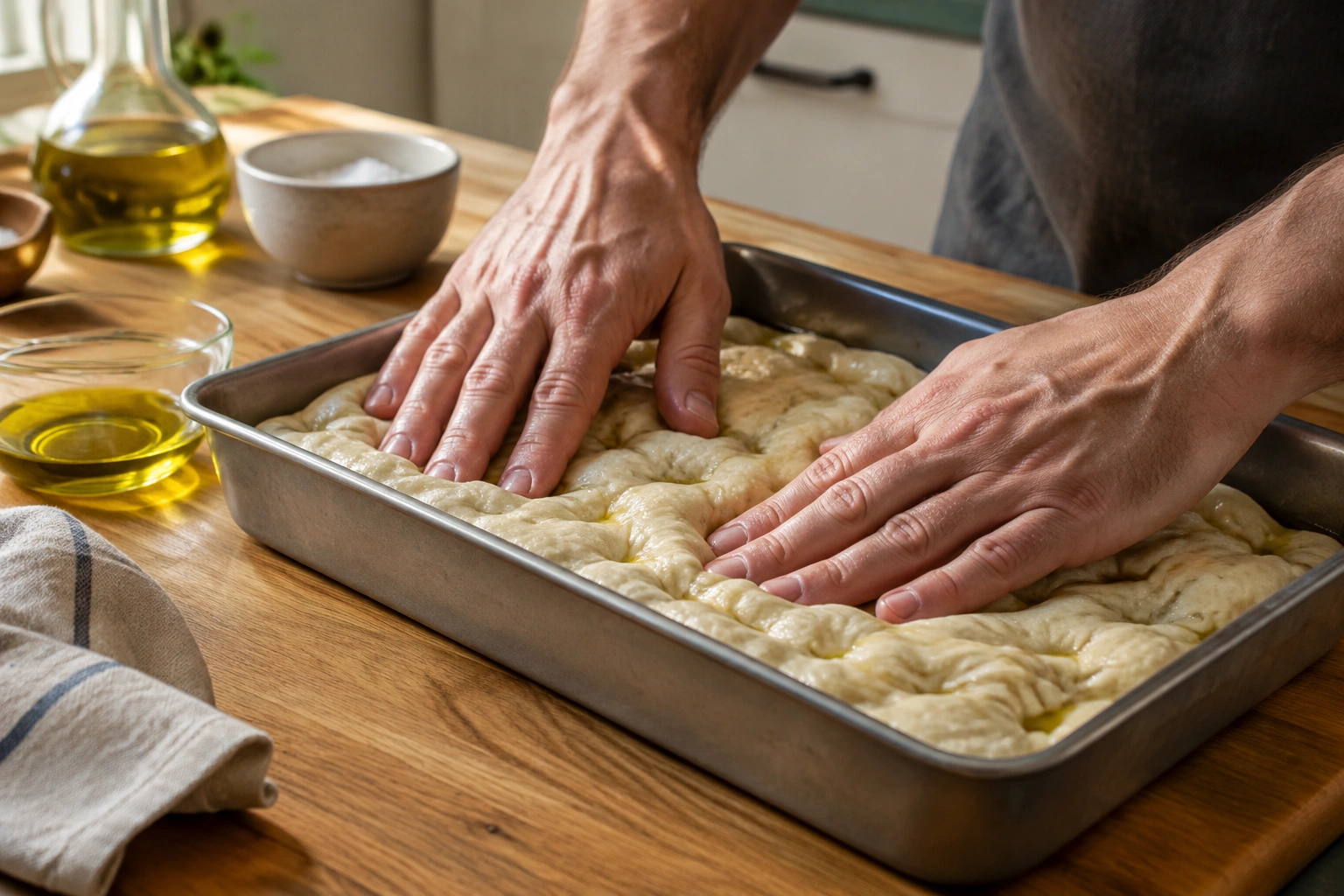
Overproofed dough can actually be a good candidate for focaccia because the pan supports it. If the dough is soft and bubbly, press it gently into an oiled pan, let it relax, and bake it flat.
A useful companion topic here is bread dough hydration, because very wet doughs can feel “overproofed” earlier than stiffer doughs even when the issue is really handling and structure.
Common Mistakes When Trying to Fix It
A few rescue attempts do more harm than good.
Overhandling the dough
If the dough is already fragile, rough handling can drive out too much gas and tear the gluten. That leaves you with a dense, uneven bake.
Assuming every flat dough is overproofed
Sometimes dough is flat because it was weak, not because it was overproofed. If the gluten never developed well, the dough may spread even before it truly overproofs.
Trusting the clock more than the dough
Recipe timing is a guide. Your kitchen temperature, flour, and yeast level matter more than the printed number.
Reshaping too many times
One gentle rescue is reasonable. Repeated deflating and reshaping can strip away what little structure remains.
How to Prevent Overproofing Next Time
Prevention is mostly about controlling fermentation speed and reading the dough earlier.
Match proofing to your kitchen temperature
Warm kitchens shorten proofing time. If your kitchen runs hot, check the dough earlier than the recipe suggests. In a cooler kitchen, the dough may need more time than expected.
If your kitchen is warm, the first adjustment should usually be more frequent checks and, if needed, shorter proofing windows. If the dough is racing ahead during the final proof, move it to a cooler spot or refrigerate it briefly to slow things down.
Use less yeast when the schedule is long
If you know the dough will sit for a long bulk fermentation or an overnight final proof, reduce yeast accordingly. That gives you a wider window before the dough runs away from you.
Build stronger dough
Adequate gluten development gives dough more tolerance. A dough with better structure can usually handle fermentation longer than one that was mixed too lightly.
Watch the dough after shaping
Many bakers lose dough at the final proof, not during bulk fermentation. Once shaped, the dough can move from “almost ready” to “too far” faster than expected, especially in a warm room.
Use cold proofing when timing is uncertain
Cold proofing slows fermentation and gives you more control. That can be especially helpful if you’re juggling class schedules, work, or a busy home kitchen.
If you’re doing a long cold proof, the main adjustment is usually to watch the dough after it comes back toward room temperature. A dough that looked fine in the fridge can move quickly once it warms up, so don’t rely on the fridge timer alone.
There is a trade-off, though: cold proofing adds flexibility, but it also asks you to manage temperature shifts carefully when the dough comes back to room temperature. If you are learning how dough behaves in different environments, this is worth practicing.
Overproofed vs Underproofed Dough
These two problems can look similar from a distance because both can give disappointing bread. But the fix is opposite.
- Underproofed dough needs more time.
- Overproofed dough usually needs immediate action, reshaping, or repurposing.
Underproofed dough tends to be tight and resistant. Overproofed dough tends to be fragile and slack. Underproofed dough may burst in the oven because it was not expanded enough. Overproofed dough may not spring much at all because it has already spent its strength.
If you’re unsure which one you have, ask three questions:
- Does the dough feel tight or fragile?
- Does the poke test spring back quickly or not at all?
- Has the dough held its shape, or has it started to sag?
Those answers usually point you in the right direction.
Practical Examples of Overproofed Dough
A sandwich loaf that rose above the pan and then sank
This is a classic overproofing scenario. If the dough rose high, then started to droop, the gluten probably gave out. Bake it if it still has some structure, but expect less oven spring. Next time, check it earlier once it nears the rim.
Pizza dough left in a warm kitchen overnight
Pizza dough can become slack and difficult to stretch cleanly after too much time at room temperature. If it still smells clean and yeasty, degas it gently and reball it. If it feels too loose, turn it into focaccia or a sheet pan pizza.
Dinner rolls that look puffy but spread instead of springing
These may seem ready because they are visibly expanded, but the poke test tells the truth. If the indentation stays and the dough feels fragile, bake them right away or reshape into pan rolls.
An enriched dough that seems “slow” but is actually fine
Brioche and similar enriched doughs can be harder to read because sugar, butter, and eggs slow fermentation. A baker may think the dough is underproofed when it is simply moving at its own pace. In enriched doughs, rely on structure and feel, not just the clock.
When to Consult a Master Baker
If your dough keeps overproofing even after you shorten proof times, lower yeast, and watch temperature, the issue may be in the formula or dough development rather than proofing alone. That is a good moment to study the recipe more closely, compare flour strength, hydration, and mixing method, or ask a master baker to help you diagnose the process from start to finish.
FAQs
Is overproofed dough the same as underproofed dough?
No. Underproofed dough needs more fermentation; overproofed dough has gone too far and often lacks strength. They can both bake poorly, but for opposite reasons.
Can I still bake bread if the dough has overproofed?
Often yes, especially if it still holds some structure. If it has only slightly overproofed, bake it soon. If it has collapsed badly, reshape or repurpose it.
What does overproofed dough feel like?
It usually feels very airy, fragile, and slack. When touched lightly, it may deflate a little or leave a deep fingerprint that doesn’t spring back.
How do I know if the dough is just relaxed rather than overproofed?
Relaxed dough is soft but still resilient. Overproofed dough has lost more strength and tends to feel fragile, over-aerated, and unstable.
What should I do if my dough has risen too long?
Check whether it still holds shape. If it does, bake or gently reshape it. If it has become weak, repurpose it into pizza, focaccia, or pan rolls.
Does room temperature affect overproofing?
Yes. Warm dough ferments faster, so room temperature can shorten the window before overproofing happens.
Final Takeaway
Overproofed dough is really a timing and structure problem: the dough has fermented beyond the point where it can hold itself together well. Once you learn to read the look, feel, and poke test together, the mystery gets a lot smaller.
And that’s the skill worth building. Not just saving one batch, but learning how your dough behaves so the next one lands right where you want it.