
How to Remove Baking Soda Deodorant Stains Fast

Remove loose powder first, then spot-treat baking soda deodorant stains with mild detergent and cool water before washing. Keep heat out of the process until the stain is fully gone.
Baking soda deodorant stains can leave white marks on dark shirts, dull patches on underarms, and a gritty residue that seems to cling even after washing. The good news is that fresh buildup often lifts quickly with the right pre-treatment, and set-in stains can still improve if you avoid the common mistakes that lock them in.
- Start dry: Brush or shake off loose residue before adding water.
- Use mild cleaners: Liquid detergent is usually the safest first treatment.
- Avoid heat early: Do not dry the garment until the stain is gone.
- Match the fabric: Delicates, wool, silk, and dark synthetics need extra care.
Why Baking Soda Deodorant Stains Happen and Why They’re Hard to Remove
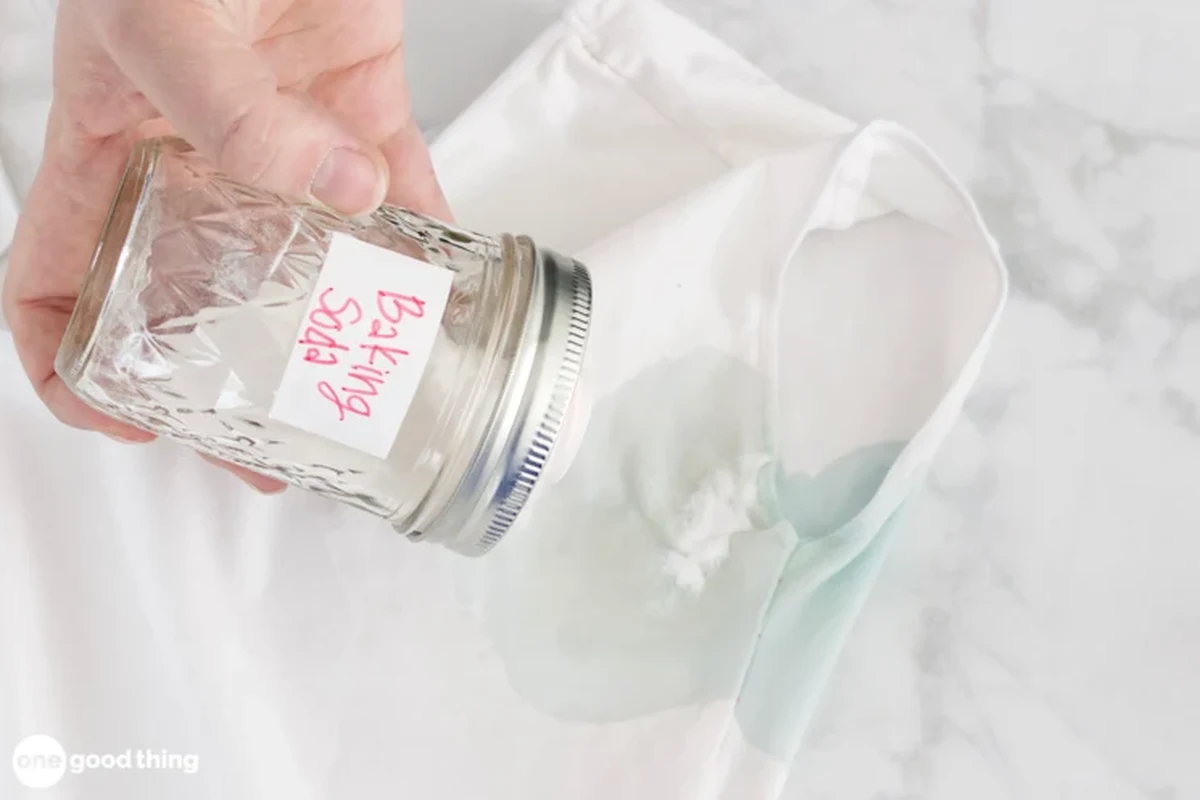
Baking soda deodorant stains usually start as a dry white film on fabric. Baking soda is alkaline and powdery, so it can settle into the weave of cotton, blends, and performance fabrics instead of sitting only on the surface.
What causes the white chalky residue on shirts and underarms
The residue often comes from a mix of baking soda, deodorant binders, and skin oils. When the product dries on the underarm area, the powder can cling to fibers and leave a pale, chalky edge that becomes more visible on dark clothing.
Underarm seams and folded areas are especially prone to buildup because fabric rubs there all day. That friction pushes residue deeper into the weave, which is why a quick wipe sometimes removes only the top layer.
How sweat, body oils, and fabric type make stains set faster
Sweat and body oils act like a glue for powdery residue. Once the mixture dries, it can bond more tightly to fabric, especially in areas that stay warm and damp.
Fabric type matters too. Tight weaves, synthetic blends, and moisture-wicking shirts can hold onto residue differently than loose cotton. Dark fabrics show the contrast more clearly, while textured fabrics can trap particles in the surface.
Why older stains become harder to lift in 2026 laundry routines
Older stains are harder to remove because repeated wear, body heat, and detergent cycles can press residue further into the fibers. If a shirt has gone through the dryer with the stain still present, the heat can make the buildup more stubborn.
Modern laundry routines also rely on quicker cycles and lower-water washes, which are efficient but sometimes less forgiving with heavy underarm buildup. That is why a separate pre-treatment step still matters for baking soda deodorant stains.
Heat is one of the biggest reasons stains become harder to remove. If a garment goes into the dryer before the residue is fully lifted, the stain can set more deeply into the fibers.
What You Need Before You Start Treating the Stain
A few basic tools make the process easier and reduce the chance of damaging the fabric. Keep your approach gentle at first, especially on darker clothes and delicate materials.
Safe stain-removal tools: soft brush, microfiber cloth, basin, and gloves
A soft brush helps loosen dry residue without grinding it in. A microfiber cloth is useful for lifting powder from the surface, and a basin gives you space for soaking without overhandling the garment.
Best cleaning agents for baking soda residue: liquid detergent, white vinegar, oxygen bleach, and enzyme cleaners
Liquid detergent is usually the first choice because it breaks up oily grime and helps suspend residue in water. White vinegar can help dissolve mineral-like buildup in some cases, while oxygen bleach may be useful for washable whites and colorfast items.
Enzyme cleaners can help when body oils are part of the stain. They are not a cure-all, but they can be useful on underarm buildup where sweat, deodorant, and skin oils overlap. Always check the garment label and the cleaner directions before mixing products.
Do not mix vinegar with bleach or use it on fabrics that are labeled dry clean only unless the care label specifically allows wet cleaning. When in doubt, test any stain remover on an inside seam first.
Fabrics and finishes that need extra caution, including wool, silk, and dark synthetics
Wool and silk can shrink, distort, or lose surface texture if treated too aggressively. Dark synthetics can also show faded spots if you scrub too hard or use an overly strong cleaner.
If the garment has special finishes, trims, or bonded seams, treat it as delicate. For those items, a gentle blotting method is safer than a soak.
Fast Pre-Treatment Methods That Work on Fresh Stains
Fresh baking soda deodorant stains are the easiest to remove, and the goal is to lift loose powder before it gets wet and spreads. Start dry, then move to a mild wet treatment only if needed.
- Check the care label
- Test cleaners on a hidden spot
- Use cool or lukewarm water first
- Keep the garment out of the dryer until the stain is gone
Dry removal first: shaking, brushing, and lifting loose powder without rubbing
Hold the garment over a sink or trash bin and gently shake off any loose powder. Then use a soft brush or dry microfiber cloth to lift residue from the surface.
Do not rub back and forth. Rubbing can push the powder deeper into the weave and make the stain look larger than it is.
Spot-treating with cool water and mild detergent
Mix a small amount of liquid detergent with cool water and dab it onto the stain. Let it sit for several minutes so the detergent can break up the residue before you rinse.
Use a clean cloth to blot, not scrub. If the fabric is cotton or a washable blend, this simple step often removes a fresh mark before a full wash is needed.
When to use a vinegar solution and when to avoid it
A diluted vinegar solution can help when the residue feels stiff or leaves a visible white ring after detergent alone. Use a light mix and keep the contact time short, then rinse well.
Avoid vinegar on wool, silk, and any garment with a care label warning against acid-based cleaners. If the fabric is sensitive or the stain is very dark and visible, a detergent-only approach is safer.
For fresh stains, the fastest method is usually dry removal first, then a small amount of liquid detergent, then a full wash. The more you can avoid heat and friction at the start, the better your results are likely to be.
How to Remove Set-In Baking Soda Deodorant Stains Step by Step
Set-in residue needs more time, but the process is still straightforward. The key is to loosen the buildup gradually so you do not damage the garment while chasing the stain.
Pre-soak method for cotton tees, workout shirts, and everyday laundry
Use cool water to wet the stained underarm section from the back of the fabric if possible. This helps push residue out of the fibers instead of deeper into them.
Add a small amount of liquid detergent to a basin of cool or lukewarm water and soak the garment. A longer soak can help with older stains, but check progress periodically so the fabric does not sit longer than needed.
Rinse thoroughly and look at the stain in good light. If the white residue is still visible, repeat the soak before moving to a stronger treatment.
For cotton tees and workout shirts, a soak is often the best starting point because these fabrics usually tolerate water well. If the stain is light, you may see improvement after one soak and wash cycle.
Targeted stain paste for stubborn underarm buildup
For stubborn areas, make a paste with liquid detergent and a little water, then apply it directly to the stain. Let it sit so the cleaner can work on the residue before you rinse.
Some people use a baking soda paste for deodorant stains, but if the problem is already baking soda residue, adding more can make the buildup worse. Detergent is usually the better first choice because it addresses both powder and body oils.
Wear gloves if you have sensitive skin, and keep stain removers away from eyes and mouth. Even mild cleaners can irritate skin when you are working closely on a small area.
Machine-wash settings that help without spreading the residue
After pre-treatment, wash the garment according to its care label using the warmest water that is safe for the fabric. For many cotton items, that means warm rather than hot water, but always verify the label first.
Use the normal cycle for sturdy clothing and a gentler cycle for delicate blends. If the stain is still visible after washing, do not dry the item yet. Air-dry it and treat it again instead.
How long to let each treatment sit before checking progress
Short dwell times are best for fresh stains, often just a few minutes before rinsing. For set-in residue, a pre-soak may need longer, but it should still be checked regularly so the fabric does not become overhandled or stretched.
If you are using a cleaner with a longer recommended contact time, follow the label rather than guessing. Different brands vary, and fabric type can change how long a treatment should remain on the garment.
Fabric-Specific Cleaning Tips for Better Results
The same stain remover can behave differently depending on the fabric. That is why the best method for a white cotton tee is not always the best method for a black athletic shirt or a silk blouse.
White cotton and blends: how to brighten without over-bleaching
White cotton usually tolerates the widest range of stain treatments. Start with detergent, then consider oxygen bleach if the label allows it and the stain persists.
Be careful not to over-bleach. Strong chlorine bleach can weaken fibers and may not be necessary for baking soda deodorant stains. A cleaner, repeated pre-soak is often enough.
Oxygen bleach for washable whites
This is often a useful option for white cotton and other colorfast fabrics when detergent alone does not fully lift residue. It is generally gentler than chlorine bleach, but it still needs label checks and proper dilution.
Dark clothing: avoiding faded patches and streaking
Dark clothing shows residue clearly, but it also shows damage if you scrub too hard or use a strong spot treatment unevenly. Apply cleaners lightly and work in a broad area around the stain so you do not create a sharp ring.
Rinse thoroughly after treatment. Leftover detergent or vinegar can leave pale streaks that look like the original stain, especially on black or navy fabric.
Delicates and performance fabrics: gentle methods that protect stretch and moisture-wicking finishes
Delicates need a light touch. Use a diluted detergent solution and blot rather than soak if the care label is strict or the garment includes elastic, lace, or decorative trim.
Performance fabrics can hold odor and residue in different ways because their fibers are designed to move moisture. A gentle enzyme cleaner may help, but avoid harsh scrubbing that can damage the finish or stretch.
- Gentle methods protect fabric life
- Targeted cleaning reduces fading risk
- Soaking can lift residue without heavy scrubbing
- Delicate fabrics often need repeat treatment
- Strong cleaners can damage finishes
- Fast results are less likely than with cotton
Common Mistakes That Make Baking Soda Deodorant Stains Worse
Most failed stain removals come from rushing the process. The fabric usually gives you a better result when you work gently and avoid heat until the stain is fully gone.
Using hot water too early and setting the residue deeper
Hot water can help some laundry stains, but it is not the first move for baking soda deodorant stains. If the residue contains oils or has already dried into the fibers, early heat can make it harder to remove.
Scrubbing aggressively and damaging fibers
Hard scrubbing may seem effective, but it can fuzz the fabric, distort knit shirts, and push the residue into the weave. A soft brush and blotting motion are usually enough.
Mixing incompatible cleaners or overusing vinegar
Never mix vinegar with bleach, and avoid layering several cleaners at once unless the product labels say it is safe. Too much vinegar can also weaken some fabrics or leave a lingering smell if it is not rinsed well.
Skipping a full rinse before drying the garment
Drying a garment before all residue is removed is one of the most common reasons stains come back. Always inspect the underarm area in good light before using a dryer.
The stain looks lighter after washing, but a white edge returns once the shirt dries.
That usually means some residue is still trapped in the fibers. Repeat a gentle pre-treatment and air-dry until the stain is fully gone.
How to Keep Baking Soda Deodorant Stains from Coming Back
Prevention is simpler than repeated stain removal. A few small changes in application and laundry habits can reduce recurring residue on shirts and underarms.
Applying deodorant in thinner layers for less buildup
Thicker application does not usually work better. A thinner layer gives you the coverage you need while reducing the amount of product that can transfer to fabric.
Letting products dry before dressing
Give deodorant time to dry before putting on a shirt. This helps keep the product on your skin instead of on the inside of the garment.
Choosing formulas and laundry habits that reduce recurring residue
If you repeatedly see baking soda deodorant stains, look at both the deodorant formula and your laundry routine. Washing shirts soon after wear can help, and so can turning garments inside out so the underarm area gets more direct cleaning.
For frequent buildup, consider whether a different formula would be easier on your clothes. Some users find that lower-residue products leave fewer marks, especially on dark shirts and athletic wear.
When to switch to a different deodorant if stains keep returning
If you have cleaned the garment correctly and the same marks keep coming back, the issue may be the product itself rather than the wash method. At that point, switching formulas may save time and keep clothes looking better.
This is especially worth considering for uniforms, work shirts, and expensive basics where repeated treatment may shorten fabric life. A less stubborn product can be the more practical choice even if it is not the one you started with.
If you are comparing stain-prevention habits with other everyday kitchen and laundry routines, it can help to think in terms of small, repeatable steps rather than one aggressive fix. The same careful approach used in baking often works best here too: measure lightly, avoid overdoing it, and check progress before moving on.
Final Recap: The Fastest Way to Restore Shirts Without Damaging Them
The fastest safe approach is to remove loose powder first, then use a mild detergent treatment, and only move to a soak or oxygen bleach if the stain remains. Keep heat out of the process until the fabric looks clean in good light.
Best method by stain age: fresh, moderate, and set-in residue
Fresh stains usually respond to dry brushing and a quick detergent spot treatment. Moderate stains often need a short soak, while set-in residue may require repeated pre-treatment and a careful wash cycle before it fully lifts.
When to stop treating at home and consider professional cleaning
If the garment is silk, wool, heavily structured, or labeled dry clean only, stop before using stronger home treatments. The same is true if repeated attempts are causing fading, distortion, or seam damage.
Practical closing advice for keeping clothes clean in everyday use
With baking soda deodorant stains, patience usually works better than force. Treat the residue early, use the mildest cleaner that gets the job done, and never let a visible stain go through the dryer if you want the best chance of restoring the shirt.
- Brush off loose powder before wet cleaning
- Use cool or lukewarm water first
- Air-dry until you are sure the stain is gone
- Rubbing hard or using hot water too soon
- Mixing cleaners without checking labels
- Drying the garment before the residue is fully removed
Frequently Asked Questions
Dry brush off loose powder first, then spot-treat with liquid detergent and cool water. For set-in residue, a short soak usually works better than scrubbing.
Diluted vinegar can help on some washable fabrics, but it is not right for every garment. Avoid it on wool, silk, and any item that should not be treated with acid-based cleaners.
Not at first. Hot water can set residue deeper into the fibers, so start with cool or lukewarm water and only use warmer water if the care label allows it.
The residue may still be trapped in the fabric, or the garment may have gone into the dryer too soon. Repeat pre-treatment and air-dry until the stain is fully gone.
No. They can be useful on many washable items, but you should check the care label and the product instructions first, especially for delicates, wool, silk, and dark synthetics.
Apply deodorant in thinner layers, let it dry before dressing, and wash underarm areas promptly. If stains keep returning, a lower-residue deodorant may be easier on your clothes.