
Shampoo Slime Recipe: A Simple, Flexible Guide for Easy Homemade Sensory Play
Shampoo slime is a quick at-home craft that uses common household ingredients to create a soft, stretchy, hands-on sensory material. It is not the same as classic glue slime, and that matters. Shampoo slime usually has a softer, less durable texture, but it can still be a satisfying project for kids, caregivers, and teachers when the goal is simple play rather than a perfect store-bought slime clone.
If you want a low-lift activity that can be mixed in one bowl and adjusted by feel, this is a useful place to start. The recipe below gives you a practical starting point, plus the texture cues that help you decide whether to add more thickener, knead longer, or stop before the mixture turns stiff.
What Shampoo Slime Is and What to Expect
Shampoo acts as the base, giving the mixture body and slip. On its own, shampoo is usually too loose to hold together as slime, so it is commonly paired with a thickener such as cornstarch. Some versions also include glue for more stretch and a more familiar slime feel.
That said, shampoo slime is best treated as a homemade sensory craft, not a laboratory-perfect formula. Different shampoos vary a lot in thickness, fragrance, and added conditioning ingredients, so the same measurements may behave differently from one brand to another. A batch that works well with one bottle may need a little less or a little more cornstarch with another.
Here is the practical expectation: a good batch should gather into a soft mass, pull away from the bowl, and be kneadable without immediately coating your hands. It may not bounce, hold sharp shapes, or last as long as glue-based slime.
Ingredients You Need
You can make shampoo slime with a very short ingredient list. The most useful setup is a no-glue version first, then a glue-added version if you want more stretch.
Glue is optional in this recipe. Baking soda is not required for this version.
Core ingredients
- Shampoo
- Cornstarch
- A mixing bowl
- Spoon or spatula
- Food coloring, if desired
Optional ingredients
- White school glue, for a stretchier result
- A tiny amount of water, only if needed to loosen a mixture that is too stiff
- Scented add-ins, though fragrance can bother sensitive skin
Basic tools
- Measuring spoons or cups
- Clean hands for kneading
- Airtight container for storage
If you are making this with children, keep the setup simple. One bowl and one spoon are usually enough for a beginner batch. Extra ingredients can make troubleshooting harder, especially when you are still learning how your shampoo behaves.
Which Shampoo Works Best
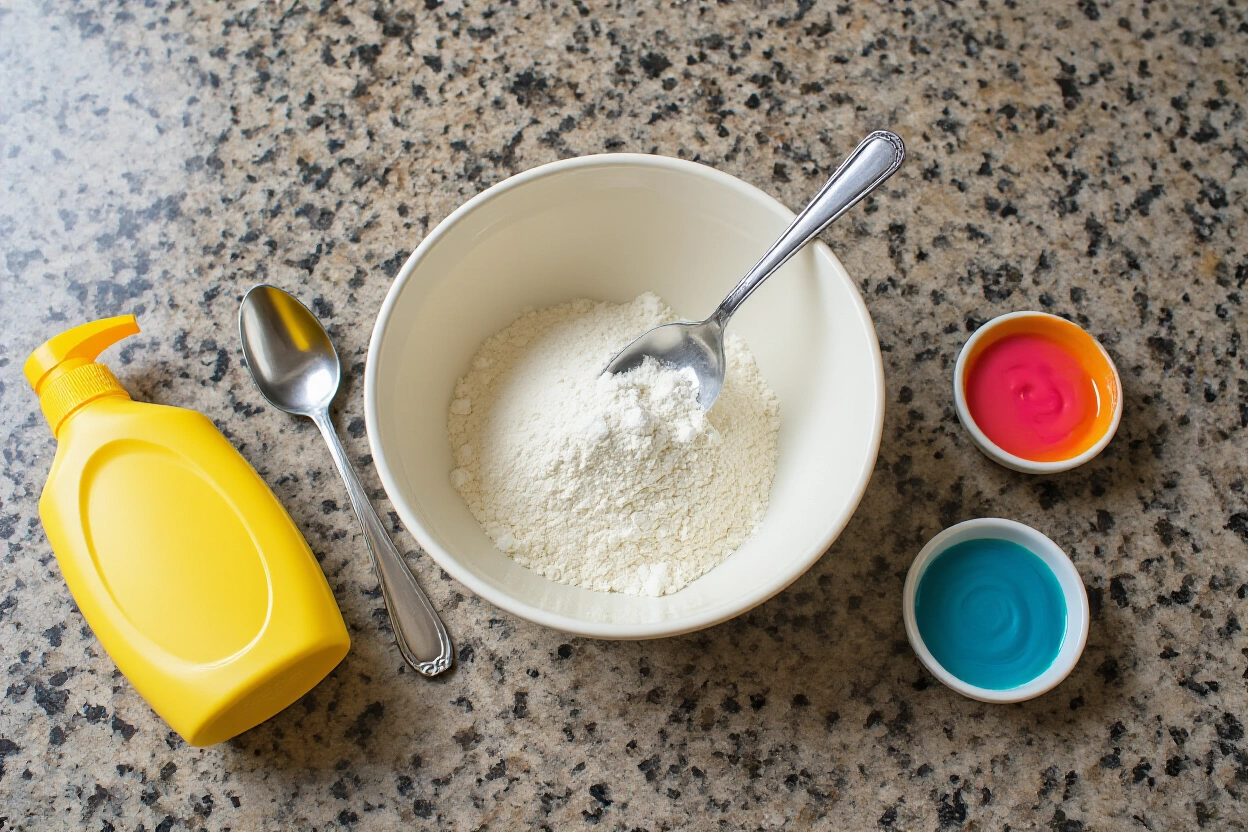
The best starting point is usually a thicker shampoo rather than a thin, watery one. Thick shampoos tend to combine with cornstarch more predictably and are less likely to turn runny before they set up.
Here is a quick comparison to help you choose.
| Shampoo type | What it tends to do | Best use case | Trade-off |
|---|---|---|---|
| Thick, creamy shampoo | Gives the mixture more body | Best starting point for no-glue slime | May need more kneading to feel smooth |
| Thin or very runny shampoo | Can make the batch loose or sticky | Only if you already know the brand works well | Often needs extra cornstarch |
| 2-in-1 or conditioning shampoo | May create a softer texture | Good if you want a gentler feel | Can be less elastic |
| Strongly fragranced shampoo | Adds scent | Fun for older kids who like sensory play | May irritate sensitive skin |
| Clear shampoo | Can be useful if you want to color the slime | Good for bright food coloring | Texture still depends on thickness |
If you are unsure, choose the thickest shampoo you already have. That one decision often matters more than adding extra ingredients later.
Simple Shampoo Slime Recipe
This version is designed as a starting point, not a rigid formula. If your shampoo is especially thick or thin, expect to adjust.
No-glue version
- 1/2 cup shampoo
- 1/4 cup cornstarch, added gradually
- Optional: 1 to 2 drops food coloring
Glue-added version
- 1/2 cup shampoo
- 2 tablespoons white school glue
- 1/4 cup cornstarch, added gradually
- Optional: 1 to 2 drops food coloring
Step-by-step method
- Pour the shampoo into a mixing bowl.
- If you want color, stir in a small amount now. Use only a few drops so you do not thin the mixture too much.
- Add the cornstarch a spoonful at a time, stirring after each addition.
- If you are using glue, mix it in with the shampoo before adding the cornstarch.
- Once the mixture becomes too thick to stir easily, switch to kneading with clean hands.
- Continue kneading until the slime gathers into one soft mass and no longer looks glossy and wet in the bowl.
- If it still sticks heavily to your hands, add a small pinch of cornstarch and knead again.
The key moment is the transition from “wet paste” to “soft dough-like slime.” That usually happens before the mixture looks completely dry. If you wait for it to look dry in the bowl, it may already be too stiff.
How to Adjust the Texture
Most shampoo slime problems come from adding too much at once. Small corrections work better than big ones.
If it is too sticky
Add cornstarch in tiny amounts, then knead for a full minute before deciding whether to add more. Sticky slime often needs time, not just more powder. A batch that seems hopelessly tacky can improve once the cornstarch fully hydrates.
If it is too runny
Runny slime usually needs more cornstarch. Add it slowly. If you dump in too much, the result can jump from watery to crumbly very fast. If the shampoo is very thin or conditioner-heavy and still stays loose after several small additions, switch to a thicker shampoo next time rather than trying to force the batch into shape.
If it is too stiff
If the slime feels dry, cracks when you stretch it, or tears instead of pulling, you may have added too much cornstarch. Try kneading it longer first. If it still feels rigid, a tiny amount of shampoo can soften it, but add only a few drops at a time.
If it is sticky and stiff at the same time
That usually means the mixture is unevenly mixed. Keep kneading before changing the formula. Uneven batches often feel sticky in one spot and hard in another until they are fully worked together.
Texture cues that the batch is ready
- It pulls away from the bowl in one piece
- It can be picked up without immediately dripping
- It stretches a little before breaking
- It feels soft, not wet, on the outside

A useful rule: stop adjusting once the slime is easy to handle and only lightly tacky. Chasing a perfect texture often pushes the batch too far.
Optional Variations for Stretch, Firmness, and Color
Once you have a workable base, you can change the feel without making the recipe much more complicated.
For more stretch
Adding a little glue can help the slime feel more elastic. This is the main trade-off: more stretch, but also one more ingredient and one more variable. If your goal is a classic slime feel, glue is worth trying. If your goal is a quick kitchen-table activity, skip it.
For a firmer slime
Use a little more cornstarch, but add it slowly. Firmer slime is easier for younger children to hold, yet it can lose stretch quickly if overdone.
For a fluffier feel
Some people add shaving cream, but that changes the texture and can make the batch less predictable. If you want a simple recipe with fewer surprises, leave it out. A basic shampoo-and-cornstarch mix is easier to control.
For color
Food coloring can make the activity more engaging, especially for classroom use. Use only a small amount, because too much liquid can loosen the mixture and staining is possible on hands, clothes, and counters.
For scent
Fragranced shampoo already provides scent, so extra fragrance is usually unnecessary. If a child has sensitive skin or reacts to strong smells, a lightly scented or unscented shampoo is the safer choice.
Safety Tips for Kids and Sensitive Skin
This is a hands-on activity, so a little planning helps.
- Use adult supervision for younger children.
- Do not let children taste or eat the slime.
- Check the shampoo label if anyone has known skin sensitivities or fragrance concerns.
- Keep the mixture away from eyes and broken skin.
- Wash hands after play.
- Stop using the batch if it causes redness, itching, or discomfort.
For very young children who still put objects in their mouths, choose a different sensory activity. Shampoo slime is better for children who can follow basic “hands-only” rules.
If you are making this in a classroom, test one small batch first before preparing multiple portions. That gives you a better sense of how the shampoo behaves and whether the scent or texture is appropriate for the group.
Storage and Cleanup
Shampoo slime does not usually last as long as commercial slime, so treat it as a short-term activity. It is often best used the same day, or within a few days if it is sealed properly, though the exact lifespan depends on the shampoo and how much air it is exposed to. Store it in an airtight container or resealable bag when not in use. If left uncovered, it can dry out quickly or separate.
If the slime becomes dry after storage, knead it for a while before adding anything else. Sometimes the outside just needs time to warm up and soften. If it still feels brittle, the batch may simply be past its best texture.
For cleanup:
– Wipe bowls and spoons before the mixture hardens.
– Wash hands with warm water and soap.
– Clean counters promptly, especially if you used food coloring.
– Wipe up residue from shampoo before it dries, since it can leave a slippery film.
– Check clothing, towels, and fabric surfaces for stains or residue from food coloring and shampoo, and rinse or launder them as soon as possible.
– If residue sticks to a table, let it dry slightly and lift it with a damp cloth instead of scrubbing immediately.
Keeping the batch covered is important. Air exposure is the main reason homemade slime dries out.
Shampoo Slime vs. Other Easy Sensory Options
If you are deciding between shampoo slime and another simple activity, this comparison can help.
Shampoo slime vs. classic glue-based slime
Glue-based slime usually has more stretch and a more familiar slime feel. Shampoo slime is simpler and often uses ingredients you already have, but it can be less durable and more variable from batch to batch. If you want the easiest kitchen-cabinet project, shampoo slime wins. If you want a more elastic result, glue slime is usually the better path.
Shampoo slime vs. cornstarch-only sensory dough
Cornstarch-and-water mixtures make a fascinating sensory material, but they behave differently. They are more like a temporary sensory slurry than a kneadable slime. Shampoo slime is better if you want something you can pick up and stretch. Cornstarch-only play is better if you want a quick texture experiment with almost no setup.
Which one to choose
- Choose shampoo slime if you want a simple, tactile craft with common ingredients.
- Choose glue-based slime if stretch matters most.
- Choose cornstarch-only play if you want the fastest, mess-light sensory option.
For families, the best choice is often the one that matches the child’s age and your cleanup tolerance, not the one with the fanciest texture.
A Few Practical Troubleshooting Scenarios
If your first batch is not quite right, these examples may help.
A parent making an after-school activity might find that a thin shampoo turns the mixture soupy. The fix is usually to switch to a thicker shampoo next time, not to keep dumping in powder until the batch becomes chalky.
A teacher making a classroom batch may notice that the slime feels fine in the bowl but too sticky in small hands. In that case, a short knead before play often helps more than adding another ingredient.
A caregiver working with a child who likes firmer textures may prefer a slightly drier batch. That can be useful for shaping, but it will give up some stretch. That trade-off is normal.
Final Thoughts
A shampoo slime recipe works best when you keep the process simple and adjust by feel. Start with a thick shampoo, add cornstarch gradually, and knead until the mixture becomes soft and manageable. If you want more stretch, add a little glue. If you want a firmer result, use more cornstarch in small steps. If the batch does not behave perfectly, that is normal.
For an easy at-home craft, the goal is not perfection. It is a safe, hands-on activity that gives kids something tactile to mix, knead, and explore.

