
Vinegar and Bicarb Soda Reaction Explained: Why It Fizzes and What It Means
If you have ever mixed vinegar and bicarb soda and watched it foam up straight away, you have already seen a simple acid-base reaction in action. The effect looks dramatic, but the science behind it is straightforward: the ingredients react quickly, release gas, and that gas creates the bubbles you see.
For a home baker, student, or parent, the useful part is not just knowing that it fizzes. It is understanding what that fizz means, when it is useful, and when it is the wrong tool for the job. In baking, that distinction matters. In a classroom demo, it makes the reaction easier to control. In cleaning, it helps you avoid expecting more from it than it can do.
What Happens When Vinegar and Bicarb Soda Mix?
The moment vinegar touches bicarb soda, the mixture starts to bubble and foam. The reaction is usually fast, so the first thing you notice is a sudden burst of fizz rather than a slow change.

That fizz is not just “air.” It is gas being released inside the liquid. As the gas escapes, it pushes the liquid upward and creates foam. If you use a wide bowl, you will see the reaction spread out and bubble over the surface. If you use a narrow container, the foam rises more dramatically.
A small spoonful of bicarb soda with a splash of vinegar gives a mild, easy-to-watch reaction. More of either ingredient usually gives a bigger reaction, but not always a better one. If the mixture is unbalanced, one ingredient may be left over after the fizzing slows down.
Why the Mixture Fizzes: The Simple Chemistry
Vinegar is acidic, and bicarb soda is a base. When an acid and a base meet, they react. In this case, the reaction produces carbon dioxide gas, along with water and sodium acetate.
That carbon dioxide is what makes the mixture foam. The gas forms inside the liquid, rises to the top, and escapes in visible bubbles. The more gas released at once, the more vigorous the fizz appears.
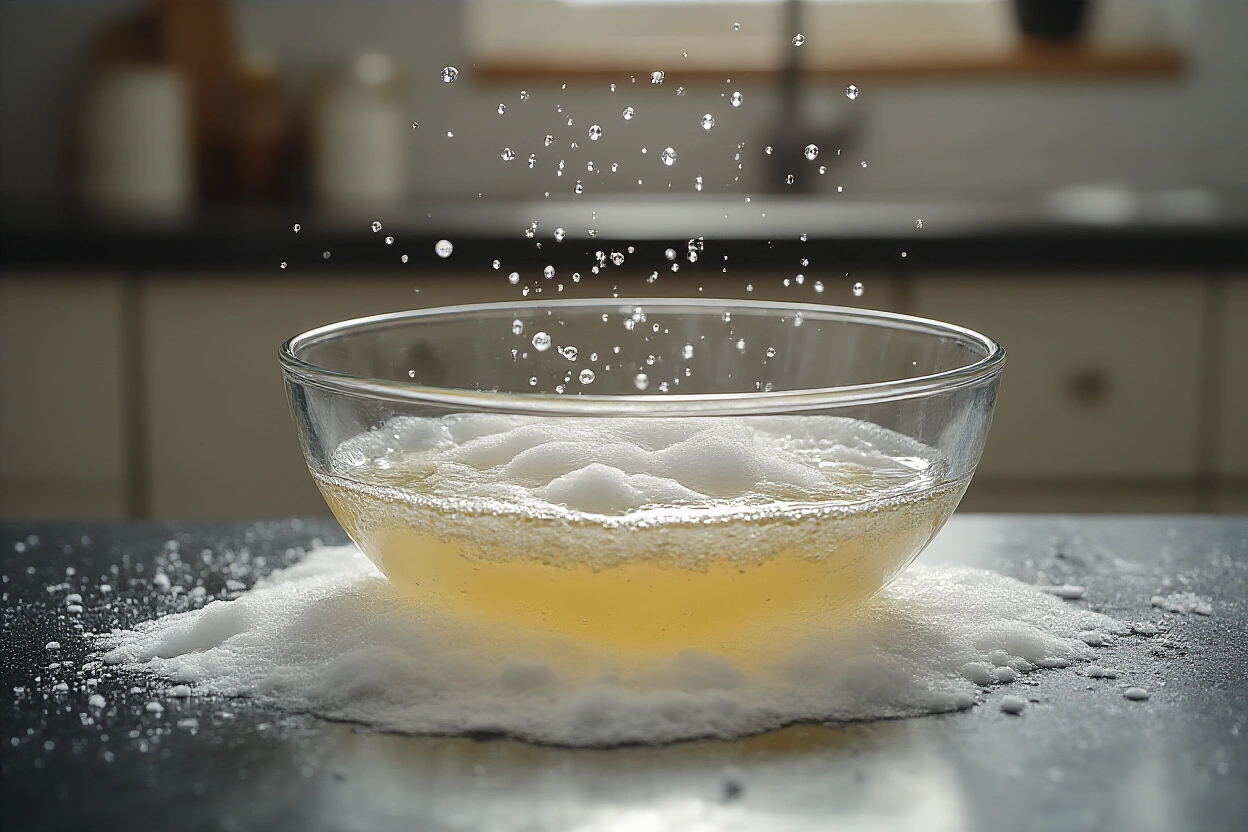
If you want the simplest possible way to think about it, use this rule: acid plus base equals gas, and the gas is what gives you the bubbling effect. That is why the reaction looks lively even though the ingredients themselves are ordinary kitchen staples.
What Gas Is Produced and Is It Safe?
The gas released is carbon dioxide. In an open bowl, the gas disperses into the air and the reaction is generally easy to handle. That is one reason this mixture is popular for school experiments and kitchen demonstrations.
The main safety point is pressure. Do not seal vinegar and bicarb soda in a closed container, because gas buildup can force the container to burst or spray the mixture out. Keep the reaction in an open bowl, tray, or other container with plenty of space.
It is also sensible to avoid splashes, especially around the eyes. If children are involved, supervise the experiment and keep the setup simple. A tray under the bowl helps catch foam if it overflows.
How Much Vinegar and Bicarb Soda Should You Use?
There is no single perfect ratio for every purpose, because the right amount depends on whether you want a visible fizz, a controlled classroom demo, or a baking application. For a simple experiment, use enough to see the reaction clearly, but keep the amounts modest so the foam stays manageable.
For a home demo experiment, a practical starting point is 1 tablespoon of bicarb soda with about 2 to 3 tablespoons of vinegar. That is a useful starting ratio for experimentation, not baking. If you want a stronger fizz, you can scale both up a little while keeping the same general balance.
A useful practical approach is to add the ingredients gradually. If you pour in all the vinegar at once, the reaction happens quickly and can overflow. If you add it little by little, you can watch the fizz build and stop when the effect is strong enough.
If you use too much bicarb soda, some of it may remain undissolved or unused. If you use too much vinegar, the mixture may become more liquid and more sour, which matters in cooking. In other words, more fizz does not automatically mean a better result.
A quick way to think about quantity
- Small amount of each: good for a short, controlled fizz
- More vinegar: often looks more dramatic, but can add too much liquid
- More bicarb soda: can leave residue if there is not enough acid to react with it
For a science demo, the goal is usually visibility. For baking, the goal is performance and flavor, which are not always the same thing.
Does the Type of Vinegar Matter?
Yes, the type of vinegar can matter, mainly because different vinegars vary in acidity and flavor. White vinegar is usually the cleanest choice for a demonstration because it tends to have a neutral look and a sharp, simple smell. That makes the reaction easier to observe without adding much color or taste.
Apple cider vinegar can also react well, but it may bring its own color and flavor. That matters if you are using the mixture in food, because the vinegar taste can remain noticeable. Other vinegars may work too, but the result can vary depending on how acidic they are and what else they contain.
If your goal is a clear visual demo, choose a vinegar with a simple appearance and flavor. If your goal is cooking, think about whether the vinegar’s taste will fit the recipe. A stronger-smelling vinegar may make the reaction seem more intense, but it can also affect the final dish more noticeably.
Vinegar and Bicarb Soda vs Baking Powder
This is where many beginners get tripped up. Vinegar and bicarb soda can create gas, but they are not the same as baking powder.
Baking powder is designed to create lift in a more controlled way. It already contains both the base and the acid needed for a leavening reaction. That makes it much more predictable in baking. By contrast, vinegar and bicarb soda are two separate ingredients that react as soon as they meet, so the gas is released immediately and is harder to control in batter.
Here is the practical difference:
| Feature | Vinegar + bicarb soda | Baking powder |
|---|---|---|
| Reaction timing | Starts immediately | More controlled |
| Best use | Demo, quick fizz, some special recipes | Reliable baking lift |
| Flavor impact | Can add sourness | Usually less noticeable |
| Control in batter | Lower | Higher |
| Risk in recipe | Extra liquid and fast gas loss | More consistent result |
If your recipe calls for steady rise and dependable texture, baking powder is usually the better choice. If you want an obvious fizz for a demonstration, vinegar and bicarb soda are easier to show.
For a deeper look at the chemistry, you may also find this simple breakdown of the vinegar and baking soda equation helpful.
Can This Reaction Make Cakes or Bread Rise?
Sometimes it can help, but it is not a direct replacement for baking powder in most recipes. The main issue is timing. Vinegar and bicarb soda react as soon as they combine, so much of the gas is released right away. In baking, that means the batter or dough needs to capture the gas immediately if it is going to help with lift. If the batter is too thin, too slow to bake, or not structured enough, the gas can escape before it is trapped.
That is easier in a quick batter than in a bread dough or a slow-rise recipe. A muffin batter, for example, can sometimes use the reaction more successfully than a dense dough that needs a longer structure-building process. Even then, the extra liquid and vinegar flavor can change the final texture and taste.
A useful rule is this: if the recipe depends on a fast bake and a quick rise, the reaction may be workable in a limited way. If the recipe needs a longer, more controlled rise, baking powder or another leavening system is usually the better fit.
What Happens If You Use Too Much or Mix It Wrong?
When the ratio is off, the reaction becomes less useful. Too much vinegar can make the mixture overly wet and sour. Too much bicarb soda can leave a chalky taste or residue if there is not enough acid to react with it.
In a baking context, that can affect both flavor and texture. Extra liquid can loosen a batter more than intended. Leftover bicarb soda can create an unpleasant aftertaste. Too much of both ingredients can also make the reaction too sudden, which means the gas may escape before the batter has a chance to trap it.
If you are testing the reaction, it helps to think in terms of balance rather than strength. A bigger fizz is not always better. A controlled reaction is often more useful, especially if you want to see what is happening without making a mess.
For a practical demonstration, one of the best ways to learn is to test the reaction in an open bowl first. If you want that kind of setup, this open-bowl test guide shows how to judge the fizz and why weak reactions happen.
Good Uses at Home: Experiments, Demo Fizz, and Cleaning
The strongest use for vinegar and bicarb soda is usually as a quick visual experiment. It is ideal for a classroom-style demo, a kitchen science activity, or a simple way to show gas production.
It can also be used for brief foaming effects in some household tasks, but expectations should stay realistic. The fizz itself is useful for showing that a reaction is happening, yet it is not a magic cleaner. The foaming can help loosen light debris or make a task more satisfying to watch, but it is not a substitute for proper scrubbing or a purpose-made cleaner.
If you want to understand the reaction from a science-first angle, this simple guide to the fizz, foam, and science is a useful companion read.
Safety and Cleanup Tips
Keep the setup open and spacious. A bowl, tray, or shallow dish is safer than a narrow bottle. That reduces the chance of overflow and makes cleanup easier if the foam spreads.
Use a surface that is easy to wipe down. If you are doing the reaction with children, place a towel or tray underneath so spills do not run across the table. Avoid getting the mixture into eyes, and wash hands after handling the ingredients.
Cleanup is usually simple: wipe away the foam, rinse the area, and dry the surface. If any residue remains, a damp cloth is usually enough for a basic kitchen experiment. The main thing is to clean promptly before the mixture dries and sticks.
When to Choose Vinegar and Bicarb Soda, and When Not To
Choose vinegar and bicarb soda when you want a fast, visible reaction. That makes them useful for science demonstrations, simple home experiments, and brief foaming effects. They are also easy to explain, which is why they work well for beginners.
Choose baking powder when the goal is reliable baking lift. It gives you more control, less flavor impact, and better consistency in most standard recipes. If the recipe is built around rise and texture, baking powder is usually the safer choice.
That decision rule keeps things simple: use vinegar and bicarb soda for showing the reaction; use baking powder for dependable baking.
FAQ: Vinegar and Bicarb Soda Reaction
What happens when vinegar and bicarb soda mix?
They react quickly and produce fizzing, bubbling, and foam. The visible action comes from gas being released in the liquid.
What gas is produced?
Carbon dioxide is produced during the reaction. That gas creates the bubbles and foam you see.
Is the reaction safe to do at home?
Yes, in an open container with basic care. Do not seal it in a closed container, and avoid splashes, especially near the eyes.
Does the type of vinegar matter?
Yes. White vinegar is often best for a clear demo, while other vinegars may add color or flavor that changes the result.
Can I use this reaction to make bread or cake rise?
Not usually as a direct substitute for baking powder. The reaction is fast, so much of the gas is released before the batter can trap it.
Why does my mixture not fizz much?
The ingredients may be old, the ratio may be off, or the vinegar may not be acidic enough. A weak reaction usually means there is less gas being produced or less of it being trapped in the foam.
Is it okay to use more vinegar for a bigger reaction?
More vinegar can make the reaction look stronger, but it can also add too much liquid and sourness. Bigger fizz is not always better in cooking.
If you are building your understanding of baking science, the next useful step is to compare this reaction with other leavening methods and see why each one behaves differently.

