
What Does Baking Soda Do to a Pool and Why It Matters

Baking soda raises a pool’s total alkalinity and helps keep pH more stable. It is useful for gentle correction, but it is not a fix for algae, dirty filters, or major sanitizer problems.
If you’re asking what does baking soda do to a pool, the short answer is that it raises total alkalinity and helps keep pool water more stable. Used correctly, it can make pH easier to manage and reduce the swings that lead to cloudy water, corrosion, or uncomfortable swimming conditions.
- Main effect: Baking soda mainly raises total alkalinity, not pH dramatically.
- Best use: It helps stabilize water that keeps drifting out of balance.
- Testing matters: Use reliable water tests and avoid guessing the dose.
- Add slowly: Small adjustments are safer than one large correction.
What Baking Soda Does in Pool Water: The Chemistry Behind pH and Alkalinity
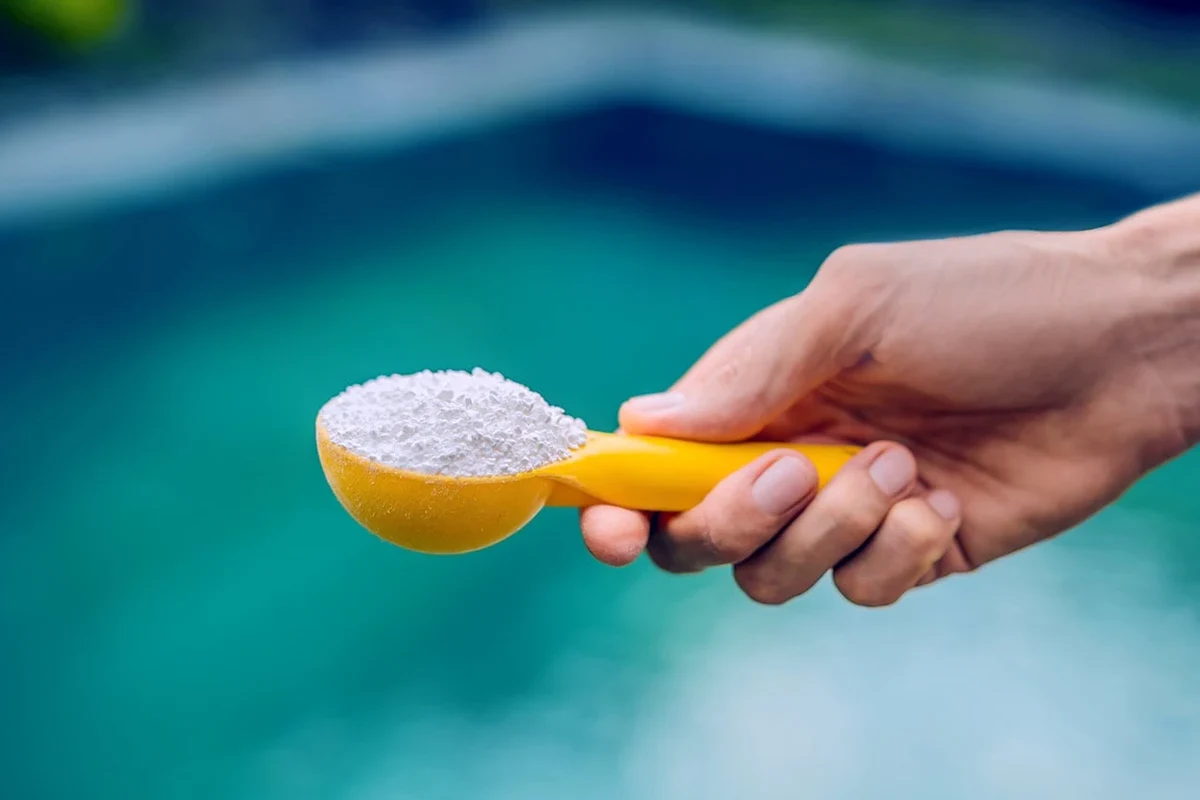
Baking soda is sodium bicarbonate, a mild alkaline compound that buffers pool water. In practical terms, it helps the water resist sudden pH changes, which is important because pool chemistry can shift quickly from rain, swimmers, sunlight, and sanitizer use.
Pool owners often focus on pH first, but total alkalinity is the support system behind it. When alkalinity is in a workable range, pH tends to stay steadier and the water is easier to balance overall.
How sodium bicarbonate affects total alkalinity without dramatically raising pH
Sodium bicarbonate mainly increases total alkalinity. It does raise pH a little, but not as sharply as stronger alkaline products such as soda ash, which is why baking soda is often used for gentler correction.
This slower action matters because pool water is a system, not a single number. If you correct one part too aggressively, you can create a new problem somewhere else, such as scaling, cloudy water, or a pH reading that drifts in the wrong direction.
Alkalinity is often described as the water’s “buffer.” A stronger buffer helps the pool absorb small chemical changes instead of reacting with big swings.
Why pool chemistry changes when alkalinity is too low or too unstable
When alkalinity is too low, pH can bounce around from one test to the next. That instability can make chlorine less predictable, and it may leave water feeling harsher or more irritating than it should.
Low alkalinity can also make water more corrosive. Over time, that can be hard on metal fixtures, pumps, heaters, and some pool surfaces, so the issue is not just comfort; it is also equipment care.
Why Pool Owners Use Baking Soda Instead of Other Pool Chemicals
Baking soda is popular because it is relatively mild and easy to control. For many pool owners, that makes it a practical first choice when the problem is low alkalinity rather than a major pH emergency.
- Raises alkalinity gently
- Easy to dose in small adjustments
- Less likely to shock the water chemistry
- Works slowly
- Not the right fix for every imbalance
- Can be overused if testing is inaccurate
Comparing baking soda with soda ash, muriatic acid, and chlorine products
Soda ash raises pH more aggressively than baking soda, so it is usually chosen when pH is the main issue. Muriatic acid does the opposite by lowering pH and alkalinity, and chlorine products are used primarily for sanitation, not for rebuilding alkalinity.
That distinction matters because pool chemicals are not interchangeable. If you use a sanitizer to solve an alkalinity problem, or an alkalinity product to fix algae, the water may still stay out of balance.
When baking soda is the safer, slower, more controlled choice
Baking soda is often the safer choice when the goal is a measured correction rather than a dramatic change. That makes it useful for beginners, especially when a pool is only slightly out of range.
It is also a better fit when you want to avoid overshooting the target. A slow correction gives the water time to circulate and gives you a chance to retest before adding more.
Always check your pool manufacturer’s guidance and use a reliable water test before adding chemicals. Pool size, sanitizer type, and surface material can affect the right adjustment.
How Much Baking Soda to Add to a Pool: Measurement, Testing, and Dosing Basics
The amount of baking soda needed depends on pool volume, current alkalinity, and how far you need to move the water. Because brands and pool conditions vary, it is best to follow the product label and use test results rather than guessing.
Reading test strips versus liquid test kits for accurate alkalinity results
Test strips are convenient, but they can be harder to read accurately if lighting, storage, or water conditions are off. Liquid test kits usually take a little more time, but they often give a more precise result for total alkalinity and pH.
If your readings seem inconsistent, retest before adding more chemical. A small measuring error can lead to a big correction mistake, especially in smaller pools or spas.
Estimating dosage by pool size and avoiding overcorrection
Pool dosage is usually estimated by the pool’s gallons or liters, then adjusted based on test results. Since pool shape, fill level, and circulation all affect the final outcome, treat any estimate as a starting point rather than a final answer.
It is better to add less, circulate, and retest than to dump in a large amount all at once. Overcorrection can push alkalinity too high, which may contribute to cloudy water or scale formation.
Do not rely on kitchen measuring habits alone. Pool chemicals should be measured carefully, kept dry, and stored away from children, pets, and food-prep areas.
Step-by-Step: How to Add Baking Soda to a Pool Correctly
Adding baking soda is straightforward, but the order matters. Good circulation and careful retesting are what keep a simple adjustment from turning into a chemistry cleanup.
Preparing the water, calculating the dose, and broadcasting it safely
Start by testing the water and confirming that low alkalinity is the issue. Then calculate a conservative dose using the product label or a trusted pool calculator, since pool size and current readings determine how much change you actually need.
Check alkalinity and pH before adding anything so you know whether baking soda is appropriate.
Some pool owners prefer dissolving baking soda in a clean bucket of pool water to help it spread more evenly.
Broadcast it slowly around the deep end or pour the dissolved mixture into the water while the pump is on.
Circulation time, retesting, and when to make a second adjustment
After adding baking soda, let the water circulate before testing again. The exact wait time depends on your pool system and circulation rate, but the goal is to allow the chemical to mix fully before judging the result.
If the reading is still low, make a second small adjustment rather than a large one. That stepwise approach is much easier to control and helps prevent the water from drifting too far in the other direction.
Wear gloves and avoid breathing dust directly when handling pool chemicals. Keep the area dry and never mix baking soda with other pool chemicals in the same container.
Common Problems Baking Soda Helps Solve in Pools
Baking soda is most useful when the water needs stability, not a dramatic chemical reset. It can help calm some of the most common “something feels off” pool problems.
Cloudy water, corrosive water, and unstable chlorine performance
Cloudy water can have many causes, but weak alkalinity is one factor that can contribute to unstable conditions. When the water is better buffered, sanitizer performance and overall balance are often easier to maintain.
Corrosive water is another concern. If alkalinity is too low, water can become aggressive toward metal parts and some finishes, which is why this adjustment is often part of routine pool care rather than a one-time fix.
Real-world examples of underbalanced versus overcorrected pool water
An underbalanced pool may show pH that keeps dropping after each test, even when only a small amount of sanitizer or rain has been added. In that case, baking soda can help the water hold steady.
An overcorrected pool may feel dull, look hazy, or show scale on surfaces and equipment. That is why patience matters: the goal is balanced water, not the highest alkalinity reading possible.
The pool keeps drifting out of range after small changes.
Check alkalinity first, then raise it gradually with baking soda and retest after circulation.
Common Mistakes Pool Owners Make When Using Baking Soda
Most problems come from using too much, too fast, or for the wrong issue. A careful test-and-adjust routine is more reliable than reacting to every cloudy or uncomfortable water reading.
Adding too much at once and creating scale or imbalance
It is tempting to “fix it in one shot,” but that can overshoot the target. High alkalinity may make the water harder to balance and can contribute to scale, especially in pools with warm water or hard fill water.
If you are unsure, split the dose into smaller parts. That gives you better control and makes it easier to stop once the water is in range.
Confusing alkalinity adjustment with pH correction
Alkalinity and pH are related, but they are not the same. Baking soda is mainly for alkalinity support, so it should not be treated as a direct substitute for a dedicated pH adjustment chemical.
This is a common point of confusion for beginners, and it is one reason pool chemistry can feel frustrating. Once you separate the two readings, the water becomes much easier to manage.
Using baking soda as a fix for algae, sanitizer failure, or dirty filters
Baking soda does not kill algae, clean a clogged filter, or replace chlorine. If the pool is green, slimy, or still cloudy after balancing, the real issue may be sanitation, circulation, or filtration.
In other words, baking soda can support the pool system, but it cannot do every job. That is similar to how the right ingredient helps a bake rise, but it cannot rescue a batter that was mixed poorly or baked in the wrong pan.
Safety, Storage, and Compatibility Considerations for Pool Use
Even though baking soda is familiar from the kitchen, pool use still calls for chemical safety. Store it separately from food ingredients and follow the product label and pool equipment guidance.
Handling baking soda around swimmers, equipment, and chemical storage areas
Keep swimmers out of the water while you add chemicals, and run the pump so the product can disperse properly. Avoid adding chemicals near return jets, skimmers, or crowded areas where concentrated material could settle.
Use a clean scoop or measuring cup that is reserved for pool care only. That helps prevent cross-contact with kitchen tools and keeps your storage area organized and safer.
How it interacts with liners, plaster, saltwater systems, and pool surfaces
Baking soda is generally used to support balance across many common pool types, but the exact effect depends on the surface and water system. Vinyl liners, plaster, fiberglass, and saltwater pools can all respond differently if the water is already near the edge of scale or corrosion risk.
That is why surface condition matters as much as the chemical reading. A pool with older plaster or sensitive equipment may need a slower, more cautious approach than a newer system.
- Test before and after dosing
- Use the pump for circulation
- Add small amounts gradually
- Mixing chemicals together
- Guessing the dose by eye
- Using baking soda for algae treatment
When Baking Soda Is the Right Fix—and When It Is Not
Baking soda is the right fix when the pool needs higher total alkalinity and more stable water. It is not the right fix when the real problem is sanitizer failure, severe pH imbalance, algae, or dirty equipment.
If your readings are only slightly off, baking soda can be a calm, controlled correction. If the water is badly out of range, or if you are seeing persistent cloudiness or discoloration, it is smarter to identify the root cause before adding more chemicals.
Situations where a pool needs alkalinity support versus a different chemical approach
Choose baking soda when alkalinity is low and pH is drifting. Choose another approach when pH is the main problem, when sanitizer levels need attention, or when scale and cloudiness suggest a different imbalance.
When in doubt, retest and compare the numbers rather than treating every symptom the same way. That habit prevents unnecessary chemical changes and usually saves time in the long run.
Final recap on what baking soda does to a pool and how to use it wisely
So, what does baking soda do to a pool? It mainly raises total alkalinity, which helps stabilize pH and makes the water easier to manage. Used carefully, it is a useful, gentle tool for keeping pool chemistry in a healthier range.
The best approach is simple: test first, add slowly, circulate well, and retest before making another change. That method keeps the water balanced and helps you avoid the most common pool-care mistakes.
- Confirm low alkalinity with a reliable test
- Check whether pH also needs adjustment
- Measure the pool volume as accurately as possible
- Add baking soda in small, controlled amounts
- Retest after circulation before adding more
Frequently Asked Questions
It raises total alkalinity and gives the water more buffering power. That usually helps pH stay steadier over time.
Yes, but usually only a little compared with stronger alkaline chemicals. Its main job is alkalinity support.
Use a water test and your pool’s volume, then follow the product label or a trusted pool calculator. Start with a smaller amount if you are unsure.
No. Baking soda helps balance water chemistry, but chlorine is a sanitizer that helps keep the pool safe.
The water can become too alkaline, which may contribute to cloudy water or scale. If that happens, retest and correct gradually instead of adding more.
It is commonly used in many pools, but surface type, equipment, and existing water balance all matter. Check your pool manufacturer’s guidance and test carefully.