
What to Do With Stale Bread: Smart Ways to Revive, Repurpose, and Save It

Stale bread is one of those kitchen problems that looks small until you’re holding a loaf that feels too dry to enjoy but not quite bad enough to throw away. The good news? Dry bread is often still useful. In many cases, it’s actually better for certain recipes than fresh bread.
The trick is knowing whether the loaf is merely stale, worth reviving, or ready to be turned into something else entirely. That decision is where you save both money and flavor.

Quick Answer: Should You Revive, Repurpose, Freeze, or Discard It?
| What you notice | Best move | Time you have |
|---|---|---|
| Slightly dry, still flexible bread | Revive | 5 to 15 minutes |
| Dry but sturdy bread | Repurpose into crumbs, croutons, toast, stuffing, or French toast | 10 minutes to a few hours |
| Very dry bread you won’t use soon | Freeze as cubes, slices, crumbs, or croutons | Right now |
| Any visible mold, musty smell, or slimy patches | Discard | Immediately |
Quick rule of thumb:
– Still bendable? Try reviving it.
– Too dry for sandwiches but structurally sound? Repurpose it.
– Not using it today? Freeze it before it gets worse.
– Moldy? Throw it out.
How to Tell Whether Stale Bread Is Safe to Use
Bread stales when it loses moisture and the starches firm up. That’s different from spoilage. A stale loaf may feel dry, tough, or a little leathery, but it can still be perfectly usable if it shows no signs of mold or off odors.
Discard bread if you notice any of these:
- Visible mold, even a small spot
- A musty, sour, or otherwise off smell
- Slimy, sticky, or unusually damp patches
- Strange discoloration that doesn’t look like normal browning or baking
If the bread is only dry and otherwise smells normal, it’s generally fair game for cooking, baking, or reviving.
What to Do First: Revive It or Repurpose It?
The fastest way to decide is to ask two questions:
- Is it still safe?
- Do I need it to be bread again, or just useful in a recipe?
Use this simple framework:
- Slightly stale, still flexible: revive it if you want sandwiches, toast, or dinner bread.
- Dry but sturdy: repurpose it into croutons, breadcrumbs, stuffing, strata, or bread pudding.
- Very dry or crusty: don’t force it back into soft bread unless you’re only aiming for a short-term fix. It will usually perform better in a cooked dish.
Think of revival as a rescue mission and repurposing as a redesign. Revival works best when the loaf is only moderately stale. Repurposing wins when the bread has already crossed into “too dry to enjoy plain” territory.
Best quick decision rule: if the bread would still be pleasant after a brief reheat and a little moisture, revive it. If it would still feel tired even after that, cook it into something else.
Tools and Materials You’ll Need
You do not need much to make stale bread useful again.
For reviving bread:
– Oven or microwave
– Clean kitchen towel or paper towel
– A spray bottle or fingers for light water application
– Baking sheet
For breadcrumbs:
– Knife or food processor
– Baking sheet
– Airtight container or freezer bag
For croutons:
– Cutting board and knife
– Oil or melted butter
– Salt and seasonings
– Baking sheet or skillet
For leftover-bread recipes:
– Eggs, milk, or custard ingredients for sweet dishes
– Broth, vegetables, and herbs for savory dishes
– A mixing bowl and casserole dish for strata or stuffing
If you already have stale bread on hand, you probably already have most of what you need to turn it into dinner.
How to Soften Stale Bread Again
The best revival method depends on the bread’s shape and how dry it is.
Oven method: best for loaves, rolls, and crusty bread
This is the better choice when you want the bread to taste like bread again rather than merely warm.
- Heat the oven to a moderate temperature, around 300°F to 350°F.
- Lightly dampen the outside of the loaf or slices. A good target is about 1 to 2 teaspoons of water per slice or 1 to 2 tablespoons for a small loaf, just enough to moisten the surface without soaking it.
- The bread should look slightly glossy or damp to the touch, not wet enough to drip or leave puddles.
- Wrap the bread loosely in foil for a softer result, or leave it unwrapped if you want more crust.
- Heat for 5 to 10 minutes for slices or 10 to 15 minutes for a small loaf, then check it. Stop when it feels warmed through and the crumb has softened.
Why this works: the moisture turns to steam and helps soften the interior before the crust dries out again.
Use this method when:
– The bread is only moderately stale
– You want to serve it at the table
– You have a loaf, not just a few slices
Microwave method: best for a single serving in a hurry
This is the faster option, but it’s also the easiest way to make bread rubbery if you overdo it.
- Wrap the slice or small piece in a slightly damp paper towel.
- Use about 1 teaspoon of water total on the towel for a slice or two; it should feel damp, not dripping.
- Microwave in 5- to 10-second bursts.
- Stop as soon as the bread feels soft and warm. If it starts to feel steamy or spongy, it’s already too far.
Use this method when:
– You want one sandwich or one slice for immediate use
– You don’t mind that the texture may fade quickly
– You are not trying to restore a whole loaf
The trade-off is simple: the microwave is quick, but the effect is brief. The oven takes longer, but it gives you a better texture.
If you want a deeper walkthrough of refresh methods, this guide on how to refresh stale bread goes into oven, microwave, steam, and skillet options in more detail.
Best Recipes and Uses for Stale Bread
Once bread is too dry to enjoy as-is, the best recipe depends on what shape it still has.
Use It Tonight
If you want something fast, these are the easiest same-night options:
- Toast or garlicky bread slices: revive briefly, then top with butter, garlic, olive oil, or cheese
- French toast: ideal for slices that are dry but still hold together
- Quick croutons: cube, oil, season, and bake until crisp
- Breadcrumbs for tonight’s dinner: pulse and use as a coating or topping
- Bread salad or panzanella: toss sturdy cubes with tomatoes, dressing, and herbs
Weekend Cooking
If you have a little more time, these are better for make-ahead or more involved dishes:
- Bread pudding: sweet or savory, especially good for very dry bread
- Stuffing: best when you want bread that can absorb broth and seasonings
- Strata: a baked egg casserole that benefits from dry bread and a longer soak
- Homemade breadcrumbs for the freezer: make a larger batch and store for later
- Soup thickener: use very dry bread to add body to rustic soups or stews
Breadcrumbs
Breadcrumbs are the easiest and most flexible option.
Use breadcrumbs for:
– Breaded chicken or fish
– Topping baked pasta
– Binding meatballs or veggie patties
– Thickening fillings and casseroles
Best bread types:
– Sandwich bread for soft, fine crumbs
– Sourdough or artisan bread for more texture
Croutons
Croutons are ideal when the bread is firm but still has some structure.
Toss cubes or torn pieces with oil, salt, and seasonings, then bake or sauté until crisp. A little garlic, herbs, or Parmesan can make them feel intentional rather than leftover.
Use croutons for:
– Salads
– Soups
– Grain bowls
– Snacking
Best bread types:
– Baguettes
– Sourdough
– Rustic artisan loaves
French toast
French toast is one of the best uses for stale bread because dry bread absorbs the custard without collapsing as easily as fresh bread.
Use it when:
– The slices are sturdy
– The bread is a little dry but not rock-hard
– You want a quick breakfast or brunch
Best bread types:
– Thick sandwich bread
– Brioche-style bread
– Challah
– Day-old sliced loaf
Bread pudding
Bread pudding is a classic for a reason: stale bread soaks up custard beautifully and bakes into a soft, cohesive dessert or savory side.
Use it when:
– The bread is very dry
– You have cubes, chunks, or torn pieces
– You want a make-ahead dish
Best bread types:
– White bread
– Brioche
– Challah
– Leftover rolls
Stuffing
Stuffing benefits from bread that is dry enough to hold its shape but not so stale that it turns dusty.
Use it when:
– You need cubes that can absorb broth
– You want a dish with structure and flavor
– You’re cooking for a holiday meal or roast dinner
Best bread types:
– Country loaf
– Sourdough
– French bread
– Mixed leftover loaves
Panzanella
Panzanella is a bread salad, so stale bread is not a problem—it’s part of the point. The bread soaks up tomato juices and dressing while keeping some chew.
Use it when:
– You have rustic bread
– You want a summer meal
– The bread is firm enough to hold up after dressing
Best bread types:
– Artisan bread
– Ciabatta
– Country loaf
– Sourdough
Strata
A strata is a savory baked casserole made with bread, eggs, dairy, and usually vegetables, cheese, or meat. It’s a great choice when you want a hearty brunch or dinner.
Use it when:
– You want a make-ahead dish
– The bread is dry enough to absorb custard
– You have leftover vegetables or cheese to use up
Thickening soups, stews, and sauces
Very dry bread can do more than sit in cubes. It can dissolve into liquid and help thicken a soup, stew, or sauce.
This works especially well when:
– The bread is too dry to revive
– You want body rather than texture
– You’re making rustic, homestyle dishes
Think of it as a practical thickener with flavor.
Which Bread Types Work Best for Each Use
Bread type matters more than many home bakers realize.
Sandwich bread
Best for:
– French toast
– Bread pudding
– Breadcrumbs
Why it works: it’s soft and uniform, so it breaks down evenly.
Baguette
Best for:
– Croutons
– Bruschetta-style toasts
– Bread crumbs
Why it works: the crust and open crumb give you great texture once dried.
Sourdough
Best for:
– Croutons
– Stuffing
– Panzanella
– Breadcrumbs
Why it works: its flavor holds up well in savory dishes.
Artisan or country loaf
Best for:
– Panzanella
– Stuffing
– Strata
– Rustic breadcrumbs
Why it works: the irregular crumb and crust create more interesting texture.
If your bread is soft and sliceable, lean toward dishes that need absorbency. If it is crusty and firm, lean toward dishes that benefit from crunch or structure.
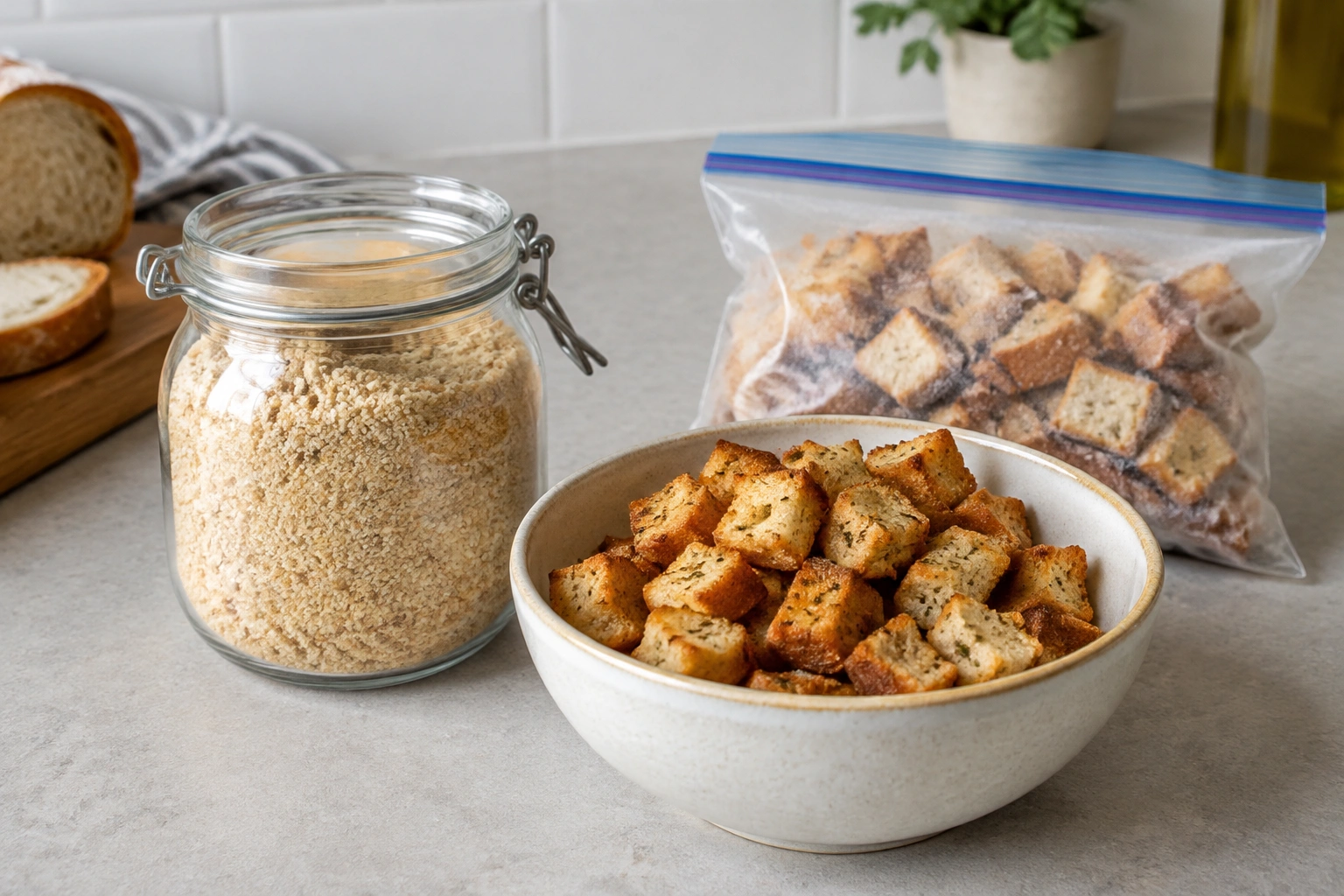
How to Make and Store Breadcrumbs and Croutons
These are the two most useful ways to preserve stale bread for later.
Breadcrumbs
- Dry the bread further if needed.
- Break it into pieces.
- Pulse in a food processor or grate by hand.
- Use immediately, or dry/toast lightly for a longer-lasting pantry ingredient.
You can keep them raw or toasted. Raw crumbs are more versatile for coatings and binders. Toasted crumbs bring more flavor and stay crisp longer.
Store breadcrumbs in:
– Room temperature: an airtight container for up to about 1 week if they are fully dry
– Freezer: a sealed freezer bag or container for several months
If you’re unsure, freeze them. That’s the safest way to keep them from going stale again or picking up moisture.
Croutons
- Cut bread into cubes or tear into rustic pieces.
- Toss with oil, salt, and seasonings.
- Bake or sauté until crisp.
- Cool completely before storing.
Store croutons in:
– Room temperature: a tin or airtight container for about 3 to 5 days if they are fully cooled and dry
– Freezer: a freezer-safe bag for longer storage, especially if you made a big batch
A useful rule: if the croutons feel even slightly warm when stored, they can soften from trapped steam. If they’ll be used within a few days, room temperature is fine; if you want to keep them longer, freeze them.
Common Mistakes to Avoid
The most common errors are easy to fix once you know what to watch for.
Over-wetting the bread
A little moisture helps revive bread. Too much turns the crust soggy and the crumb gummy.
Using moldy bread
No amount of heat makes moldy bread safe.
Choosing the wrong recipe
Very dry bread usually belongs in baked or soaked recipes, not sandwiches.
Storing crumbs or croutons while warm
That traps moisture and ruins the texture.
Waiting too long to freeze bread
If you know you won’t finish the loaf, freeze it before it becomes deeply stale.
Troubleshooting Stale Bread Problems
“My bread turned gummy.”
You likely used too much water or too much microwave time. Next time, use less moisture and shorter heat bursts.
“It’s still too hard after reheating.”
The loaf may be too dry to revive. Repurpose it instead of forcing it back into soft bread.
“The crust is soft, but the center is dry.”
Wrap the bread loosely in foil and warm it a little longer, or slice and use it for toast or sandwiches rather than trying to restore the whole loaf.
“My breadcrumbs clumped.”
They were probably not dry enough before storage. Spread them out and toast briefly before packing them away.
How to Store Bread So It Stays Fresh Longer
The best way to handle stale bread is to slow the staling before it starts.
- Store bread in a way that matches how quickly you’ll use it.
- Freeze bread early if you know it won’t be eaten soon.
- Slice before freezing if you usually use bread one piece at a time.
- Keep a partial loaf on hand for immediate use and freeze the rest.
For homemade bread, storage habits matter even more. If you want the bigger picture on why bread dries out quickly and how to slow that process, see why homemade bread goes stale fast.
The goal is not to keep bread “fresh forever.” It’s to keep it in the best state for the next job you want it to do.
Quick Examples: What to Do With Different Kinds of Stale Bread
Slightly dry sandwich loaf
If it’s still flexible, toast it, revive it briefly, or turn it into French toast.
Firm baguette
This is perfect for croutons, bruschetta-style slices, or breadcrumbs.
Very dry sourdough
Use it for stuffing, panzanella, or rustic breadcrumbs.
A few leftover slices from a loaf
Make bread pudding, strata, or a quick pan of French toast.
Bread that is dry but not worth reviving
Turn it into crumbs or croutons and freeze them for later.
When to Consult a Master Baker
If you’re working with a special loaf—especially one with a delicate crust or a prized artisan crumb—and you’re unsure whether it’s still worth reviving, a master baker can help you judge texture, moisture, and the best next use. That matters most when the bread is homemade, expensive, or meant for a specific service.
FAQ
Can stale bread be made soft again?
Yes, if it’s only moderately stale. The oven method works best for loaves and crusty bread, while the microwave is better for a single slice you want to use right away.
What should I do with very dry bread?
Very dry bread is usually better repurposed than revived. Turn it into breadcrumbs, croutons, stuffing, bread pudding, strata, or a bread-thickened soup.
How do I know if bread is too stale to use?
If it’s dry but smells normal and shows no mold, it’s usually still usable. If it has visible mold, a musty smell, or slimy spots, discard it.
Can I freeze stale bread?
Yes. Freeze it as slices, cubes, crumbs, or croutons as soon as you know you won’t use it soon.
Should breadcrumbs be stored in the fridge or freezer?
For short-term use, an airtight container at room temperature can work if the crumbs are very dry. For longer storage, the freezer is the better choice.
Final Thoughts
Stale bread is rarely a dead end. More often, it’s a fork in the road: revive it if it still has life, or turn it into something better suited to its texture. Once you learn that habit, leftover bread stops feeling like waste and starts behaving like an ingredient.
The real skill is not rescuing every loaf. It’s choosing the right path before the bread gets any further from its best self.