
Why Air Fryer Food Gets Soggy and How to Fix It
If your air fryer meals keep coming out soft instead of crisp, the problem usually comes down to a few basics: too much moisture, crowded basket space, not enough heat, or a coating that never had a chance to dry and brown.
Air fryers crisp food by moving hot air around it. That airflow helps moisture evaporate from the surface while the outside browns. When that process gets interrupted, food can steam instead of crisp. The result is familiar: fries that look done but feel limp, breaded chicken that stays pale, or vegetables that turn wet before they ever get golden.
This guide walks through the most common causes of soggy air fryer food and the fixes that usually help right away.
Why Air Fryer Food Gets Soggy Instead of Crispy
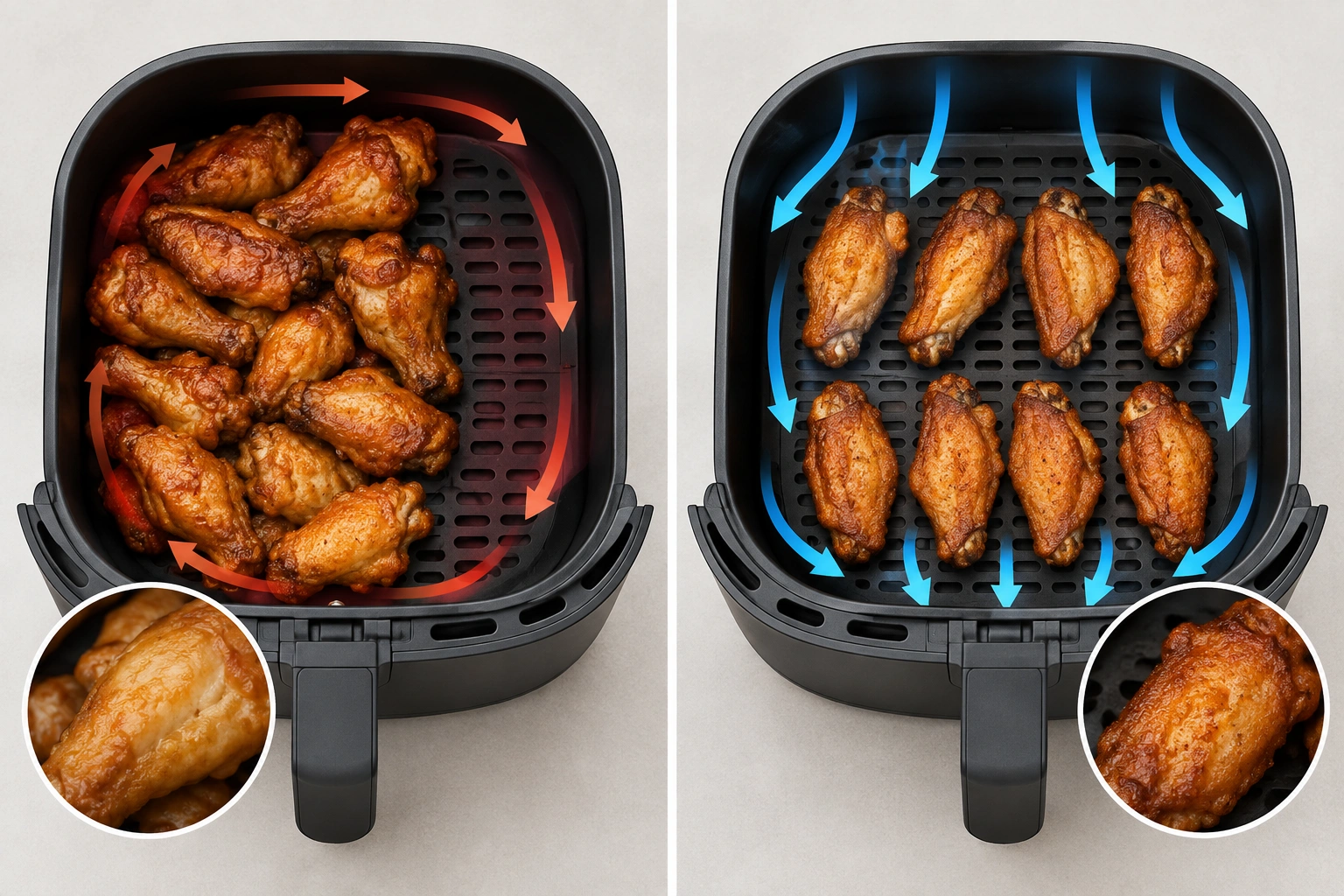
The basic job of an air fryer is to circulate hot air quickly around the food. That moving air helps dry the surface and promote browning. If the air can’t reach the food evenly, moisture hangs around longer and the food stays soft.
That is why a basket full of fries or nuggets often performs worse than a smaller batch spread out in a single layer. The food on the edges may brown, while the food underneath stays damp. The same thing happens when food goes into the basket wet, or when frozen items release extra moisture as they cook.
A useful way to think about it: air frying is part cooking, part drying. If the drying step is blocked, crispness suffers.
For a deeper look at the cooking process itself, see how an air fryer cooks food. If you’re deciding how much to load into the basket, it also helps to understand how much food you can cook in an air fryer.
The Most Common Reasons Air Fryer Food Gets Soggy
1. The basket is overcrowded
This is one of the biggest reasons food stays soft. If pieces are stacked, touching too much, or packed tightly, hot air cannot move around them properly. In practice, that means the bottom layer may steam while the top layer browns.
A basket that looks “full enough” for convenience may still be too full for crisping. Fries piled high are a classic example: the ones on top crisp first, while the ones underneath stay limp.
What to do: cook in smaller batches and spread the food out. If pieces are touching slightly, that may still be fine for some foods, but once the basket is packed, crispness usually drops fast.
2. The food surface is too wet
Moisture on the outside of the food turns to steam. That steam works against browning. This is especially common with fresh potatoes, vegetables, thawed frozen foods, and marinated items.
Fresh-cut potatoes can carry a surprising amount of surface starch and moisture. Zucchini, mushrooms, and other vegetables also release water as they cook. If they go in wet, they often come out soft.
What to do: pat food dry before seasoning. For vegetables with a lot of moisture, a short rest after salting can help draw out water before cooking.
3. The air fryer was not preheated
Food that starts in a fully heated basket gets surface heat sooner, which can help it crisp before it has time to soften.
This does not mean every recipe must be preheated, but when you are trying to recover crispness, it can make a noticeable difference.
What to do: preheat when the recipe or food type benefits from immediate high heat, especially for breaded foods, fries, and smaller pieces that should brown quickly.
4. The temperature is too low, or the food is pulled too early
Sometimes food is cooked through but never gets the surface heat needed for browning. Other times it is undercooked and still soft in the center. Those are different problems, even though they can look similar at first.
Lower temperatures can be useful for delicate foods, but they may not dry the surface fast enough for crisp results. On the other hand, if you increase heat too much, the outside may brown before the inside is done.
What to do: if the food is cooked but pale, try a hotter finish. If it is still soft in the middle, give it more time before adjusting the temperature.
5. Too much oil, or the wrong kind of coating
Oil helps some foods crisp, but too much can make breading heavy or greasy. That can leave the outside looking coated but not crunchy. Wet batters can also stay soft because they are not designed to dry out quickly in circulating air.
A light oil spray is often a better choice than adding a heavy coating. The goal is a thin, even film, not a slick layer.
What to do: use a light spray for potatoes, vegetables, and breaded foods that need help browning. If the food feels greasy or heavy, reduce the oil next time.
6. The food was not shaken, flipped, or rearranged
Air fryers do not brown every surface equally. Food on the bottom or in the center of the basket often gets less direct exposure to hot air. Shaking or flipping gives those surfaces a chance to dry and brown.
This matters most for fries, nuggets, vegetables, and other small pieces. Larger items may need turning instead of shaking.
What to do: move the food halfway through cooking, and more often if the basket is crowded or the pieces are small.
How to Diagnose the Problem: Undercooked, Too Wet, or Just Not Crisping
When air fryer food disappoints, the fix depends on what is actually wrong. A soft exterior does not always mean the food is undercooked.
Fries and potato pieces
- Wet, limp fries that never browned much: usually too much surface moisture, too much oil, or overcrowding.
- Fries that are browned on the outside but floppy overall: often cooked enough, but the basket was too full or they were not shaken well.
- Fries that are crisp on the edges but soft in the middle: often need more time, or they were cut too thick for the cook time used.
Chicken
- Breading is pale and soft, but the chicken feels done: usually a crisping problem, not a doneness problem.
- Coating is gummy or slides off: the surface may have been too wet, or the basket may have been crowded.
- Chicken is soft in the center or still looks raw near the thickest part: treat that as undercooked and check internal temperature.
Vegetables
- Soft, watery vegetables with little browning: usually too much moisture or too many pieces in the basket.
- Edges are browned but the vegetables still seem limp: they may be cooked through but not dried enough.
- Vegetables are firm in the middle and not tender yet: they likely need more time before any final crisping step.
Frozen foods
- Frozen fries or breaded items turn soft after thawing in the basket: that often points to released moisture and crowding.
- Frozen food is hot but still pale and limp: it may need a hotter finish or more space for airflow.
- Frozen vegetables look wet in the basket: that is usually moisture from ice crystals, not just undercooking.
A simple rule helps here:
- Pale and soft: likely needs more heat or time
- Wet and limp: likely needs drying, spacing, or less oil
- Cooked outside, soft underneath: likely needs flipping, shaking, or smaller batches
If chicken or other protein seems soft in the middle, use a food thermometer and follow official food-safety guidance for the correct internal temperature. The USDA’s food safety and temperature guidance is a good reference point when cooking poultry or other potentially risky foods.
Fixes That Usually Work Right Away
These are the changes to try first when an air fryer batch turns out soft.
Reduce the batch size
If the basket looks crowded, that is the first thing to change. Even a small reduction can improve airflow enough to make a difference.
Dry the food before it goes in
Use paper towels for potatoes, vegetables, and thawed frozen foods. If the food is marinated, let excess liquid drip off before cooking.
Preheat when crispness matters
A preheated basket gives food a head start on browning. That can matter more for breaded or starchy foods than for dense items.
Use a light oil spray instead of a heavy coating
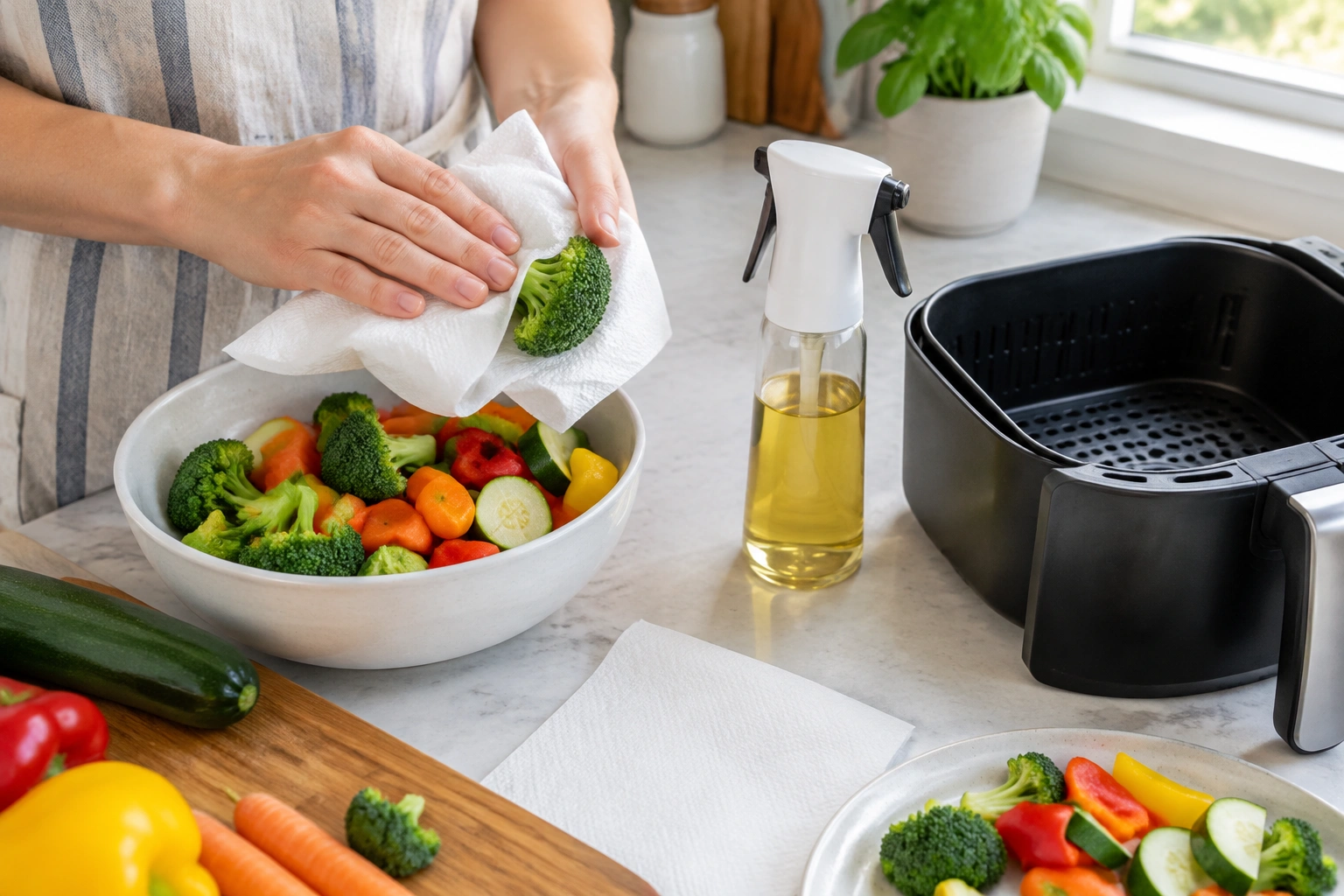
A thin mist helps the surface brown without weighing it down. If the food looks shiny or greasy before cooking, there is probably too much oil.
Shake or flip halfway through
This is one of the simplest ways to improve even browning. It is especially useful for fries, nuggets, cauliflower, Brussels sprouts, and other small pieces.
Give the food a short finish at higher heat
If the food is cooked but still soft, a brief hotter finish may help dry the surface. Watch it closely so the outside does not overbrown before the inside is ready.
How to Handle the Foods That Get Soggy Most Often
Fries and potato pieces
Fresh potatoes can release moisture as they cook, especially if they were not dried well after cutting or rinsing. If fries come out limp, check three things first: basket crowding, moisture on the surface, and whether they were shaken during cooking.
A practical test: cook half the amount you usually make and spread them out. If the smaller batch crisps better, the air fryer probably was not the problem.
Chicken
Breaded chicken can go soggy if the coating is too wet, the basket is overcrowded, or the heat is too low to dry the crust. If the chicken is fully cooked but the breading is soft, the issue is usually texture, not doneness.
For raw chicken, do not rely on appearance alone. Check internal temperature and follow official food-safety guidance.
Vegetables
Vegetables often release water as they cook. Zucchini, mushrooms, and tomatoes are especially prone to this. If they go in wet or are piled together, they can steam quickly.
For better results, keep the pieces similar in size, dry them well, and avoid overloading the basket.
Breaded foods
Breaded foods need enough heat and enough spacing to set the coating. If the breading looks pale and soft, the basket may be too full or the coating may be too wet.
A light spray can help, but too much oil can make the crust heavy instead of crisp.
Frozen foods
Frozen foods are convenient, but they often need extra attention because ice crystals melt and release moisture during cooking. That moisture can soften breading or keep fries from crisping evenly.
Shake or flip frozen items more often than you think you need to, and avoid dumping a large frozen batch into a crowded basket.
Fresh Food vs Frozen Food: Why Frozen Items Need Different Treatment
Fresh food usually starts with less surface moisture than frozen food, but fresh food can still be soggy if it is wet from rinsing, marinating, or cutting. Frozen food has a different challenge: as it warms, it releases moisture from ice crystals and frost.
That means frozen food often needs:
– more space in the basket
– a little more time
– more shaking or turning
– less added moisture from oil, sauce, or wet seasoning
If you are cooking frozen breaded items, the main goal is to let moisture escape while the coating sets. If you are cooking frozen vegetables, the challenge is often getting rid of excess water before it collects in the basket.
Fresh food can sometimes crisp faster, but it also may need more drying before cooking. Frozen food may be more predictable in shape, but it usually needs more time for the moisture to burn off.
When the Recipe Is the Problem, Not the Air Fryer
Some dishes are simply not well suited to the air fryer without adjustment. Wet batters, heavy sauces, and recipes designed to steam or bake can come out soft because they were never built for dry, high-airflow cooking.
A few examples:
– batter that drips heavily
– vegetables coated in too much sauce
– casseroles or layered dishes that trap steam
– baked-style recipes that need a moist interior rather than a crisp exterior
If a recipe depends on moisture staying in place, an air fryer may not give you the texture you want. In those cases, the better fix may be to change the method rather than keep forcing the same recipe to work.
That is also why air frying often performs better on foods that already have a dry or breaded exterior. If you want a crisp finish, the food needs room to dry and brown.
What You Can and Cannot Fix After Cooking
Some soggy food can be improved. Some cannot.
Usually fixable
- fries that are cooked but soft
- breaded items that browned unevenly
- vegetables that need a little more drying
- frozen foods that need a short re-crisp
For example, fries that are already cooked through can sometimes regain some bite after a short return to the air fryer, especially if they were only soft because the basket was crowded. Breaded chicken tenders or frozen nuggets that are warm inside but pale on the outside can also improve with a brief finish.
Usually not fixable
- undercooked poultry
- food that is wet all the way through
- a coating that has turned heavy and gummy
- recipes that trapped too much steam from the start
If the problem is undercooking, texture is only part of the issue. Check doneness first, especially with chicken or other proteins. If the problem is excess moisture, a quick reheat may improve the outside, but it will not always restore the crispness you wanted.
A Quick Troubleshooting Order That Saves Time
If your air fryer food is soggy and you want the fastest path to a better result, use this order:
- Check the basket — if it is crowded, cook less at once.
- Check the surface — if the food is wet, dry it first.
- Check the heat — if it is pale, raise the temperature or extend time.
- Check movement — if you did not shake or flip, do that next time.
- Check the recipe — if it is a wet batter or steam-heavy dish, the method may be the issue.
That sequence solves a lot of air fryer problems without guesswork.
Final Thoughts
Soggy air fryer food usually comes down to airflow and moisture. If the basket is crowded, the food is wet, the heat is too low, or the coating is too heavy, the air fryer cannot do its job properly. Once you understand that, the fixes become much more straightforward: dry the food, give it space, preheat when needed, use only a light coating of oil, and turn the food during cooking.
If you want crisp results more consistently, treat the air fryer like a tool that rewards good airflow. That one idea explains most of the common texture problems.
FAQ
Why does my air fryer food come out soggy?
The most common reasons are overcrowding, excess surface moisture, too little heat, or not shaking/flipping the food during cooking.
Can I fix soggy air fryer food after it’s cooked?
Sometimes. Foods that are already cooked through, like fries, breaded items, or some frozen foods, may crisp up a bit with a short finish in the air fryer. Food that is wet all the way through or undercooked poultry usually needs more than a quick re-crisp.
Why are my air fryer fries soggy?
Fries usually turn soggy when the basket is too full, the potatoes are wet, or they are not spread out enough for airflow.
Why is my air fryer chicken soggy?
Chicken often gets soggy when the breading is wet, the basket is crowded, or the coating does not get enough heat to dry and brown.
Do frozen foods need different air fryer settings?
Often, yes. Frozen foods usually release more moisture as they cook, so they may need more space, more time, and more turning than fresh foods.
Should I preheat my air fryer?
Preheating can help food start browning sooner, especially for fries, breaded foods, and smaller pieces that benefit from immediate heat.

