
Why Dough Shrinks Back and How to Stop It from Fighting You

If you’ve ever rolled dough into a neat round only to watch it tighten up again, you’re not imagining things. Dough can shrink back for a few predictable reasons: the gluten is too tense, the dough is too cold, it hasn’t rested long enough, or it was mixed and handled in a way that made it overly elastic.
The good news is that this is usually a handling problem, not a ruined dough problem. Once you understand what the dough is “telling” you, the fix becomes more deliberate. Sometimes the answer is a short bench rest. Sometimes it’s warming the dough slightly. Sometimes it’s adjusting hydration or giving the dough more fermentation time so it becomes easier to work with in the first place.
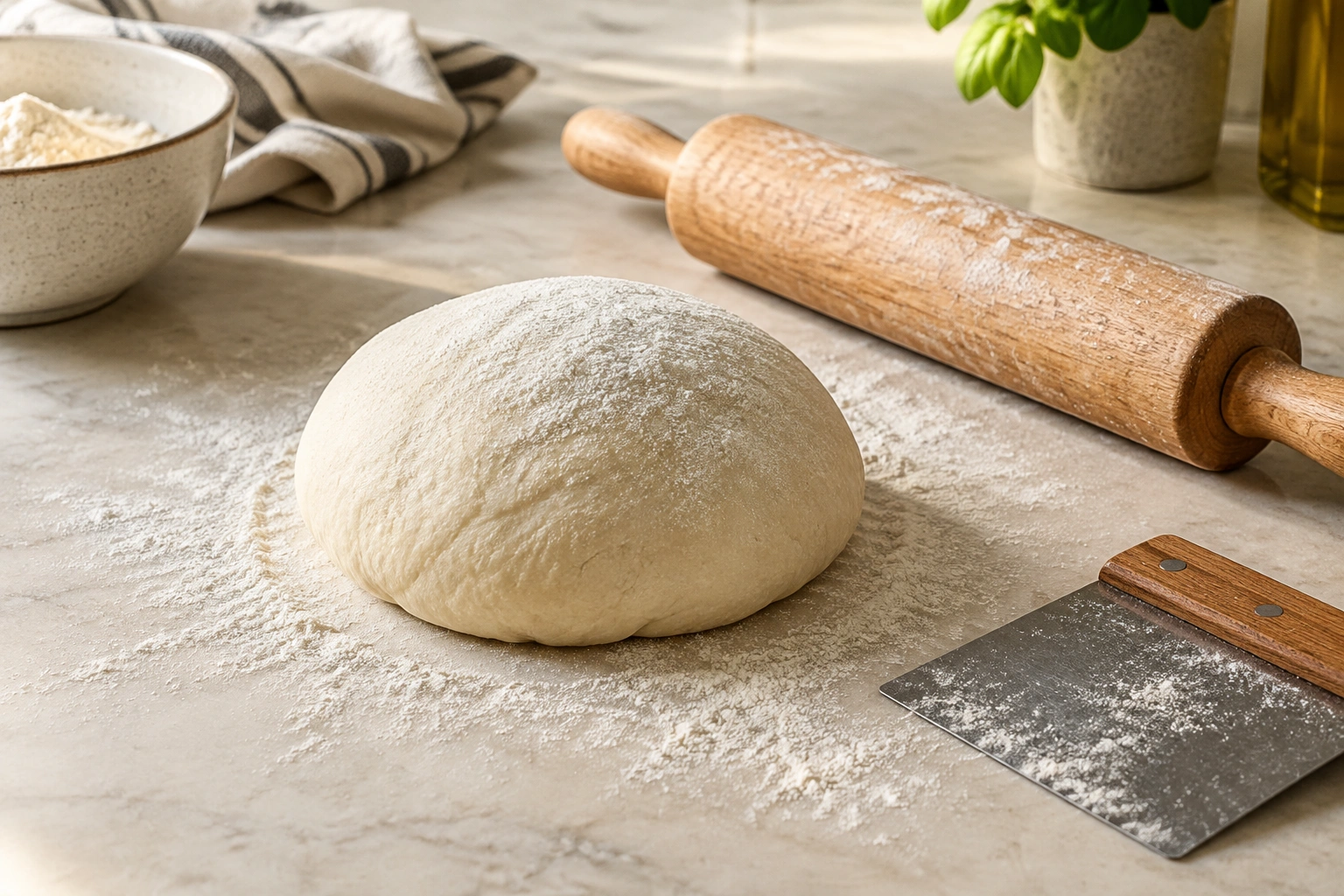
For home bakers and culinary students, the goal is not to force dough into submission. It’s to get it relaxed enough that it stretches, rolls, or shapes without springing right back.
Why Dough Shrinks Back in the First Place
Dough shrinks back because gluten has memory-like behavior. When flour and water are mixed, gluten proteins form a network that gives dough strength. That strength is useful, but it also means the dough resists being stretched. If the network is tight, the dough springs back when you roll or pull it.
A few things make that resistance stronger:
- Kneading develops gluten, which is necessary, but it can also make the dough tighter if you keep working it.
- Resting time lets the gluten relax after mixing or shaping.
- Cold temperature stiffens the dough and slows relaxation.
- Low hydration often makes dough firmer and less extensible.
- Underproofing can leave dough feeling tight and resistant because fermentation has not progressed enough.
That’s why the same dough may feel stubborn at first and then suddenly become cooperative after a short rest.
Elasticity vs. Extensibility
These two terms matter a lot.
- Elasticity is the dough’s tendency to spring back.
- Extensibility is its ability to stretch without tearing.
A dough can have plenty of strength and still be hard to shape if elasticity is dominating. The sweet spot is a dough with enough structure to hold shape, but enough extensibility to roll or stretch without fighting you.
How to Tell What’s Causing the Problem
Before changing anything, look at the dough’s behavior. The fix depends on whether the issue is tension, temperature, hydration, or fermentation.
Pie dough and yeasted dough do not usually fail the same way. Pie dough is more likely to shrink because it was overworked, stretched into the pan, or allowed to warm too much. Bread, pizza, and pasta dough are more likely to shrink back because the gluten needs to relax, the dough is too cold, or fermentation is still incomplete.
Quick diagnosis guide
| What you notice | Most likely cause | Best first fix |
|---|---|---|
| Dough snaps back quickly after rolling or stretching | Under-rested dough or tight gluten from handling | Stop working it and give it a short bench rest of 10 to 15 minutes |
| Dough feels firm, stiff, or hard to roll because it is cold | Cold dough | Let it sit at room temperature until it softens slightly |
| Dough feels rubbery after a lot of kneading and keeps resisting | Overworked dough | Rest it longer; do not knead again |
| Dough is dense, puffy, or still resistant even though it has rested | Underproofed dough | Give it more fermentation/proofing time if the recipe allows |
| Dough tears, cracks, or feels dry at the edges | Dry dough or low hydration | Check hydration; use a lightly higher-hydration formula next time |
| Pie dough shrinks in the pan after shaping | Overhandling or warming too much | Chill it, handle it less, and avoid stretching it to fit |
| Bread or pizza dough keeps pulling back while shaping | Tight gluten, cold dough, or underproofing | Rest first, then warm slightly if needed, and proof longer only if fermentation is still incomplete |
A useful rule: if the dough springs back immediately, think rest and temperature first. If it tears, think hydration and development. If it feels rubbery and stubborn, think overmixing or under-resting. If it feels dense and underexpanded, think underproofing rather than just a short pause.
What You Need Before You Start
You do not need special equipment to fix shrink-back, but a few basics make the process smoother:
- a rolling pin
- a bench scraper
- a lightly floured work surface
- a clean kitchen towel or plastic wrap
- a timer
- a room that is not excessively cold
A comfortable room temperature matters more than many bakers expect. Dough taken from a chilly fridge or worked in a cold kitchen will usually resist stretching more than dough that has had time to relax.
Step-by-Step: How to Stop Dough from Shrinking Back
Here is the troubleshooting order I use when dough keeps fighting back.
1) Stop rolling and give the dough a short bench rest
If the dough keeps shrinking after a few passes, stop forcing it. Cover it and let it rest for 10 to 15 minutes. That short pause often gives the gluten enough time to relax so the dough becomes easier to shape.
This is the simplest and most reliable first move when the problem is tension from mixing, shaping, or rolling. It is a bench rest, not a full fermentation step: you are not trying to make the dough rise more, just to let the gluten loosen.
2) Check the dough temperature
If the dough came straight from the refrigerator, it may simply be too cold. Cold dough feels tighter and less extensible. Let it sit at room temperature until it softens slightly, then try again.
There’s a trade-off here: warming the dough helps it stretch, but too much warmth can make some doughs slack and difficult to handle. That is especially true for pie dough, where you want pliability without letting the fat soften too much.
3) Change your handling, not your force
Use lighter pressure and fewer passes with the rolling pin. Roll from the center outward, then rotate the dough a quarter turn instead of pressing harder in one direction. If you keep flattening the same area repeatedly, you can reinforce tension rather than release it.
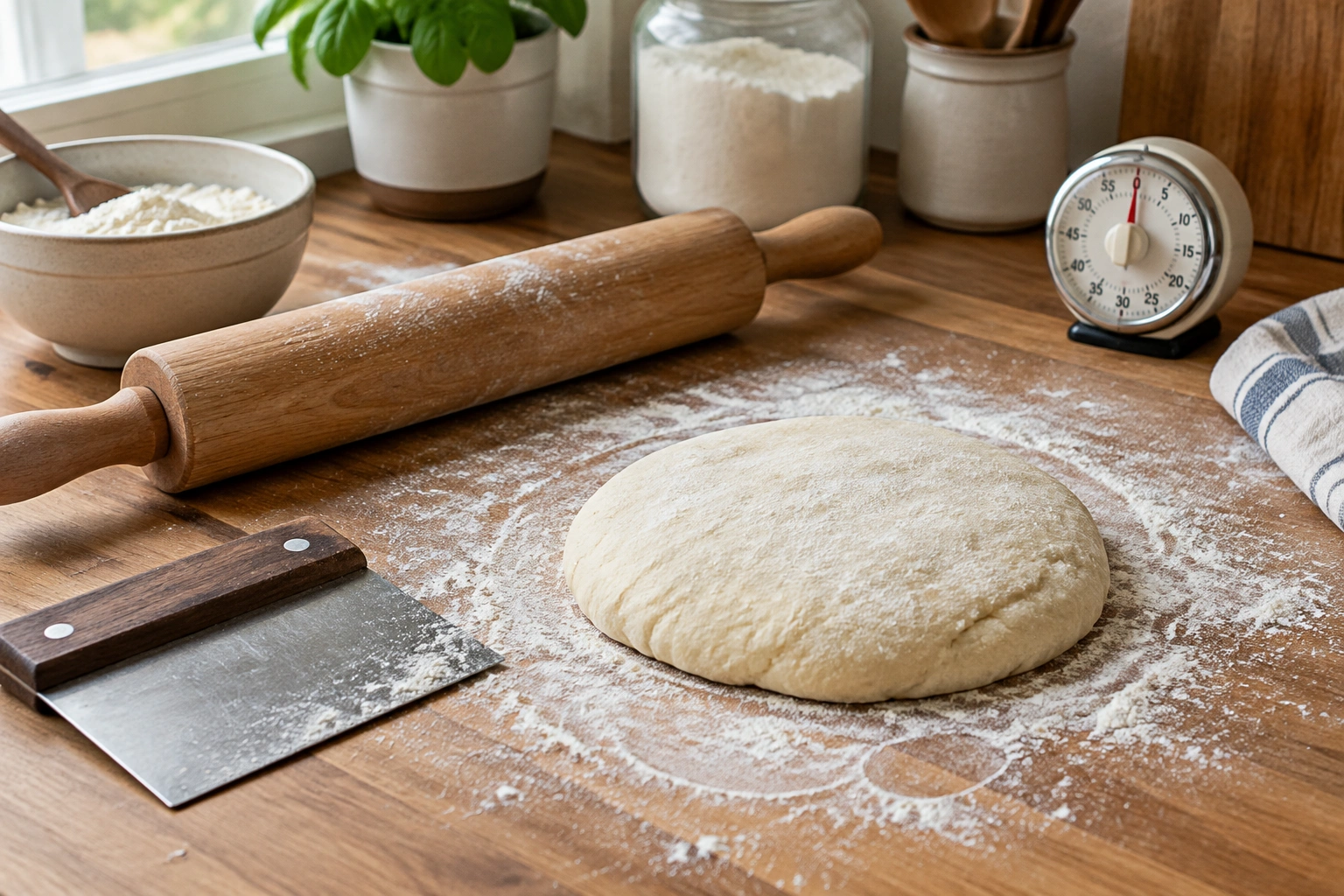
For stretched dough, work in stages. Stretch a little, rest a little, then continue. That pause-and-return rhythm is often easier than trying to finish in one go.
4) Decide whether the dough needs more fermentation or proofing time
If the dough keeps shrinking even after resting, it may be underproofed or simply not fermented enough to relax well. This is different from a bench rest. A bench rest helps the gluten relax for shaping. Longer fermentation or proofing helps the dough develop more gas, flavor, and extensibility over time.
Use more fermentation time when the dough still feels dense, tight, or underexpanded rather than merely tense from recent handling. That is more common with pizza dough, bread dough, and some enriched doughs. It is not the same fix as a 10- to 15-minute pause.
If you want a deeper breakdown of water levels and dough feel, this guide on bread dough hydration is a helpful companion.
How Long to Rest Dough So It Relaxes
There is no single perfect rest time for every dough, but a few ranges are useful.
Short bench rest: 10 to 15 minutes
Use this when the dough is mostly cooperative but keeps shrinking a little after rolling, stretching, or shaping. This is the right first fix for tension from handling. It’s often enough for pizza dough, bread dough, and pasta dough that has just been mixed or pre-shaped.
Longer rest: 20 to 30 minutes
Use this when the dough feels noticeably tight or has been rolled several times already. This is still a bench rest, but it gives the gluten more time to settle.
Longer fermentation or proofing: 1 to several hours
Use this when the dough is not just tight, but also underdeveloped or underproofed. This is not a quick pause at the counter. It is time for the dough to ferment further so it becomes more relaxed, airy, and workable.
A practical example: if a pizza dough ball snaps back every time you try to stretch it, rest it for 15 minutes, then try again. If it still resists and also seems dense or underproofed, give it more fermentation time rather than pressing harder.
How to Roll, Stretch, and Shape Without Fighting the Dough
Technique matters almost as much as rest time.
Use the center-outward method
Roll from the center toward the edge, then rotate the dough. This helps spread the pressure evenly and prevents one section from becoming overworked. If you keep rolling only in one direction, the dough often tightens unevenly.
Pause between passes
Give the dough a few seconds between passes with the rolling pin. That tiny pause lets the gluten settle instead of staying in a constant state of tension.
Don’t chase perfect thinness too early
If you try to force the dough to its final size in one step, it usually shrinks back more aggressively. Get it partway there, rest it, then finish shaping.
Use gravity when appropriate
For pizza dough, lifting and letting the dough drape can help stretch it more gently than repeated rolling. That works best once the dough has already relaxed a bit.
Keep flour use moderate
A little flour prevents sticking, but too much can dry the surface and make the dough even less extensible. If the dough is sticking badly, flour the surface lightly rather than dusting heavily.
How Different Dough Types Behave
Not all doughs should be handled the same way.
Pizza dough
Pizza dough is the most common example of shrink-back. It should feel soft, relaxed, and extensible. If it snaps back, the usual fix is a short bench rest, then gentle stretching. If it still resists after that and feels dense, it may need more fermentation time before shaping.
Pie dough
Pie dough is different. You do want it cool, but not brittle. If pie dough shrinks in the pan, the likely cause is overworking or excess gluten development. The fix is usually to handle it less, chill it as needed, and avoid stretching it to fit the pan by force. A short rest can help if the dough has gotten tight, but chilling is usually the better choice if the fat is soft or the dough is warming up.
Pasta dough
Pasta dough often resists the roller until it has rested enough for the gluten to relax. If it keeps tightening as you roll it through the machine, stop and let it sit. A short rest often makes the next pass much easier.
Bread dough
Bread dough can tighten during pre-shaping or final shaping, especially if it has been handled a lot. If the dough keeps pulling back while you form a loaf, it usually needs a bench rest between steps. If it still feels dense and resistant after resting, it may need more proofing time.
Common Mistakes That Make Dough Shrink More
A few habits make the problem worse instead of better:
- Adding more flour too quickly can dry the dough and make it stiffer.
- Kneading again when it needs rest tightens the gluten further.
- Using dough straight from the fridge usually increases resistance.
- Rolling aggressively without pauses keeps the dough in a tense state.
- Treating all doughs the same leads to trouble, especially when comparing pizza dough and pie dough.
One of the most common mistakes is assuming more effort will solve the problem. Usually, the dough needs less force and more time.
Troubleshooting: What to Do If the Dough Still Springs Back
If a short bench rest does not solve it, move through this checklist:
- Check temperature. If the dough is cold, warm it slightly.
- Check hydration. If the dough feels stiff or cracks, it may be too dry.
- Check fermentation. If the dough is dense and resistant, it may be underproofed and need more time.
- Check your shaping method. If you are rolling too hard or too fast, soften your technique.
- Rest again if needed. If the dough is simply tense, another short bench rest may be enough.
If the dough has been overworked, it may still recover with time. What usually helps most is a longer rest, not more kneading. If the dough is torn, dry, or structurally weak, though, it may need a formula adjustment next time rather than another rescue attempt.
Practical Examples and Fixes
Pizza dough snapping back on the counter
This usually means the gluten is too tight or the dough is too cold. Rest it for 10 to 15 minutes, then stretch again more gently. If it still resists and seems underexpanded, give it more proofing time instead of forcing it.
Pie dough shrinking in the pan
This often points to overhandling. Press the dough in with the lightest touch possible, chill it if needed, and avoid stretching it to fit. If the dough has already been overworked, chilling can help, but it may not fully undo the effect.
Pasta dough resisting the roller
Rest it between passes. Pasta dough often improves dramatically after a short pause because the gluten relaxes enough to roll thinner without snapping back.
Bread dough tightening during shaping
If the dough keeps pulling inward while you shape a loaf, stop and let it bench rest before finishing. That break often makes the final shaping cleaner and less stressful.
How to Prevent Shrink-Back Next Time
The best prevention is a calmer dough from the beginning:
- mix only as much as the dough needs
- give it adequate rest after mixing
- keep cold dough from going straight into final shaping
- match hydration to the dough type
- avoid overworking during pre-shape and final shape
- allow enough fermentation for the dough to relax
If you consistently run into shrink-back, the answer is usually not one dramatic fix. It is a better sequence: mix, rest, observe, then shape with less force.
When to Consult a Master Baker
If a dough keeps shrinking even after proper rest, temperature adjustment, and careful handling, the formula itself may need attention. That is when a master baker’s eye helps. A professional can look at flour choice, hydration, mixing time, fermentation schedule, and shaping method together instead of treating the symptom in isolation.
FAQs
Why does dough shrink back after rolling?
Because the gluten network is elastic and tight. When the dough is stretched, it tries to return to its original shape unless it has rested enough to relax.
How long should I let dough rest before trying again?
A 10 to 15 minute bench rest is a strong starting point for many doughs. If the dough is still resisting and also seems dense or underproofed, give it more fermentation time rather than forcing it.
Does kneading make dough shrink back more?
It can. Kneading builds gluten, which is necessary for structure, but too much kneading or repeated handling can make dough tighter and more resistant to stretching.
Is my dough too cold or just under-rested?
If it feels firm and stiff, temperature is likely part of the problem. If it softens but still springs back quickly, it probably needs a short bench rest. If it remains dense and underexpanded, it may need more proofing time.
Can I fix dough that has already been overworked?
Sometimes, yes. A longer rest can help the gluten relax. If the dough is also dry or damaged, though, it may need a formula adjustment next time.
Why does pie dough shrink in the pan?
Pie dough usually shrinks because it was overhandled or stretched too much when fitting the pan. Keep it cool and handle it as little as possible.
What if the dough still shrinks after resting?
Check temperature, hydration, and proofing. If those are all reasonable, the shaping technique may be too aggressive.