Baking powder to soda works only when the recipe already has enough acid to activate the soda. If the balance is off, the bake can turn flat, bitter, or overly dark.
Changing from baking powder to soda is one of those small recipe edits that can make a big difference in rise, flavor, and color. This guide explains when the swap works, how to do it safely, and when it is better to keep the original leavener.
- Acid matters: Baking soda needs an acidic ingredient to rise properly.
- Use less: Soda is stronger than baking powder, so direct swaps are risky.
- Watch timing: Batter should usually go into the oven soon after mixing.
- Check texture: Too much soda can cause bitterness, dark color, or collapse.
- Know the limit: Some delicate recipes should keep baking powder unchanged.
What “Baking Powder to Soda” Really Means in Modern Baking
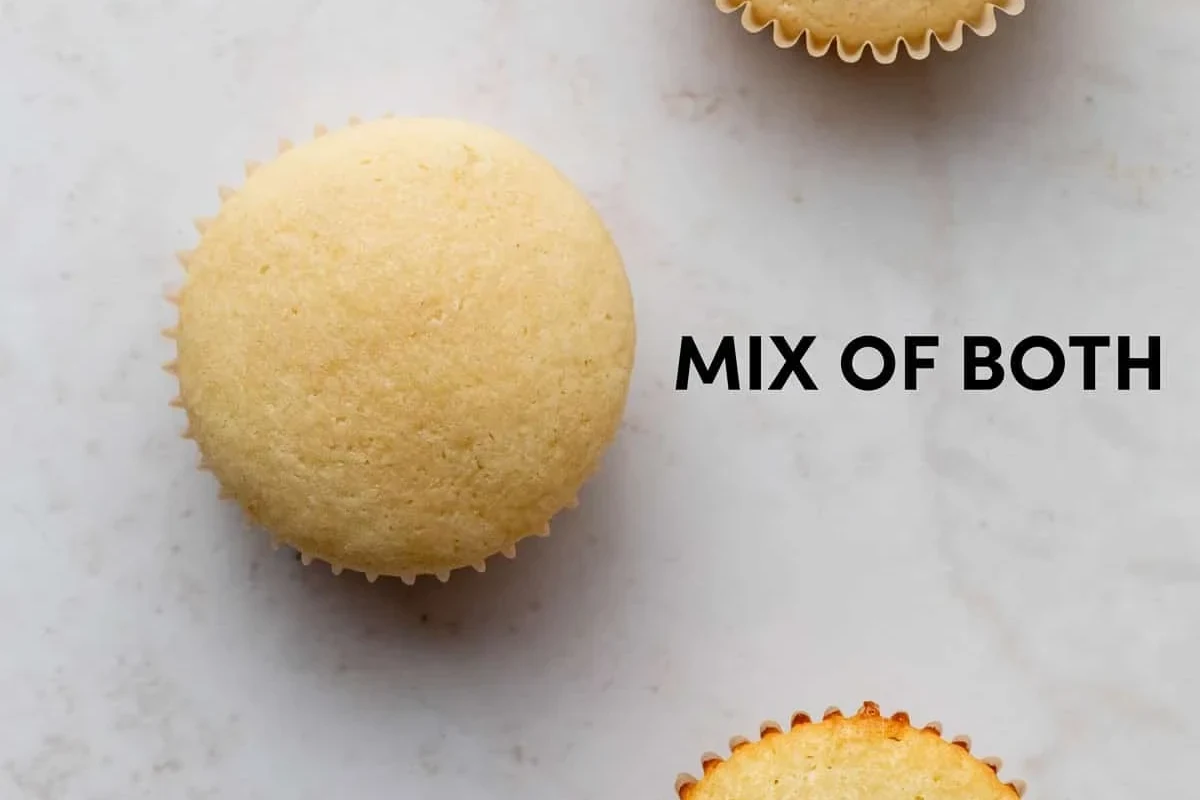
In recipe language, “baking powder to soda” means replacing baking powder with baking soda and then adjusting the rest of the formula so the batter still rises correctly. That is not a simple one-for-one swap, because the two ingredients work in different ways. If you want the broader science behind these leaveners, our guide on baking soda and baking powder differences is a helpful starting point.
How baking powder and baking soda differ in acidity, strength, and timing
Baking soda is pure sodium bicarbonate. It needs an acid in the batter, such as buttermilk, yogurt, sour cream, lemon juice, brown sugar, cocoa, or vinegar, to create carbon dioxide gas. That gas helps the batter rise, but the reaction starts as soon as the soda gets wet and meets acid.
Baking powder already contains both an acid and a base, so it can rise with just moisture and heat. Most baking powders used in home kitchens are double-acting, which means part of the lift happens when mixed and part happens in the oven. That extra timing cushion is one reason baking powder is easier to use in recipes with neutral ingredients.
Why this conversion matters for home bakers and students in 2026
Home bakers often want to make a recipe with what is already in the pantry. Baking students also need to understand why a formula behaves differently when the leavener changes, because leavening affects texture, browning, and flavor as much as it affects height.
In 2026, many bakers are still working from older family recipes, online formulas, or ingredient substitutions based on what is available locally. Knowing when baking powder to soda is safe helps you avoid flat muffins, bitter cakes, and wasted ingredients.
Baking soda is much stronger than baking powder by volume, so even a small measuring error can change crumb, color, and taste.
How to Convert Baking Powder to Soda Without Throwing Off the Recipe
The safest conversions start with the recipe’s acid level. If the formula already includes enough acidic ingredients, you may be able to replace part of the baking powder with a much smaller amount of baking soda. If the recipe has little or no acid, the swap usually needs a second adjustment, or it should be left alone.
The basic substitution ratio and when it is actually safe to use
A common home-kitchen rule is that baking soda is far more concentrated than baking powder, so you use much less soda than powder. Exact substitution is not universal, because baking powder brands vary and recipes vary even more. The practical question is not only “how much?” but also “does the batter have enough acid to activate it?”
As a general guide, baking soda is best used when the recipe already contains acidic ingredients. If the recipe depends on baking powder for lift in a neutral batter, replacing it with soda usually creates a chemical imbalance instead of a clean conversion. For a related safety-focused explanation, see our article on using baking soda instead of baking powder safely.
Do not assume a direct teaspoon-for-teaspoon swap. Too much baking soda can leave a soapy or metallic taste and may make baked goods brown too fast before the center is done.
How to adjust for missing acid in the batter or dough
If you replace baking powder with soda, you must check whether the recipe has enough acid to support it. Ingredients like buttermilk, yogurt, sour cream, molasses, natural cocoa, lemon juice, and vinegar can provide that acid. If the recipe does not include any of these, you may need to add a small acidic ingredient and reduce another liquid to keep the batter balanced.
This is where recipe judgment matters. A small amount of acid can brighten flavor and help rise, but too much can make the crumb tight or taste sharp. If you are not sure, it is usually better to keep the baking powder and avoid changing the liquid balance.
Practical example: converting a quick bread or muffin formula
Imagine a muffin recipe that uses baking powder, but also includes buttermilk and brown sugar. That recipe is already acidic enough to support some baking soda. In that case, you might reduce the baking powder and use a small amount of soda for lift and browning, but the exact amount depends on the total flour, liquid, and acid in the formula.
For a quick bread, the goal is usually a tender crumb with even rise, not a dramatic dome. Mix the batter only until the dry ingredients are moistened, then bake promptly so the gas created by the soda is not lost before the loaf goes into the oven. If you want a related ingredient reference, our equivalent of baking soda guide can help with pantry substitutions.
Look for buttermilk, yogurt, sour cream, brown sugar, cocoa, citrus, molasses, or vinegar before deciding on the swap.
Start conservatively, because soda is stronger and can overwhelm flavor or color if overused.
Get the batter into the oven quickly so the initial reaction still helps the final rise.
Ingredient Roles That Change When You Switch Leaveners
When you change leaveners, you are not just changing height. You are changing the chemistry that affects taste, browning, spread, and tenderness. That is why a recipe can look fine on paper but still bake differently after a substitution.
How acidity affects rise, flavor, and browning
Acidity helps baking soda produce gas, but it also changes flavor and browning. Slight acidity can sharpen flavor and improve color development. In many baked goods, especially chocolate or fruit-based recipes, that effect can be a plus.
However, if the batter is too alkaline because there is too much soda, the baked good may brown too quickly and taste harsh. That is especially noticeable in pale cakes, biscuits, and delicate muffins where the flavor should stay clean and mild.
What happens to texture when soda is used too aggressively
Too much baking soda can make the batter rise fast and then collapse. The result may be a coarse crumb, a sunken center, or tunnels inside the loaf. In some recipes, the texture can also feel dry even when the baked good is still moist, because the structure set too early.
Overuse can also weaken the balance between flour and liquid. Once the batter becomes overly alkaline, gluten behavior and starch setting can shift enough to change the final bite. That is why careful measuring matters more with soda than with powder.
Why salt, dairy, cocoa, and citrus can change the outcome
Salt sharpens flavor and can make a soda-heavy recipe taste less flat, but it does not replace acid. Dairy ingredients matter because cultured dairy, such as buttermilk or yogurt, provides acid, while regular milk usually does not. Cocoa is another important variable: natural cocoa is acidic, while Dutch-process cocoa is less acidic and may not support soda in the same way.
Citrus zest and juice can also shift the chemistry, but juice adds water as well as acid. That means the rest of the recipe may need adjustment to keep the texture right. Ingredient brands, measuring method, and room temperature all affect the final result, so a conversion that works in one kitchen may need fine-tuning in another.
Natural cocoa, buttermilk, and brown sugar often make soda-based recipes easier to balance. Dutch-process cocoa and neutral dairy usually make the conversion less forgiving.
Measurement Mistakes That Cause Flat, Bitter, or Soapy Bakes
Most conversion failures come from measurement errors, not from the idea of the swap itself. A small spooning mistake can turn a good formula into a flat or bitter one. That is why precise measuring tools matter more when you change leaveners.
Common conversion errors in teaspoons, tablespoons, and scaling
The most common mistake is using too much baking soda because the baker assumes it should match the baking powder amount. Another common issue is scaling a recipe up or down without recalculating the leavener carefully. A recipe that is doubled does not always need a simple doubled amount of soda if the acid balance changes.
Measuring by teaspoon is safer than estimating with a tablespoon, especially in small-batch baking. If your measuring spoons are worn or rounded, the actual amount can drift more than you expect. For best results, level each spoon carefully and avoid packing the powder.
The baked good rises fast, then falls or tastes sharp and soapy.
Too much soda or too little acid is the likely cause. Reduce the soda next time, confirm the recipe includes enough acidic ingredients, and mix only until combined.
Signs the recipe had too much baking soda or not enough acid
Common signs include a bitter aftertaste, a yellowish or overly dark crumb, a coarse or open texture, and a smell that seems chemical rather than buttery or sweet. If the baked item looks tall at the edge but sinks in the middle, the gas may have formed too quickly before the structure set.
Sometimes the clue is visual: muffins spread too much, cookies brown too deeply, or a cake develops an uneven dome. In those cases, the issue may be the conversion, but it may also be oven calibration, pan color, or rack position.
How double-acting baking powder changes timing expectations
Double-acting baking powder gives you more time because it creates gas in two stages. Baking soda does not offer the same built-in delay, so once acid and moisture are added, the batter should move toward the oven without unnecessary resting.
That timing difference matters in classes and home kitchens alike. If a batter sits too long after a soda conversion, some of the lift can be lost before baking begins. If you need a deeper look at the reaction itself, our article on baking soda and vinegar reaction explained simply shows how fast acid-base reactions can happen.
Method Adjustments for Better Results After a Substitution
Even when the ingredient math is right, technique still matters. Mixing order, oven heat, and pan choice all influence whether the batter keeps the gas it makes. Small process changes can make the difference between a good bake and a disappointing one.
Mixing order, resting time, and how fast the batter should go into the oven
For most soda-based batters, combine the dry ingredients first, then add the wet ingredients, and mix just until no dry pockets remain. Overmixing develops gluten and can make the crumb tough, especially in muffins and quick breads. Once the batter is mixed, bake it promptly unless the recipe specifically calls for a rest.
Resting time is especially important after a substitution because the leavener may react sooner than expected. If you are baking in a warm kitchen, the reaction can move even faster. In that situation, prep the pans before mixing so the batter is not waiting on the counter.
- Preheat the oven fully
- Line or grease the pan first
- Measure the acid source carefully
- Mix only until combined
How oven temperature and pan choice affect lift and spread
A properly preheated oven helps set the structure before the gas escapes. If the oven runs cool, the batter may spread before it rises. If it runs hot, the outside may brown too quickly while the center stays underbaked.
Pan material matters too. Dark pans absorb more heat and can increase browning, while lighter pans are usually gentler. Glass and ceramic heat differently from metal, so the same converted recipe may need a small temperature or timing adjustment depending on the pan.
Doneness checks that matter more after changing the leavener
After a baking powder to soda conversion, do not rely on color alone. Color can change faster when the batter is more alkaline, so a dark top does not always mean the center is done. Use a skewer, touch test, and visual edge pull-away together.
For cakes and muffins, the center should spring back lightly when touched and a tester should come out with a few moist crumbs, not wet batter. For loaves, the top should feel set and the sides should begin to pull from the pan. Let the item cool before cutting so the crumb can finish setting.
When You Should Not Convert Baking Powder to Soda
There are times when the safest choice is to leave the recipe alone. Some formulas depend on baking powder for balance, and changing that balance can create more problems than it solves. A good baker knows when not to improvise.
Recipes that lack enough acidic ingredients to support soda
If a recipe is built around milk, neutral yogurt alternatives, or plain water and does not include an acidic ingredient, soda usually will not have enough acid to react properly. The result may be flat, bitter, or oddly colored. In that case, baking powder is the better choice.
This is especially true in recipes where the leavener is the main source of lift. If you remove baking powder without replacing its built-in acid, you are changing both chemistry and structure at the same time.
Delicate cakes, biscuits, and formulas that depend on powder for balance
Light cakes and tender biscuits often need the controlled lift that baking powder provides. Their texture depends on a careful balance between fat, flour, liquid, and leavener. A soda swap can upset that balance quickly, especially in recipes with little acid.
Some formulas also depend on baking powder for a neutral flavor profile. In those cases, soda can bring a taste change that is more noticeable than the rise itself. That is a strong sign to keep the original ingredient.
Situations where replacing the leavener changes the recipe too much
If the recipe is already carefully developed, a leavener swap may create too many variables at once. This is common in tested pastry formulas, where the ingredient balance is part of the final structure. For those recipes, changing the leavener can affect not only rise but also spread, color, and shelf life.
When in doubt, choose the ingredient the recipe was written for. If you need a long-lasting pantry check before baking, our article on when to replace baking soda can help you confirm freshness before you begin.
- Can improve browning in acidic recipes
- May give a cleaner flavor when balanced correctly
- Uses a pantry ingredient many bakers already have
- Easy to overuse and create bitterness
- Requires enough acid in the recipe
- Can change timing, texture, and color more than expected
Troubleshooting Conversion Problems in Real Baking Situations
When a converted recipe fails, the clues are usually visible, smellable, and tasteable. The trick is to connect the symptom to the likely cause instead of guessing. That makes it easier to fix the next batch.
Flat tops, dense crumb, and uneven rise
Flat tops often mean the batter did not trap enough gas before baking or the oven was not hot enough to set the structure. Dense crumb can come from too little leavener, too much mixing, or a batter that sat too long before baking. Uneven rise can point to uneven oven heat or poor pan placement.
If the center rises and then collapses, the batter may have been overleavened or the structure may not have set in time. In muffins and quick breads, a large domed top with a gummy center is a classic sign that the outside baked faster than the inside.
Too-dark color, metallic taste, or bitter aftertaste
Too-dark color often means the batter became too alkaline. A metallic or bitter aftertaste is one of the clearest signs that too much baking soda was used or that there was not enough acid to neutralize it. If you notice that flavor, the next batch should use less soda or more acid, depending on the recipe.
Sometimes the problem is not the soda itself but the cocoa or dairy choice. For example, Dutch-process cocoa does not behave like natural cocoa, and regular milk does not provide the acid that buttermilk does. Those ingredient differences can completely change the outcome.
Storage and freshness checks for both baking powder and baking soda
Old leaveners can make any conversion harder to judge. Baking soda should be dry and free-flowing, not clumped from moisture. Baking powder should also be dry, and if it has been open for a long time, it may lose strength even if it still looks normal.
Because storage conditions vary by kitchen, pantry humidity matters. Keep both ingredients tightly sealed and away from steam. If you suspect one is stale, replace it before troubleshooting a recipe, or you may end up correcting the wrong problem.
Do not taste raw batter or dough if it contains raw flour or raw eggs. Follow USDA and FDA food safety guidance, and always bake and cool on heat-safe surfaces away from children’s reach.
Final Conversion Recap for Confident Everyday Baking
Baking powder to soda can work well, but only when the recipe has enough acid and the conversion is handled carefully. The best results come from checking the ingredient list, using a conservative amount of soda, and baking the batter quickly after mixing.
How to decide whether to substitute, adjust, or keep the original ingredient
If the recipe already includes acidic ingredients and you want a slightly different browning or flavor profile, a soda-based adjustment may make sense. If the recipe is neutral, delicate, or highly structured, keep the baking powder and avoid unnecessary risk. When the formula is unclear, the original ingredient is usually the more reliable choice.
Best-use guidance for reliable results in home kitchens and baking classes
For home bakers, the practical rule is simple: convert only when you can explain why the swap will work. For baking students, the deeper lesson is that leavening is part of the recipe structure, not just a rise agent. If you want to practice the skill safely, start with recipes that already contain buttermilk, yogurt, cocoa, citrus, or brown sugar, then observe how the crumb, color, and flavor change from batch to batch.
That approach builds confidence without wasting ingredients. It also helps you learn when a recipe needs substitution, when it needs a small adjustment, and when it should be left exactly as written.
Frequently Asked Questions
No. Baking soda needs enough acid in the recipe to work properly, or the bake can turn bitter or flat. Recipes with buttermilk, yogurt, cocoa, citrus, or brown sugar are better candidates.
Too much baking soda can cause a soapy or metallic taste, fast browning, and a coarse or sunken crumb. It can also make the batter rise and collapse before the structure sets.
Look for acidic ingredients such as buttermilk, yogurt, sour cream, molasses, natural cocoa, lemon juice, or vinegar. If the recipe is mostly neutral ingredients, baking powder is usually the safer choice.
Baking soda raises pH, which can increase browning. If the muffins are too dark and taste off, the recipe likely used too much soda or not enough acid.
Yes. Old or damp leaveners can weaken rise and make troubleshooting difficult. Keep both ingredients sealed and replace them if they no longer perform well.
Usually no. Baking soda reacts as soon as it meets moisture and acid, so the batter should go into the oven promptly unless the recipe specifically says otherwise.
