
Baking Soda Paste for Sweat Stains That Really Works

Baking soda paste can help loosen sweat, deodorant, and odor buildup before washing. It works best on washable fabrics when you spot-test first and avoid heat until the stain is fully gone.
Baking soda paste for sweat stains can help loosen underarm buildup, lift odor, and make wash day more effective. It is a simple at-home treatment, but it works best when you match the paste to the fabric, stain age, and follow-up wash cycle.
- Best use: Fresh or moderate sweat stains on washable cotton and everyday clothing.
- Mix ratio: Start with about 3 parts baking soda to 1 part water for a thick.
- Safety step: Spot-test delicate or dark fabrics before full treatment.
- Biggest mistake: Drying the garment before confirming the stain is gone.
- When to switch: Use enzyme detergent, oxygen bleach, or professional cleaning for old or delicate stains.
What Baking Soda Paste for Sweat Stains Actually Does on Fabrics
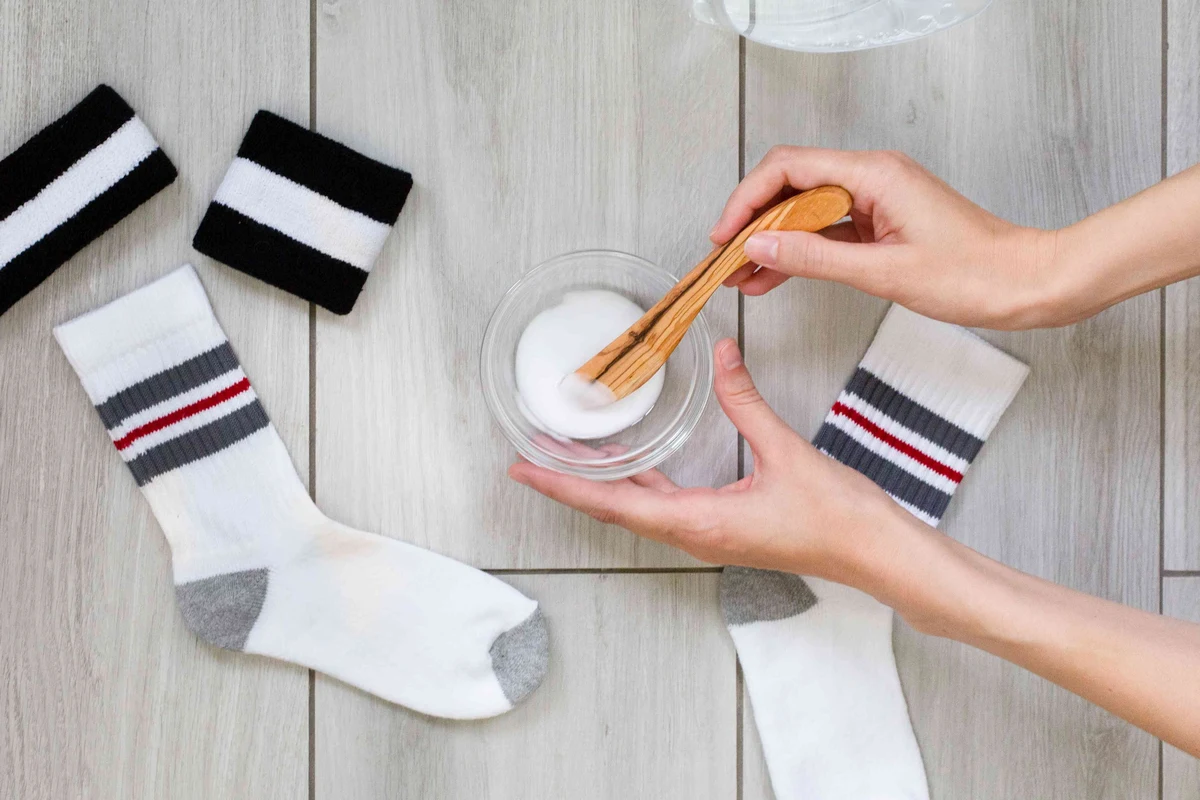
Baking soda is mildly alkaline, so it can help break up acidic body residue, deodorant film, and some of the oily buildup that collects in underarms and collars. It also has a gentle abrasive quality, which can help dislodge surface residue without the harshness of stronger scrubs.
For readers who want the broader laundry context, our guide to baking soda in laundry benefits explains why this ingredient is often used as a booster rather than a stand-alone cleaner.
Why baking soda helps lift odor, oil, and underarm buildup
Sweat stains are rarely just sweat. They often include deodorant, skin oils, detergent residue, and minerals from hard water, all of which can cling to fibers and darken over time. Baking soda can help loosen that layer so the wash water and detergent can reach the fabric more evenly.
It is especially useful when the garment smells stale even after a normal wash. That odor often means residue is still trapped in the fibers, and baking soda paste can help pull some of it out before the item goes into the machine.
Which stain types respond best: fresh sweat marks, deodorant residue, and yellowing
Fresh sweat marks usually respond the best because the buildup has not had time to bond deeply with the fabric. Deodorant residue often softens well too, especially on cotton T-shirts and workout tops.
Light yellowing can improve, but older yellow stains are harder. If you are dealing with that problem, it may help to compare this method with our article on baking soda for yellow stains, since long-set discoloration often needs a stronger or repeated treatment.
When baking soda paste is not enough on its own
If the stain is old, heavily set, or mixed with antiperspirant buildup, baking soda paste may only partly improve it. Dark fabrics can also hold visible residue even after the odor is reduced.
Do not assume a stain is gone just because it looks lighter when wet. Heat from a dryer can set leftover residue and make the mark much harder to remove later.
Ingredients and Ratios for a Reliable Sweat-Stain Paste
A good paste should be thick enough to stay on the stain, but not so dry that it falls off the fabric. Think of it like a spreadable paste, similar to thick frosting, not a runny slurry.
Basic baking soda-to-water measurement for everyday stains
For most everyday stains, start with about 3 parts baking soda to 1 part water. Add the water slowly so the paste holds together without becoming soupy.
If you need a small batch, 3 tablespoons baking soda plus 1 tablespoon water is a practical starting point. For larger areas, scale up gradually rather than making the paste too thin at the beginning.
Optional boosters: hydrogen peroxide, white vinegar, and mild detergent
Some stains benefit from a booster, but each one has limits. Hydrogen peroxide can help with light-colored fabrics and yellowing, while a small amount of mild liquid detergent can improve grease removal.
White vinegar is often mentioned in stain removal, but it should not be mixed casually with every cleaner. If you want to understand that reaction better, see our guide to baking soda and vinegar reaction explained simply. For laundry, the fizz is not the main cleaning action; contact time and proper rinsing matter more.
Use boosters only when the fabric can handle them. What works on sturdy cotton may be too strong or too risky for silk, wool, or dark dyed items.
Why fabric type and stain age change the ideal mix
Thicker cotton can usually tolerate a slightly firmer paste and longer dwell time. Synthetic athletic fabric may need a gentler mix because too much rubbing can damage the finish or push residue deeper into the weave.
Older stains usually need repeated treatment instead of a stronger paste. A harsher mix can irritate the fabric without fully removing the stain, so patience often works better than force.
How to Apply Baking Soda Paste the Right Way
Application matters as much as the ingredients. A well-made paste can still fail if it is rubbed in too hard, left to dry unevenly, or washed out too soon.
Pre-treating the garment before washing
Start with a dry garment if possible. Brush off any loose residue first, then apply the paste directly to the stained area so it can sit on the fibers instead of sliding off.
Let the paste rest before washing. That waiting time gives the baking soda a chance to loosen buildup instead of being diluted immediately in the washer.
How thick the paste should be and how long to leave it on
The paste should cling to the stain in an even layer. If it is too wet, it runs; if it is too dry, it may crumble before it can work.
For many everyday stains, 15 to 30 minutes is a reasonable starting point. For heavier buildup, some garments can handle a longer pre-soak, but always check the care label first and avoid letting the paste dry into a crust on delicate fabric.
Baking soda is often used in laundry because it can help control odor and support detergent performance, but it does not replace detergent for a full wash.
Best application method for collars, armpits, and white shirts
For collars and armpits, use a soft brush or your fingertips to spread the paste gently across the stained zone. Work from the outside of the stain inward so you do not enlarge the mark.
White shirts often show yellowing and shadowing most clearly, so cover the full affected area rather than only the darkest spot. If deodorant buildup is the main issue, a targeted pre-treatment can help reduce the ring that often forms at the edge of the stain.
Common Mistakes That Make Sweat Stains Harder to Remove
Most stain-removal problems come from overdoing the process. Too much water, too much scrubbing, or too much heat can make a manageable stain turn into a stubborn one.
Using too much water or rubbing the stain too aggressively
If the paste becomes watery, it will not stay in place long enough to work. On the other hand, aggressive scrubbing can roughen the fabric and push residue deeper into the fibers.
Use light pressure. A gentle spread and a short rest usually work better than trying to grind the stain out right away.
Applying heat before the stain is fully gone
Dryer heat can lock in leftover discoloration. That is one of the most common reasons a stain seems “almost gone” after washing but becomes permanent after drying.
Even though this is laundry care, the same rule applies as in the kitchen: do not use heat to finish a job until you are sure the stain is gone.
Mixing baking soda with the wrong cleaners or fabrics
Baking soda is gentle, but it is not universally safe. Some delicate fibers and specialty finishes can react badly to moisture, rubbing, or alkaline products.
If you are comparing stain strategies, our article on remove baking soda deodorant stains fast can help when the problem is actually leftover product rather than body sweat itself.
Fabric Safety, Color Testing, and Stain-Removal Limits
Before treating a visible garment, do a small spot test in an inconspicuous area. That is the safest way to check for color change, texture change, or water spotting.
How to spot-test cotton, synthetics, silk, wool, and dark fabrics
Cotton usually handles baking soda paste well, especially in everyday shirts and undershirts. Many synthetics do too, though athletic fabrics may need gentler handling to avoid damage to stretch fibers or surface coatings.
Silk and wool are different. They are more delicate, and a paste that seems mild on cotton can still leave marks or alter the feel of the fabric. Dark fabrics also deserve caution because residue may show as a pale patch if the paste is not rinsed fully.
When to avoid baking soda paste on delicate or dry-clean-only items
Skip baking soda paste on dry-clean-only garments unless a care professional specifically approves a spot treatment. That includes many structured pieces, trim-heavy garments, and fabrics that can distort with moisture.
For items that need careful handling, a professional cleaner may be the safer choice. The cost of a cleaning visit can be less than the cost of damaging a favorite shirt or uniform.
Signs the stain has set permanently and needs another method
If the stain remains after repeated treatment, looks darker after drying, or feels stiff even after rinsing, it may be deeply set. Some antiperspirant and sweat combinations can bond with fabric in a way that home methods only partly improve.
- Spot-test first
- Use gentle pressure
- Air-dry until the stain is confirmed gone
- Scrubbing hard
- Drying too soon
- Using the paste on dry-clean-only items without guidance
Step-by-Step Washing and Drying After the Paste Treatment
Once the paste has had time to work, the wash step is what clears away loosened residue. Use the garment’s care label as your first guide, since fabric instructions matter more than any one stain trick.
Best wash settings for treated sweat stains
Wash the garment in the warmest water the care label allows, because warmer water can help remove body oils and detergent film more effectively than cold water alone. Use a normal amount of detergent unless the label says otherwise.
If the item is heavily soiled, a second rinse can help remove loosened residue. For laundry add-ins and detergent pairing, see our guide to baking soda to laundry detergent benefits and uses.
How to check the garment before drying
Inspect the stained area while the garment is still damp. Look for yellow shadows, gray edges, or a sticky feel, because those signs often mean residue is still present.
If you can still see the stain, wash it again instead of drying it. Air-drying is the safer checkpoint because it avoids heat-setting the problem.
What to do if the stain remains after one cycle
Repeat the paste treatment if the fabric is sturdy and the care label allows it. For older stains, a second round often works better than increasing the strength of the paste.
If the mark does not improve after several careful attempts, switch methods rather than scrubbing harder. An enzyme detergent, oxygen bleach, or professional cleaning may be the better next step depending on the fabric.
Practical Examples for Real-Life Sweat Stain Problems
Different garments need different levels of caution. The same paste that works on a casual T-shirt may be too much for a dress shirt or school uniform with a crisp finish.
White T-shirt underarm yellowing
White cotton T-shirts are one of the best candidates for baking soda paste for sweat stains. The fabric is usually sturdy, and the yellowing is often visible enough to judge whether the treatment is working.
Apply the paste to the underarm area, let it sit, then wash before drying. If the yellow tone remains, a second treatment may help, especially if the shirt has been worn repeatedly without immediate laundering.
Workout clothes with odor and deodorant buildup
Workout clothes often trap odor because synthetic fibers can hold onto body oils and deodorant film. Baking soda paste can help with that buildup, but it is best used gently so the fabric does not lose stretch or finish.
For persistent odor issues, air circulation matters too. Wash sweaty clothes promptly, avoid leaving them balled up in a hamper, and let them dry fully after treatment.
Dress shirts, uniforms, and school clothes that need gentle care
Dress shirts and uniforms need a softer hand because collars, plackets, and seams can show wear quickly. A light paste, short dwell time, and careful spot testing are the safest approach.
For school clothes, the goal is usually to preserve the fabric while lifting the visible stain enough for daily wear. If the garment is especially important or expensive, a professional cleaner may be worth considering before trying repeated home treatments.
When Baking Soda Paste Is the Best Choice and When to Try Something Else
Baking soda paste is a smart first choice when you want a low-cost, simple pre-treatment for fresh or moderate sweat stains. It is especially useful for cotton basics, workout gear, and everyday clothing that can handle normal laundering.
Best use cases for budget-friendly, at-home stain removal
This method makes sense when the stain is recent, the fabric is washable, and you want a gentle option before moving to stronger cleaners. It is also helpful when odor is part of the problem, not just visible discoloration.
If you are building a simple home laundry toolkit, baking soda is one of the easiest ingredients to keep on hand because it is inexpensive, easy to measure, and versatile.
Situations that call for enzyme detergent, oxygen bleach, or professional cleaning
If the stain contains body oils, protein residue, or a mix of sweat and deodorant buildup, an enzyme detergent can sometimes outperform baking soda alone. Oxygen bleach may also help on washable whites and colorfast items, but always follow the product label and fabric care instructions.
For delicate textiles, structured garments, or anything marked dry clean only, professional cleaning is often the safer route. That is especially true when the stain is old, large, or already affected by heat.
Final recap on choosing the safest and most effective approach
The best baking soda paste for sweat stains is simple: thick enough to stay put, gentle enough for the fabric, and followed by a careful wash before drying. Used that way, it can improve odor, loosen buildup, and reduce fresh underarm marks without much cost.
When the stain is old, delicate, or already heat-set, switch to a more suitable method instead of forcing the paste to do everything. Careful stain removal is less about one miracle ingredient and more about matching the method to the fabric and the problem.
Baking soda paste is a practical first step for many sweat stains, especially on washable cotton and everyday clothing. For delicate fabrics, old yellowing, or stains that survive the first wash, use a different method rather than risking damage with repeated scrubbing.
Frequently Asked Questions
For many everyday stains, 15 to 30 minutes is a good starting point. Older buildup may need longer, but do not let the paste dry hard on delicate fabrics.
Yes, if the fabric is colorfast and you spot-test first. Dark or heavily dyed items should be checked carefully because residue or water marks can show after treatment.
Not usually. The fizz is not the main cleaning action, and mixing cleaners without a plan can make the process messier without improving results.
It may lighten them, but old yellow stains are often harder to remove completely. Repeated treatment or a different cleaner may be needed for set-in discoloration.
Only after you check that the stain is gone. Dryer heat can set leftover residue and make the stain much harder to remove.
It is not the best choice for delicate fibers like silk or wool unless a care professional approves it. Spot-test first and follow the garment label closely.