
Baking Soda Blaster Uses Benefits and Buying Guide
A baking soda blaster is a gentle blasting tool for cleaning residue from surfaces that should not be heavily abraded. It works best for ovens, racks, stainless steel, and restoration jobs where control and surface protection matter most.
A baking soda blaster is a specialized cleaning tool that uses sodium bicarbonate as a gentle blasting media. It is useful when you need to remove grime, grease, or light buildup without aggressively scratching the surface.
- Gentle cleaning: Baking soda blasting removes grime with less surface damage than harder media.
- Best fit: It suits ovens, racks, stainless steel, and restoration work more than heavy stripping jobs.
- Buying focus: Check compressor compatibility, hopper size, nozzle choices, and moisture resistance.
- Safety first: Use PPE, ventilation, and strict food-area cleanup before returning to production.
- Maintenance matters: Dry storage and post-use cleaning help prevent clogs and media hardening.
Baking Soda Blaster: What It Is and Why It’s Different from Other Blasting Tools
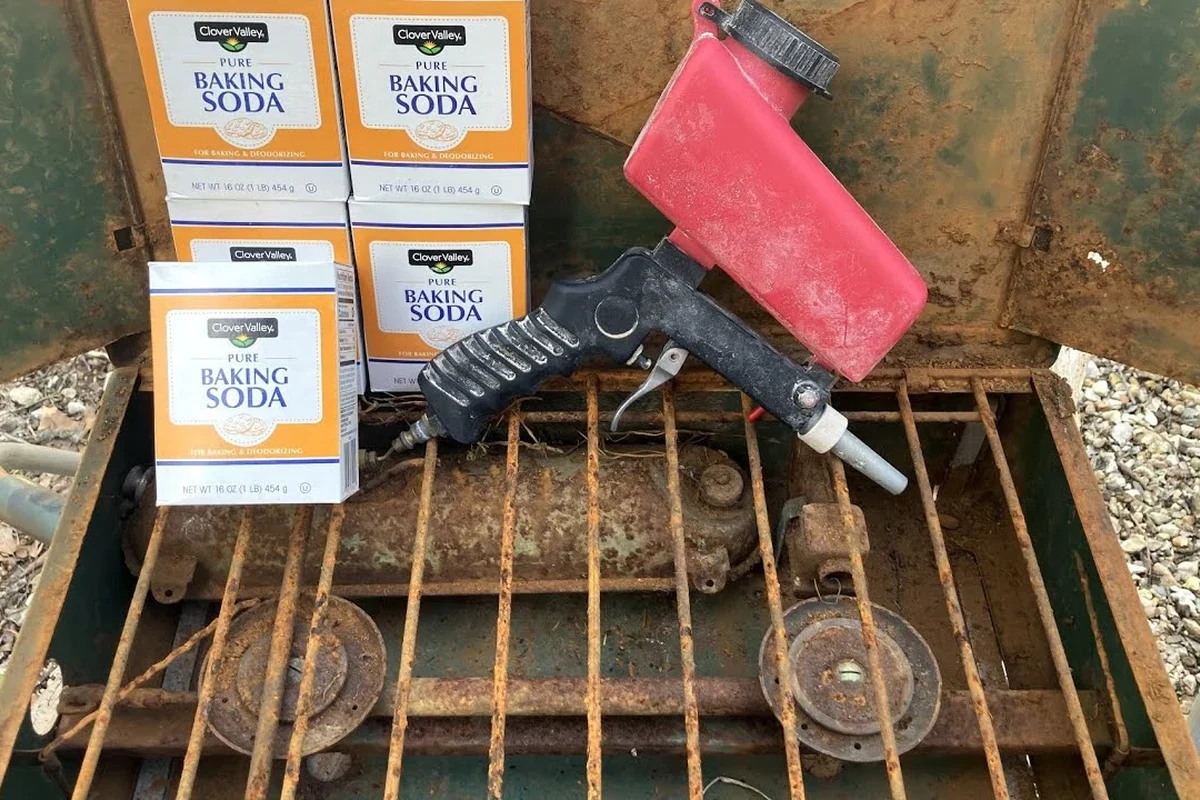
A baking soda blaster works by mixing compressed air with fine baking soda particles and directing that stream through a nozzle. The media breaks the bond between dirt and the surface, but it is much less abrasive than sand or hard grit, so it is often chosen for delicate or food-adjacent cleaning jobs.
That gentler action is the main reason it stands out. Instead of cutting deeply into metal, paint, or coatings, it tends to lift residue off the top layer, which can be helpful when you want cleaning power without heavy surface damage.
How baking soda blasting works in real-world cleaning and restoration
In practice, the blasting stream hits the surface at speed and shatters loose contamination such as grease, carbon residue, soot, and some oxidation. Because baking soda is water-soluble, cleanup can be easier than with many abrasive medias, especially when the job calls for rinsing or wiping afterward.
The result depends on the surface, the pressure setting, the nozzle shape, and how heavy the buildup is. A light film may come off quickly, while baked-on residue often needs several passes and careful technique. For readers comparing other cleaning methods, our guide on baking soda vinegar cleaning ovens explains why soda-based cleaning is often chosen for stubborn oven grime.
Where it outperforms sand, walnut shell, and abrasive media
A baking soda blaster usually performs better than harder blasting media when the goal is cleaning rather than reshaping the surface. It is often preferred for painted surfaces, stainless steel, food equipment exteriors, and restoration work where scratches would be a problem.
Compared with sand, it is far less aggressive. Compared with walnut shell, it can be better for greasy contamination because it breaks down residue in a different way. That said, each media has a job, and the best choice depends on the surface, the finish you want to preserve, and the compressor you already own.
- Gentler on many finished surfaces
- Useful for grease, soot, and light carbon buildup
- Often easier to clean up than hard abrasive media
- Not ideal for heavy rust or thick paint removal
- Can be slower on large, neglected surfaces
- Requires dry media and good compressor support
Best Uses for a Baking Soda Blaster in Baking, Food-Adjacent, and Workshop Settings
In bakery and food-adjacent spaces, a baking soda blaster is most useful for maintenance cleaning rather than daily wipe-downs. It can help remove baked-on grease from equipment housings, carbonized residue from ovens, and grime from metal racks or stands when standard cleaners are not enough.
It is also used in workshops and restoration settings for jobs where a softer blast is safer than harsh media. Still, it should never replace normal sanitation procedures in food prep areas, and it should be used only where the equipment manufacturer and the work environment allow it.
Common cleaning jobs: ovens, sheet pans, racks, mixers, and stainless surfaces
Typical targets include oven interiors, sheet pans with stubborn residue, cooling racks, mixer exteriors, and stainless steel surfaces that have accumulated grease or discoloration. The tool can be especially helpful where scrubbing would take too long or could leave scratches from aggressive pads.
For example, a heavy oven door frame may respond better to blasting than to repeated hand scrubbing, especially if residue has hardened around corners and seams. If you are also comparing other household uses of baking soda, our article on baking soda for shoes cleaning shows how the ingredient behaves in a much gentler setting.
A baking soda blaster is usually a maintenance and restoration tool, not a substitute for routine dishwashing, sanitizing, or approved food-contact cleaning steps.
Use cases where soda blasting is too mild or not the right choice
It is not the best option for deep rust scale, thick industrial coatings, or surfaces that need major material removal. In those cases, a stronger abrasive media or a different restoration method may be more effective.
It is also a poor choice for some plastics, soft seals, electronics, and any surface that can trap media in hidden cavities. If the item is fragile, heat-sensitive, or difficult to fully clean afterward, a simpler method is usually safer.
Key Features to Compare Before Buying a Baking Soda Blaster in 2026
When shopping for a baking soda blaster, focus on how the machine fits your actual cleaning work, not just the headline features. Capacity, airflow needs, nozzle choices, and corrosion resistance matter more than flashy marketing claims.
Because specs vary by brand and model, always verify the manufacturer’s manual before buying. The right choice for a small bakery maintenance cart may be very different from the right choice for a restoration shop.
Capacity, hopper size, and media consumption rates
Hopper size affects how long you can work before refilling. A larger hopper can be helpful for long cleanup sessions, but it also adds weight and may be unnecessary for occasional use.
Media consumption rate matters because soda blasting can use more media than beginners expect, especially at higher pressure or on rough surfaces. If you plan to clean large ovens or multiple racks, think about how often you want to stop and refill.
Air pressure, compressor compatibility, and nozzle options
Compressed air requirements are one of the biggest buying filters. A blaster may look portable, but if your compressor cannot supply enough air volume consistently, performance will drop and clogging may become more likely.
Nozzle options also matter. A narrower nozzle can concentrate cleaning power, while a wider pattern may cover more area but use more air and media. For a bakery or shop, the best nozzle is usually the one that balances control, reach, and cleanup speed.
Materials, build quality, and corrosion resistance
Because baking soda is moisture-sensitive, the machine should be built to resist corrosion and to keep media flowing smoothly. Look for durable fittings, strong hoses, and parts that can handle repeated use without warping or rusting.
Build quality matters even more in humid kitchens or busy workshops where equipment is moved often. A sturdy unit may cost more at first, but it can save time if it clogs less and lasts longer.
Portable soda blaster
Best for small shops and occasional maintenance work. It is easier to move and store, but it may have a smaller hopper and depend more heavily on a capable compressor.
Safety, Surface Compatibility, and Food-Safe Considerations
Safety is a major part of buying and using a baking soda blaster. Even though sodium bicarbonate is gentler than many blasting medias, the process still creates dust, noise, airborne residue, and the risk of surface damage if the settings are wrong.
In food-adjacent spaces, follow the equipment manual and your facility’s sanitation rules. If the area handles open food, allergen control and post-cleaning verification matter as much as the blasting itself.
What surfaces can be cleaned safely without damage
Baking soda blasting is often considered safer for metal surfaces, painted equipment housings, stainless steel, and some restoration surfaces with light contamination. It may also be appropriate for parts that need their finish preserved more than they need aggressive stripping.
Even so, the word “safe” depends on the exact material and finish. Soft metals, polished surfaces, coated labels, seals, and delicate trim can still be damaged, especially if pressure is too high or the nozzle is held too close.
Do not assume a surface is blast-safe just because the media is mild. Test a hidden area first, and follow the manufacturer’s instructions for any appliance, metal finish, or food equipment part.
Dust control, PPE, ventilation, and cleanup practices
Use eye protection, a dust mask or respirator appropriate for the task, gloves, and hearing protection when needed. Ventilation is important because the process can spread fine dust and loosened debris into the air.
Cleanup should include collecting residue, wiping or rinsing as needed, and checking nearby surfaces for powder drift. If you are working near flour, sugar, or other dry ingredients, keep the area isolated so you do not create cross-contamination or extra mess.
Never use blasting equipment around open food, exposed ingredients, or active prep stations. Move food out of the area first and verify the space is fully cleaned before resuming production.
When a food-prep environment needs extra caution
Food-prep spaces need extra caution because residue can settle on counters, tools, vents, and storage shelves. Even a small amount of leftover powder can be a problem if it lands where dough, pastry cream, or plated food will be handled.
Also consider allergen control. If the area processes nuts, dairy, wheat, or other allergens, the cleaning method should not spread contamination from one zone to another. When in doubt, use a more controlled cleaning approach and verify with your facility procedures.
How to Use a Baking Soda Blaster Effectively
Good results depend on preparation as much as on the machine itself. The surface should be cleared, the media should be dry, and the operator should start with conservative settings before increasing pressure.
Many first-time users expect instant stripping, but soda blasting usually works best as a controlled cleaning method. Slow, even passes often produce better results than trying to force the job in one aggressive sweep.
Preparing the surface and choosing the right media amount
Start by removing loose debris, grease buildup, or large crumbs with a dry wipe or vacuum when appropriate. This helps the blasting media focus on the bonded residue instead of wasting effort on loose material.
Load only the amount of media you expect to use for the session, and keep the rest sealed and dry. Baking soda that absorbs moisture can clump, which leads to inconsistent flow and frustrating clogging.
- Confirm the surface can tolerate soda blasting
- Protect nearby food, tools, and electrical parts
- Check that the media is dry and free-flowing
- Verify compressor output matches the machine
- Test on a hidden area first
Technique, distance, and pressure settings for better results
Keep the nozzle moving in steady passes rather than holding it in one spot. That helps prevent uneven cleaning and reduces the chance of scuffing a softer finish.
Distance and pressure depend on the machine and the surface. Start farther away and lower than you think you need, then adjust gradually. If residue is not lifting, increase only one variable at a time so you can tell what improved the result.
Begin on a hidden section to confirm the finish will not dull, streak, or pit.
Move evenly across the surface and overlap lightly for consistent cleaning.
Check the area after each pass cycle and stop as soon as the residue lifts cleanly.
Common mistakes that reduce performance or leave residue
One common mistake is using damp media. Another is blasting too close, which can leave uneven marks even with a mild medium. Overfilling the hopper or ignoring compressor limits can also make the stream inconsistent.
Residue can remain if the operator moves too quickly or if the buildup is too heavy for soda alone. In those cases, a pre-clean, a second pass, or a different method may be more effective than pushing the machine harder.
The blaster seems weak or clogs during use.
Check for moisture in the media, confirm air supply is steady, and clean the nozzle and hose before increasing pressure.
Cleaning, Maintenance, and Storage After Each Use
A baking soda blaster lasts longer when it is cleaned right after the job. Soda residue can pull moisture from the air, so leaving the machine loaded is a common cause of clogs and hardening.
Routine care is simple, but it matters. A few minutes of cleanup can prevent a frustrating jam the next time you need the tool.
Preventing clogs, moisture buildup, and media hardening
Empty the hopper after use if the machine will sit unused. Blow out or clean the feed path according to the manufacturer’s instructions, and make sure no powder remains in low spots where it can absorb humidity.
If your workspace is humid, consider storing media in a sealed container and keeping the machine off the floor. Moisture control is one of the biggest factors in reliable soda blasting performance.
Routine inspection of hoses, seals, and nozzles
Check hoses for cracks, loose connections, and soft spots. Inspect seals and fittings for leaks, since even a small air leak can reduce blasting power and make the machine harder to control.
Nozzles wear over time, especially with repeated use. If the spray pattern changes or the stream becomes uneven, inspect the nozzle before assuming the compressor is the problem.
Safe storage in humid or high-traffic workshop environments
Store the unit in a dry area away from floor moisture, wash-down zones, and heavy foot traffic. If the machine is moved often, protect fittings and hoses so they are not bent or crushed.
In a busy bakery or workshop, it helps to assign one storage place and one cleanup routine. That makes the tool easier to keep ready for the next maintenance job.
Buying Guide: Who Should Choose a Baking Soda Blaster and Who Should Not
A baking soda blaster is a smart purchase for people who need gentle, targeted cleaning on equipment or surfaces that cannot handle harsh abrasion. It is less compelling for users who only need occasional spot cleaning or who do not have the compressor support to run it well.
Think about the size of your jobs, how often you will use the tool, and whether you need a specialized cleaning method at all. For some tasks, a scraper, degreaser, or standard oven cleaner will still be the better choice.
Best fit for bakery maintenance teams, small shops, and restoration users
This tool fits bakery maintenance teams that clean ovens, racks, and stainless surfaces on a regular basis. It also suits small shops that want a more controlled method for preserving finishes, as well as restoration users who need to remove residue without stripping everything underneath.
If you are managing a food space, the tool can be useful for non-production cleaning windows when equipment is offline. For broader baking ingredient questions, our article on using baking soda instead of baking powder safely is a helpful reminder that baking soda’s behavior changes a lot depending on the job.
Budget considerations, replacement parts, and long-term value
Look beyond the purchase price. Replacement nozzles, hoses, seals, and compatible media all affect long-term cost, especially if the unit will see regular use.
A more expensive machine may be worth it if it is easier to maintain, less likely to clog, and better matched to your compressor. On the other hand, a simpler unit may be the better value if you only need light maintenance a few times a year.
Practical examples of when a simpler cleaning method is better
If you are wiping down a lightly dirty mixer housing, a microfiber cloth and food-safe cleaner may be faster and safer. If you are cleaning a pan with fresh residue, soaking and normal washing may solve the problem without special equipment.
For odor control or non-equipment cleaning, a blasting tool is usually unnecessary. In those cases, a basic baking soda approach may be enough, such as the methods covered in our article on baking soda carpet cleaning and refresh.
Final Verdict: Choosing the Right Baking Soda Blaster for Your Needs
A baking soda blaster is worth considering if you need gentle but effective cleaning for ovens, racks, stainless surfaces, or restoration projects. The best model is the one that matches your compressor, stays dry, handles your typical workload, and is built for the environment where you will use it.
For bakery and food-adjacent work, prioritize control, cleanup, and surface compatibility over raw power. When the job is small, delicate, or routine, a simpler cleaning method may be the smarter choice.
Recap of the most important buying factors and use-case priorities
Focus first on compressor compatibility, hopper size, nozzle choice, and moisture resistance. Then compare how easy the machine is to clean, store, and maintain after each use.
Also think about the surfaces you clean most often. If you mainly need to preserve finish quality while removing grease or soot, a baking soda blaster can be a strong fit.
Decision checklist for selecting a model in 2026
Before buying, confirm that the machine is designed for dry soda media, that replacement parts are available, and that the manufacturer provides clear operating guidance. Verify any pressure or airflow claims against the manual rather than relying on marketing language alone.
If your work is mostly light cleaning, choose a compact, easy-to-store model. If your work is frequent or heavy, invest in sturdier construction, better airflow support, and a design that is easier to service over time.
The right baking soda blaster is the one that fits your cleaning surface, your compressor, and your maintenance routine. For most bakery and workshop users, a reliable mid-range model with strong corrosion resistance and easy cleanup will offer the best long-term value.
Frequently Asked Questions
It is often best for stainless steel, painted equipment housings, and other surfaces where you want gentle cleaning without heavy abrasion. Always test a hidden spot first because finishes and coatings vary.
It may remove light surface contamination and some loose oxidation, but it is usually not the best choice for heavy rust scale. Stronger abrasive methods are often needed for deep corrosion.
Yes, compressor compatibility matters a lot because weak airflow can reduce performance and cause clogging. Check the manufacturer’s required pressure and air volume before buying.
It can be used in food-adjacent maintenance work, but only when food, tools, and exposed ingredients are removed first. Follow facility sanitation rules and manufacturer instructions to prevent contamination.
Keep the media dry, empty the hopper after use, and inspect hoses and nozzles for buildup. Moisture is one of the most common causes of clogs.
Only if you have a real need for gentle blasting and the right compressor to support it. For simple cleaning jobs, a cloth, degreaser, or soaking method is often easier and more economical.

