Baking Soda and Hydrogen Peroxide for Skunk Smell Relief
Baking soda and hydrogen peroxide can help reduce skunk smell when used fresh, gently, and with a full rinse. The method works best on pets and washable items, but severe contamination may need professional help.
If a skunk has left your pet, clothes, or porch smelling awful, a baking soda and hydrogen peroxide mix can help reduce the odor fast. The method works best on fresh contamination and when you use the right ratios, safe handling, and a full rinse.
- Best use: Fresh skunk spray on pets, towels, and washable fabrics.
- Main limit: Strong odors, delicate materials, and facial exposure often need professional care.
- Safety first: Use 3% peroxide, test hidden spots, and avoid eyes and broken skin.
- Technique matters: Apply gently, rinse well, and do not scrub the odor deeper.
What Baking Soda and Hydrogen Peroxide Actually Do for Skunk Smell
Skunk odor is stubborn because it is made of sulfur-based compounds that spread easily and stick to hair, fabric, and porous surfaces. Once those compounds settle in, they can linger in seams, under fur, and in textured materials even after the first wash.
Why skunk odor clings to fur, clothing, and surfaces
Skunk spray is oily, which is one reason plain soap and water often do not remove it fully. The spray can coat fur shafts, sink into towel loops, or settle into upholstery fibers, where the smell keeps releasing as the material warms up or gets damp.
That is why the odor often seems stronger after you start cleaning. Rubbing, scrubbing, or adding too much water too early can spread the oily residue instead of lifting it.
The chemical logic behind baking soda, hydrogen peroxide, and soap
Baking soda helps by supporting odor neutralization and by making the cleaning mix less harsh than peroxide alone. Hydrogen peroxide helps break down odor-causing compounds through oxidation, which changes the molecules so they smell less intense.
Dish soap is usually included because it helps loosen the oily spray and lets the solution spread through fur or fabric more evenly. If you want a deeper explanation of how these two pantry staples work together, see our guide to hydrogen peroxide and baking soda uses.
Hydrogen peroxide is an oxidizer, which means it can change odor compounds chemically rather than just covering them up with fragrance.
When This DIY Odor-Removal Method Is Worth Trying in 2026
This mix is still a practical first response in 2026 because the ingredients are common, inexpensive, and easy to prepare fresh. It is most useful when you need a quick cleanup before the smell spreads through the whole house.
Best-use scenarios for pets, fabrics, gear, and outdoor items
The method is most useful on dogs and other pets with light to moderate spray exposure, as long as the animal can be washed safely. It can also help on washable fabrics, leashes, collars, yard gear, shoes, and outdoor items that can tolerate a damp cleaning process.
For fabric-heavy cleanup, it helps to pair odor treatment with a laundry-focused approach, especially on towels and blankets. For related odor work, our article on baking soda in laundry benefits explains why baking soda is often used in wash routines.
When the smell is too strong for a home remedy alone
If the skunk spray hit the face, eyes, mouth, or inside the nose, a home mix is not the first choice. The same is true if the odor is so heavy that it has soaked into carpets, HVAC filters, car upholstery, or multiple rooms.
Very strong contamination may need repeated cleaning, specialized odor treatment, or professional equipment. If you can still smell the skunk after a full wash and dry cycle, the source may be deeper than the surface.
Situations where a vet, groomer, or professional cleaner is safer
Use a vet or groomer if the pet has skin irritation, open wounds, eye exposure, breathing trouble, or a history of sensitive skin. A professional cleaner is also safer for delicate upholstery, antique textiles, or materials that may discolor with peroxide.
If a pet seems distressed, has redness, or got spray near the eyes, contact a veterinarian before trying a full DIY wash. For serious indoor contamination, professional deodorizing may be safer than repeated home treatments.
Ingredients, Ratios, and What Each Component Contributes
Most home versions of this cleanup use a fresh batch made right before application. Measurements matter because too much peroxide can irritate skin or fade fabric, while too little may not cut through the odor well enough.
Typical household formula and why measurements matter
A common household formula is 1 quart of 3% hydrogen peroxide, 1/4 cup baking soda, and a small amount of liquid dish soap. The exact soap amount is usually modest, just enough to help spread the mixture and lift oils without making the solution too foamy.
Do not treat the formula as a forever recipe. Ingredient brands, the size of the affected area, and the strength of the odor all affect how well it works.
Role of baking soda in odor neutralization
Baking soda works as a mild deodorizing ingredient that can help reduce lingering smells on contact and after rinsing. It is not magic, but it is useful because it supports the overall cleanup without being overly harsh.
In baking, baking soda is known for its reaction with acids. In odor cleanup, the same ingredient is valued more for its deodorizing and gentle abrasive properties than for leavening.
Role of hydrogen peroxide as an oxidizing agent
Hydrogen peroxide helps break down the odor compounds that make skunk spray so persistent. The common 3% household strength is generally the safer starting point for home use, especially on pets and washable items.
Stronger peroxide is not automatically better. Higher concentrations can be too harsh for skin, may damage color, and can increase the risk of irritation or bleaching.
Why dish soap is often included in the mix
Dish soap helps emulsify the oily skunk residue, which means it helps the oil and water components mix long enough to rinse away. Without soap, the odor can stay trapped in the greasy layer on fur or fabric.
This is similar to how soap helps remove cooking grease from pans. If you are curious about other baking-soda cleaning pairings, our guide to baking soda and vinegar reaction explained simply shows why some mixtures fizz but do not always clean better.
How to Apply the Mixture Safely Without Damaging Skin, Fur, or Fabric
The safest approach is to mix only what you need, apply it gently, and rinse thoroughly. Aim for contact with the odor source, not aggressive scrubbing.
- Use 3% hydrogen peroxide only unless a product label or professional says otherwise.
- Keep the mixture away from the eyes, mouth, and broken skin.
- Test fabrics in a hidden spot first.
- Wear gloves and work in a ventilated area.
Step-by-step use on dogs and other pets
First, keep the pet calm and prevent it from rubbing the smell into furniture or carpets. If possible, move the animal to a washable area such as a tub, utility sink, or outdoor wash station.
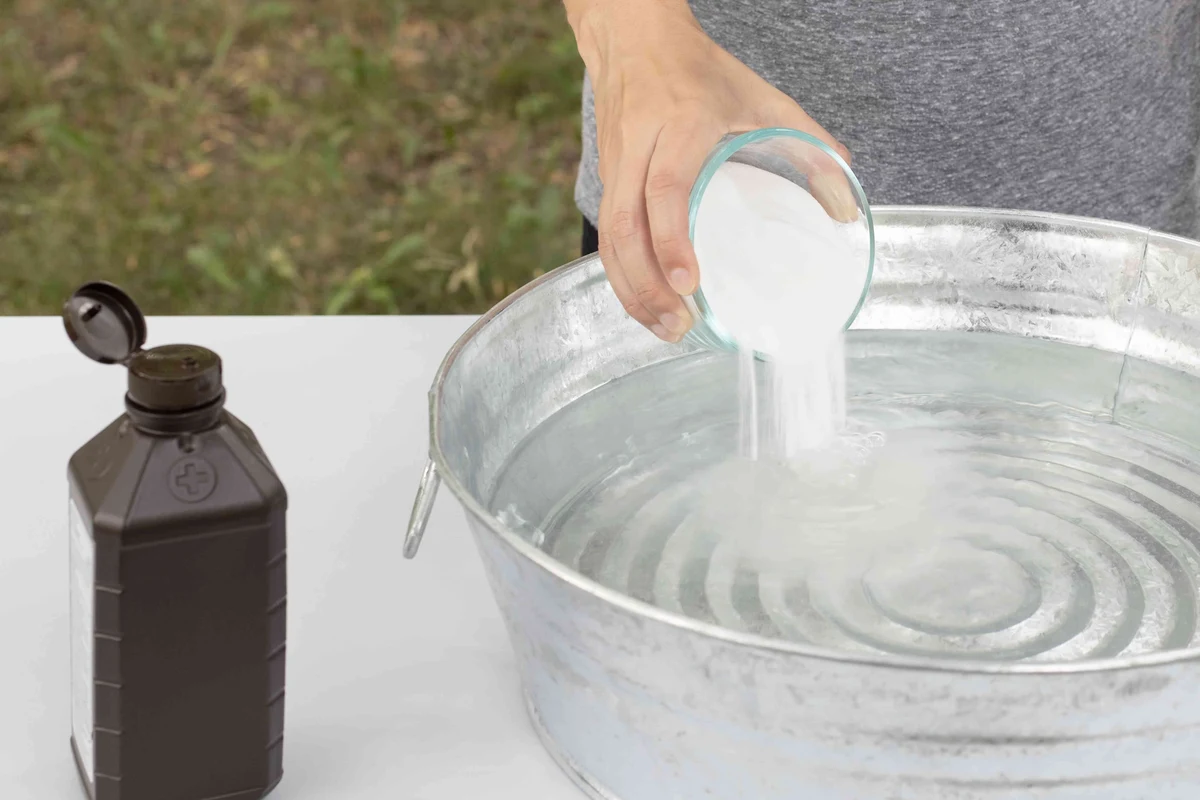
Combine the ingredients in a bowl or bucket right before use. Stir gently so the baking soda dissolves as much as possible.
Work the solution into the fur with your hands or a soft cloth, avoiding the eyes, nose, and mouth. Focus on the areas that were directly sprayed.
Use lukewarm water and rinse until the fur no longer feels slippery or soapy. Leftover residue can keep the smell from fully fading.
Pat dry with clean towels and let the pet dry in fresh air. Check the odor again after drying, since damp fur can make smells seem stronger.
Never use peroxide near the eyes, and never let a pet lick the mixture off its coat. If the animal resists strongly or has facial spray, stop and call a vet.
How to treat clothing, towels, bedding, and soft surfaces
For washable fabrics, blot first if the odor source is still wet, then test the mix on a hidden seam or hem. Apply lightly, let it sit briefly, and rinse or launder according to the fabric’s care label.
For bedding and towels, a second wash may help if the smell remains after the first cycle. If you are treating shoes or other odor-prone items, our article on baking soda for shoes cleaning covers a similar deodorizing approach.
Testing on a hidden spot before full application
Peroxide can lighten dyes, especially on dark, bright, or vintage fabrics. A small hidden test helps you see whether the material reacts before you commit to the full surface.
Wait for the test area to dry, because color changes sometimes show up after drying rather than immediately.
Ventilation, gloves, eye protection, and pet safety precautions
Open windows if you are working indoors, and keep the area well ventilated. Wear gloves to protect your hands, especially if you have cuts or sensitive skin.
Eye protection is smart when you are mixing a foamy solution or washing a nervous pet. Keep children and other animals away until the area is rinsed and safe.
Freshly mixed peroxide solutions are more effective than mixtures that have been sitting around. In odor cleanup, timing matters as much as the ingredients themselves.
Common Mistakes That Make Skunk Smell Worse
Most cleanup failures happen because the odor gets spread around or the mixture is used too aggressively. The goal is to lift and rinse, not scrub the smell deeper into the surface.
Using the wrong peroxide strength or mixing too much at once
Higher-strength peroxide may fade color or irritate skin. Mixing a huge batch is also a problem, because the solution is best used fresh and may lose effectiveness if it sits.
Stick to a manageable amount and make a second batch only if you need it.
Rubbing the odor deeper into fur or fibers
Hard rubbing can push the oily residue farther into fur, carpet, or fabric weave. Gentle massaging and blotting are usually better than vigorous scrubbing.
This is one reason a soft cloth or your gloved hands can be more effective than a stiff brush on delicate areas.
Skipping rinsing, repeating too often, or storing leftover mixture
If you do not rinse thoroughly, the peroxide, soap, and loosened odor residue can stay behind and irritate skin or attract dirt. Repeating the treatment too many times in a row can also dry out fur or damage fabric.
Do not bottle leftovers for later. The mixture is meant to be made fresh and used promptly.
Why this method is not a replacement for professional deodorizing in severe cases
Deep contamination, especially in carpets, upholstery, or vehicle interiors, may need specialized cleaning tools and odor-neutralizing products. A home mix can help with the surface layer, but it cannot always reach the source if the odor has soaked in deeply.
- Uses common household ingredients
- Can work quickly on fresh skunk spray
- Useful for pets and washable items
- Can fade colors or irritate skin if misused
- May not solve severe indoor contamination
- Must be mixed fresh and used carefully
Troubleshooting Lingering Odor After the First Treatment
If the smell remains after one wash, do not assume the mix failed. Drying time, humidity, and how much spray hit the surface all affect the result.
What to do if the smell remains on pets, hands, or indoor fabrics
For pets, a second careful wash may help if the first rinse was incomplete. For hands, wash with soap and water, then use a gentle deodorizing wash if needed, but avoid harsh scrubbing that can irritate skin.
For indoor fabrics, rewash according to the care label and dry in fresh air if possible. If the item is not washable, consider professional cleaning rather than repeated home treatment.
How drying time, humidity, and odor source affect results
Warm, damp air can make skunk odor seem stronger because volatile compounds release more easily. A surface may seem clean when wet and smell worse once it dries, which is why a follow-up check matters.
The deeper the spray source, the more likely the smell will linger. Fur with thick undercoat, heavy upholstery, and porous wood are especially challenging.
Safe follow-up options for stubborn skunk contamination
If the odor remains, wash washable items again with an odor-focused laundry routine and good ventilation. For pet cleanup, ask a groomer or veterinarian for advice if the animal has skin sensitivity or the spray hit the face.
For home odors, use absorbent materials like baking soda on dry, safe surfaces after the wet cleaning stage is complete. Do not combine every cleaner at once, since more chemistry is not always better chemistry.
Safety Limits, Storage Rules, and Final Decision Guide
The biggest safety rule is simple: make the mixture fresh, use it carefully, and stop if the material or animal reacts badly. That approach gives you the best chance of odor relief without creating a second problem.
Why the mixture should be made fresh and not bottled for later use
Hydrogen peroxide breaks down over time, especially when exposed to light or mixed with other ingredients. A stored batch may be weaker and less predictable than a freshly mixed one.
This is one reason cleaning formulas with peroxide are usually prepared right before use rather than kept on a shelf.
Materials and surfaces that may react poorly to peroxide
Peroxide can discolor dyed fabrics, natural fibers, painted surfaces, and some finishes. It can also be risky on leather, silk, wool, and other delicate materials unless a professional specifically approves it.
If you are unsure, test a small hidden area first and wait for it to dry completely before deciding.
How to decide between DIY cleanup and professional help
Choose DIY when the spray is fresh, the surface is washable, and the pet or item tolerates gentle cleaning. Choose professional help when the odor is severe, the material is delicate, or the spray affected the eyes, mouth, or broken skin.
If you need a broader cleaning strategy for a skunk smell that spread through a room, a professional may save time and reduce the risk of damage. For comparison, our post on baking soda for smoke odors shows how odor control often depends on the type of residue, not just the smell itself.
Recap: the most practical way to use baking soda and hydrogen peroxide for skunk smell relief
The most practical approach is to use 3% hydrogen peroxide, baking soda, and a small amount of dish soap in a fresh batch, then apply it gently, rinse thoroughly, and dry the item well. It is a helpful first-line fix for pets and washable items, but it is not a cure-all for deep or severe contamination.
If you treat the odor source quickly, test materials first, and know when to call in a vet or professional cleaner, you will usually get better results with less damage.
- Mix fresh and use 3% peroxide
- Test fabrics before full cleaning
- Rinse thoroughly and ventilate well
- Using stronger peroxide without guidance
- Scrubbing hard or storing leftovers
- Ignoring eye, skin, or fabric sensitivity
Frequently Asked Questions
Yes, many people use a fresh mix on dogs with mild to moderate skunk odor. Avoid the eyes, mouth, and broken skin, and rinse thoroughly after treatment.
Three percent hydrogen peroxide is the usual household starting point. Stronger peroxide may irritate skin or damage color, so check labels and test first.
Baking soda can help reduce odors, but it usually works better as part of a cleaning mix. On heavy skunk contamination, it may not be enough on its own.
Yes, peroxide can fade some dyes and finishes. Always test a hidden spot before using it on fabric or furniture.
No, it is best made fresh and used right away. Stored peroxide mixtures can lose effectiveness and become less predictable.
Call a vet if the pet has eye exposure, skin irritation, or distress. Use a professional cleaner for severe indoor contamination or delicate materials that may react badly to peroxide.