
Baking Soda Fire Safety Tips Every Home Needs

Baking soda can help with a tiny, contained kitchen fire, but only when you can safely cover the flame. If the fire is spreading, smoky, or tied to an appliance, evacuate and call emergency services instead.
A baking soda fire is one of the simplest kitchen safety topics to understand, but it only works in very specific situations. Used correctly, baking soda can help smother a tiny flame before it spreads; used incorrectly, it can waste precious seconds when you should be evacuating.
- Use case limit: Baking soda is only for very small, visible, contained flames.
- Best action: Turn off heat first, then smother the fire without scattering burning grease.
- Not enough for: Large flames, hidden appliance fires, and fires that are spreading fast.
- Kitchen setup: Keep a lid, smoke alarms, and the right extinguisher within easy reach.
- Safety rule: If you are unsure, leave the area and call for help.
What “Baking Soda Fire” Means in Real Home Safety Situations
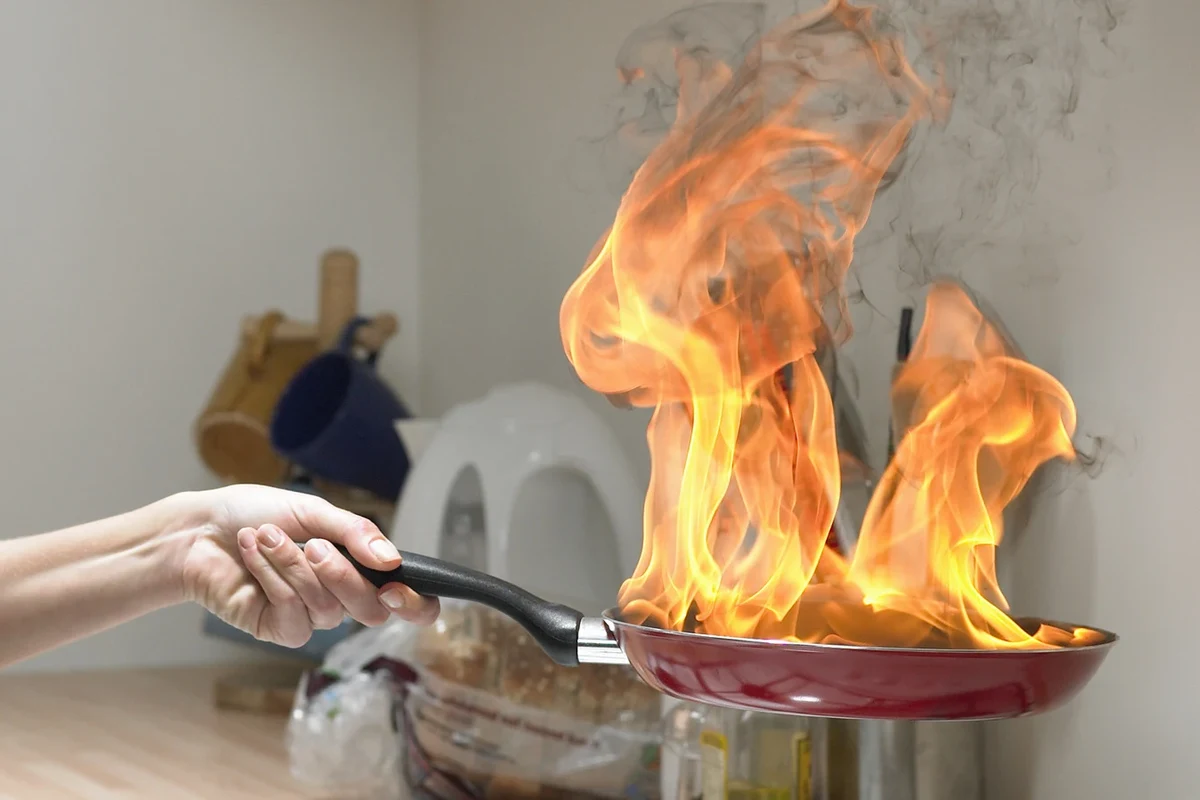
In home kitchens, the phrase baking soda fire usually refers to using baking soda to put out a very small, contained flame. It is most often discussed for stovetop flare-ups, a brief grease ignition, or a tiny ember in a trash can or baking sheet.
It is not a general replacement for a fire extinguisher. If a flame is growing, moving, or producing thick smoke, the safest response is to get people away from the area and follow emergency guidance from your local fire department or other official safety sources.
Kitchen flare-ups, grease fires, and small electrical fires: where baking soda fits
Baking soda can be useful when the fire is small enough that you can still see exactly where it is and reach it safely. That usually means a pan edge flare-up, a tiny grease spot that just ignited, or a very limited ember caught in dry debris.
It is not the right tool for a large grease fire, a fire inside an appliance wall, or an electrical fire that involves wiring or repeated sparking. For those situations, use the proper extinguisher if you are trained and it is safe to do so, or leave immediately if the fire is not contained.
Why baking soda is helpful only for very small, contained fires
Baking soda works best when the burning area is narrow and the fuel is limited. A small pile of powder can cover the flame and reduce the oxygen reaching it, which may stop combustion before the fire grows.
Once the fire has spread across a pan, into an oven cavity, or onto nearby towels or paper, baking soda usually is not enough. The bigger the fire, the less useful a pantry item becomes.
Never treat baking soda as a substitute for a working smoke alarm, a safe escape plan, or the correct fire extinguisher for your kitchen. Official fire-safety guidance changes by fire type, so verify local recommendations and read the extinguisher label before an emergency happens.
How Baking Soda Extinguishes a Fire: The Science Behind the Reaction
Baking soda is sodium bicarbonate. When heated, it breaks down and releases gases that can help push oxygen away from the flame while also cooling the burning area a little.
That is why it can sometimes stop a tiny fire, especially when the flame is still shallow and the fuel source is limited. It is a chemical effect, not magic, and it does not work equally well on every fire.
Carbon dioxide release and oxygen displacement
When baking soda is exposed to enough heat, it releases carbon dioxide. Carbon dioxide does not support combustion, so it can help displace oxygen around the flame.
That oxygen reduction is the main reason baking soda can smother a small fire. The effect is local, though, which is why the powder must actually cover the burning spot rather than land nearby.
Heat absorption and why it works differently than water
Baking soda also absorbs some heat as it breaks down, which can help lower the temperature of the burning material. Water cools in a different way: it absorbs heat as it turns to steam.
That difference matters in the kitchen. Water can spread hot grease and make a grease fire worse, while baking soda is more useful for very small grease ignitions because it does not splash the fuel around in the same way.
Limits of baking soda fire suppression in modern home kitchens
Modern kitchens often include nonstick pans, electrical appliances, ovens with fans, and tightly packed counters. Those features can make fire spread faster or become harder to reach safely.
Baking soda also has limited range and limited volume. If the flame is hidden behind a toaster wall, under an appliance, or inside an oven with a closed door, a small amount of powder may not reach the burning material effectively.
Baking soda and baking powder are not the same thing. Baking soda is a single alkaline ingredient, while baking powder includes additional acids and starch for leavening, which is why they behave differently in both baking and fire response.
When to Use Baking Soda and When Not To
The rule is simple: use baking soda only when the fire is tiny, contained, and immediately accessible. If you hesitate because the flame is growing or you are unsure what is burning, step back and prioritize safety.
If you also want to understand the ingredient itself better, our guide on whether baking soda and baking powder are the same explains the difference in a baking context, and our article on when baking soda expires can help you decide whether the box in your pantry is still useful for cooking.
Safe use cases for stovetop, oven, and trash-can flare-ups
A small stovetop flare-up from oil or food residue may be a use case if the flame is still localized and you can safely reach it without leaning over the burner. A tiny ember in a trash can or on a baking sheet can also be a candidate if the ignition is limited and there is no fast-moving smoke.
In an oven, baking soda is usually less practical because the fire is enclosed. If the flames are visible and the oven door can stay closed, that is often safer than opening it and feeding the fire oxygen.
Situations where baking soda is not enough: large flames, spreading grease, and appliance fires
If flames are climbing the side of a pan, licking cabinets, or spreading across the countertop, baking soda is not enough. The same is true for appliance fires, especially if an electrical smell, sparking, or repeated popping is involved.
Once the fire is beyond a very small area, use the correct extinguisher only if you are trained and can do so safely. Otherwise, leave the area, close doors behind you if possible, and call emergency services.
Why water, flour, and other pantry items can make the fire worse
Water can splash burning grease and spread the fire. Flour is combustible dust in a fire context and should never be thrown on flames. Even a common cleanup instinct, like grabbing a towel, can make things worse if it knocks fuel over or catches fire itself.
If you want a deeper look at a common household reaction, our article on the baking soda and vinegar reaction explains why some kitchen mixtures fizz but do not act as proper fire tools.
Never toss flour, sugar, or wet towels onto a grease fire. If the fire is not tiny and clearly contained, back away and use the safest emergency response instead of improvising.
Step-by-Step Baking Soda Fire Safety Procedure for Home Cooks
The goal is to stay calm, protect people first, and only attempt a baking soda response when the fire is clearly small enough. Keep your movements slow and deliberate so you do not scatter grease or knock over cookware.
Shutting off heat, keeping distance, and clearing the area
Turn off the burner, oven, or appliance only if you can do it without reaching through flames. Then step back and clear the area of towels, paper, packaging, and anyone who is not helping.
If the fire is on the stovetop, do not lean over the pan. Heat and smoke rise quickly, and the upper air can be much hotter than it looks from standing height.
How to apply baking soda without scattering burning grease
Use a generous amount and place it gently over the base of the flame rather than throwing it from across the room. The goal is to smother, not to blast the burning grease around.
If you have a lid that fits the pan, that is often a better first move for a stovetop grease flare-up than trying to sprinkle powder from a distance. A lid can cut off oxygen more evenly, while baking soda can help with very small remaining hot spots.
What to do after the flames are out: ventilation, cooling, and cleanup
After the flame is out, keep watching the area for hidden heat, smoke, or re-ignition. Turn on ventilation if it is safe to do so, but do not stand directly in the smoke.
Let pans and nearby surfaces cool fully before cleaning. Grease can stay hot longer than expected, and a surface that looks calm may still be capable of reigniting if disturbed.
Common Mistakes People Make During a Baking Soda Fire Response
Most mistakes happen because people act too quickly or assume a small flame cannot become a bigger one. In a kitchen, seconds matter, but so does choosing the right response.
Using too little baking soda to cover the flame
A light dusting is often not enough. If the powder does not fully cover the burning area, oxygen can still reach the fuel and the flame may continue.
Think in terms of coverage, not decoration. The fire needs to be blanketed, not sprinkled.
Throwing baking soda from too far away or into a moving fire
If you throw from too far away, the powder may miss the base of the flame or scatter before it lands. A moving flame, such as one fed by dripping grease or airflow from a vent, is even harder to control with a pantry ingredient.
That is one reason to keep a proper extinguisher where you can reach it quickly. For fire response, distance is not always your friend.
Assuming a fire is out before hidden heat or smoke is gone
Some fires are not visible anymore but still hot enough to flare up again. Smoke, sizzling, or a lingering burnt smell can signal that the material is still heating.
Stay nearby only if it is safe, and keep monitoring the area. If the flame returns, do not repeat a risky attempt over and over.
Hot oil, steam, and metal cookware can cause serious burns even after the flame seems to be gone. Handle cleanup only after the area has cooled and you are sure the fire is fully out.
Home Fire Safety Setup Every Kitchen Should Have in 2026
Good fire response starts before anything burns. The best kitchen setup is the one that makes the right tool easy to grab and the wrong habits harder to repeat.
Best placement for baking soda, lid covers, and a Class K or ABC extinguisher
Keep baking soda in an easy-to-reach place near the kitchen, but not so close to the stove that you would have to reach through heat to get it. Store a fitting lid or flat sheet pan where you can grab it quickly.
A Class K extinguisher is designed for certain cooking oil fires, while an ABC extinguisher covers several common home fire types. Check the label, follow the manufacturer instructions, and make sure the extinguisher type matches your kitchen risks.
Smoke alarms, stove clear zones, and safe storage near cooking areas
Smoke alarms should be working and tested regularly. Keep a clear zone around the stove so towels, oven mitts, and packaging are not sitting next to open heat.
Store oils, paper goods, and flammable cleaning items away from burners. A tidy cooking area gives you more reaction time and fewer things to catch fire if something splatters.
Training family members and roommates on quick response steps
Everyone in the home should know the basic sequence: turn off heat if safe, keep distance, cover or smother only if the fire is tiny, and leave if it is not under control. Practice this as a calm conversation, not a panic drill.
If you live with children, roommates, or older adults, make sure they know where the extinguisher is and how to call emergency services. A shared plan is often more useful than a perfect pantry item.
- Know where the extinguisher is stored
- Keep a lid or sheet pan within reach
- Test smoke alarms regularly
- Clear paper, towels, and packaging from the stove area
Practical Examples: Realistic Baking Soda Fire Scenarios and Best Responses
Real kitchens are messy, and fire situations do not always look textbook-perfect. These examples show where baking soda may help and where it should not be your main plan.
Small pan flare-up on the stove
If a tiny flame appears at the edge of a pan and does not spread, turn off the burner and assess the size first. A lid may be the best immediate response, and baking soda can be used if the flame is still very small and accessible.
If the flame grows after you cover it, back away and escalate to the proper emergency response. Do not keep lifting the lid to check.
Grease splatter ignition in an oven or toaster area
Small grease ignition near an oven door or toaster crumb tray may be manageable only if the fire is tiny and visible. Unplugging an appliance can help if the plug is safe to reach, but never reach through heat or smoke to do it.
For oven fires, keeping the door closed is often safer than opening it. Opening the door can feed the fire with oxygen and make the flare-up worse.
Trash can or baking sheet ember incident
A small ember in a metal baking sheet or trash can may go out with baking soda if it has not spread to surrounding materials. The key is that the ember must still be small and contained.
If the trash contains paper, plastic, or food packaging and the fire is already growing, treat it as a real fire, not a cleanup problem. Remove people first and call for help if needed.
- Easy to keep in most kitchens
- Can help with very small contained flames
- Does not splash grease like water can
- Too limited for larger or hidden fires
- Requires close, careful placement
- Not a replacement for an extinguisher or evacuation plan
Final Safety Recap: How to Decide If Baking Soda Is the Right First Response
Baking soda is a smart immediate tool only when the fire is tiny, visible, and contained enough that you can safely cover it. If you are unsure, if the flame is spreading, or if smoke is building fast, do not rely on a pantry ingredient.
For more household safety context, readers who often cook with high-heat appliances may also find our guide on whether air fryers have caused fires useful when thinking about heat, airflow, and appliance placement.
When baking soda is a smart immediate tool
Use it when the fire is no larger than a very small spot, the fuel source is limited, and you can apply the powder without crossing over the flame. In that moment, coverage and calm matter more than speed.
When to evacuate and call emergency services instead
Leave immediately if the fire spreads, you cannot see the base of the flame, or the room fills with smoke. If an appliance is sparking or the fire involves wiring, treat it as an emergency and get out.
Building a safer kitchen routine beyond emergency response
The best fire safety is prevention: keep cooking areas clear, watch hot oil carefully, and maintain working alarms and an extinguisher. If you want to stay informed about kitchen safety and baking science, our article on cleaning ovens with baking soda and vinegar is a useful reminder that routine care also reduces smoke, residue, and flare-up risk.
Used wisely, baking soda can be a helpful first response for a tiny kitchen fire. But the real safety habit is knowing its limits, choosing the right tool, and leaving the area the moment a fire is bigger than a simple pantry fix.
Frequently Asked Questions
It can help only if the fire is very small and contained. For a spreading grease fire, use the correct extinguisher if safe or evacuate.
Usually no, unless it is a tiny, accessible flare-up and you can do it safely. Keeping the oven door closed is often the safer first move.
You need enough to fully cover the burning spot, not just sprinkle lightly. If you cannot cover it completely, it is not the right response.
No. Flour can be combustible dust, and sugar can burn; neither is a safe fire response.
Keep watching for smoke, heat, or re-ignition, then ventilate and let everything cool fully. Clean up only when the area is safe to touch.
Call immediately if the fire spreads, produces heavy smoke, involves wiring, or cannot be safely contained. Leave the area first if you are unsure.