
Baking Soda for Nappy Rash Safe Relief Tips for Parents

Baking soda is not the safest first-choice remedy for nappy rash because it can dry or irritate a baby’s sensitive skin. Gentle cleaning, frequent nappy changes, and a barrier cream are usually better options.
If you are searching for baking soda for nappy rash, the short answer is that it is not a first-choice remedy for a baby’s irritated skin. Mild nappy rash usually responds better to frequent changes, gentle cleaning, and a protective barrier cream.
- Safety first: Baking soda can sting or dry irritated baby skin.
- Better basics: Frequent changes and barrier creams usually help more.
- Watch for clues: Spreading redness, pus, or fever needs medical advice.
- Keep it simple: Fewer products make it easier to spot triggers.
What Parents Mean by “Baking Soda for Nappy Rash” in 2026
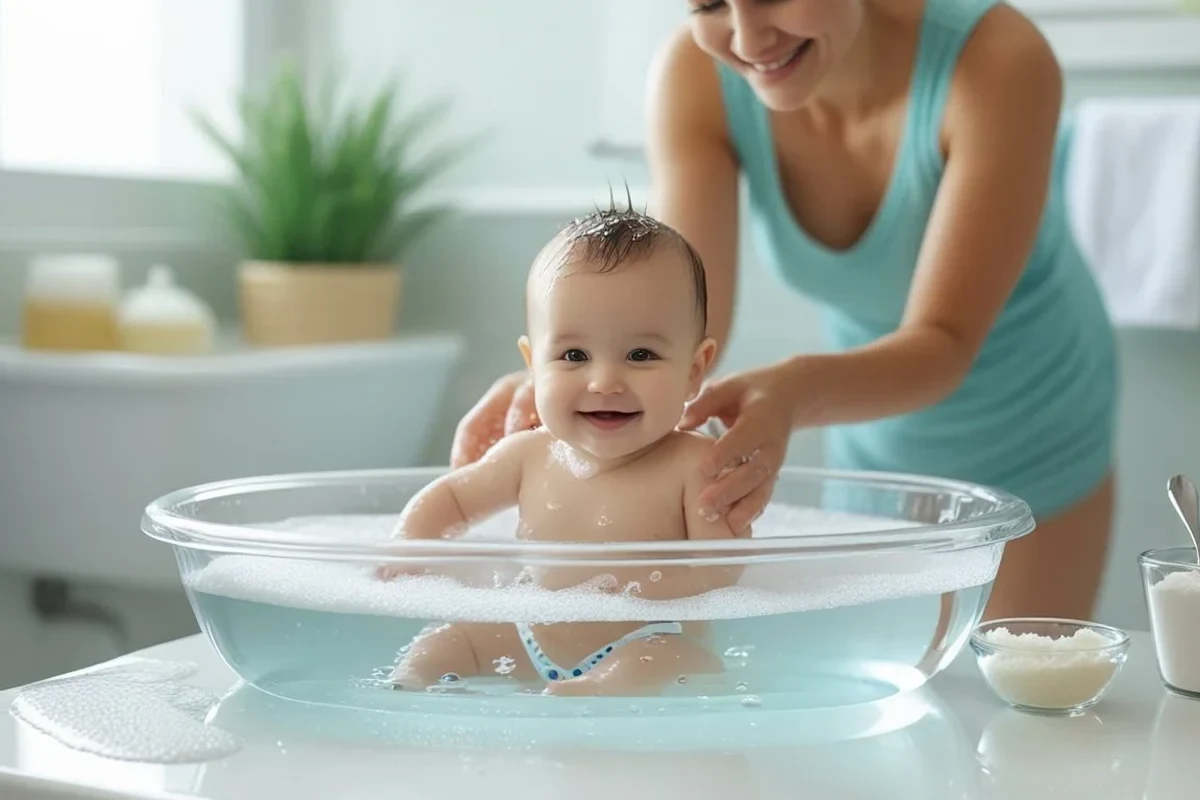
In baby-care searches, this phrase usually means parents are looking for a quick home remedy for redness, soreness, or chafing in the nappy area. The idea often comes from older household advice, social media posts, or tips passed along in parenting groups.
Why this search term is common in baby-care advice
Nappy rash is common, especially when a baby’s skin stays damp for too long or is exposed to friction from a nappy. Parents often want something simple already in the kitchen, and baking soda feels familiar because it is used in so many cleaning and deodorizing jobs.
That said, baby skin is much more delicate than a baking tray or sink surface. A remedy that seems mild in the kitchen can still be too harsh for a baby’s skin barrier.
What nappy rash is and when home care may be appropriate
Nappy rash is usually a form of skin irritation caused by moisture, rubbing, urine, stool, or sometimes a reaction to a product. In many mild cases, home care is appropriate for a short time if the skin is only a little red and the baby otherwise seems comfortable.
If the rash is spreading, looks raw, or is not improving after a couple of days of gentle care, it needs a closer look. If you want a simple explanation of how household ingredients behave, our guide to the baking soda and vinegar reaction explained simply shows why mixing common ingredients does not always make them safer or stronger for every use.
Why baking soda comes up in older remedies and online parenting forums
Baking soda is alkaline, and some older home-remedy advice treats it as a “soothing” ingredient for itch or odor. In online forums, it is often suggested for baths, rinses, or spot treatment because it is inexpensive and easy to find.
But “common” does not mean “best for babies.” A baby’s skin has a thin outer barrier, and that barrier can be disrupted more easily than adult skin.
Healthy skin has a slightly acidic surface, which helps support the skin barrier. Products that shift that balance too far can sometimes make irritation feel worse rather than better.
Is Baking Soda Safe for Nappy Rash? What Current Guidance Suggests
For most babies, baking soda is not the safest routine option for nappy rash. Current baby-care advice generally favors gentle cleansing, dryness, and barrier protection over DIY mixtures that may sting or dry the skin.
How baking soda can affect a baby’s delicate skin barrier
Baking soda can change the pH of water or a mixture, and that may affect the skin’s protective layer. When the barrier is already irritated, even a mild shift can increase discomfort.
That matters because nappy rash is often not just “red skin”; it is skin that has already been stressed by moisture and friction. If the barrier is weak, anything drying or irritating can slow recovery.
Situations where it may worsen irritation, dryness, or stinging
Parents sometimes expect a soothing bath additive, but baking soda can leave skin feeling tighter or drier. On broken or very inflamed skin, it may sting.
This is especially important if the rash is already raw, weeping, or accompanied by tiny cracks. In those cases, the goal is usually to reduce exposure and protect the skin, not add another active ingredient.
Do not use baking soda on open sores, severe redness, or skin that looks infected. If your baby seems unwell, has a fever, or the rash is rapidly worsening, contact a pharmacist, GP, or pediatric clinician promptly.
When to avoid home remedies and seek medical advice instead
Seek medical advice sooner if the rash lasts more than a few days, keeps returning, or seems painful. Also get help if the rash spreads beyond the nappy area, forms blisters, or has pus, crusting, or a strong odor.
When you are unsure whether a rash is simple irritation or something else, it is better to pause DIY ideas and ask a professional. That is similar to how careful bakers verify ingredients before swapping them; if you are comparing pantry basics, our article on using baking soda instead of baking powder safely explains why one ingredient is not a universal replacement for another.
How Parents Use Baking Soda in Practice: Common Methods and Their Limits
Online, the most common baking soda idea for nappy rash is a diluted bath or rinse. Even then, the method is inconsistent, and the strength varies widely from one suggestion to another.
Bath-water dilution approaches seen in parent discussions
Some parents talk about adding a small amount of baking soda to bath water for short soaking. The logic is that a diluted bath might calm skin without direct rubbing.
The problem is that “small amount” is not a precise measure, and bath water is not the same as a controlled treatment. What feels mild in one tub may be much stronger in another, depending on water volume and how well it dissolves.
If a parent chooses to try any bath additive at all, it should be discussed with a healthcare professional first, especially for newborns, premature babies, or babies with eczema or very sensitive skin.
Why direct application is riskier than many expect
Applying dry baking soda directly to the skin is riskier because it concentrates the ingredient right where the skin is already inflamed. It can also rub against the area and increase friction.
In kitchen terms, think of it like using the wrong abrasive on a delicate surface. What helps with cleaning can be too aggressive for a soft, damaged barrier.
Typical mistakes that make symptoms worse, not better
One common mistake is using too much product in the hope that more will work faster. Another is combining baking soda with other products without knowing how they interact.
Parents also sometimes keep using a home remedy even when the rash is clearly not improving. With baby skin, a lack of improvement is a signal to stop experimenting and reassess the cause.
- Cheap and easy to find
- May feel familiar to parents who use it elsewhere in the home
- Can dry or sting irritated skin
- Not a standard first-line nappy rash treatment
- Strength is hard to control in a bath or rinse
Safer Home Care Steps for Mild Nappy Rash Relief
For mild nappy rash, the safer path is usually simple and consistent care. The goal is to keep the skin clean, dry, and protected while it heals.
Changing nappies more often and reducing wet skin contact
Frequent changes are one of the most effective steps because they reduce the time skin spends in contact with urine and stool. Even a very gentle product will not help much if the skin stays wet for long periods.
Check nappies often, especially after feeds and naps. For babies with frequent stools, more frequent changes can make a noticeable difference within a day or two.
Using fragrance-free cleansers and pat-drying gently
Use lukewarm water or a fragrance-free baby cleanser if needed, then pat the skin dry rather than rubbing. Rubbing can create tiny surface injuries and make the rash feel worse.
A soft cloth or cotton pad is usually enough. If wipes are used, choose ones that are gentle and free from added fragrance or harsh alcohols when possible.
Do not use household cleaning mixtures, scented bath products, or leftover baking ingredients on a baby’s rash. Baby skin care should stay separate from cleaning routines, even if the ingredient seems harmless in the kitchen.
Applying barrier creams and protecting skin during healing
A barrier cream or ointment can help protect the skin from moisture and stool while the rash settles. These products work by forming a protective layer, which is often more useful than trying to “treat” the skin with an active DIY ingredient.
Apply a thin, even layer after cleaning and drying. If the rash is very irritated, do not scrub off every trace of the previous barrier layer at each change; gentle removal is usually enough.
Letting skin air out and managing friction from nappies
When practical, give the skin some time without a nappy so air can help reduce moisture. Short nappy-free periods can be especially useful after bathing or after a change.
Also check fit. A nappy that is too tight can increase rubbing, while one that is too loose may leak and keep the area wet.
How to Tell If It’s More Than Simple Irritation
Not every rash in the nappy area is simple irritation. Some rashes are caused by yeast, bacteria, or an allergic reaction to a product.
Signs of yeast, bacterial infection, or allergic reaction
A yeast rash may look bright red and may involve the skin folds, sometimes with small red spots around the main rash. A bacterial infection may look crusted, oozy, or increasingly painful.
An allergic reaction often appears after a new wipe, cream, detergent, or bath product is introduced. If the timing fits a recent change, the product may be the trigger.
When rash patterns suggest a new product or wipe is the trigger
If the rash appears soon after switching wipes, changing detergent, or trying a scented cream, stop the new product and go back to the simplest routine possible. That is often the fastest way to identify the cause.
It helps to change one thing at a time. If you change several products at once, it becomes much harder to know what helped or what caused the rash.
Examples of symptoms that need prompt medical review
Get prompt advice if the baby has fever, seems unusually sleepy, refuses feeds, or the rash is blistering, bleeding, or spreading quickly. Also seek help if the rash is severe or the baby seems in significant pain when the area is touched.
If the rash is not improving after a few days of careful home care, do not keep cycling through remedies. A pharmacist or GP can help decide whether the baby needs an antifungal, a different barrier product, or another treatment.
Common Baking Soda Mistakes Parents Should Avoid
When a home remedy sounds gentle, it is easy to assume more is better. With baby skin, that is often the mistake that creates the most trouble.
Using too much powder or mixing at the wrong strength
The biggest risk with baking soda is usually overdoing it. A stronger mix does not mean a better result, and bath-water estimates are easy to misjudge.
Because the skin area is small and sensitive, even a small change in concentration can matter. If a recipe is not clearly recommended by a qualified clinician, it is safer not to improvise.
Applying it to broken skin, open sores, or severe redness
Never put baking soda on broken skin, open sores, or areas that look raw. Those spots are already vulnerable, and extra exposure can increase burning and discomfort.
This is the point where a gentle barrier routine and medical advice are more appropriate than experimentation.
Assuming a home remedy replaces treatment for persistent rash
Persistent rash needs a cause, not just a temporary soothing attempt. If the underlying issue is yeast, allergy, or infection, baking soda will not solve it.
Home care can be part of the plan, but it should not delay proper treatment when the rash lingers or worsens.
Ignoring ingredient interactions with creams, wipes, or bath additives
Mixing products can create unwanted effects, even when each item seems mild on its own. For example, a cleanser, wipe, and bath additive may all contain ingredients that dry the skin when combined.
That is why a simple routine is usually best. Fewer ingredients mean fewer chances for irritation and fewer variables to track.
What to Do Instead: A Practical Decision Guide for Parents
If you are standing in the bathroom wondering what to try first, keep the decision simple. Start with the gentlest steps and move to professional advice if the rash does not settle quickly.
When mild home care is reasonable for short-term relief
Mild home care is reasonable when the rash is light red, the skin is intact, and the baby otherwise seems well. In that case, frequent changes, gentle cleaning, air time, and a barrier cream are usually the safest first steps.
Keep a close eye on the skin over the next 24 to 48 hours. Improvement should usually look like less redness, less shine from moisture, and less fussing during changes.
When to switch from DIY remedies to pharmacist or GP advice
Switch to professional advice if the rash does not improve within a few days, keeps coming back, or looks worse after you change products. Also ask for help if you are unsure whether it is yeast, allergy, or simple irritation.
When in doubt, a pharmacist can often help with over-the-counter options, while a GP or pediatric clinician can assess whether prescription treatment is needed.
How to choose a nappy rash routine that is gentle and repeatable
The best routine is the one you can repeat consistently without irritating the skin. Choose one cleanser, one barrier cream, and one washing approach, then keep the routine simple.
If you like practical household guidance, you may also find our article on whether baking soda expires and when to replace it useful for understanding how the ingredient changes over time in general household use. But for baby care, freshness does not make it automatically appropriate for skin.
Final Recap: The Safest Way to Think About Baking Soda and Nappy Rash
Baking soda for nappy rash is a common search, but it is not the safest default choice for a baby’s irritated skin. The more reliable approach is gentle cleaning, frequent changes, barrier protection, and watching closely for signs that the rash is more than simple irritation.
Balanced conclusion on possible use, risks, and better alternatives
If baking soda appears in old advice or online discussions, treat it as a remedy with limits rather than a trusted standard treatment. It may dry, sting, or worsen a rash if the skin is already inflamed.
For most families, a simple routine is better than a DIY mixture. That means fewer ingredients, less rubbing, and more attention to what the skin is telling you.
Parent-friendly reminder on monitoring, prevention, and escalation
Watch the rash for change, not just the clock. If it improves, continue the gentle routine; if it spreads, becomes painful, or does not improve, ask a pharmacist or GP.
That balanced approach keeps the focus on what helps the skin heal, rather than on a kitchen shortcut that may not be suitable for babies.
Frequently Asked Questions
It is not usually the first choice for nappy rash, because baby skin is delicate and may dry or sting. Safer options are frequent changes, gentle cleaning, and a barrier cream unless a clinician advises otherwise.
Direct application is riskier because it can irritate broken or inflamed skin. It is better to avoid putting baking soda on raw, open, or severely red areas.
Change nappies often, clean gently with water or a fragrance-free cleanser, pat dry, and apply a barrier cream. Short nappy-free time can also help the skin dry and recover.
Look for spreading redness, pus, crusting, blisters, strong odor, or increasing pain. Fever or a baby who seems unwell needs prompt medical review.
Mild irritation often starts to improve within a few days of gentle care. If it does not improve or keeps returning, ask a pharmacist or GP for advice.
Yes, a new wipe, cream, detergent, or bath product can trigger irritation or an allergic reaction. If the rash started after a product change, stop the new item and use a simpler routine.