
Baking Soda Grease Fire Safety Tips You Need to Know

Baking soda can help extinguish a very small grease fire that is still contained in the pan, but it is not the right choice for larger or spreading flames. Turn off the heat first, stay back, and evacuate if the fire grows or smoke builds.
A baking soda grease fire is one of the few kitchen emergencies where a simple pantry ingredient can help, but only if you use it at the right moment and in the right amount. This guide explains when baking soda can help, when it cannot, and how to reduce the chance of a grease fire in the first place.
- Use case matters: Baking soda is only for tiny, contained pan fires.
- First move: Shut off the heat before doing anything else.
- Do not use water: It can spread burning grease and worsen the fire.
- Have backups ready: Keep a lid and a proper extinguisher nearby.
- Know the limit: If flames spread or smoke thickens, leave and call for help.
What a Baking Soda Grease Fire Is and Why It Happens in Home Kitchens
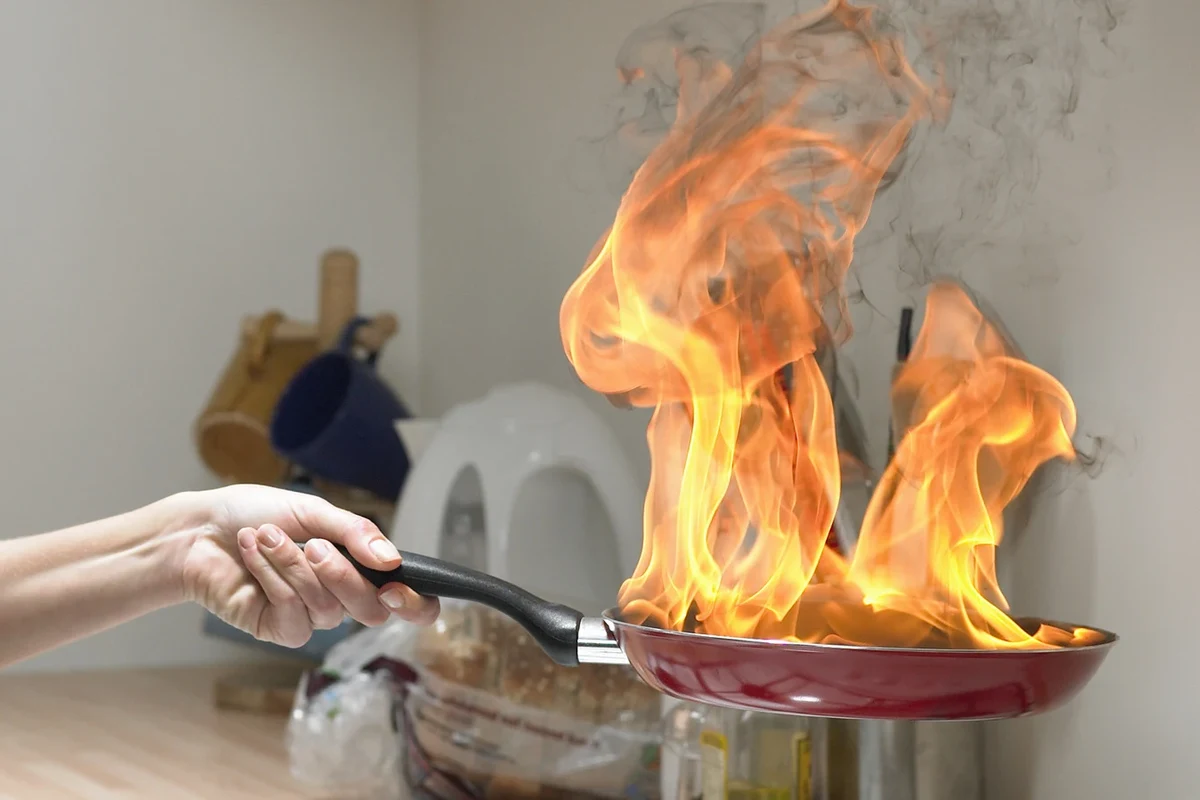
A grease fire starts when cooking oil or fat gets hot enough to ignite. In a home kitchen, that often happens in a skillet, sauté pan, or shallow pot when the oil is overheated, left unattended, or splashes onto a hot burner.
For a deeper look at how kitchen heat and airflow can create unexpected hazards, our article on air fryers causing fires shows how fast moving hot air and residue can change the risk profile in a cooking space. The same basic idea applies on a stovetop: heat, fuel, and oxygen can combine quickly.
How hot oil, pan residue, and airflow can turn a small flare-up into a grease fire
Oil does not need to boil to become dangerous. Once it reaches its smoke point, it begins to break down, smoke, and become more likely to ignite, especially if food crumbs or old grease are already in the pan.
Airflow matters too. A strong draft, a fan, or even moving the pan around can feed flames with more oxygen and spread hot oil across the surface. That is why a small flare-up can jump from a brief flash to a pan fire in seconds.
Why baking soda works differently from flour, water, or regular fire extinguishers
Baking soda helps because heat turns it into carbon dioxide and water vapor, which can help smother a small flame by reducing oxygen around it. It is not magic, and it is not the same as a chemical extinguisher, but it can be useful for a tiny, contained grease fire.
Flour is dangerous because it can feed the fire. Water is dangerous because it can instantly flash into steam and throw burning grease outward. A regular extinguisher is often the better choice for a larger fire, but only if it is the correct type and you know how to use it safely.
Baking soda is sodium bicarbonate, and heat causes it to release carbon dioxide. That gas can help starve a small flame of oxygen, which is why it may work on a tiny grease fire that is still contained in a pan.
When Baking Soda Is the Right Choice for a Grease Fire
Baking soda is only appropriate in a very limited situation: a small grease fire that is still in the pan and has not spread. If the flames are low, contained, and you can reach the pan safely, it may help as one part of a calm response.
Small stovetop flare-ups where the flames are still contained in the pan
The best case is a shallow flame over oil in a skillet or sauté pan, with no surrounding cabinets, towels, or paper products catching fire. In that moment, the goal is to stop the heat source and smother the flame without making the situation more violent.
If you are cooking something like a pan-fried cutlet, searing vegetables, or frying dough, watch for a sudden burst of flame at the edges of the pan. That is the kind of narrow, contained flare-up where baking soda may be useful if it is already nearby and you can act quickly.
Situations where baking soda should not be your first move
If the fire is climbing the backsplash, reaching a hood, or filling the room with thick smoke, baking soda is not the right first response. The same is true if you cannot safely approach the pan or if the fire is in the oven, on the grill, or inside an appliance.
For larger or less contained kitchen fires, a proper extinguisher or immediate evacuation is the safer choice. If you are unsure, treat the situation as serious and move to safety rather than trying to improvise.
Do not throw water on a grease fire. Do not carry a burning pan across the kitchen unless you are trained and it is clearly safe to do so. When in doubt, shut off heat if you can, back away, and call emergency services.
How to Use Baking Soda Safely on a Grease Fire
The response has to be fast, calm, and controlled. Baking soda only helps if you do not feed the fire with movement, air, or panic.
The correct step-by-step approach: stove off, cover if safe, then apply baking soda
Shut off the burner right away if you can reach the control safely. Removing the heat source is the first real step toward stopping the fire.
If a lid is within reach and you can place it without leaning over flames, cover the pan to help cut off oxygen. Do not trap heat with a tight seal if the pan is unstable or too large to cover safely.
Use a steady stream, not a throw. Aim to blanket the burning oil until the flames are smothered, then step back and watch for relighting.
How much baking soda to use and why a light, steady pour matters
There is no universal measuring cup for a grease fire because pan size, flame size, and oil depth all change the amount needed. The practical rule is to use enough baking soda to cover the burning surface in a light layer, then add more only if the flames are still visible.
A quick dump can splash hot grease. A gentle pour gives you better control and reduces the chance of spreading the fire to the stove, counter, or nearby cloths.
Keep your face and body back from the pan. If the fire grows, stop applying baking soda and move to evacuation or extinguisher use instead of leaning closer.
Common mistakes that make the fire worse, including tossing water or dumping too late
The most common mistake is using water. The second is waiting too long, then trying to rescue a fire that is already too large for baking soda to handle.
Another mistake is shaking the pan or moving it while flames are active. That can slosh burning oil onto the stovetop or floor. If the fire is no longer small and contained, stop trying to smother it with pantry items.
- Turn off the burner first
- Use a lid only if it is safe to place
- Apply baking soda in a controlled layer
- Do not use water
- Do not carry the pan
- Do not wait until flames spread
What to Keep in a Baking Soda Fire Safety Setup at Home
A good kitchen safety setup makes your response faster and less stressful. The point is not to stockpile random supplies, but to keep a few practical items within easy reach of the stove.
Kitchen-safe storage for baking soda, lids, oven mitts, and a Class K or ABC extinguisher
Store baking soda in a dry container near, but not directly above, the cooking area so you can reach it quickly. Keep a metal lid that fits your most-used pans, oven mitts that are in good condition, and a fire extinguisher rated for kitchen use according to the manufacturer’s instructions.
For the extinguisher, verify the label and instructions before an emergency. If you are choosing between options, an ABC extinguisher is commonly used for general household fires, while a Class K extinguisher is designed for cooking oils and fats in commercial-style kitchen settings; follow local guidance and manufacturer directions for home use.
Why pan size, handle placement, and cooking oil type affect your response
A wide, shallow pan can expose more surface area, which may make a flare-up spread faster. A pan with an exposed handle can also become a burn hazard if you panic and grab it.
The oil itself matters because different fats behave differently at heat. Oils with lower smoke points can become troublesome sooner, while deeper oil levels can hold more heat and create a bigger fire load if they ignite.
Kitchen Fire Prevention Habits That Reduce Grease Fire Risk
The best way to handle a baking soda grease fire is to avoid needing one. Most grease fires begin with ordinary cooking habits that are easy to improve.
Temperature control, oil monitoring, and avoiding overcrowded pans
Keep the heat at the lowest setting that still does the job, especially when you are frying or searing. Watch the oil instead of stepping away, and avoid crowding the pan with too much food at once, which can cause uneven heating and splattering.
If you are making something like fried pastries or sautéed fillings, add food gradually. A crowded pan can trap moisture, lower control, and create sudden spitting when the water in the food meets hot oil.
Cleaning splatter, grease buildup, and residue before it becomes a hazard
Old grease on burners, grates, and nearby surfaces can ignite more easily than a clean pan. Wipe splatter after the stove cools, and clean range hoods and filters on a regular schedule based on how often you cook.
This is also where good kitchen habits overlap with cleaning habits. If you want a simple pantry-based cleaning approach for non-fire tasks, our guide to baking soda and vinegar cleaning ovens explains how residue removal differs from fire response. The key difference is that cleaning methods are not emergency methods.
Grease buildup is not just messy. It can become fuel. A clean stovetop, clear backsplash, and uncluttered counter reduce the amount of material that can catch if oil flashes.
Practical examples from frying, sautéing, and broiling situations
When frying, keep the oil below the rim of the pan and dry food well before it goes in. Water on the surface of food can trigger splatter, which is often the first sign that the heat is too aggressive.
When sautéing, keep the pan moving only as needed and do not leave it unattended. Under a broiler, watch for drips from fatty foods because those drips can ignite on the hot tray or burner area and create a different kind of fire risk.
What Baking Soda Can and Cannot Do in a Real Emergency
Baking soda is a useful tool, but it is not a universal solution. Knowing its limits is part of using it safely.
Limitations for larger flames, smoke-filled kitchens, and oven or grill fires
If flames are large enough that you cannot see the pan edges, baking soda may not be enough. If smoke is building fast, visibility is dropping, or the heat is pushing you back, the situation has moved beyond a simple pantry response.
Oven and grill fires are different because the fire may be inside an enclosed space or involve built-up residue over a larger area. In those cases, follow the appliance manual and use the extinguisher or emergency guidance recommended by the manufacturer and local fire authorities.
When to evacuate, call emergency services, and stop trying to fight the fire yourself
Leave the kitchen immediately if the fire spreads beyond the pan, reaches cabinets, or blocks your exit. If you cannot safely control the fire in a few seconds, do not keep trying with baking soda or other household items.
Call emergency services if the fire is growing, if someone is injured, or if you suspect hidden fire in the wall, hood, or appliance. Safety guidance from recognized agencies such as USDA and FDA on kitchen and food handling emergencies consistently emphasizes quick, calm action and avoiding risky improvisation.
Smoke, heat, and panic can make a small fire feel manageable when it is not. If you hesitate, your safest move may be to exit and let professionals handle it.
After the Fire: Cleanup, Damage Check, and Safe Reuse of Cookware
Once the flames are out, the job is not finished. Hot grease, damaged surfaces, and lingering smoke can still cause injury or secondary damage.
How to let the pan cool, dispose of burnt grease, and clean affected surfaces
Let the pan cool completely before touching it or moving it. Burnt grease can stay hot longer than you expect, especially in thick pans or cast iron.
Once safe, dispose of the burned oil according to local waste guidance, not down the drain. Wipe the stovetop, backsplash, and nearby counters with a cleaner appropriate for the surface, and wash any towels or mitts that absorbed grease or smoke.
Signs that cookware, burners, or nearby materials should not be reused immediately
If the pan is warped, heavily soot-covered, or has damaged handles, do not use it until you inspect it carefully. A burner that smells like burning plastic, has melted parts, or will not ignite normally should be checked before the next cooking session.
Also inspect nearby items such as curtain edges, oven mitts, paper towels, and cabinet finishes. If anything smells strongly of smoke or feels heat-damaged, remove it from use until it has been cleaned or replaced.
Final Safety Recap: The Smartest Way to Handle a Baking Soda Grease Fire
The smartest response to a baking soda grease fire is to decide quickly whether the fire is still small enough for baking soda, whether a lid can safely smother it, or whether you need to leave the area and call for help. That decision should happen in seconds, not minutes.
Decision points for choosing baking soda, covering the pan, or exiting the kitchen
If the fire is tiny, contained in the pan, and you can reach the stove safely, turn off the heat and use baking soda in a light, steady pour. If a lid can be placed safely, it may help smother the fire before or along with baking soda.
If flames are spreading, smoke is thick, or you feel unsure, exit the kitchen and call emergency services. A fast retreat is not failure; it is the correct safety choice when the fire is beyond a simple response.
The most important habits to remember before the next time you cook with oil
Keep a lid, baking soda, and a proper extinguisher within reach before you start cooking. Stay near the stove when oil is heating, keep the pan clean, and never add water to burning grease.
For cooks and baking students, this is one of those kitchen basics that matters as much as measuring flour or controlling oven temperature. A calm, prepared response protects both the cook and the kitchen, which is always the real goal.
Use baking soda only for a very small, contained grease fire, and only after turning off the heat and keeping yourself at a safe distance. For anything larger, smokier, or harder to control, choose evacuation and emergency help over improvisation.
Frequently Asked Questions
Yes, but only if the fire is small and still contained in the pan. It can help smother the flames, but it is not the best choice for larger or spreading fires.
No. Water can make hot grease splatter and spread the flames quickly. Turn off the heat and use a safer method such as a lid, baking soda, or the correct extinguisher if the fire is still manageable.
Use enough to cover the burning area in a light layer, then add more only if needed. The exact amount depends on the pan size and how much oil is burning.
No. Flour can feed the fire rather than smother it. Keep flour away from any active flame and use baking soda only for very small, contained fires.
Leave if the fire spreads beyond the pan, smoke builds quickly, or you cannot safely reach the stove. If the fire is bigger than a small contained flare-up, call emergency services.
Let the pan and surrounding surfaces cool completely before cleaning. Check for damage, dispose of burnt grease safely, and inspect cookware and nearby materials before using them again.