
Does Baking Soda Dissolve in Water A Simple Answer

Yes, baking soda dissolves in water, though warm water and stirring make it happen faster. In baking, full dissolution helps it spread evenly and work more predictably.
Yes, baking soda does dissolve in water, but how fast and how completely it dissolves depends on the water temperature, how much you stir, and the amount of powder you use. In the kitchen, that difference can affect both baking results and cleaning mixtures.
- Soluble, not magical: Baking soda dissolves in water, but it may need stirring and enough liquid.
- Temperature matters: Warm water usually dissolves it faster than cold water.
- Mixing method counts: Dry mixing works best in many batters, while pre-dissolving helps in thin liquids and.
- Even spread improves results: Better dissolution supports more even leavening and fewer bitter spots.
- Storage affects performance: Moisture and clumping can make baking soda seem less effective.
What “Dissolve” Means When Baking Soda Meets Water
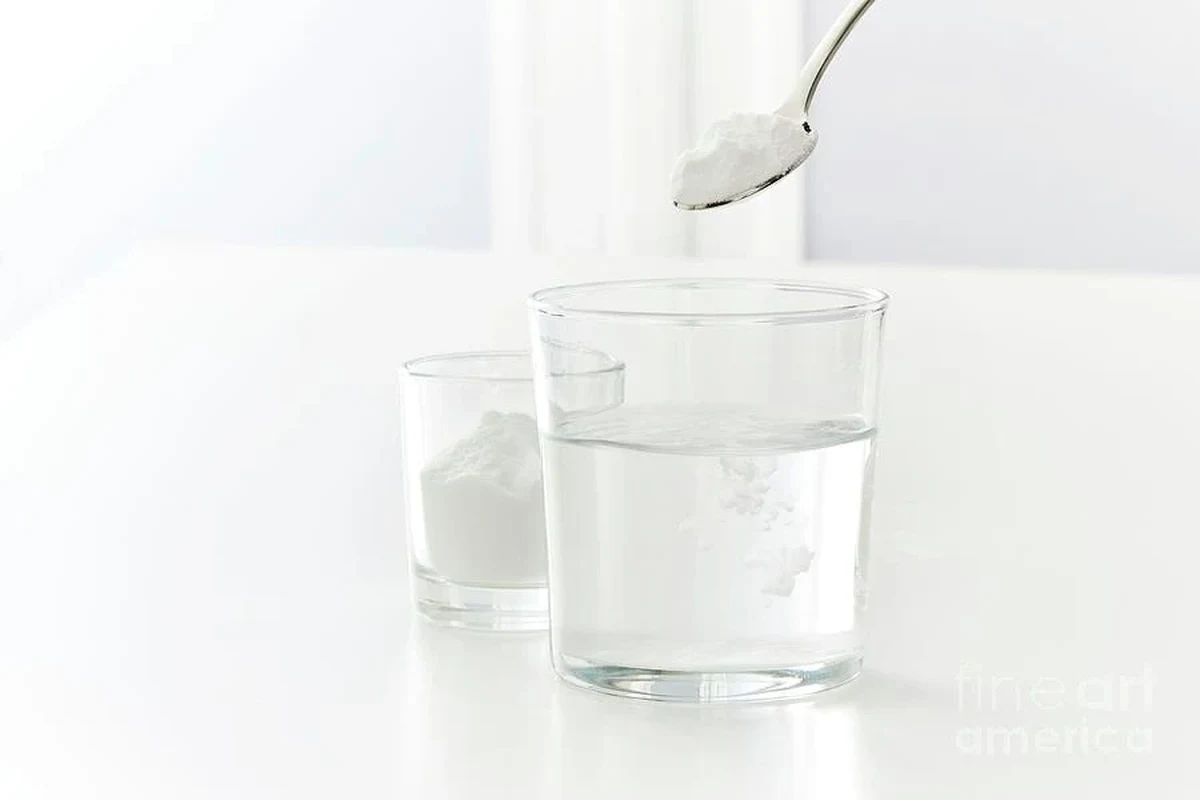
When baking soda is added to water, the solid particles break apart and spread through the liquid until they are no longer visible. That is what cooks usually mean by dissolve. It does not mean the ingredient disappears forever; it means it becomes evenly distributed in the water.
Why baking soda is classified as a soluble ingredient, not a truly disappearing one
Baking soda is sodium bicarbonate, and it is considered water-soluble. In plain kitchen terms, that means it can mix into water rather than stay as separate grains forever. If enough water is present and the mixture is stirred well, the powder will usually seem to vanish.
That said, “soluble” is not the same as “instant.” Some baking soda dissolves quickly, while some needs more stirring or warmer water. If the water is cold or the mixture is thick, you may still see specks for a short time.
How temperature, stirring, and particle size affect the speed of dissolution
Warm water usually helps baking soda dissolve faster than cold water. Stirring also matters because it moves fresh water across the powder and helps break up small clumps. Finer particles dissolve more easily than compacted or damp granules.
In a busy kitchen, this is why a quick stir in a cup of water looks very different from trying to mix the same powder into a thick batter. The more resistance the liquid offers, the slower the dissolve process tends to be.
Baking soda dissolves in water without needing acid first, but its baking power is only activated in a useful way when it later meets an acid in the recipe.
Does Baking Soda Dissolve in Water in Everyday Baking Use?
For everyday kitchen use, the short answer is yes. In a small amount of water, baking soda will usually dissolve well enough for baking or cleaning, especially if the liquid is warm and the mixture is stirred.
If you want a deeper look at how this ingredient behaves in mixed kitchen applications, our guide on baking soda and vinegar reaction shows what happens when it meets an acid.
What happens in cold, warm, and hot water
In cold water, baking soda still dissolves, but it may take longer and can leave temporary cloudiness or small particles. In warm water, it usually disperses more quickly and evenly. Hot water can speed things up further, though you generally do not need boiling water for ordinary kitchen use.
For baking, warm water is often enough if you are pre-dissolving it for a batter or cleaning mixture. For cleaning, the goal is usually full distribution rather than a precise chemistry test, so a thorough stir matters as much as the temperature.
Water quality can affect the look of a mixture. Hard water, very cold water, or a very small amount of water may make baking soda seem slower to dissolve even when it is still doing its job.
How much water is needed for a complete dissolve in typical kitchen measurements
There is no single universal kitchen measurement, because the amount of water needed depends on how much baking soda you are dissolving and what you plan to do with it. A teaspoon will dissolve more easily in a few tablespoons of water than in a thick paste with almost no free liquid.
As a practical rule, use enough water to let the powder move freely. If the mixture looks grainy after a minute of stirring, it usually needs either more water, more mixing, or both.
Practical examples from batter, dough, and cleaning mixtures
In batter, baking soda is often mixed dry with flour and other ingredients first, then hydrated by the wet ingredients during mixing. In dough, it may be blended in dry so it disperses evenly before the liquid is added. For cleaning mixtures, it is common to dissolve or partially dissolve it in water before applying it to a surface.
That difference matters because batter and dough are not the same as a simple glass of water. Thick mixtures slow down movement, so a powder can remain visible longer even if it is eventually incorporated.
What Baking Soda Changes in a Mixture Beyond Dissolving
Dissolving is only the first step. Once baking soda is spread through the liquid, it can react more evenly with acids in the recipe, which affects rise, flavor, and texture. That is why bakers pay attention to when and how it is added.
How dissolved baking soda reacts with acids in batters and doughs
Baking soda needs an acidic ingredient to create carbon dioxide gas in a recipe. Common acids include buttermilk, yogurt, lemon juice, vinegar, molasses, and natural cocoa that has not been heavily alkalized. When the soda is dissolved first, it can react more evenly once the acid is added.
If you are deciding between chemical leaveners, it helps to compare recipes carefully. Our article on using baking soda instead of baking powder safely explains why substitution is not always one-to-one.
Why full dissolution matters for even leavening and flavor
Even distribution helps prevent one part of the batter from reacting too soon while another part stays flat. A well-dissolved mixture tends to rise more evenly and can bake with a more consistent crumb. This is especially helpful in quick breads, cakes, and pancakes.
Full dissolution also helps reduce the chance that one bite tastes sharper or saltier than another. In baking, tiny differences in ingredient spread can show up more than many beginners expect.
Too much baking soda can leave an alkaline, soapy, or bitter taste. If a recipe already calls for a specific amount, do not increase it just because the batter looks weak or thin.
When undissolved granules can leave a bitter taste or uneven texture
If baking soda stays in clumps, those pockets may not react evenly. The result can be small bitter spots, a slightly gritty feel, or uneven browning. This is more likely in low-moisture batters and doughs, or when the powder is dumped into one spot without enough mixing.
In some recipes, a few visible specks are not a disaster, but they are a sign that the ingredient was not distributed as well as it could have been. That is one reason professional bakers often pay close attention to mixing order and ingredient temperature.
Common Reasons Baking Soda Seems Not to Dissolve
When baking soda seems stubborn, the problem is usually not true insolubility. More often, the issue is too little water, poor mixing, clumping, or an old container that has absorbed moisture.
Using too little water for the amount of powder
If you add a large amount of baking soda to just a spoonful of water, it may form a paste instead of a clear solution. That paste can look like the soda has not dissolved, when really it simply does not have enough liquid to spread out in.
The fix is simple: add a bit more water and stir again. In small kitchen tests, a little extra liquid often makes a bigger difference than people expect.
Adding baking soda to thick mixtures instead of first dissolving it
Thick cookie dough, muffin batter, and some savory mixtures do not let ingredients move around easily. If baking soda is added directly to a dense mixture, it can form small pockets before it is fully blended. Those pockets may be hard to see until the finished bake.
In those cases, many bakers prefer to whisk it with the dry ingredients first. That helps spread it out before the wet ingredients turn the mixture heavy.
Confusing clumping with true insolubility
Clumps often happen when baking soda has sat open in a humid kitchen or when it is added too quickly to water. A clump can be a group of tiny particles stuck together, not a sign that the ingredient cannot dissolve at all. Stirring usually breaks the clump apart.
If you also want to understand how freshness affects performance, see our guide on whether baking soda expires. Old product can still look normal while performing less reliably.
How expired or moisture-damaged baking soda can behave differently
Moisture-damaged baking soda may clump more, and very old product can be less dependable for baking. That does not always mean it will fail to dissolve, but it can make measuring and mixing less consistent. For baking, consistency matters because leavening depends on predictable reactions.
If the product smells off, feels hard and lumpy, or has been stored near steam, it is worth replacing. For food use, fresh, dry storage is the safer choice.
How to Dissolve Baking Soda Correctly in the Kitchen
The best method depends on your goal. For drinks, sauces, and cleaning mixes, pre-dissolving can help. For many batters and doughs, dry mixing is simpler and just as effective.
Recommended mixing method for small and large batches
For a small batch, place the measured baking soda in a bowl and add a small amount of water gradually while stirring. Keep stirring until the visible grains mostly disappear. If you are making a larger batch, whisk the soda into a larger volume of liquid so it can spread more easily.
Use the exact amount the recipe calls for. Baking soda is powerful, so small measuring errors can change flavor and lift.
Pour in a little water first, then stir. This helps prevent hard clumps from forming.
Mix until the solution looks uniform and grain-free, or as close as practical for your recipe.
Best water temperature and stirring approach for faster dissolving
Room-temperature or warm water is usually the easiest choice. Stirring with a spoon or whisk helps more than shaking alone, especially if the mixture is thick. If you are working with a recipe that depends on an immediate reaction, keep your timing tight after mixing.
For cleaning uses, this is where a related method can help. Our guide to cleaning ovens with baking soda and vinegar shows how mixing order affects spread and scrubbing power.
Measuring accurately for consistent results in baking and cleaning
Use level measuring spoons for baking, not heaping scoops. For cleaning, exact precision is less critical, but consistency still helps if you want repeatable results. If a recipe is sensitive, the brand and age of the baking soda can matter too.
- Check the recipe for whether the soda should be mixed dry or dissolved first
- Use fresh, dry baking soda with no hard clumps
- Match the water amount to the job, not just the ingredient
- Stir until the mixture looks even before moving to the next step
When Baking Soda Should Be Dissolved First and When It Shouldn’t
Not every recipe benefits from pre-dissolving. In some cases, it improves texture and evenness. In others, it adds an unnecessary step and can change the batter in ways you do not want.
Situations where pre-dissolving improves batter consistency
Pre-dissolving can help in smooth batters, drink mixes, thin sauces, and some cleaning applications. It is especially useful when you want the ingredient to spread quickly and evenly. This can reduce the chance of tiny clumps and visible specks.
It also helps when the recipe has a short mixing window. If the batter will be folded quickly and baked soon after, starting with a dissolved ingredient can improve distribution.
Recipes where dry mixing is the better choice
Many baking recipes work best when baking soda is whisked with the flour and other dry ingredients. That method spreads it through the batter without adding extra liquid. It is often the simplest choice for cookies, muffins, and quick breads.
Dry mixing also helps avoid over-thinning a recipe. Too much extra water can change gluten development, batter viscosity, and final texture.
Best for most cakes, muffins, cookies, and quick breads when the soda can be evenly blended with flour first.
Best for thin batters, liquid mixtures, and cleaning uses where fast, even spread matters more than dryness.
How professional bakers decide based on texture, timing, and reaction control
Professional bakers usually choose the method that gives the most control over reaction timing and texture. If the recipe depends on a fast acid-base reaction, they may mix and bake quickly. If the goal is even crumb and predictable browning, they often prioritize thorough dry distribution.
That same logic applies to home baking: use the method that best supports the recipe’s texture, not just the one that seems fastest.
Safety, Storage, and Mistakes to Avoid with Baking Soda and Water
Baking soda is common in kitchens, but it still deserves careful handling. Food use and cleaning use should be kept separate, and storage should protect the powder from moisture.
Do not reuse a container or spoon that has been used with cleaning chemicals for food ingredients. Keep food-grade baking soda separate from household cleaning mixes.
Safe handling for food use versus cleaning use
For food, use clean utensils and a dry container. For cleaning, label mixtures clearly and keep them away from ingredients, especially if they contain vinegar, hydrogen peroxide, or other household products. If you are unsure about a cleaning mixture, do not use it on food-contact surfaces unless it is fully rinsed according to the product instructions.
For more on household use, our article on baking soda in laundry benefits explains why the same ingredient can behave differently outside the oven.
Storage conditions that prevent moisture clumping and loss of performance
Store baking soda in a tightly closed container in a cool, dry place. Keep it away from steam, wet scoops, and open sinks. Moisture can cause clumps and make measuring less accurate, even if the product still looks usable.
If your kitchen is humid, check the container more often. A powder that feels hard or damp may not spread as evenly in a recipe.
Overuse, substitution errors, and other common beginner mistakes
One common mistake is using baking soda when baking powder was needed, or using too much soda to force a rise. That can create off flavors and poor texture. Another mistake is assuming that any fizzing means the recipe is balanced; fizz only shows that a reaction is happening, not that the amount is correct.
If a recipe calls for both an acid and baking soda, keep the amounts as written unless you understand the formula. Small changes can affect rise, browning, and taste.
- Use fresh baking soda and measure it carefully
- Stir thoroughly when dissolving it in water
- Match the method to the recipe’s texture and moisture level
- Adding extra soda to “fix” a flat batter
- Mixing food ingredients with cleaning tools
- Assuming clumps mean the ingredient cannot dissolve
Final Verdict: Does Baking Soda Dissolve in Water and Why It Matters
Baking soda does dissolve in water, and in normal kitchen use it is best described as a soluble ingredient that may need a little help from stirring, warmth, and enough liquid. It does not disappear by magic; it disperses into the water so it can mix more evenly.
Simple recap for home bakers, students, and kitchen testers
For home bakers, the main point is simple: baking soda usually dissolves well enough for kitchen use, but the method you choose affects the result. In thin liquids, it dissolves quickly. In thick batters or damp storage conditions, it may clump or appear slower.
Best-use guidance based on the goal: leavening, mixing, or cleaning
If your goal is leavening, follow the recipe and decide whether dry mixing or pre-dissolving gives the most even distribution. If your goal is mixing or cleaning, use enough water and stir until the powder is fully dispersed. The best choice depends on the recipe, the texture you want, and how fast the reaction needs to happen.
Baking soda does dissolve in water, and that matters because even dissolution helps it work more predictably in baking and cleaning. For the best results, use the right amount of liquid, stir well, and match the method to the task.
Frequently Asked Questions
Yes, but it may dissolve more slowly than in warm water. Stirring and using enough liquid help it disappear more evenly.
Sometimes. Thin batters and liquid mixtures may benefit from pre-dissolving, but many recipes work better when the soda is mixed with the dry ingredients first.
Clumping usually happens when there is too little water, too much powder, or moisture in the container. It is usually a mixing issue, not true insolubility.
It may still dissolve, but old or moisture-damaged baking soda can clump more and perform less reliably in baking. Fresh, dry product is the safer choice.
It can if too much is used or if it is not balanced with enough acid in the recipe. Accurate measuring helps prevent soapy or bitter flavors.
Only if it has stayed food-safe and uncontaminated. Keep food ingredients separate from cleaning mixtures and use clean utensils for baking.