
Fresh Yeast vs Dry Yeast: How to Choose, Convert, and Bake Better Bread

If you’ve ever stared at a recipe and wondered whether fresh yeast or dry yeast would give you the best loaf, you’re not alone. The short version: both can make excellent bread, but they behave a little differently in storage, mixing, and substitution.
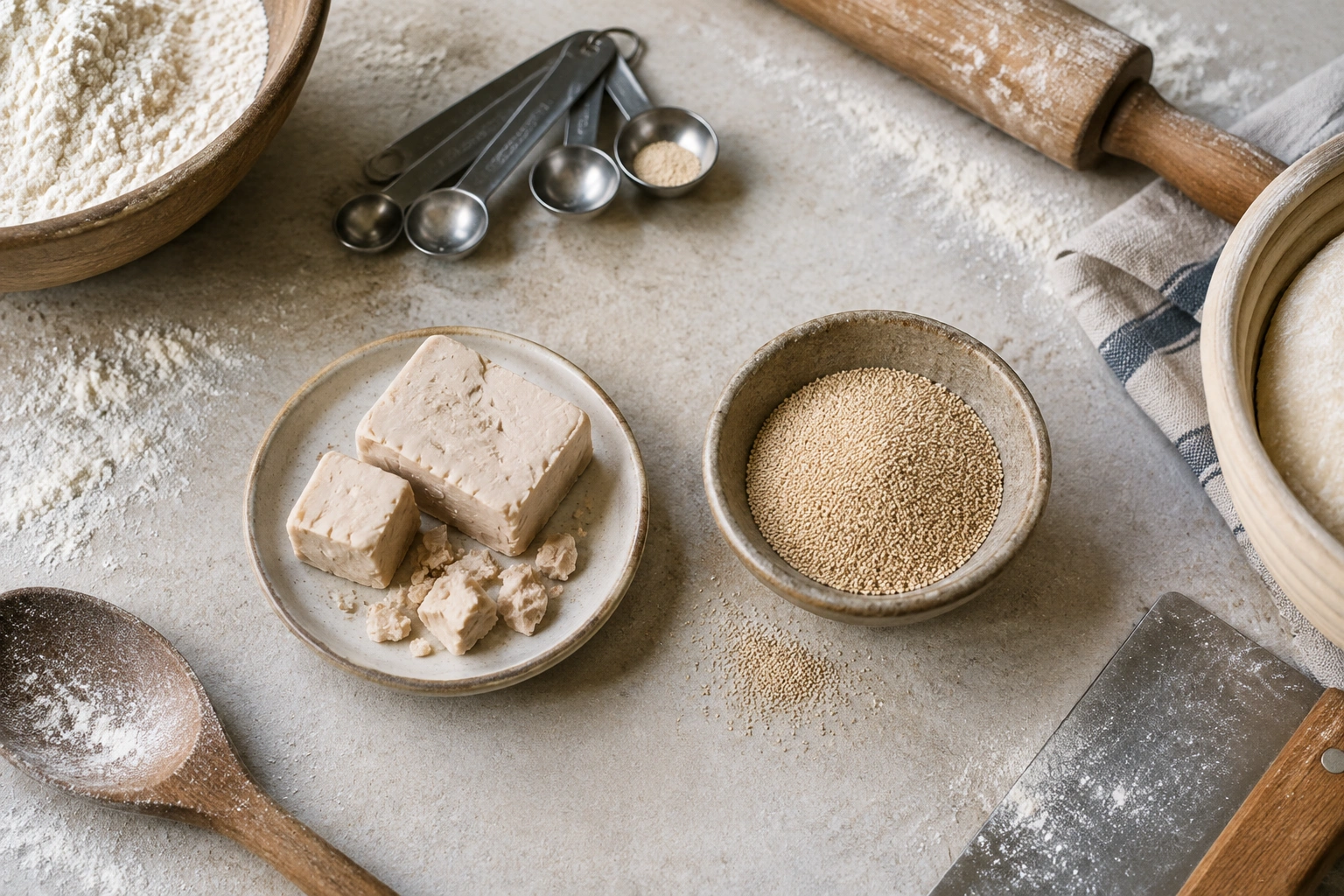
Fresh yeast is the softer, more perishable option. Dry yeast is the more convenient, shelf-stable one. In real baking, the “best” choice usually comes down to how often you bake, how precise you want to be, and whether your recipe was written for active dry yeast or instant yeast.
Here’s the practical truth from an artisan baker’s point of view: if you bake occasionally, dry yeast is usually the easier tool to keep on hand. If you bake frequently and want to work the way many professional bakeries do, fresh yeast can be a pleasure to use. The catch is that fresh yeast asks for more attention, while dry yeast asks for less.
Quick Answer: Fresh Yeast vs Dry Yeast
Fresh yeast and dry yeast both leaven bread, but they’re not interchangeable by weight.
- Fresh yeast is moist, soft, and highly perishable. It must be refrigerated and used quickly.
- Dry yeast is a broad category that includes active dry yeast and instant yeast.
- Active dry yeast usually benefits from rehydration before mixing.
- Instant yeast can usually go straight into the dough without proofing.
If you want the simplest everyday choice, dry yeast wins on convenience. If you want to follow a bakery-style workflow and you can use it quickly, fresh yeast is a perfectly good option.
For home bakers, the flavor difference is usually subtle. For weekly baking, it’s often not worth going out of your way to buy fresh yeast just for flavor alone.
Which Yeast Should You Choose?
- Occasional home baking: dry yeast, especially instant yeast
- Frequent baking: fresh yeast if you can use it quickly; otherwise dry yeast for ease
- Enriched doughs: either can work, but fresh yeast or instant yeast are both practical starting points
- Same-day bread: instant yeast is usually the simplest choice
- Cold fermentation: either works, but dry yeast is often easier to manage for long, slow schedules
What Fresh Yeast Is and How It Behaves in Dough
Fresh yeast is also called cake yeast or compressed yeast. It comes as a soft, crumbly block, usually sold refrigerated. Because it contains a lot of water, it’s more delicate than dry yeast and loses activity faster if it sits too long.
In dough, fresh yeast tends to disperse well and gives bakers a very direct feel for fermentation. Some professionals like that responsiveness, especially in formulas where they want a lively, predictable rise. That said, “better” is not automatic. The biggest advantage is not magical performance; it’s the way the yeast behaves in a bakery workflow when used fresh and handled correctly.
The trade-off is obvious: fresh yeast is less forgiving. If you buy more than you can use quickly, waste becomes part of the equation. That’s why it makes more sense for bakers who bake often or who have a recipe plan for the week.
What Dry Yeast Means: Active Dry vs Instant Yeast
“Dry yeast” is a broad term. In practice, it usually means one of two things:
- Active dry yeast
- Instant yeast
They are not identical.
Active dry yeast has larger granules and is commonly rehydrated before use. Instant yeast is finer and designed to mix directly into dough. That difference matters because it affects how you handle the yeast, how fast it starts working, and how you adapt a recipe.
If you want a deeper comparison of those two dry forms, our guide on active dry yeast vs instant yeast breaks down the handling differences in more detail.
Active Dry Yeast vs Instant Yeast in Practice
Here’s the simplest way to think about it:
- Active dry yeast: more old-school, often rehydrated first, slightly more hands-on
- Instant yeast: more convenient, usually mixed right in, good for streamlined baking
That doesn’t mean active dry yeast is outdated. It still works well. It just asks for one extra step more often than instant yeast.
Fresh Yeast vs Dry Yeast: Key Differences That Affect Baking
The differences that matter most are not abstract chemistry lessons. They’re the things that affect your loaf on baking day.
| Factor | Fresh Yeast | Active Dry Yeast | Instant Yeast |
|---|---|---|---|
| Moisture | High | Low | Lower |
| Shelf life | Short | Long | Long |
| Storage | Refrigerated | Cool, dry place | Cool, dry place |
| Best for | Frequent baking, bakery-style handling | General home baking | Fast, convenient mixing |
| Proofing needed | Not usually, but can be crumbled into liquid | Often yes | Usually no |
| Mix-in method | Can be dissolved or mixed into dough | Often rehydrated first | Usually added directly |
| Conversion from fresh | Baseline | About 3:1 fresh to active dry by weight is a useful general guide | About 3:1 fresh to instant dry by weight is a useful general guide |
A key point worth remembering: fresh yeast is not a 1:1 swap for dry yeast. Because fresh yeast contains much more water, you need more of it by weight to get similar leavening power.
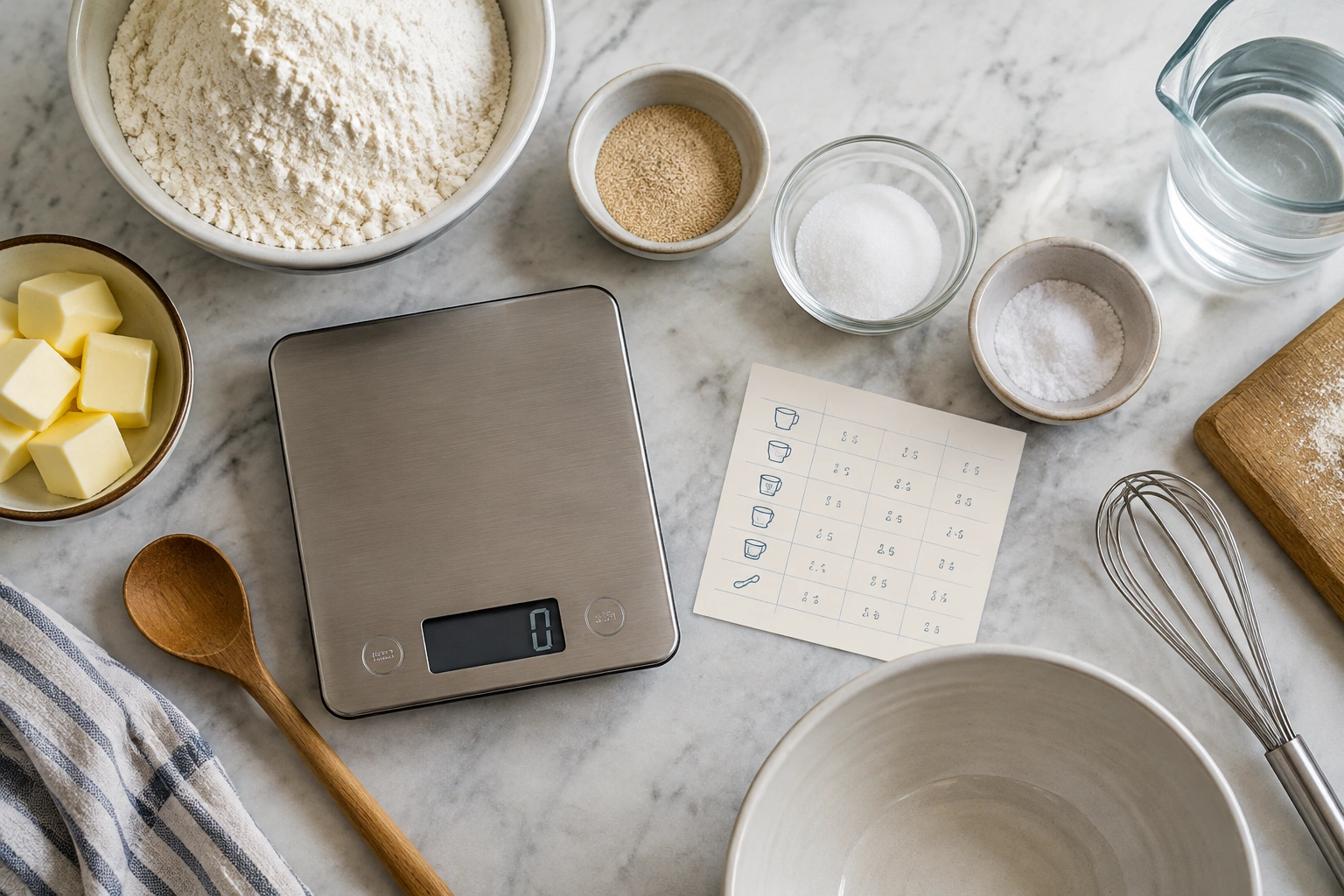
Conversion Ratios: How Much Fresh Yeast Equals Dry Yeast?
This is where many bakers get tripped up.
A reliable baking reference from King Arthur Baking suggests that when converting from fresh yeast to instant dry yeast, a useful starting point is multiplying the fresh quantity by 0.33. In plain language, that’s roughly a 3:1 ratio: use about one-third as much instant yeast as fresh yeast by weight. King Arthur Baking’s yeast guide is a useful reference point here, but actual conversion can vary a little by brand and recipe.
Simple Conversion Guide
- Fresh yeast to instant yeast: fresh weight × 0.33
- Fresh yeast to active dry yeast: use a similar general 3:1 starting point, then watch the dough
- Dry yeast to fresh yeast: dry weight × 3
Example Conversions
- 30 g fresh yeast → about 10 g instant yeast
- 15 g fresh yeast → about 5 g instant yeast
- 9 g instant yeast → about 27 g fresh yeast
These are practical starting points, not fixed rules. Manufacturer guidance can vary a little, and dough temperature, sugar content, and fermentation time all influence how the dough behaves.
A Better Way to Think About the Ratio
Fresh yeast is mostly water, while dry yeast is mostly yeast solids. That’s why the weight numbers look so different. The water content explains most of the conversion difference.
How to Substitute Fresh Yeast for Dry Yeast and Vice Versa
If you’re swapping yeast types, don’t just change the number and hope the rest sorts itself out. Think through the process.
Swapping Fresh Yeast for Instant Yeast
- Multiply the fresh yeast amount by about 0.33.
- Add the instant yeast directly to the flour or dry ingredients.
- Keep an eye on dough temperature and rise time.
- Expect the dough to behave a little differently if the recipe was written for fresh yeast.
Swapping Fresh Yeast for Active Dry Yeast
- Use about one-third the fresh yeast weight as a starting point for active dry yeast.
- If your method calls for proofing, rehydrate the active dry yeast first.
- Watch the dough rather than the clock alone.
Swapping Dry Yeast for Fresh Yeast
- Multiply the dry yeast weight by about 3.
- Crumble the fresh yeast into the liquid or blend it into the dough as your recipe directs.
- Check the dough earlier than you might expect, especially if the recipe was developed for instant yeast.
A Practical Trade-Off
When you swap yeast types, the biggest risk is not the math. It’s the rise schedule. A dough that was meant to ferment for a certain amount of time may move faster or slower once you change the yeast form.
Do You Need to Proof Yeast Before Using It?
Not always.
Fresh Yeast
Fresh yeast does not usually need the same proofing step as active dry yeast. Bakers often crumble it into liquid or mix it directly into the dough. Because it is already moist, it doesn’t need the same rehydration treatment.
Active Dry Yeast
Active dry yeast often benefits from proofing or rehydration. A practical reference from Modernist Cuisine notes that it can be reactivated in lukewarm water at about 40–43 °C / 104–109 °F. Water that is too hot or too cold can damage or kill the cells and reduce fermentation power. That temperature window matters more than many home bakers realize.
Instant Yeast
Instant yeast is designed for direct mixing. In most recipes, you can add it straight to the flour without pre-activating it.
What This Means in Real Baking
If your recipe says “proof the yeast,” it is usually written with active dry yeast in mind. If you’re using instant yeast, that step is often unnecessary. If you’re using fresh yeast, you can usually skip the proofing step unless the recipe specifically asks for it.
Tools, Materials, and Ingredients You’ll Need
You don’t need a complicated setup, but a few things make yeast baking much easier:
- Digital scale
- Mixing bowl
- Thermometer for water or dough temperature
- Flour, salt, water, and yeast
- Small bowl or cup for rehydrating active dry yeast if needed
- Clean spatula or spoon
- Container or proofing bowl for fermentation
A scale matters more than most beginners think. Because yeast is measured in small amounts, volume measurements can drift quickly. If you want to measure packets accurately or scale formulas up and down, our guide to how much yeast is in a packet is a useful companion.
Step-by-Step: Using Fresh Yeast or Dry Yeast in Bread Dough
1) Check the recipe’s yeast type
If the formula names active dry yeast, instant yeast, or fresh yeast, match it if you can. That gives you the least guesswork.
2) Measure by weight
Use a scale, especially when converting between fresh and dry yeast.
3) Decide whether to activate
- Fresh yeast: usually no separate activation step
- Active dry yeast: often rehydrate first
- Instant yeast: usually mix directly
4) Watch the water temperature
If you’re rehydrating active dry yeast, use lukewarm water, not hot water. Too much heat can reduce yeast activity.
5) Mix and knead as usual
Once the yeast is incorporated, proceed with the dough development method your recipe uses.
6) Judge the dough, not just the timer
Rise times can shift when you change yeast type. A dough may need more or less time depending on the yeast and the room temperature.
7) Bake when the dough is ready
Look for proper volume, elasticity, and the feel of the dough rather than relying on the clock alone.
How Yeast Choice Changes Rise Time, Fermentation, and Flavor
This is where the practical differences show up.
Rise Time
Fresh yeast is often praised for quick rising behavior in professional settings. That reputation is not baseless, but it can be overstated. In home baking, the bigger factor is often how fresh the yeast is, how warm the dough is, and whether the recipe was adjusted after the swap.
For example, if a dough written for fresh yeast normally proofs in about an hour, switching to instant yeast may not change the schedule dramatically if the amount is converted correctly. But if you use too much or too little, the same dough can move noticeably faster or slower.
Fermentation
If you switch from active dry to instant yeast, the dough may move a little faster because instant yeast is designed for direct use and disperses efficiently. If you switch from fresh yeast to dry yeast without changing the formula, the dough may lag or overproof depending on how much yeast you used and how the dough was handled.
A cold-fermented dough shows this clearly: a recipe that was written for fresh yeast may need a little more monitoring after you convert it to dry yeast, especially overnight. The dough may be ready sooner or later than expected depending on temperature and the exact yeast amount.
Flavor
The flavor difference between fresh and dry yeast is usually subtle in ordinary home baking. Some bakers feel fresh yeast gives a slightly fuller bread flavor, but the difference is typically small enough that it should not drive your decision unless you already have access to fresh yeast and know how to use it.
Dough Handling
Fresh yeast can feel more responsive and familiar in a bakery workflow. Dry yeast is easier to store and more forgiving for a home baker who bakes on weekends or in batches.
When to Choose Fresh Yeast vs Dry Yeast
Here’s the decision framework I’d use in a real kitchen.
Choose fresh yeast if:
- You bake often enough to use it quickly
- You want a more bakery-style workflow
- You already have a recipe developed for it
- You don’t mind refrigerated storage and shorter shelf life
Choose dry yeast if:
- You bake occasionally
- You want less waste
- You need a yeast that stores well
- You want the easiest path for most home bread recipes
Choose instant yeast if:
- You want speed and simplicity
- You don’t want to proof yeast separately
- You’re making same-day bread or a streamlined dough
Choose active dry yeast if:
- You want a common, reliable pantry yeast
- You don’t mind an extra rehydration step
- Your recipe was written for it
Common Mistakes When Swapping Yeast Types
-
Using a 1:1 substitution
Fresh yeast and dry yeast do not convert equally by weight. -
Ignoring the type of dry yeast
Active dry and instant yeast are not the same in the bowl. -
Skipping proofing when the recipe expects it
That can slow the dough or make you think the yeast failed. -
Using the wrong water temperature
Too hot can damage yeast; too cold can slow activation. -
Not adjusting rise time
A dough can be perfectly fine and still need a different schedule. -
Storing fresh yeast too long
Because it is perishable, fresh yeast can lose strength quickly.
Troubleshooting: Why Didn’t My Dough Rise Properly?
If your dough didn’t rise, don’t blame the yeast type too quickly. Check these first:
- Was the yeast fresh and within its usable period?
- Was fresh yeast refrigerated properly?
- Was active dry yeast rehydrated in the right temperature range?
- Was instant yeast accidentally treated like active dry yeast?
- Was the dough too cold?
- Was the liquid too hot?
- Was the salt added in a way that slowed the yeast?
- Was the dough underproofed simply because it needed more time?
A slow rise often comes from handling or temperature, not from the yeast form alone.
Storage and Shelf Life for Fresh Yeast and Dry Yeast
Fresh yeast must be refrigerated and used quickly. Bob’s Red Mill notes that because of its high moisture content, it may last around two weeks in some storage conditions before spoiling, though actual shelf life can vary with packaging and refrigeration. That short window is one reason many bakers avoid buying more than they need. Bob’s Red Mill’s yeast comparison is a useful storage reference.
A practical way to tell whether fresh yeast is still usable is to look for a clean, creamy appearance and a normal yeasty smell. If it smells sour, looks discolored, or feels unusually slimy or dry, it’s safer to discard it. If you’re unsure, a small test in dough is better than committing an entire recipe to questionable yeast.
Freezing fresh yeast is sometimes done, but it’s not the most reliable storage method. If you choose to freeze it, treat it as a practical backup rather than a guaranteed long-term solution, and expect that performance may vary after thawing.
Dry yeast is much more forgiving. It is shelf-stable, portable, and easier to portion. That makes it a better pantry staple for most home bakers.
Storage Rule of Thumb
- Fresh yeast: refrigerate, use quickly, discard if it smells off or looks discolored
- Dry yeast: store cool and dry, keep sealed well, avoid moisture and heat
If storage is your main concern, our article on how to store yeast so it stays fresh goes deeper into pantry, fridge, and freezer options.
Practical Examples and Recipe Swaps
Example 1: Sandwich Bread
A recipe calls for 12 g fresh yeast.
Use about 4 g instant yeast or a similar amount of active dry yeast as a starting point.
If the dough normally rises in 60 minutes with fresh yeast, check it earlier and later than usual the first time you bake it with dry yeast.
Example 2: Pizza Dough
A pizza formula written for 9 g instant yeast can be converted to about 27 g fresh yeast.
If you use fresh yeast, keep the dough cold-fermented as directed, but monitor the proof more closely because the timing may shift.
Example 3: Brioche
Enriched doughs like brioche can be sensitive to yeast handling because sugar, butter, and eggs all affect fermentation. If you swap yeast types here, be conservative with timing and watch the dough’s volume rather than assuming the clock will behave the same way.
When to Consult a Master Baker
If you’re working on a formula that is highly enriched, under a tight production schedule, or intended for a professional exam or bakery service, it can be worth asking a master baker or instructor to review your yeast choice and fermentation schedule. That’s especially true if you’re converting a formula that was developed around a specific yeast type and you need the result to be consistent.
FAQ: Fresh Yeast vs Dry Yeast
Is fresh yeast better than dry yeast?
Not automatically. Fresh yeast can be pleasant to work with, but dry yeast is usually easier to store and use at home.
Can I swap fresh yeast and dry yeast 1:1?
No. Fresh yeast is much wetter, so you usually need about three times as much fresh yeast by weight as dry yeast.
Do I need to proof instant yeast?
Usually no. Instant yeast is designed to be mixed directly into the dough.
Why is active dry yeast often rehydrated first?
Because it benefits from being reactivated in lukewarm water before it goes into the dough.
Does fresh yeast make bread taste better?
Some bakers think so, but the difference is usually small in home baking.
How should I store fresh yeast?
Keep it refrigerated and use it quickly. If it smells off or changes color or texture in an unusual way, discard it.
Which yeast is best for home bakers?
For most home bakers, dry yeast is the easiest and most practical choice. Instant yeast is especially convenient.
Can I use fresh yeast in a recipe written for dry yeast?
Yes, but convert the amount by weight and be ready to adjust rise time.
The bottom line is simple: fresh yeast vs dry yeast is less about “good” versus “bad” and more about workflow. Fresh yeast rewards a baker who uses it promptly and keeps a close eye on fermentation. Dry yeast rewards a baker who values convenience and flexibility. Once you understand the conversion ratio and the handling differences, either one can give you excellent bread.