
Why Bread Tastes Bland and How to Fix the Flavor in Your Next Loaf

If your bread looks beautifully risen but tastes flat, you are not imagining it. Bread can be technically well baked and still feel one-note on the palate. In most cases, the problem comes down to a formula that is under-seasoned, fermentation that was too rushed, or a bake that never built enough crust flavor.
The good news is that bland bread is usually fixable. You do not need a completely new recipe every time. You need a better diagnosis.
A loaf can be bland for different reasons, and the fix depends on which part of the process went off track. A lean sandwich loaf that lacks salt needs a different adjustment than a sourdough that fermented too quickly or an enriched dough that browned too lightly. Once you learn to read those clues, flavor troubleshooting becomes much easier.
Why Bread Tastes Bland: The Most Likely Causes
The most common reason bread tastes bland is simple: it was not seasoned enough. Salt does more than make bread taste salty. It sharpens wheat flavor, balances sweetness, and keeps the finished loaf from tasting dull. If salt is too low, the bread can taste soft and pleasant in texture but strangely empty in flavor.
The second big reason is rushed fermentation. Bread develops much of its aroma while yeast and bacteria are working in the dough. When the process is shortened too much, the loaf may still rise, but it often lacks the deeper, bready complexity people expect from bakery bread. That is why same-day bread can taste perfectly acceptable yet still seem flat beside a loaf that fermented longer.
Two other causes are easy to overlook:
- Weak flour flavor: all-purpose flour can produce good bread, but it often tastes milder than a stronger bread flour.
- Pale crust: even if the crumb is baked through, a light crust reduces perceived flavor because browning creates toasted, nutty notes.
For a deeper look at crust development, see our guide on bread crust too hard if your loaves are browning unevenly or baking too aggressively.
What You’ll Need to Diagnose and Fix the Flavor
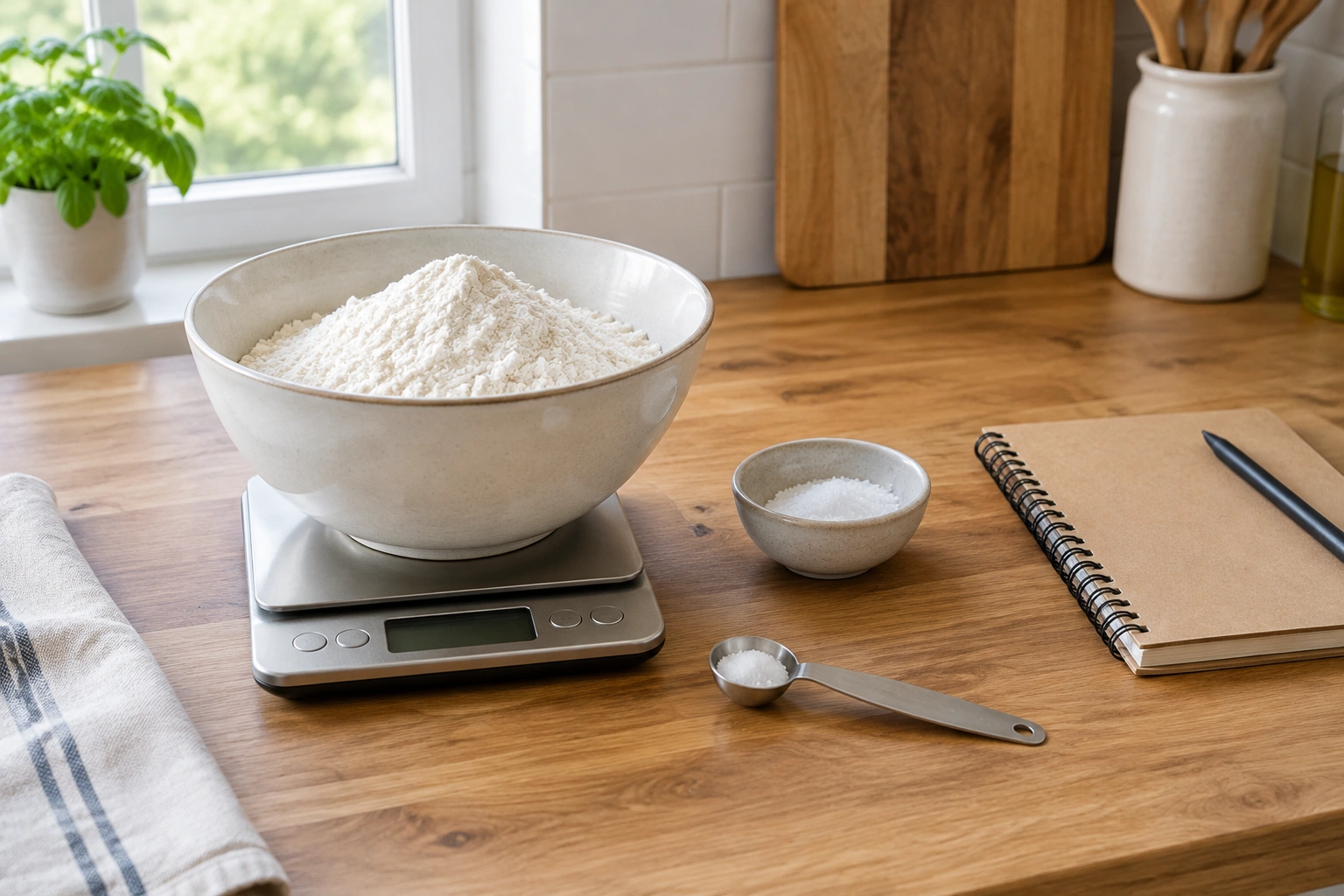
You do not need special equipment, but a few basics make diagnosis much more accurate:
- A digital scale for measuring salt, flour, water, and yeast by weight
- Your full formula, including any sugar, butter, milk, or preferment
- The flour bag or label, so you can identify flour type and protein level
- A thermometer, helpful for checking dough and oven conditions
- A notebook or phone notes app to record what changed from one bake to the next
If you want to improve flavor with less guesswork, baker’s percentages help. They let you compare salt, yeast, and hydration from one formula to another. Hydration also affects how quickly dough ferments, how extensible it feels, and how open the crumb may be, which can change how expressive the flavor seems in the finished loaf. Our article on bread dough hydration can help if the dough feels too tight or too slack and you want to understand how water affects both handling and flavor.
How to Tell Whether the Problem Is the Recipe or the Process
Use the loaf itself as evidence. The texture, aroma, and crust usually tell you where to look first.
| What you notice | Likely cause | Best next move |
|---|---|---|
| Bread rises well, slices cleanly, but tastes flat | Too little salt or a simple formula | Increase salt slightly or add a preferment next time |
| Bread smells yeasty but tastes bland | Rushed fermentation or underproofing | Slow the process and give the dough more time |
| Bread tastes bland and also feels dense or tight | Underproofing, rushed fermentation, or too much yeast | Slow the process and reduce yeast if needed |
| Bread has a gummy crumb and weak flavor | Underbaked interior, underproofing, or both | Check doneness and extend fermentation next time |
| Bread smells nice but tastes weak | Flour may be mild, or crust is too pale | Switch flour or bake darker |
| Bread tastes a little sweet but still one-dimensional | Enrichment is masking rather than building flavor | Rebalance salt and fermentation, not just sugar |
| Bread has good crumb but little crust flavor | Oven too cool, bake too short, or too little browning | Extend bake slightly or raise finishing heat |
The key decision is this: if the loaf looks fine structurally but tastes bland, the formula is usually the first suspect. If the loaf also feels underdeveloped, the process deserves more scrutiny.
Step 1: Check the Salt Level First
Salt is the fastest flavor correction to evaluate because it affects the loaf at two levels: taste and dough behavior. Too little salt makes bread taste flat. It also lets fermentation move faster, which can shorten flavor development and weaken dough control.
A practical target for many lean breads is around 1.8% to 2.2% salt based on flour weight. That range is common enough to be a useful starting point, but the exact sweet spot depends on your style of bread and personal taste. If your formula is below that range, the loaf may taste under-seasoned even if everything else is technically correct.
Here is how to troubleshoot it:
- Check the formula by weight, not by teaspoons.
- Compare the salt to the flour weight.
- If the bread tasted flat, increase salt slightly next time, not dramatically.
- Taste the dough at the mixing stage if your process allows it; it should not taste aggressively salty, but it should not taste dull either.
Do not overcorrect. Too much salt can slow fermentation and make the bread taste harsh. The goal is not a salty loaf; it is a loaf that tastes complete.
Step 2: Extend Fermentation for More Bread Flavor
If salt is adequate, the next thing to examine is fermentation time. Bread often gains flavor as it ferments because yeast activity and enzymatic changes create more aroma and complexity. When dough is rushed, you can get volume without much depth.
A short bulk fermentation can be perfectly workable, especially for a weekday loaf. But if you want more bakery-style flavor, give the dough more time before shaping and proofing. A properly fermented dough should feel lighter and more aerated, show visible expansion, and still have enough strength to hold shape without collapsing. Even a modest extension can help, as long as the dough is still strong enough to handle.
A useful rule of thumb: if the loaf rises quickly but tastes plain, try a slower schedule before changing the whole formula. That may mean:
- using less yeast,
- fermenting at a slightly cooler room temperature,
- or allowing a longer bulk rise before shaping.
The trade-off is time and predictability. Longer fermentation can improve flavor, but it also requires more attention. If you push it too far, the dough can lose strength and overproof. Signs that extra fermentation is helping include better aroma, more extensibility, and a dough that feels alive but still structured. Signs that it is going too far include slackness, a fragile surface, or a loaf that rises and then starts to deflate.
Step 3: Improve the Flour and Formula Balance
Sometimes bland bread is not a process failure at all. It is a formula that is too plain for the flavor you want.
Bread flour vs all-purpose flour
Bread flour often gives a stronger wheat character and a chewier crumb. All-purpose flour can make fine bread, but the flavor may seem milder. If your loaf consistently tastes thin even when the fermentation is good, try bread flour for the next bake and compare.
Freshness matters
Flour that has sat around for a long time can lose some of its liveliness. It will still bake bread, but the flavor may be less robust. If your flour has been open for a while, freshness may be part of the issue.
Hydration changes flavor perception
Higher hydration can support better fermentation and a more open crumb, which often makes flavor seem more expressive. But that is a baking guideline, not a guarantee, and there is a trade-off: wetter doughs can be harder to handle, especially for newer bakers. If you are still developing dough-handling confidence, make only small hydration changes at a time.
For a detailed breakdown of how water affects dough feel and crumb, our guide to bread dough hydration will help you decide whether your formula is too dry, too wet, or simply unbalanced.
Step 4: Use Preferments or Sourdough for More Complexity
If you want bread with more depth, a preferment is one of the most reliable upgrades. Preferments such as poolish, biga, or levain give part of the dough extra time to ferment before the final mix. That extra time can build aroma and complexity that straight dough often lacks.
Sourdough goes even further because it adds acidity along with fermentation flavor. That tang is not just a “sour” note; it can make the bread taste fuller and more layered. Some bakers prefer the cleaner, milder flavor of straight yeast bread, but if your goal is a more bakery-style loaf, a preferment is often the better choice.
The trade-off is control. Preferments and sourdough add flavor, but they also add variables. Temperature, ripeness, and timing matter more. If you want consistency first and complexity second, begin with a simple preferment before moving to fully sourdough-based bread.
Step 5: Adjust Enrichments for Richer Flavor
Butter, milk, and sugar can make bread taste richer, softer, and more rounded. That is why enriched doughs often feel more indulgent than lean doughs. A milk bread or sandwich loaf may taste delicious even with less crust intensity because the formula itself is designed for softness and mild sweetness.
But enrichment changes the style of bread. More fat and sugar can soften the crumb and reduce the crisp, toasty notes that come from a lean loaf. If you add too much enrichment hoping to “fix” bland bread, you may simply hide the problem instead of solving it.
Use enrichment when you want a richer loaf, not as a substitute for proper seasoning and fermentation. A small amount of butter or milk can deepen flavor, but salt and fermentation still do the heavy lifting.
Step 6: Bake for Better Crust Flavor
A well-browned crust can make a huge difference in how flavorful bread seems. Browning creates toasted, nutty aromas through the Maillard reaction, which is one reason bakery bread often tastes more complex than a pale homemade loaf.
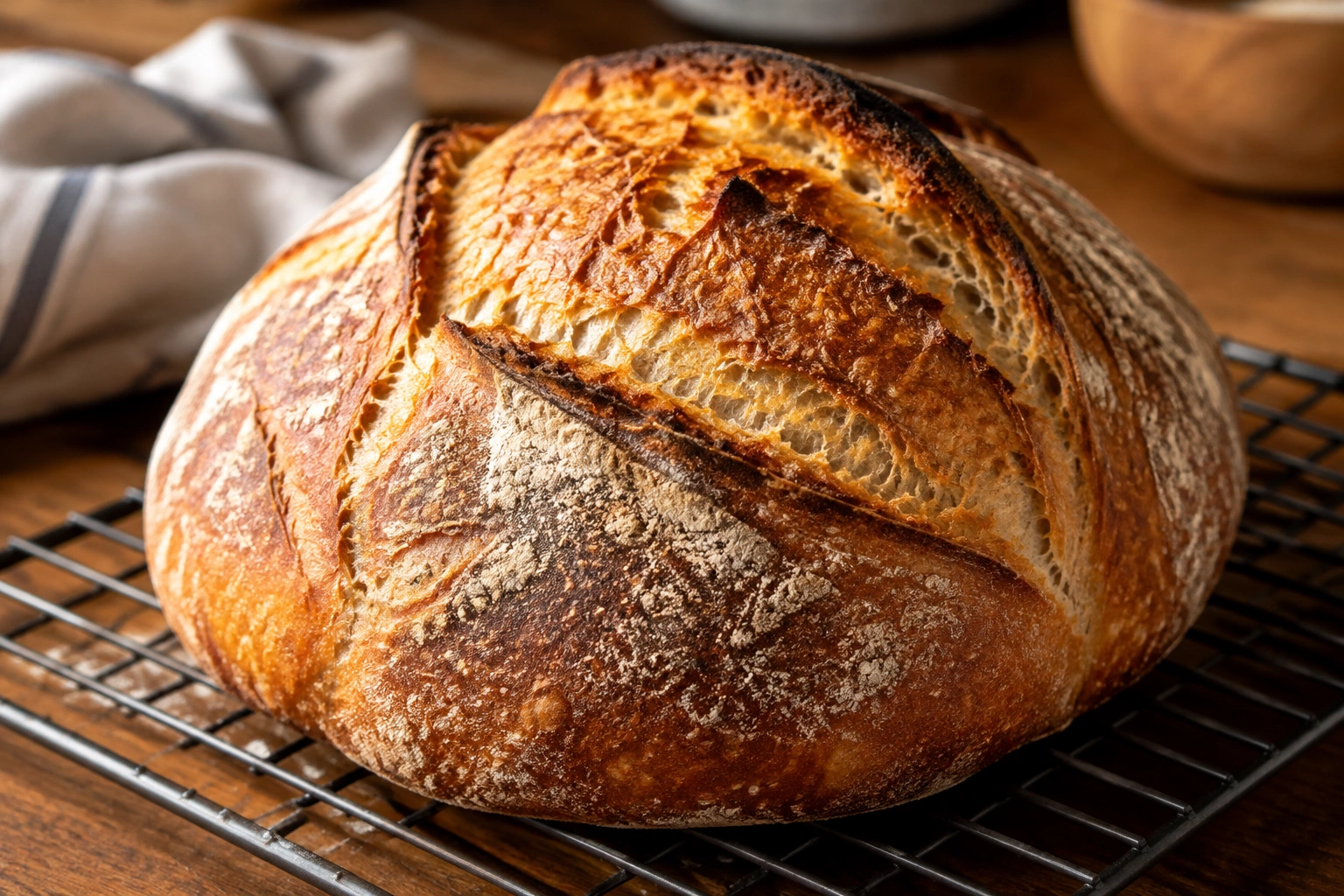
If your bread tastes bland but the crumb seems fine, check the bake:
- Was the oven fully preheated?
- Did the loaf bake long enough to color deeply?
- Was the heat too low for too long?
A pale loaf can taste underdeveloped even if it is technically cooked through. On the other hand, overbaking can dry the bread out and flatten flavor, so the goal is not maximum darkness. It is a balanced, well-browned crust with a properly baked interior.
Common Mistakes That Make Bread Taste Flat
A few patterns show up again and again when bread lacks flavor:
- Under-salting the dough
- Rushing bulk fermentation or proofing
- Using too much yeast to save time
- Choosing a very mild flour and never adjusting the formula
- Baking too lightly, so the crust never develops depth
- Assuming a good-looking loaf automatically tastes good
That last one is especially common. Good volume is only part of the story. Bread flavor depends on seasoning, fermentation, flour choice, and browning working together.
Troubleshooting by Bread Type
Lean sandwich bread
If your sandwich loaf tastes bland, the first suspects are salt and fermentation. Lean doughs have fewer built-in flavor boosters, so they rely heavily on process. Try a slightly longer rise and compare it to your usual timeline. If the loaf is still flat, increase salt within a sensible range rather than adding sugar just to force flavor.
Sourdough
If sourdough tastes bland, the starter may be active but not giving enough flavor development. That can happen when fermentation is too short or the dough is baked too lightly. Sourdough should usually bring more complexity than straight dough, so if it does not, look at timing and crust color before changing the starter itself.
Enriched dough
If milk bread or brioche tastes bland, the issue may be balance rather than intensity. Enriched dough should taste rich, but it still needs enough salt and proper fermentation to avoid tasting sweet and one-dimensional. If the loaf is soft but dull, the formula may need more seasoning or a longer rise.
Next-Bake Flavor Improvement Plan
If you want a practical plan for the next loaf, make only a few changes at once:
- Confirm salt by weight and move toward a more balanced level if needed.
- Give the dough more fermentation time rather than adding more yeast.
- Bake to better crust color so the loaf develops more aroma.
- If flavor is still thin, test a preferment or switch to bread flour on the next batch.
Keep notes on what changed and what the loaf tasted like. That way, you are not guessing. You are building a repeatable flavor profile.
For home bakers and culinary students alike, that is the real breakthrough: bland bread is usually a signal that one part of the formula or process needs more attention.
FAQs
Why does bread taste bland even when it looks baked properly?
Because appearance and flavor do not always develop at the same pace. A loaf can rise well and still taste flat if it was under-salted, fermented too quickly, or baked with too little browning.
Can underproofing or overproofing make bread taste flat?
Yes. Underproofed dough often tastes underdeveloped and tight, while overproofed dough can lose strength and taste less vibrant. Both can reduce the bread’s overall flavor impression.
Does flour choice affect bread flavor?
It can. Bread flour often gives a stronger wheat character than all-purpose flour, which may taste milder. Fresh flour also tends to give a more lively result than flour that has been open too long.
Will adding more sugar fix bland bread?
Not usually. Sugar can make bread taste sweeter or richer, but it does not replace salt or fermentation. Too much sugar can also shift the bread into a different style entirely.
What is the fastest way to make bread taste better?
For the next bake, adjust salt first, then give the dough a longer fermentation window, and bake a little darker if the crust is pale. Those three changes often make the biggest difference without rewriting the recipe.
Is sourdough always more flavorful than yeast bread?
Not always, but it often has more complexity because of the extra fermentation and acidity. A well-made straight dough can still taste excellent if it is properly seasoned and fermented.
Should I add more butter or milk for better flavor?
Only if you want a richer, softer style of bread. Enrichment can improve richness, but it changes the loaf’s character and should not be used as the only fix for bland flavor.
When should I change the recipe instead of the process?
If you have already improved salt, fermentation, and bake color, but the bread still tastes weak, the formula may be too plain for your goal. That is when changing flour, adding a preferment, or moving to sourdough becomes worthwhile.
When to Consult a Master Baker
If your bread tastes bland after several controlled tests, a master baker can help you identify whether the issue is formula balance, fermentation timing, or oven behavior. That kind of outside feedback is especially useful when you are making bread professionally or training for consistent results.