Baking soda paste can help loosen armpit stains by lifting deodorant buildup and reducing odor. It works best on fresh or moderate stains and needs careful testing on delicate or dark fabrics.
Baking soda paste for armpit stains can help loosen deodorant buildup, absorb odor, and reduce the dull yellowing that often shows up under the arms. It is not magic, but for many everyday laundry stains it is a practical first step before you reach for a stronger treatment.
- Best first step: Use baking soda paste for localized underarm residue and light yellowing.
- Safe ratio: Start with about 3 parts baking soda to 1 part water for a thick.
- Fabric matters: White cotton is easiest; delicates and synthetics need gentler handling.
- Avoid heat: Do not dry the garment until the stain is fully gone.
What Baking Soda Paste for Armpit Stains Actually Does to Fabric and Odor
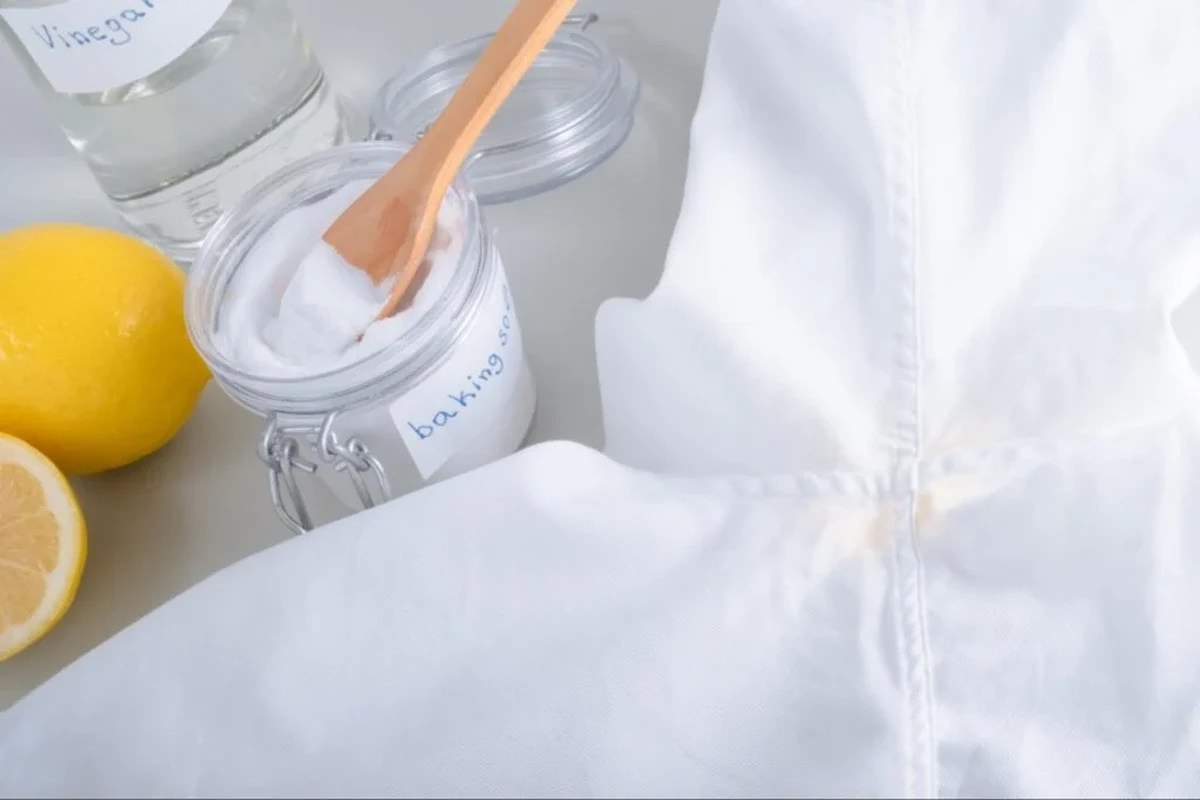
Baking soda works as a mild abrasive and a gentle deodorizer. In laundry, that means it can help lift residue sitting on the surface of the fibers, especially where sweat, body oils, and deodorant ingredients collect in the underarm area. If you want a broader laundry strategy, our guide to baking soda in laundry benefits explains why it shows up so often in wash routines.
How baking soda targets sweat residue, deodorant buildup, and yellowing
Underarm stains are usually a mix of sweat proteins, salts, skin oils, and product residue. Baking soda helps by changing the surface conditions of the stain and giving you a soft scrubbing paste that can break up that film without the harshness of aggressive rubbing. It is especially useful when the stain looks chalky, waxy, or slightly stiff from repeated deodorant use.
Yellow armpit discoloration often comes from a reaction between sweat, body oils, and ingredients in deodorant or antiperspirant, not from sweat alone.
When a paste works better than a soak or laundry booster
A paste is best when the stain is concentrated in one area and you want direct contact. It gives you control over where the treatment goes, which matters on collars, underarms, and seams. A soak or booster may be better for a full garment with several stained zones, but a paste is usually the smarter choice for spot treatment on shirts and uniforms.
- Targets the exact stain area
- Easy to make with pantry ingredients
- Gentler than many harsh stain removers
- May not remove deep-set yellowing in one round
- Can leave residue if not rinsed well
- Not ideal for all delicate fabrics
Ingredients and Ratios That Make the Paste Effective in 2026
The basic formula has not changed much: baking soda plus a small amount of liquid to make a spreadable paste. The key is consistency. Too dry and it will fall off the fabric; too wet and it behaves more like a rinse than a spot treatment.
Best baking soda-to-water consistency for spot treatment
Start with about 3 parts baking soda to 1 part water, then adjust until you get a thick, toothpaste-like paste. You want it to cling to the underarm area without running. If the fabric is very absorbent, a slightly thicker paste can stay in place better, while smoother fabrics may do better with a looser mix that spreads evenly.
Optional add-ins: hydrogen peroxide, dish soap, or vinegar—and when to avoid them
Some people add a small amount of hydrogen peroxide for white cottons because it can help with visible yellowing. Dish soap may help cut oily residue, especially if the underarm area feels slick or waxy. For a fuller breakdown of that combination, see our article on hydrogen peroxide and baking soda uses.
Vinegar is different. It can help with some odors and mineral residue, but mixing vinegar and baking soda creates a fizzing reaction that mostly neutralizes both ingredients once the bubbling settles. If you want to understand that reaction better, read baking soda and vinegar reaction explained simply. For stain treatment, that means vinegar is usually better used separately, not in the same paste.
Do not mix random stain removers together. Never combine baking soda with bleach or other strong cleaners unless the product label specifically says it is safe. If you are treating colored clothing, always test first because additives like hydrogen peroxide can lighten fabric.
Why fabric type changes the ideal formula
White cotton usually tolerates a firmer paste and a little more working time. Synthetics, athletic fabrics, and dark garments can show residue or texture changes more easily, so a lighter touch is safer. Delicate blends may also snag if you scrub too hard, which can make the stain area look worn even after the stain lifts.
Step-by-Step Method for Treating Armpit Stains Without Damaging Clothes
The most reliable results come from patience, not force. Think of this as a controlled pre-treatment, similar to how a baker adjusts hydration little by little instead of dumping in extra liquid all at once.
Pre-check: fabric care label, colorfastness, and stain age
Before you start, check the care label. If the garment says dry clean only, or if it contains silk, wool, acetate, or another delicate fiber, treat it cautiously and consider professional cleaning. For washable items, spot-test the paste on an inside seam first, especially on dark or bright colors.
- Read the care label
- Test colorfastness on an inside seam
- Check whether the stain is fresh or old
- Confirm the garment is washable
How to apply, dwell, and gently work the paste into the underarm area
Spread the paste over the stained underarm area so it covers the yellowed or gray buildup without clumping. A thin, even layer is easier to rinse out later.
Allow the paste to rest for about 15 to 30 minutes for routine stains. For older buildup, a longer dwell may help, but do not let it dry into a hard crust on delicate fabric.
Use your fingers, a soft brush, or a clean cloth to lightly massage the paste into the fibers. Use small, circular motions rather than aggressive scrubbing so you do not rough up the weave.
If you are treating clothing that was recently worn, make sure the fabric is dry and cool before you start. Wet fabric can spread stain residue, and heavy scrubbing on damp delicate material can distort the fibers.
Rinsing and washing after treatment for best results
Rinse the paste out thoroughly with cool or lukewarm water. Then wash the garment according to the care label, using your usual detergent. If the stain is still visible, repeat the treatment before drying; heat from a dryer can set residue and make later removal harder.
If you are trying to prevent the same problem from building up in laundry, it can also help to review your regular wash routine. Our article on baking soda to laundry detergent benefits covers where baking soda fits best in a load, not just as a spot treatment.
Common Mistakes That Make Armpit Stains Harder to Remove
Most failed stain attempts come from using too much force or letting the product sit in the wrong way. Underarm stains are stubborn because they sit in a high-friction area, so the fabric can already be stressed before you even treat it.
Using too much abrasion on delicates and dark fabrics
A stiff brush can lift fibers on knits, dark tees, and performance fabrics. That may make the stain look lighter at first, but it can leave a fuzzy patch or a faded ring around the treated area. A soft cloth or gentle fingertip pressure is usually enough.
Letting paste dry too long or setting stains with heat
Once a paste dries hard, it can cling to the fibers and become harder to rinse away. That leftover residue may look like fresh stain. Also avoid the dryer until you are sure the stain is gone, because heat can lock in discoloration just as it can set many food stains into fabric.
Mixing baking soda with the wrong stain-fighting ingredients
It is tempting to combine everything at once, but that can reduce effectiveness or damage the garment. Baking soda does not need to be paired with vinegar in the same paste for this job, and stronger cleaners should only be used according to label directions. If you are dealing with a stain caused by deodorant itself, our guide to remove baking soda deodorant stains fast may help you separate product residue from true sweat discoloration.
What Types of Armpit Stains Respond Best—and Which Need a Different Approach
Baking soda paste is best for light to moderate buildup, especially when the stain is still mostly on the surface. Once discoloration has changed the fiber itself, you may need a stronger or different treatment.
Fresh sweat marks versus long-set yellow stains
Fresh sweat marks usually respond well because the residue has not had time to bond deeply to the fibers. Long-set yellow stains are harder because repeated wear, washing, and heat can make the discoloration more permanent-looking. For those older stains, a paste can still help, but expect improvement rather than a perfect reset.
Deodorant buildup, body oils, and protein-based residue
Underarm stains are rarely one thing. Deodorant buildup often feels waxy or chalky, body oils can make the area look gray, and sweat proteins can darken or yellow with age. Baking soda helps most when the problem is surface residue, but enzyme-based laundry products may work better when protein is the main issue.
If a shirt smells clean but still shows a shadow under the arms, the issue may be residue in the fibers rather than active odor. That is a sign to pre-treat before the next wash instead of simply adding more detergent.
When white cotton, athletic wear, and synthetics need separate treatment
White cotton is the easiest place to start because it is usually more forgiving. Athletic wear and synthetics need more caution because they can trap odor in the weave and sometimes hold on to product buildup differently. If you are cleaning workout gear, avoid harsh scrubbing and follow the garment label closely so you do not damage stretch fibers.
For other odor-heavy items, you may also find our article on baking soda for smoke odors useful, since the same deodorizing principle applies in a different context.
Safety, Fabric Care, and Storage Tips for Repeated Use
Any stain treatment is only useful if it protects the garment. That means testing first, using the mildest effective approach, and storing mixed paste correctly if you plan to use it again soon.
Spot-testing on colored garments and delicate blends
Always test on an inside seam or hem before treating visible areas. Look for color change, texture change, or any roughness after the fabric dries. If the test spot looks dull or lighter, switch to a gentler method or use a product made for that fabric type.
Skin irritation precautions when treating worn clothing
Do not apply stain paste to clothing that is still damp with sweat and then wear it. Baking soda is mild, but some people have sensitive skin, and leftover residue can irritate the underarm area. Wash the garment fully before wearing it again, especially if you used hydrogen peroxide or dish soap in the treatment.
How to store a mixed paste for short-term use, and when to make it fresh
You can mix only what you need for one treatment, and that is usually the safest choice. If you do store a paste for a short time, keep it covered and use it quickly, since the texture can dry out or separate. For best consistency, make a fresh batch each time you treat a new stain.
The paste dries out before you can rinse it, leaving white residue behind.
Use less paste, shorten the dwell time, and rinse with enough water to clear the fibers completely.
Best Use Cases, Limitations, and When to Switch to a Stronger Stain Solution
Baking soda paste is a good first-line option, not a cure-all. It shines when the stain is recent, localized, and mostly made of residue rather than deep discoloration.
Everyday laundry stains versus deep-set underarm discoloration
For everyday stains, baking soda paste is often enough to improve appearance and odor. For deep-set underarm discoloration, repeated treatments may help, but the fabric may need a more targeted solution. If the stain has survived several wash cycles and dryer runs, expect slower progress.
Situations where oxygen bleach or enzyme treatment may outperform baking soda
Oxygen bleach is often a better choice for white or colorfast washable fabrics with stubborn yellowing. Enzyme treatments can be more effective when sweat proteins and body oils are the main issue. As with any laundry product, follow the label and avoid guessing on delicate fabrics or garments with special finishes.
- Use baking soda paste for fresh to moderate armpit stains
- Repeat before drying if the stain remains
- Match the method to the fabric care label
- Scrubbing hard on dark or delicate fabrics
- Drying before the stain is gone
- Mixing cleaners without checking safety directions
Practical examples for shirts, uniforms, and workout clothes
For cotton dress shirts, baking soda paste is a solid first try because the underarm area usually needs a focused spot treatment. For school or work uniforms, it can help keep the garment looking presentable between washes, especially if the stain is still new. For workout clothes, use a lighter hand and consider a stronger odor-focused laundry product if the fabric keeps holding onto smell after treatment.
Final Verdict: Is Baking Soda Paste for Armpit Stains Worth Trying?
Yes, baking soda paste for armpit stains is worth trying when you want a simple, low-cost spot treatment that can reduce odor and loosen buildup. It is most effective on fresh or moderate stains, while older yellowing may need repeat treatment or a stronger laundry product.
What results to expect after one treatment versus repeated applications
After one treatment, you may see lighter discoloration, less odor, and a cleaner-looking underarm area. Repeated applications can improve results on stubborn stains, but there is a point where the fabric itself has changed and a different method becomes the better choice. If the garment is expensive, delicate, or heavily stained, treat it cautiously rather than forcing the issue.
How Baking Pastry Schools Editorial Team recommends choosing the right stain method
Our editorial recommendation is simple: start with the mildest method that matches the fabric, then escalate only if needed. Baking soda paste is a smart first step for many everyday clothes, especially when you want a practical home solution before moving to oxygen bleach or enzyme-based cleaning. If you keep the care label in mind and avoid heat until the stain is gone, you give yourself the best chance of saving the garment.
Baking soda paste is a useful first-line treatment for underarm stains because it targets residue, odor, and light discoloration without much fuss. For older, deeper stains, pair it with careful laundry habits or switch to a stronger fabric-safe cleaner.
Frequently Asked Questions
It should be thick enough to cling to the underarm area without running. A toothpaste-like texture usually works best for spot treatment.
Yes, but spot-test first on an inside seam because some fabrics can look dull or lighten slightly. Be extra careful with dark colors and delicate blends.
Usually no. Vinegar and baking soda react with each other, which reduces the cleaning power of the paste for this job.
Heat from the dryer can set residue into the fibers, making stains more noticeable. Repeated wear without pre-treatment can also build up deodorant and body oils.
Try repeating the treatment before drying, or move to oxygen bleach or an enzyme cleaner if the garment is washable and the label allows it. Deep-set yellowing may need a stronger method.
It can be used carefully, but athletic fabrics often need a gentler touch. Always check the care label and avoid harsh scrubbing that could damage stretch fibers.
