
Baking Soda and Ant Killer Tricks That Actually Work

Baking soda can help with ants only in small, dry, well-placed bait setups. For larger or persistent infestations, a labeled ant bait or pest professional is usually more effective.
Baking soda gets mentioned a lot in ant control, but it is not a magic solution. In some setups it can help as part of a bait strategy, yet it works best when you understand how ants forage and where the colony is hiding.
- Best use: Small, dry bait placements near active ant trails.
- Main limit: It is not a reliable instant-kill solution.
- Success factor: Ant species, moisture, and placement matter more than the powder itself.
- Safety point: Keep bait away from food prep areas, pets, and children.
Baking Soda and Ant Killer: What It Can and Can’t Do in Real-World Ant Control
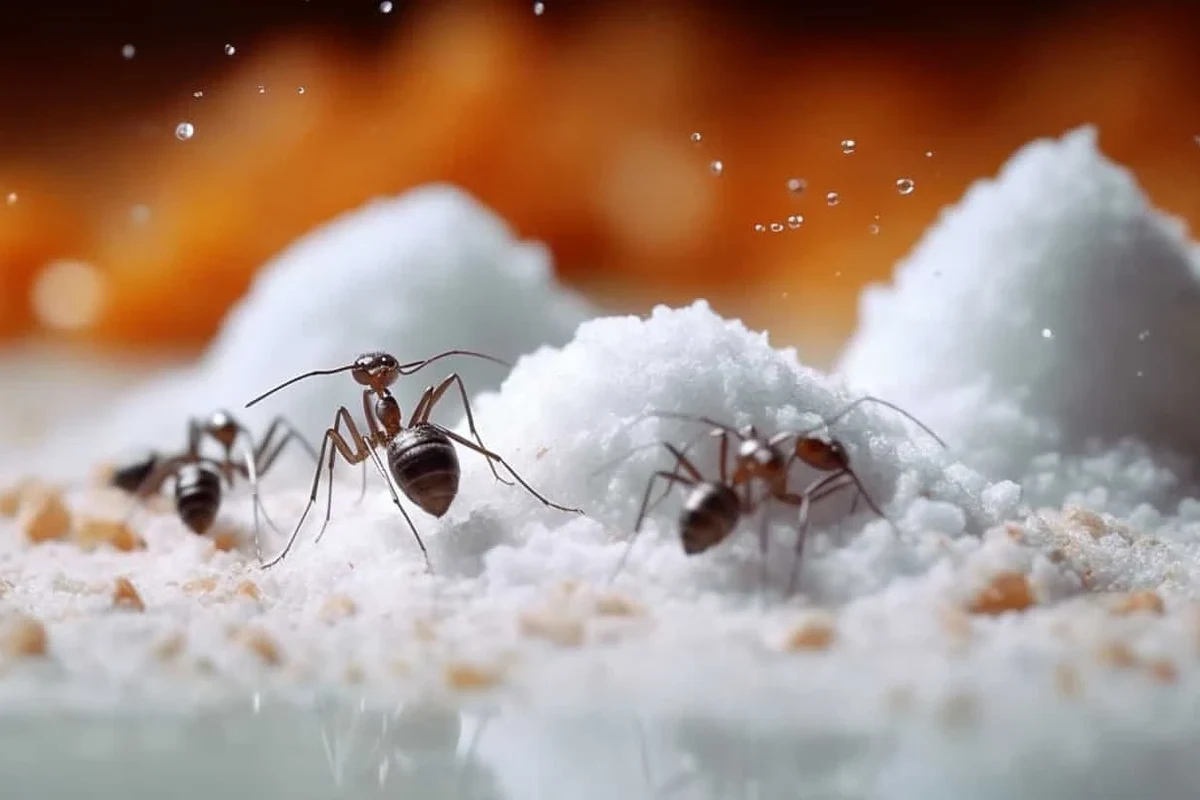
For a baking-focused site, the interesting part is the ingredient science: baking soda is alkaline, fine-textured, and easy to mix with attractants. That makes it useful in some DIY ant setups, but it does not behave like a true fast-acting insecticide. If you want a broader look at how this ingredient behaves in household cleaning, our guide on a baking soda trick that actually works shows why results depend so much on the method.
Why this home remedy keeps trending in 2026
People keep searching for baking soda and ant killer ideas because the ingredient is cheap, common, and already in the pantry. It also feels safer than spraying random chemicals around counters or baseboards, especially in homes with kids or pets.
Another reason it trends is that DIY advice often overpromises. A post that says “instant kill” gets attention, but real ant control is usually slower and more specific than that.
The science behind baking soda, baiting, and colony disruption
Baking soda by itself is not a reliable ant killer in the way a labeled ant bait is. The better logic behind the method is baiting: you use a food attractant to draw ants in, and then the ants carry the material back toward the nest or consume it over time.
That is why plain powder scattered on the floor often disappoints. Ants are usually looking for moisture, sugar, or grease, not a dry mound of white powder that does not smell like food.
Ants communicate with pheromone trails, so a few scouts can quickly recruit many more workers to the same food source.
When it helps, when it fails, and why “instant kill” claims are misleading
Baking soda may help when it is used in a dry, controlled bait near an active trail and the ants are willing to carry food back and forth. It tends to fail when the area is damp, the bait is too exposed, or the ants prefer another food source nearby.
It is also misleading to expect immediate results. Even when a DIY setup is accepted, colony-level control takes time, and some species respond by changing trails rather than disappearing.
- Inexpensive and easy to find
- Can be used in small, targeted bait spots
- Useful for testing ant preferences before buying stronger products
- Not a guaranteed fast kill
- Can fail in humid or wet areas
- May not reach the nest effectively
How Ants Actually Behave Around Food, Moisture, and Entry Points
To control ants well, you need to think like a baker dealing with moisture and ingredient movement. Small changes in humidity, surface texture, and access points can change whether ants keep returning or move on.
Common household ant patterns that make DIY control possible
Most home infestations start with scouts. These ants find crumbs, syrup, pet food, or water, then leave a trail that other ants follow. That trail-following behavior is what makes targeted bait possible.
DIY methods work best when the ant traffic is light to moderate and the source is easy to identify. If the infestation is widespread or coming from hidden wall voids, a pantry trick alone will not solve it.
Trail-following, nest location, and why the colony matters more than the individual ant
Killing one ant at a time rarely changes the problem. The colony matters more because the workers you see are only a small part of the system, and the queen can keep producing new ants if the nest stays active.
That is why bait placement matters. You want ants to keep feeding normally long enough for the colony to be affected, instead of simply avoiding the area after a harsh spray or a messy cleanup.
Examples of kitchen, pantry, bathroom, and window-frame infestations
In kitchens, ants often follow sugar spills, fruit residue, or crumbs near toasters and counters. In pantries, they may target open packages, pet treats, or sticky shelf edges.
Bathrooms and window frames are different because moisture is often the draw. A sink leak, condensation, or a small gap around a frame can be enough to keep a trail active even when food is not visible.
If ants keep showing up in the same place after cleaning, there is usually a hidden access point, a moisture source, or both. Surface cleanup helps, but it does not seal the route.
Best Baking Soda and Ant Killer Setups for Different Problem Areas
The best setup depends on where the ants are traveling. A dry bait near a trail can be worth trying, while a damp sink area usually needs a different approach.
Dry bait-style placement for low-traffic ant trails
For a low-traffic trail, place a tiny amount of dry mixture in a shallow lid, a folded piece of paper, or a small disposable container. Keep it close to the trail but not directly on a food-prep surface.
This helps reduce contamination while still giving ants a chance to find it. If they ignore it after a day or two, the attractant may not match what they want.
Moisture-prone areas where the method breaks down
Baking soda loses appeal fast in wet or humid places. It can clump, lose spreadability, and become less attractive as a bait carrier.
That is why it usually performs poorly near leaky sinks, damp windows, or bathroom corners with condensation. In those places, fixing the moisture source is usually more important than adding more powder.
Using baking soda near baseboards, thresholds, and outdoor entry points
Baseboards and thresholds are better than open counters because ants often travel along edges. A light, controlled placement near cracks or entry gaps can help you see whether the trail is active without spreading powder everywhere.
For outdoor entry points, remember that wind, rain, and soil moisture can ruin the setup. If ants are coming in from outside, sealing gaps and removing nearby food sources often matters more than the bait itself.
Never place any ant bait where it can mix with food, utensils, or pet bowls. If you use a DIY mixture, keep it clearly separated from prep zones and clean the area thoroughly afterward.
Measurement, Placement, and Method: How to Use Baking Soda Safely and Strategically
There is no single perfect ratio, because ant species and food preferences vary. Still, home users commonly test very small amounts first so they can see whether ants even approach the bait.
Simple ratios people commonly test at home
A common starting point is a small dry mix with more attractant than baking soda, especially if the goal is to get ants interested before worrying about control. Plain baking soda alone is usually less persuasive than a sweet or greasy carrier.
Keep the portion tiny. A heavy pile is more likely to be avoided, scattered, or cleaned up before it does anything useful.
Where to place it for maximum ant contact without contaminating food zones
Place the mixture beside the trail, not on top of open food or directly in a sink basin. Good spots are behind appliances, along baseboards, near a threshold crack, or just outside a known entry point.
Keep the area dry and easy to monitor. If the ants vanish overnight, you may have hit the right route; if they bypass it, the trail may be elsewhere.
- Identify the ant trail before placing bait
- Remove open food and sticky residue nearby
- Keep pets and children away from the setup
- Use a small, contained amount only
How often to refresh, replace, or remove the mixture
Refresh the bait if it gets damp, dusty, or ignored. In many homes, that means checking it daily at first and replacing it as soon as it loses its dry texture or stops attracting ants.
Remove the mixture once ant activity drops or if the ants clearly avoid it. Leaving old bait out too long can create a mess and make it harder to tell whether the problem is improving.
What to Mix Baking Soda With: Sugar, Powdered Bait, or Other Household Ingredients
This is where the method becomes more about bait design than about baking soda itself. The ingredient list matters because one part attracts, one part carries, and one part is supposed to control the ants.
Why sweet attractants can outperform plain baking soda
Sweet attractants usually outperform plain baking soda because many household ants are drawn to sugars first. If the bait does not smell like food, the ants may never take enough of it back to the colony.
That is why sugar-based mixtures often get more attention than dry powder alone. The baking soda may still be part of the setup, but the attractant is doing much of the work.
Ingredient roles: attractant, carrier, and control agent
Think of the mixture in three parts. The attractant lures the ants, the carrier helps them transport or ingest the bait, and the control agent is the ingredient intended to disrupt the colony or kill the workers.
In practice, if one part is off, the whole setup underperforms. Too much attractant can make the ants feed around the control agent, while too much control ingredient can make the bait unappealing.
Common mistakes that reduce effectiveness, like using too much moisture or too much powder
Too much moisture turns a neat dry bait into a clump that ants may ignore. Too much powder can also make the bait look unnatural and reduce feeding.
Another common mistake is placing the bait after deep cleaning has erased the trail. If you remove all scent markers first, the ants may not return to the exact spot you chose.
- Use tiny, contained bait portions
- Match the bait to the ants’ food preference
- Watch the trail before changing the setup
- Dumping large piles of powder
- Mixing bait into food-prep areas
- Assuming one formula works for every ant species
Safety, Surface Damage, and Pet or Child Considerations
Baking soda is generally low-risk as a household ingredient, but low-risk does not mean no-risk. Any ant control method can become a problem if it is placed in the wrong spot or left where someone can touch it.
Where baking soda is relatively low-risk and where caution is still needed
It is relatively low-risk in dry, contained placements away from food and hands. It needs more caution near sinks, pet feeding areas, and places where children might reach and spread it around.
If you are worried about other household uses of this ingredient, our article on baking soda in laundry benefits explains how the same powder behaves differently depending on moisture and surface contact.
Avoiding food-contact contamination and cleanup issues
Keep all bait materials off prep counters, cutting boards, and storage shelves that hold open food. Even if the mixture is small, it should still be treated like a contaminant once it has touched floors or baseboards.
Use a vacuum or damp cloth for cleanup, then wash the area with your normal cleaning routine. If the ants were around food residue, remove the food source too or they may return.
When to skip DIY methods and use labeled ant-control products instead
If the infestation is large, keeps returning, or seems tied to wall voids or outdoor nesting, labeled ant-control products are usually the better choice. Follow the product label carefully, because that is the official use instruction and safety guide.
For persistent or structural infestations, a licensed pest professional may be the most practical option. DIY methods are best for early, small, or clearly localized problems.
Troubleshooting: Why Your Baking Soda Ant Killer Trick Isn’t Working
When a bait fails, the problem is usually not just the baking soda. It is often the trail, the species, the moisture level, or the placement.
Signs the ants are ignoring the bait
If ants walk past the bait, circle it, or only inspect it briefly, they are not convinced. That usually means the attractant is wrong, the bait is too dry or too wet, or there is a better food source nearby.
If the ants feed heavily for a few hours and then stop, they may have found another route or sensed a disturbance. In that case, check for new crumbs, spills, or a cleaned-away trail.
The ants are active, but they never gather around the bait.
Change the attractant, reduce the amount you placed, and move the bait closer to the trail edge rather than the center of the room.
How to tell if you’re treating the wrong species or the wrong nest
Some ants prefer sweets, while others prefer grease or protein. If you use a sugar-style bait on the wrong species, the ants may simply ignore it.
It is also possible you are treating a satellite trail instead of the main nest. In that case, the bait may reduce activity in one spot without solving the larger source.
What to do if the colony rebounds after a few days
If activity comes back quickly, restart with a fresh, smaller bait placement and look for the original entry point. Rebound often means the colony was not fully affected or a second trail exists nearby.
At that stage, sealing cracks, removing food access, and switching to a labeled bait may give more reliable results than repeating the same DIY mix.
Final Verdict: Is Baking Soda Worth Using for Ant Control in 2026?
Baking soda can be worth trying, but mainly as a low-cost, low-intensity DIY option for small and clearly located ant problems. It is not the strongest ant killer on its own, and it should not be treated like a guaranteed fix.
Best-use cases for homeowners and renters
It makes the most sense when you have a short trail, a dry placement area, and a willingness to monitor the result closely. Renters often like it because it is simple to remove and does not require major equipment.
When baking soda is a backup method rather than a primary solution
It is a backup method when the infestation is persistent, moisture-driven, or tied to hidden nesting areas. In those cases, the ingredient may be part of a broader cleanup and baiting plan, but not the whole answer.
Practical recap for choosing between DIY control, store-bought bait, and professional help
If the problem is small, start with careful DIY baiting and strong sanitation. If the ants ignore the setup or keep returning, move to a labeled ant-control product that matches the species and follow the label directions.
And if you suspect a large colony, structural entry points, or repeated indoor invasions, professional help is often the fastest way to stop the cycle. For readers who also like understanding ingredient behavior in other home uses, our explainer on the baking soda and vinegar reaction is a useful reminder that this ingredient is powerful only when the chemistry matches the job.
Baking soda and ant killer tricks can work as a small, targeted DIY tactic, but only when the bait is dry, the ants are active, and the placement is smart. For bigger or recurring infestations, a labeled bait or professional treatment is usually the more dependable choice.
Frequently Asked Questions
It can help in some DIY bait setups, but it is not a guaranteed fast killer. Results depend on the ant species, the bait mix, and where you place it.
Use a very small, dry, contained bait near an active trail and keep it away from food areas. If ants ignore it, the attractant or placement may need to change.
Yes, sugar is a common attractant because many ants prefer sweets. Keep the amount small and dry so the bait stays appealing.
The trail may lead somewhere else, the species may prefer a different food type, or the bait may be too wet or too large. Moisture and poor placement are common reasons DIY bait fails.
It is relatively low-risk when used in a small, contained spot, but it still should be kept away from food, pet bowls, and areas children can reach. Clean up any leftover bait promptly.
Switch when the ants keep coming back, the infestation is widespread, or the trail seems tied to hidden nesting areas. Labeled ant-control products and professional help are usually more reliable for persistent problems.