
Is Baking Soda and Bicarbonate of Soda the Same Thing

Yes, baking soda and bicarbonate of soda are the same ingredient: sodium bicarbonate. The name changes by region, but the baking function is the same.
Yes—when a recipe or package says baking soda, it usually means the same ingredient as bicarbonate of soda. The name changes by region, but the baking behavior is the same when the ingredient is pure sodium bicarbonate.
- Same ingredient: Both names mean sodium bicarbonate.
- Not the same as baking powder: Baking soda needs acid to activate.
- Measure carefully: Too much or too little changes flavor, color, and rise.
- Check labels: Look for food-grade sodium bicarbonate, not cleaning products.
- Balance matters: The best results come from matching the soda to the recipe’s acidity.
What “Baking Soda” and “Bicarbonate of Soda” Actually Mean in Baking
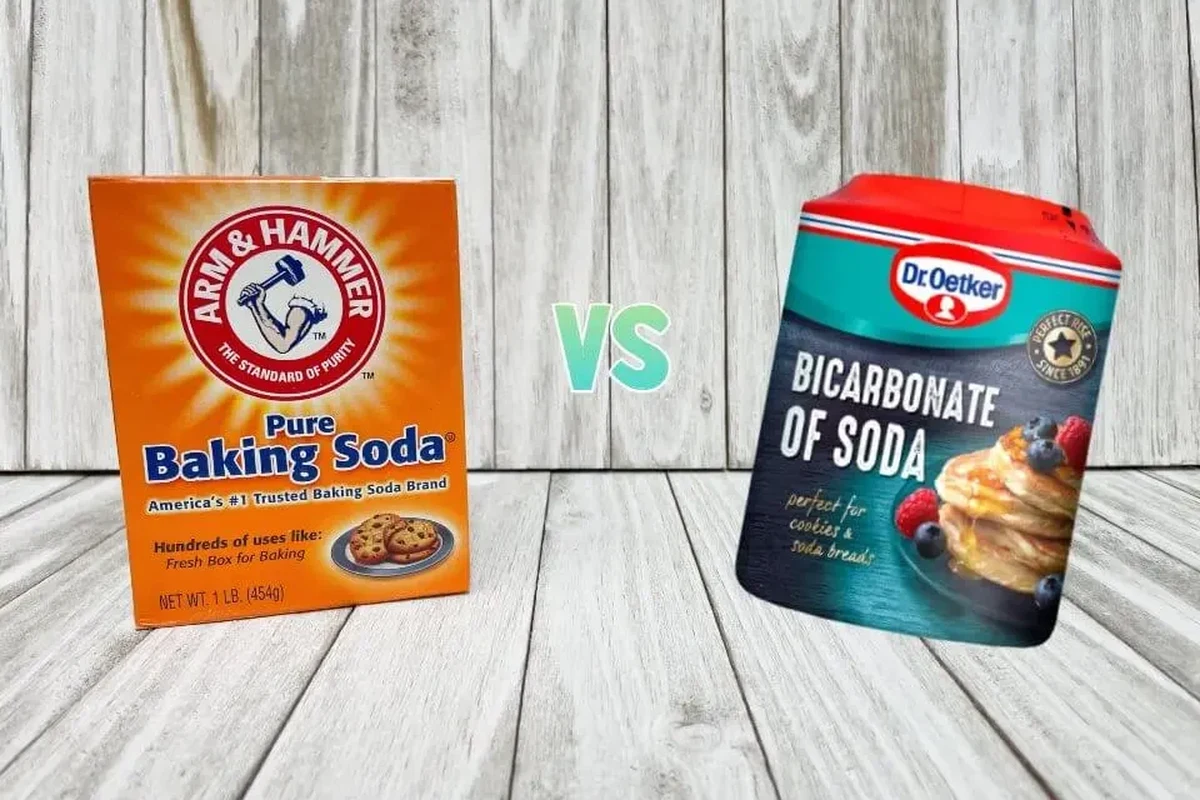
In kitchen language, baking soda is the common U.S. term, while bicarbonate of soda is the term you will more often see in the U.K., Ireland, Australia, and other regions. Both names refer to the same leavening ingredient: sodium bicarbonate.
Chemical name vs. common kitchen name
Sodium bicarbonate is the chemical name. Baking soda and bicarbonate of soda are the everyday names bakers use at home and in pastry school kitchens.
This matters because ingredient names on labels can look different even when the product is the same. If the box lists sodium bicarbonate, you are looking at baking soda, not a different ingredient.
Baking soda does not create lift by itself. It needs moisture plus an acidic ingredient, then heat helps release carbon dioxide gas that expands the batter or dough.
How regional language changes the label on the box
Different countries often use different wording for the same pantry staple. A British recipe may call for bicarbonate of soda, while an American recipe may say baking soda.
That language shift is one of the most common reasons home bakers think they need a substitute when they do not. If the recipe is written for your region, check the ingredient list, not just the name in the title.
Why both terms matter for home bakers and pastry students
For beginners, the main risk is not the name itself but using the wrong leavening agent. Baking soda is not interchangeable with baking powder in equal amounts, and that difference can change texture, flavor, and color.
For pastry students, understanding the label helps with recipe scaling, international formulas, and exam work. It also helps when you read professional ingredient lists or work from older cookbooks that use regional terminology.
How Baking Soda Works in Recipes and Why It Is Not the Same as Baking Powder
Baking soda is a base. In a recipe, it reacts with acid to form carbon dioxide, which creates bubbles and helps baked goods rise.
What it needs to activate: acid, moisture, and heat
To work well, baking soda needs three things: moisture so it can dissolve, an acidic ingredient so the reaction starts, and heat so the gas expands during baking. Common acids include buttermilk, yogurt, sour cream, lemon juice, vinegar, molasses, brown sugar in some formulas, and natural cocoa in some cakes.
If a recipe has no acid, baking soda may not fully react. That can leave a metallic or soapy taste and a darker, sometimes uneven color.
Baking powder already contains both an acid and a base, so it is designed to work in recipes that do not have enough acidic ingredients on their own.
How it affects rise, browning, and flavor
Baking soda does more than add lift. It raises the pH of the batter, which can speed browning and give cookies or cakes a deeper color.
That same pH change also affects flavor and structure. In the right recipe, it can create a tender crumb and a pleasant caramelized taste; in the wrong recipe, it can make the bake taste harsh or look too dark.
Common recipe examples where it plays a key role
You will often find baking soda in chocolate cakes, gingerbread, molasses cookies, banana bread, and many muffin formulas. These recipes usually include enough acid to activate it properly.
If you want a deeper look at a practical use case, see our guide on the baking soda trick that actually works fast and easy. It is a helpful example of how a small ingredient change can affect texture and cleanup in the kitchen.
How to Read Labels, Packaging, and Ingredient Lists in 2026
Packaging varies by market, but the ingredient itself stays the same. The key is to read the ingredient list carefully and not rely only on the front of the box.
What to look for on U.S., U.K., and international products
In the U.S., the package usually says baking soda. In the U.K. and some other countries, it may say bicarbonate of soda or bicarbonate of soda for food use.
International products may also show the chemical name sodium bicarbonate. That is normal and often the clearest label for shoppers who want to confirm the ingredient quickly.
When “sodium bicarbonate” appears instead of either kitchen name
Sodium bicarbonate is the most precise term, so it often appears on ingredient labels, nutrition panels, and bulk packaging. If you see that phrase, you can treat it as baking soda for culinary use.
Still, read the full label. Some products are sold for cleaning or deodorizing, and those are not the same as food-grade baking soda.
Only use food-grade sodium bicarbonate in recipes. Do not assume a household cleaning product is safe for baking, even if the name sounds similar.
How to avoid confusing it with baking powder or washing soda
Baking powder is not the same as baking soda. Baking powder contains baking soda plus one or more acids and usually a starch to keep it stable.
Washing soda is also different. It is sodium carbonate, a stronger alkaline cleaner that is not intended for baking.
Measurement, Conversion, and Substitution Mistakes That Change Results
Because baking soda is powerful, small measuring errors can make a noticeable difference. A little too much can throw off flavor and browning, while too little can leave a dense crumb.
How to measure accurately by teaspoon and gram
For home baking, level the spoon instead of packing it. If you are working in pastry school or scaling a formula, weighing ingredients is more consistent than spooning them.
Exact gram weights can vary slightly by brand and how tightly a spoon is filled, so use the recipe’s stated measurement system when possible. If a formula gives both teaspoons and grams, the gram amount is usually the more reliable one for repeat results.
What happens when you use too much or too little
Too much baking soda can cause a bitter or soapy flavor, coarse crumb, and overly fast browning. It can also make a batter rise and then collapse if the structure cannot support the gas.
Too little baking soda may leave cookies flat, muffins tight, or cakes pale. The recipe may still bake through, but the texture will usually be heavier than intended.
The bake tastes alkaline, looks too dark, or has a rough crumb.
Check the measuring method, verify the ingredient is baking soda and not baking powder, and confirm the recipe has enough acid to balance the soda.
When a substitution is safe and when it will fail
Sometimes baking powder can replace baking soda, but only with formula changes. Because baking powder is less concentrated and already includes acid, the amount and the rest of the recipe usually need adjustment.
Replacing baking soda with baking powder one-for-one often fails. The result may taste off, rise differently, or leave the baked good too salty or too cakey depending on the recipe.
Practical Baking Examples: Cookies, Cakes, Quick Breads, and Pastry Applications
The same ingredient can behave differently depending on the dough or batter. That is why recipe context matters as much as the name on the box.
How baking soda changes spread and texture in cookies
In cookies, baking soda often encourages spread because it weakens acidity and helps the dough brown faster. That can create a thinner, crisper edge and a more pronounced caramel flavor.
If the dough is too warm, the pan is too hot, or the flour ratio is off, the cookies may spread too much. If the recipe depends on structure, even a small soda error can change the final shape.
Why it matters in chocolate cakes, muffins, and scones
Chocolate cakes often use baking soda because cocoa and other acidic ingredients help activate it. The result is usually a softer crumb and better browning.
In muffins and scones, baking soda can support lift and tenderness, especially when buttermilk or yogurt is in the formula. For a broader comparison of kitchen appliances and how they affect baking results, you may also find our article on whether air fryers need to preheat useful when you are comparing heat behavior across tools.
When pastry formulas rely on acidity for balance and lift
Some pastry-style batters and quick doughs use acidity not only for lift but also for flavor balance. A small amount of baking soda can soften sharp tang in buttermilk-based batters while also helping color develop.
In more delicate formulas, too much alkalinity can dull flavor or interfere with the clean, buttery taste you want in pastry. That is why precise measurement matters more in fine baking than in casual cooking.
Common Problems Caused by Confusing the Two Terms
Most mistakes come from assuming the names are different ingredients or that they can be swapped freely. In practice, the bigger issue is formula balance.
Flat bakes, soapy flavor, and uneven browning
Flat bakes often happen when the soda is old, undermeasured, or missing enough acid to react. Soapy flavor usually points to too much baking soda or a recipe that cannot neutralize it.
Uneven browning can happen when the soda is not distributed evenly through the dry ingredients. Sifting or whisking the dry mix helps, especially in larger batches.
Over-acidic or under-acidic batters
If a batter is too acidic, it may taste sharp and may not brown as expected. If it is not acidic enough, the soda may remain unreacted and leave a harsh aftertaste.
Recipe developers balance this carefully. That is why changing one ingredient, such as swapping natural cocoa for Dutch-process cocoa, can alter how much baking soda a formula needs.
If a recipe fails, do not keep adding baking soda in hopes of fixing it. Too much can create an unpleasant taste and a poor crumb, and it will not correct a missing structural ingredient like flour or eggs.
How to troubleshoot a recipe that names one term but expects the other
Start by checking the ingredient list and the full method. If the recipe says bicarbonate of soda, use baking soda; if it says baking powder, do not substitute without adjusting the formula.
If the recipe is from another region or an older cookbook, confirm whether the author uses local naming conventions. This is especially important when adapting recipes from the U.K. to the U.S. or vice versa.
Storage, Safety, and Best Practices for Home and Professional Kitchens
Baking soda is simple to store, but its performance depends on keeping it dry and uncontaminated. Good storage habits help it stay useful for both baking and kitchen cleaning tasks, as long as the containers stay separate.
How to store baking soda so it stays effective
Keep baking soda in a tightly sealed container in a cool, dry pantry. Moisture can cause clumping and reduce its effectiveness over time.
In a busy kitchen, label containers clearly so food-grade baking soda is not mixed with cleaning supplies. That matters in home kitchens, pastry labs, and shared spaces alike.
Food safety and non-food uses to avoid mixing up
Baking soda is used for baking, deodorizing, and some cleaning tasks, but those uses should stay separate. A box used for the fridge or sink area should not be treated as a baking ingredient unless it is clearly food-grade and uncontaminated.
For food safety guidance on ingredient handling and cross-contact concerns, follow recognized official advice and product labels. If you have allergy concerns, check every package carefully and consult qualified guidance when needed.
When to replace an old container and how to test freshness
Old baking soda may still look fine but work less reliably. If the container has been open for a long time, or if the kitchen is humid, it is worth testing before using it in an important recipe.
A simple freshness check is to add a small amount of vinegar to a spoonful of baking soda. A strong fizz suggests it is still active; weak fizz suggests it may be time to replace it.
- Confirm the recipe means baking soda or bicarbonate of soda, not baking powder.
- Check that the ingredient is food-grade sodium bicarbonate.
- Measure carefully, especially in cookies, cakes, and quick breads.
- Make sure the recipe has enough acid for proper activation.
- Store the container sealed, dry, and clearly labeled.
Final Verdict: Are Baking Soda and Bicarbonate of Soda the Same Thing?
Yes, baking soda and bicarbonate of soda are the same ingredient in baking: sodium bicarbonate. The name changes by region, but the baking function is the same when the product is food-grade and pure.
Clear conclusion for shoppers, students, and bakers
If you are shopping or reading a recipe, treat the two names as equivalent. Just do not confuse them with baking powder or washing soda, which behave differently in the kitchen.
What to remember before starting your next recipe
Use the label to confirm the ingredient, measure it accurately, and match it to the recipe’s acid level. That simple habit prevents most of the flat, bitter, or overly dark results that happen when leavening is misunderstood.
For bakers who want consistent results, the safest approach is to read the full formula, not just the ingredient name. If you do that, baking soda and bicarbonate of soda become one less thing to worry about and one more tool you can use with confidence.
Frequently Asked Questions
Yes. They are both names for sodium bicarbonate, the same leavening ingredient used in baking.
Not usually one-for-one. Baking soda needs acid to work, while baking powder already contains an acid and is formulated differently.
Look for acidic ingredients such as buttermilk, yogurt, molasses, vinegar, lemon juice, or natural cocoa. Those ingredients often signal that baking soda is being used for lift and balance.
Excess baking soda can leave unreacted alkaline residue in the batter. That residue can create a bitter, soapy, or metallic flavor.
Store it in a sealed container in a cool, dry place. Keep it away from moisture and label it clearly so it is not confused with cleaning products.
Add a little vinegar to a spoonful of baking soda. Strong fizz usually means it is still active, while weak fizz suggests it may need replacing.