
Is Baking Soda and Powder Same Thing Explained Simply

No, baking soda and baking powder are not the same thing. Baking soda needs acid to react, while baking powder already contains its own acid and is used when a recipe needs built-in lift.
If you have ever wondered, “is baking soda and powder same thing,” the short answer is no. They are both leaveners, but they work in different ways, and using the wrong one can change how a recipe rises, tastes, and browns.
- Different formulas: Baking soda is sodium bicarbonate; baking powder includes soda plus acid and starch.
- Different jobs: Soda needs an acidic ingredient, while powder works in more neutral batters.
- Substitutions are risky: Swapping them can change flavor, browning, rise, and texture.
- Freshness matters: Old or poorly stored leavener can leave baked goods dense or flat.
What Baking Soda and Baking Powder Actually Are
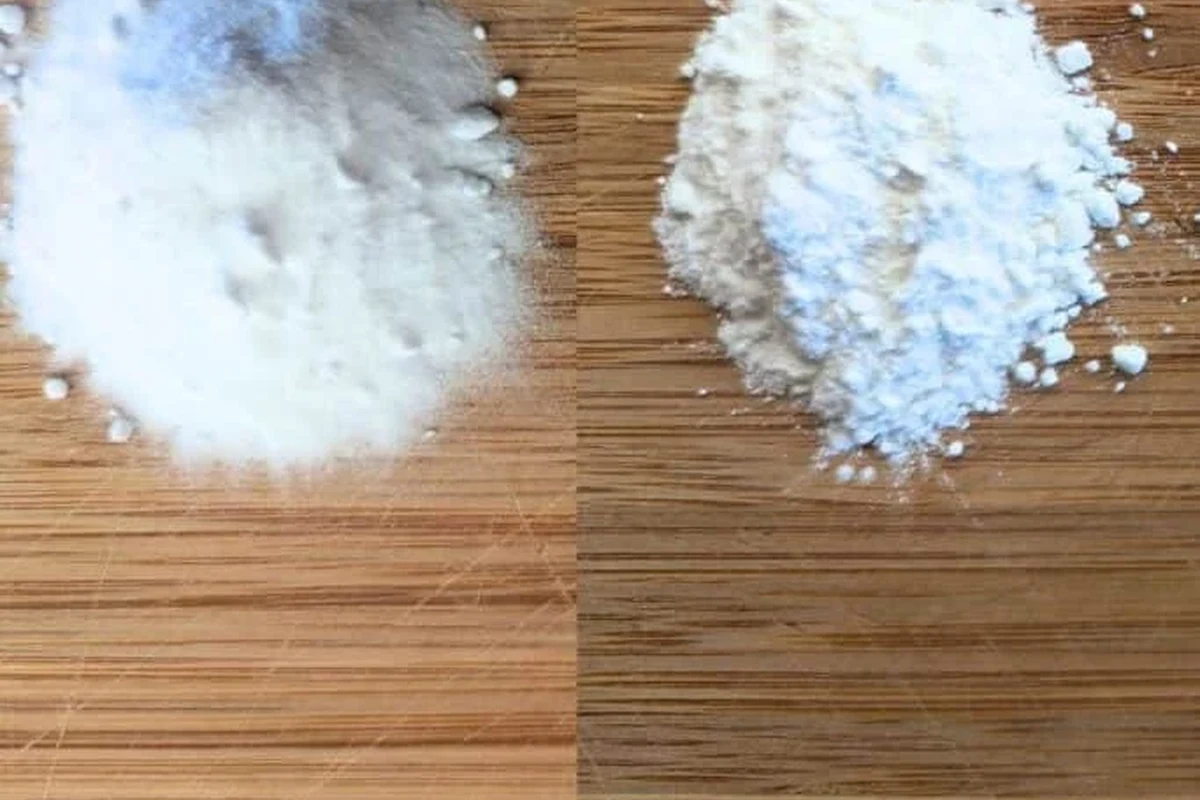
Baking soda is sodium bicarbonate, a single alkaline ingredient. Baking powder is a blend that usually includes baking soda plus one or more acid salts and a drying starch, so it can create lift on its own when mixed with liquid and heat.
How each leavening agent is made
Baking soda is a purified chemical compound used in baking and also in some household cleaning tasks. Baking powder is manufactured as a balanced formula: the soda is paired with acids such as cream of tartar or other acid salts, and starch is added to keep moisture from triggering the reaction too early.
Why they look similar but behave differently
They are both fine white powders, so the confusion is easy to understand. The difference is that baking soda needs an acidic ingredient in the recipe to react, while baking powder already contains the acid it needs to produce carbon dioxide gas.
Baking soda and baking powder are not interchangeable by volume. A recipe that needs one teaspoon of baking soda may need a very different amount of baking powder to get the same lift.
The Simple Chemistry Behind the Confusion
The chemistry is simple once you break it into two parts: gas production and timing. In baking, carbon dioxide creates air pockets, and those air pockets expand in the oven to help batter or dough rise.
How baking soda needs an acid to work
Baking soda reacts when it meets an acid such as buttermilk, yogurt, sour cream, lemon juice, vinegar, brown sugar, molasses, or cocoa that is naturally acidic. If there is not enough acid, some baking soda may remain unreacted, which can leave a bitter, metallic, or soapy taste.
How baking powder already contains its own acid
Baking powder is designed to make its own reaction happen. Most modern products are double-acting, which means they release some gas when mixed with liquid and more gas when heated in the oven.
What happens when each one is mixed into batter or dough
Once baking soda meets acid and moisture, it starts producing bubbles right away. Baking powder also starts working after liquid is added, but because it brings its own acid, it does not depend on the recipe’s other ingredients to rise.
When You Can and Cannot Use Them Interchangeably
In most recipes, you should not swap them casually. A substitution can affect not only rise, but also flavor, spread, color, and the final crumb.
Common baking situations where substitution fails
Swapping baking powder for baking soda often fails in recipes that rely on a strong acid reaction, such as chocolate cakes with natural cocoa, buttermilk pancakes, or lemon-based batters. Swapping baking soda for baking powder can also fail in plain cakes or biscuits that do not contain enough acid to activate the soda.
When a recipe can tolerate a swap with adjustments
Some recipes can be adjusted, but only if you understand the balance of acid and base. If you use baking soda instead of baking powder, you may need to add an acid ingredient and reduce the amount carefully; if you use baking powder instead of baking soda, you usually need more of it, and the recipe may still taste different.
Do not assume a one-to-one swap will work. Too much baking soda can leave a strong alkaline taste, while too much baking powder can make baked goods taste bitter or overly salty.
What happens to flavor, rise, and texture after a substitution
Flavor is often the first clue that a swap went wrong. Too much soda can create a sharp aftertaste and darker browning, while too much baking powder can make the crumb coarse, slightly dry, or unevenly domed.
- Baking soda gives strong browning and fast lift when an acid is present.
- Baking powder offers built-in lift and is easier for many neutral batters.
- Baking soda can taste harsh if the recipe lacks enough acid.
- Baking powder can weaken flavor balance if used as a direct substitute.
How to Read a Recipe and Identify Which One You Need
The ingredient list usually tells you which leavener belongs in the recipe. Look for acidic ingredients, then think about whether the batter needs lift from the acid reaction or from a self-contained leavener.
Spotting acidic ingredients that call for baking soda
If you see buttermilk, yogurt, sour cream, molasses, brown sugar, natural cocoa, citrus juice, or vinegar, the recipe may be designed for baking soda. The soda helps neutralize some acidity while also creating lift, which is why recipes often use it in chocolate cakes and spice cakes.
Recognizing recipes that depend on baking powder for lift
Recipes with little or no acid often depend on baking powder. Think of vanilla cakes, many muffins, some pancakes, and biscuits made with milk rather than cultured dairy.
Examples from cookies, cakes, muffins, and quick breads
Cookies often use baking soda to encourage spread and deeper browning. Cakes may use baking powder for a fine, even crumb, while muffins and quick breads sometimes use both for a taller rise and balanced texture. For broader ingredient swaps, see our guide on using baking soda instead of baking powder safely.
Recipe formulas vary by brand, pan size, oven calibration, altitude, and measuring method. A recipe that works in one kitchen may need small adjustments in another.
Common Mistakes Home Bakers Make With Leaveners
Most baking problems with soda and powder are not dramatic science failures. They are usually simple measuring, freshness, or recipe-reading mistakes.
Using expired baking soda or baking powder
Baking soda is very stable, but baking powder loses strength over time, especially if it absorbs moisture. If your leavener is old or stored poorly, your cake may rise slowly, stay dense, or sink in the middle.
Adding too much and causing bitter or soapy flavors
More leavener does not mean more lift forever. Too much baking soda can leave a soapy taste and excessive browning, while too much baking powder can create a chemical aftertaste and a fragile crumb.
Confusing teaspoons, tablespoons, and double-acting formulas
A tablespoon is three teaspoons, so a measuring mistake can quickly ruin a batter. It also helps to remember that most supermarket baking powder is double-acting, so it is not just a “faster” version of baking soda; it is a different product with a different formula.
Your cake rose too fast and then collapsed.
Check whether the recipe used too much leavener, too much liquid, or an oven that was not hot enough to set the structure before the gas escaped.
How to Test Freshness, Measure Correctly, and Store Properly
Freshness and measuring accuracy matter because leaveners are small ingredients that have a big effect. A teaspoon off can change the crumb more than many beginners expect.
Simple freshness tests for baking soda and baking powder
To test baking soda, stir a little into vinegar or another acidic liquid; vigorous fizzing means it is still active. To test baking powder, stir some into hot water; it should bubble quickly if it is fresh enough for baking.
Accurate measuring methods for consistent results
Spoon the powder into the measuring spoon and level it off with a straight edge instead of packing it down. For the best consistency, use the measuring tool the recipe expects, and avoid shaking the container directly over a mixing bowl if humidity may clump the powder.
Storage conditions that protect potency in 2026 kitchens
Keep both leaveners in tightly sealed containers in a cool, dry cabinet away from steam, dishwashers, and warm ovens. In modern kitchens where humidity and frequent cooking can be an issue, airtight storage matters more than fancy packaging.
Do not taste leaveners directly to test them. Use a simple fizz test instead, and keep powders away from children and from food containers that could be mistaken for salt or sugar.
Practical Baking Examples That Show the Difference
Once you see the difference in real recipes, the rule becomes easier to remember. The best choice depends on the acid level, the desired texture, and how quickly the batter needs to set.
Why chocolate cake may use both leaveners
Many chocolate cakes use both baking soda and baking powder because cocoa, sugar, and liquid need a balanced rise. The soda can help neutralize acidity and deepen browning, while the powder adds extra lift so the cake does not turn out too dense.
Why pancakes, biscuits, and muffins respond differently
Pancakes often benefit from baking powder because the batter is mixed quickly and cooked soon after, so a self-contained rise works well. Biscuits may use baking powder for a tall, tender crumb, while muffins sometimes use baking soda if the batter includes yogurt, buttermilk, or fruit purée.
What to expect in texture, browning, and spread
Baking soda usually encourages more spread and stronger browning. Baking powder often gives a lighter, more even rise, which is why it is common in cakes and muffins that need a soft, uniform crumb.
Mix the batter according to the recipe and avoid overmixing, which can toughen the crumb and push out air.
Heat sets the structure while leavening gases expand; the oven must be hot enough for the rise to hold.
Steam escapes and the structure finishes setting, so removing baked goods too early can cause collapse.
Final Verdict: Are Baking Soda and Baking Powder the Same Thing?
No, they are not the same thing. Baking soda is a single alkaline ingredient that needs acid to react, while baking powder contains baking soda plus its own acid and starch, so it can create lift more independently.
Clear recap of the difference in function and ingredients
The most important difference is not just what they are made of, but how they behave in a recipe. Baking soda is best when the batter has enough acid, and baking powder is best when the recipe needs built-in leavening.
Best choice by recipe type and baking goal
Use baking soda when you want a recipe to brown well and the ingredients already provide acidity. Use baking powder when you need a reliable rise in a more neutral batter, especially in cakes, muffins, biscuits, and some pancakes.
When to double-check the recipe instead of guessing
If a recipe seems unclear, read the ingredient list before making a substitution. When in doubt, follow the formula as written or consult a trusted baking guide such as our related article on whether baking soda and baking powder are the same and our explanation of the baking soda and vinegar reaction.
They are similar-looking leaveners with different jobs, so treat them as separate ingredients unless the recipe gives a tested substitution. For the most reliable results, match the leavener to the recipe’s acidity, then measure carefully and use fresh product.
If you want consistent baking results, the safest habit is simple: read the recipe, identify the acid, and choose the leavener that fits the formula. That one step prevents most dense cakes, bitter aftertastes, and flat muffins.
Frequently Asked Questions
Sometimes, but not as a direct one-to-one swap. Baking powder contains acid and baking soda, so the recipe may need adjustment and the flavor can change.
Look for acidic ingredients like buttermilk, yogurt, lemon juice, vinegar, molasses, or natural cocoa. Those often point to baking soda, while neutral batters often rely on baking powder.
Stir a little baking powder into hot water. If it bubbles quickly, it is still active enough for most baking needs.
Extra baking soda can leave unreacted alkaline residue in the baked good. That can create a bitter, metallic, or soapy flavor.
Yes, weak baking powder can reduce rise and make a cake dense or uneven. If the powder no longer bubbles in a freshness test, replace it.
Yes. Baking soda usually increases browning more because it raises pH, while baking powder tends to give lift with less effect on color.