
Baking Soda in Dandruff Does It Really Work for Hair

Baking soda may briefly remove surface buildup on the scalp, but it is not a reliable dandruff treatment and can cause dryness or irritation. For most people, a gentler anti-dandruff shampoo is the safer first choice.
Baking soda in dandruff is a popular home remedy, but it is not a guaranteed fix. It may help loosen flakes for some people, yet it can also dry the scalp and make irritation worse.
- Short-term effect: Baking soda can make the scalp feel cleaner, but that does not mean it.
- Main risk: Its alkalinity can dry the scalp and worsen irritation over time.
- Best use case: It may be tolerated occasionally on oily, non-sensitive scalps.
- Safer option: Proven anti-dandruff shampoos are usually better for ongoing flakes.
What Baking Soda Is and Why People Use It on Dandruff
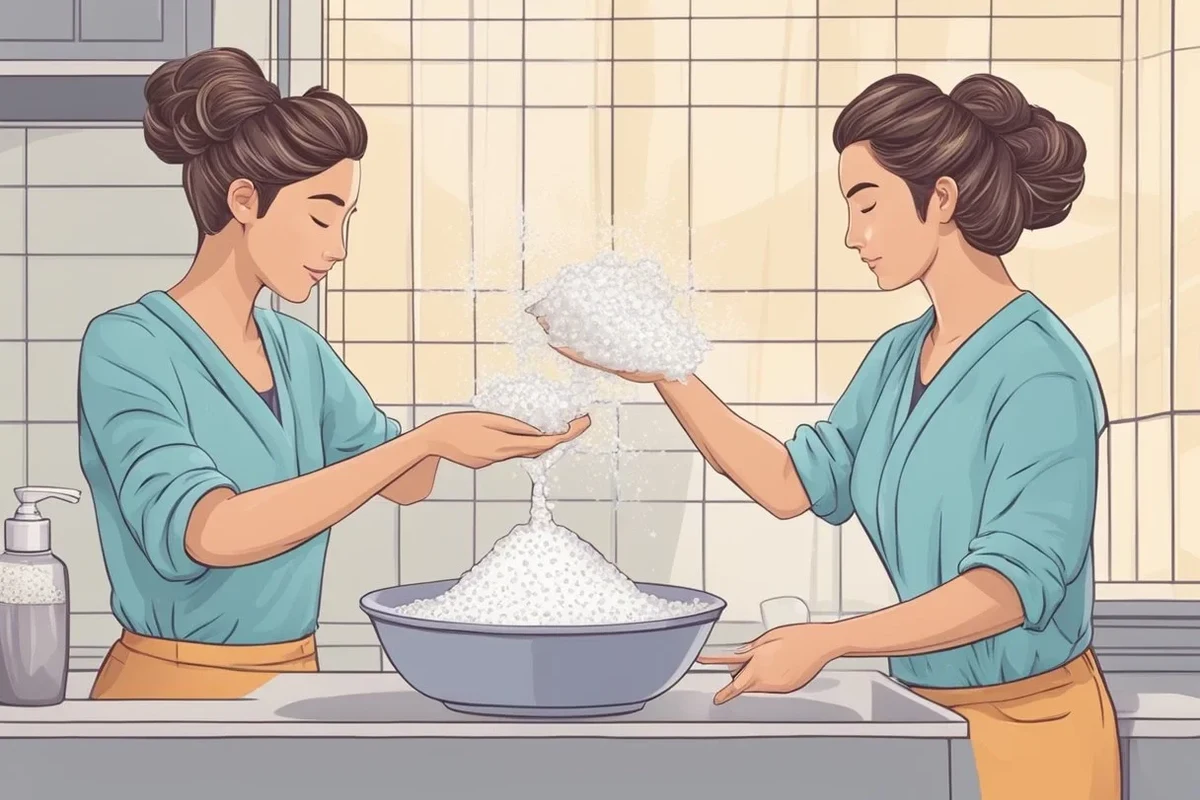
Baking soda is sodium bicarbonate, a mildly alkaline powder best known in baking and cleaning. On the scalp, people use it because it can feel “squeaky clean” and may help lift oil and loose skin cells from the hair surface.
How baking soda works on the scalp
Baking soda can act like a mild abrasive and an oil-cutting agent. In practical terms, that means it may temporarily reduce the look of flakes by removing buildup, but it does not address the deeper causes of dandruff.
That is why baking soda sometimes seems helpful right after use. The scalp may look less coated, but if the skin barrier is already stressed, the same cleansing effect can leave it drier and more reactive afterward.
Why the remedy became popular in hair-care advice
People often share baking soda remedies because the ingredient is cheap, familiar, and already in many kitchens. It also fits the idea that a strong cleaner should solve an oily, flaky scalp fast.
However, quick-cleaning ideas are not always scalp-friendly. If you want to understand why DIY mixtures can behave unpredictably, it helps to read about the baking soda and vinegar reaction and how ingredient chemistry changes when acids or water are added.
What the Evidence Says About Baking Soda for Dandruff in 2026
As of 2026, baking soda is still not a well-supported first-line dandruff treatment. Dandruff is usually tied to a mix of scalp oil, skin turnover, yeast overgrowth, and irritation, so a simple scrub does not solve every cause.
What dandruff actually is: flaking, oil balance, and scalp irritation
Dandruff is not just “dry skin.” Many cases involve an oily scalp environment where skin cells shed faster than normal, creating visible flakes that can land on hair, shoulders, and clothing.
Some people also have redness, itching, or a tight feeling on the scalp. That matters because a remedy that removes flakes but increases irritation can make the overall problem harder to manage.
Where baking soda may help briefly and where it can backfire
Baking soda may help lift surface buildup from styling products, sweat, and excess oil. For a person with a very mild, occasional flaky scalp, that temporary cleansing effect might make the hair look cleaner for a short time.
But it can backfire when the scalp is sensitive, already dry, or inflamed. If you are comparing it with other household uses, remember that laundry or cleaning success does not automatically translate to safe scalp care; hair and skin are much more delicate than fabric or tile.
Dermatology concerns about pH, dryness, and barrier damage
The scalp has a protective barrier that works best in a slightly acidic environment. Baking soda is alkaline, so repeated use may disrupt that balance, strip natural oils, and leave the skin more vulnerable to irritation.
That is the main reason many skin-care professionals are cautious about it. If the barrier becomes dry or damaged, flakes can continue, and the scalp may feel more itchy even if it looks cleaner for a day or two.
If your dandruff comes with thick plaques, bleeding, severe redness, hair loss, or pain, skip DIY remedies and get medical guidance. Those signs can point to conditions that need proper diagnosis and treatment.
How to Judge Whether Baking Soda Is Worth Trying for Your Scalp
The real question is not whether baking soda is “natural.” It is whether your scalp is the kind that can tolerate a short, cautious trial without getting worse.
Best-fit situations for occasional use
Baking soda is most likely to be tolerated when the scalp is oily, not sensitive, and only mildly flaky. It may also be more reasonable if you are trying to remove product buildup rather than treat true dandruff.
Even then, think of it as an occasional experiment, not a routine hair-care staple. If you are looking for another kitchen-style comparison point, our guide to using baking soda instead of baking powder safely shows how small ingredient differences can change the result a lot.
Signs you should avoid it entirely
Avoid baking soda if your scalp is already dry, cracked, very itchy, sunburned, or eczema-prone. You should also skip it if you have a history of irritation from scrubs, acids, or fragranced hair products.
If dandruff is severe or persistent, do not keep testing home remedies one after another. At that point, the problem is less about cleansing power and more about choosing a treatment that matches the underlying cause.
How hair type, scalp sensitivity, and existing conditions change the outcome
Curly, coily, color-treated, bleached, or chemically processed hair often needs extra moisture and gentler cleansing. Baking soda can be especially rough on these hair types because it may make the cuticle feel drier and the strands harder to detangle.
Scalp conditions also matter. Seborrheic dermatitis, psoriasis, and contact dermatitis can all look like “dandruff” at first glance, but they may respond very differently to the same product.
- Cheap and easy to find
- May remove surface buildup briefly
- Can feel cleansing on oily hair
- Can dry out and irritate the scalp
- Does not treat many true dandruff causes
- Can be too harsh for sensitive or color-treated hair
Safe Use Guidelines If You Still Want to Test It
If you decide to try baking soda in dandruff care, keep the test small and gentle. The goal is to see whether your scalp tolerates it, not to prove that stronger scrubbing works better.
Typical dilution ratios and why stronger mixes are a mistake
There is no universally approved scalp recipe, but weaker is safer than stronger. A small amount mixed with plenty of water is less likely to scratch the skin or leave gritty residue in the hair.
Do not make a thick paste and do not assume more powder means better cleansing. In the kitchen, too much leavening can ruin texture; on the scalp, too much baking soda can push the skin in the wrong direction just as quickly.
Water
Small bowl
Gentle shampoo
Clean towel
Application time, rinsing, and frequency limits
Keep contact time short. Apply the diluted mixture gently, rinse thoroughly, and follow with a mild shampoo if needed to remove residue from the scalp and hair.
Do not use it daily. Even if the first use seems fine, repeated exposure can cause cumulative dryness, especially if your hair is already fragile or chemically treated.
- Mix baking soda with plenty of water
- Test on a small scalp area first
- Rinse completely after short contact
- Stop if the scalp stings or feels tight
Patch testing and stop-use warning signs
Patch testing matters because sensitive skin can react even to common ingredients. Try a small amount on a limited area first and wait to see whether redness, burning, or itching develops.
Stop immediately if you notice increased flaking, a burning sensation, or a rough, stripped feeling after washing. Those are signs the scalp barrier is not happy with the treatment.
Keep baking soda out of the eyes and do not use it on broken skin. Rinse with plenty of water right away if irritation happens.
Common Mistakes People Make With Baking Soda on Hair
Most problems come from overdoing a remedy that should, at most, be used sparingly. The scalp is not a countertop, so it does not benefit from harsh cleaning.
Using it too often or leaving it on too long
Long contact time can increase dryness, and frequent use can compound the effect. What starts as “clean” can turn into a cycle of tightness, itchiness, and more visible flaking.
If you are someone who likes simple ingredient systems, our baking soda trick that actually works article shows why a quick result is not always the same as a long-term solution.
Scrubbing aggressively and worsening irritation
Abrasive scrubbing is a common mistake. When the scalp is already irritated, friction can worsen redness and make flakes shed in a more noticeable way.
Use your fingertips, not nails, and keep pressure light. The goal is to spread the mixture gently, not to polish the scalp.
Mixing it with harsh ingredients or replacing medical treatment
Some DIY advice combines baking soda with vinegar, lemon juice, or other strong ingredients. That can create an unpredictable mix of acidity, alkalinity, and irritation risk, especially on sensitive skin.
Also, do not use baking soda as a substitute for medicated dandruff shampoo when symptoms are persistent. If a product has an active ingredient designed for dandruff, it is usually because the formula is targeting a known cause more directly.
Better-Studied Dandruff Options to Compare Before You Choose Baking Soda
Before you reach for a kitchen remedy, compare it with options that have been studied for scalp flaking. In many cases, a gentle, targeted shampoo is the more practical first step.
Anti-dandruff shampoos with active ingredients
Look for shampoos with ingredients commonly used for dandruff control, such as zinc pyrithione, selenium sulfide, ketoconazole, salicylic acid, or coal tar, depending on what is available where you live. Product labels matter because formulas and allowed uses vary by country.
If you are unsure how ingredient substitutions affect performance in general, our guide on whether you can use baking soda and baking powder the same explains why similar-looking items can behave very differently.
Scalp-friendly cleansing habits that support treatment
Wash often enough to control oil, but not so aggressively that you strip the scalp. Use lukewarm water, massage with fingertips, and rinse well so shampoo residue does not build up and mimic flakes.
Conditioners should usually go on the hair lengths, not the scalp, unless the product label says otherwise. That helps reduce heaviness without leaving the scalp coated.
For persistent dandruff, follow the directions on the shampoo label and check with a pharmacist or dermatologist if you are unsure which active ingredient fits your scalp type.
When home care is not enough and professional care is needed
If flakes keep returning after a few weeks of proper care, or if the scalp becomes red, painful, or crusted, professional care is the smarter move. A clinician can tell the difference between dandruff and other scalp conditions that need different treatment.
That is especially important if you also have hair loss, open sores, or symptoms that spread beyond the scalp. Home remedies are best reserved for mild, short-term issues.
Practical Decision Guide: Should You Use Baking Soda for Dandruff or Skip It?
For most people, baking soda in dandruff care is a “maybe once, cautiously” idea rather than a best choice. It can remove some buildup, but it is not the most scalp-friendly or evidence-based option.
Who might try it cautiously and who should choose another option
You might try it cautiously if your scalp is oily, your flaking is mild, and your skin is not sensitive. You should choose another option if your scalp is dry, inflamed, color-treated, or already reacting to products.
If you are trying to understand ingredient choices in a broader household context, it can help to compare with other uses like baking soda in laundry benefits, where the material being cleaned is far less delicate than skin.
How to monitor results over a short trial period
If you test it, watch the scalp for 24 to 48 hours after use. Less flaking with no tightness, burning, or redness is the best sign that the trial was tolerated.
If symptoms worsen, stop and switch to a gentler dandruff option. A short trial should give you useful information without turning into a long-term irritation cycle.
Recap of the safest next step for different scalp situations
For mild, oily buildup, a cautious one-time test may be reasonable. For true dandruff, sensitive skin, or recurring flaking, a well-chosen anti-dandruff shampoo is usually the better starting point.
The safest overall approach is simple: treat the scalp gently, avoid harsh scrubs, and use baking soda only as an occasional experiment if your skin tolerates it. If the flakes are stubborn or the scalp is inflamed, skip the DIY route and get proper scalp care.
- Use a diluted mixture only if you test it
- Rinse thoroughly and keep contact time short
- Choose proven dandruff shampoos for ongoing flakes
- Scrubbing hard or using it every wash
- Mixing with harsh acids or irritants
- Ignoring redness, pain, or hair loss
In short, baking soda can sometimes remove surface buildup, but it is not the most reliable dandruff solution. If your scalp is sensitive or your flakes keep coming back, choose a gentler, better-studied treatment instead of pushing the DIY remedy further.
Frequently Asked Questions
It may help remove surface buildup and make flakes look lighter for a short time. But it does not treat the main causes of dandruff for most people.
If you try it, keep it occasional rather than daily. Frequent use can dry the scalp and make irritation worse.
Water is the safer basic option because it lets you keep the mixture weaker. Avoid making a strong paste or combining it with harsh ingredients.
Burning, tightness, increased itching, redness, and more flaking are common warning signs. Stop use right away if those happen.
It can be rough on both, especially if the hair is already dry or fragile. A gentler dandruff shampoo is usually a better choice.
Get help if flakes are severe, persistent, painful, or linked to hair loss or bleeding. Those signs may point to a condition that needs proper treatment.