
Reaction of Vinegar and Baking Soda Equation Explained
The reaction of vinegar and baking soda equation shows an acid-base reaction that makes carbon dioxide, water, and sodium acetate. In baking, it can create lift, but only when the ingredients and timing are balanced correctly.
The reaction of vinegar and baking soda equation shows how an acid and a base react to form carbon dioxide, water, and sodium acetate. In the kitchen, that simple fizz can help explain both baking science and why the reaction has limits.
- Chemistry: Vinegar supplies acetic acid, and baking soda supplies sodium bicarbonate.
- Main product: Carbon dioxide gas causes the visible fizz and can help with lift.
- Kitchen limit: More bubbles do not automatically mean better baking results.
- Best use: It works well as a teaching demo and only selectively as a baking technique.
What the Reaction of Vinegar and Baking Soda Equation Actually Represents
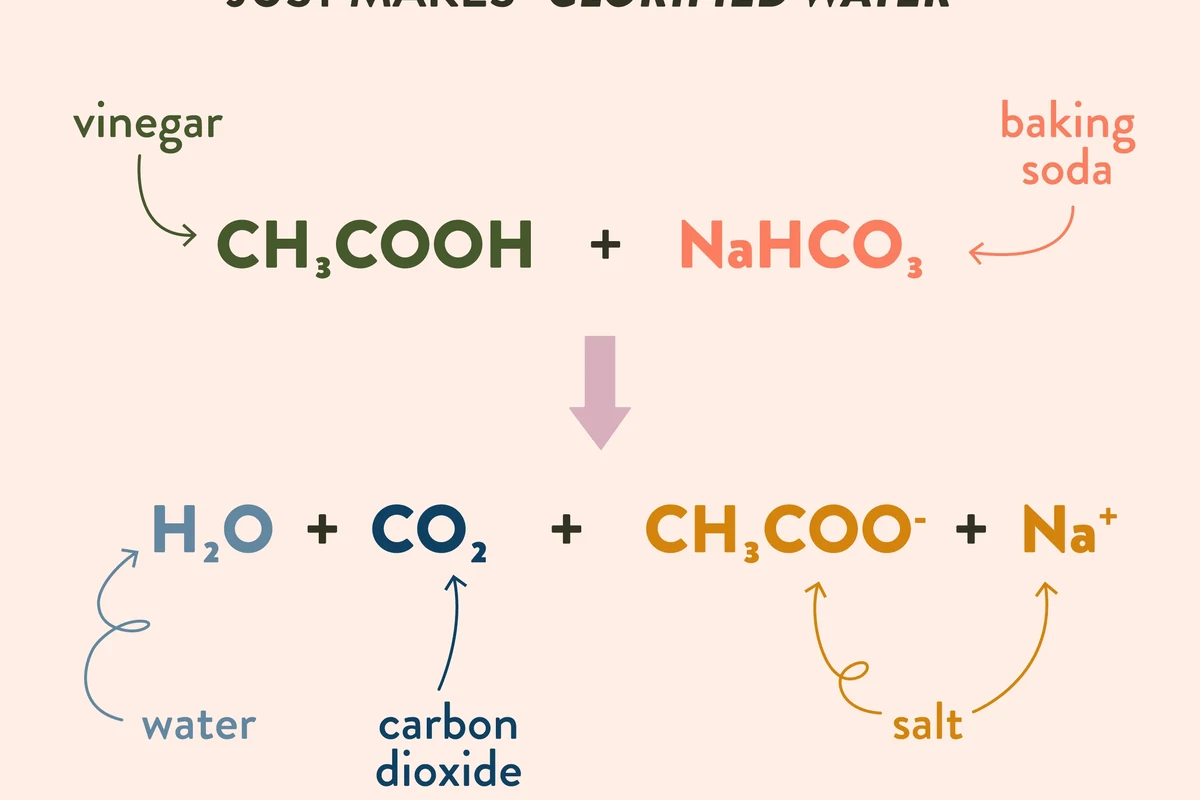
At its core, the reaction of vinegar and baking soda equation is a chemical change, not just a bubbling trick. Vinegar contains acetic acid, and baking soda is sodium bicarbonate; when they meet, they exchange ions and create new substances.
Acid-base chemistry in plain language
Think of vinegar as the acidic partner and baking soda as the alkaline partner. When they combine, the acid helps break down the bicarbonate, and that breakdown releases carbon dioxide gas.
This is why the mixture foams so quickly. The bubbles are not the whole reaction, but they are the most visible sign that gas is being released.
Vinegar is usually a dilute acetic acid solution, so the exact reaction strength depends on the vinegar type, its acidity, and how much baking soda you add.
Why the equation matters in baking and kitchen science
Bakers use this reaction as a simple model for gas production, leavening, and ingredient balance. It also helps explain why some recipes rise well while others collapse or taste slightly bitter.
If you want a broader overview of the chemistry, our guide to the baking soda and vinegar reaction explained simply gives a helpful foundation before you move into recipe use.
The Balanced Reaction Equation: Reactants, Products, and What Changes
The balanced equation is commonly written as acetic acid plus sodium bicarbonate yielding sodium acetate, water, and carbon dioxide. The key idea is that the atoms are rearranged, not destroyed.
Acetic acid and sodium bicarbonate as the starting ingredients
Vinegar provides acetic acid, usually mixed with water. Baking soda is sodium bicarbonate, a dry powder that reacts when it is dissolved or moistened enough to interact with the acid.
Because vinegar and baking soda are not pure laboratory chemicals in the home kitchen, the exact reaction can vary a little. Brand, concentration, and measuring method all matter.
Carbon dioxide, water, and sodium acetate as the products
Carbon dioxide is the gas that makes the mixture bubble and expand. Water remains in the mixture, and sodium acetate is the salt left behind after the acid-base reaction.
That leftover salt is one reason the mixture can taste salty or sharp if used carelessly in food. It is also why the reaction is not a magic replacement for proper recipe balance.
Why “fizzing” is a gas-release sign, not the full story
Fizzing tells you gas is forming, but it does not tell you whether the reaction is complete, balanced, or useful for baking. A fast burst can happen even when the ingredients are poorly measured.
In other words, more foam does not automatically mean better results. The useful question is whether the gas is being produced at the right time and in the right amount.
Do not seal vinegar and baking soda in a rigid container. Gas pressure can build quickly and may cause the container to burst or spray liquid.
How the Reaction Works in Real Kitchen Conditions
In a real kitchen, this reaction is affected by temperature, mixing, ingredient strength, and how quickly the ingredients come together. Small changes can make the fizz look very different even when the chemistry is the same.
Effect of vinegar strength and baking soda amount on reaction intensity
Stronger vinegar usually produces a more noticeable reaction because there is more acid available. Too much baking soda, however, can leave extra alkaline residue and create a soapy or metallic aftertaste.
The best result comes from matching the ingredients to the goal. If you only want a demonstration, a small amount is enough. If you are developing a recipe, balance matters more than spectacle.
If you are testing the reaction for a recipe idea, measure carefully with the same spoon or scale each time. Consistent measuring makes it easier to see whether changes come from the formula or from the ingredients themselves.
Temperature, mixing, and surface area factors that change the result
Warmer ingredients usually react faster than cold ones, because particles move more quickly. Fine baking soda mixed into liquid also reacts more readily than a clump sitting at the bottom of a bowl.
Stirring changes how much of the baking soda meets the vinegar at once. A quick stir gives a fast burst, while a gentler mix may stretch the reaction slightly longer.
Practical examples from batter, cleaning, and science demonstrations
In batter, the reaction can help create lift if the gas is trapped before it escapes. In cleaning, the fizz can loosen debris mechanically, but the mixture is not a strong all-purpose cleaner.
For school projects, the reaction is popular because it is visible, safe with supervision, and easy to explain. If your goal is cleaning rather than baking, our article on baking soda vinegar cleaning ovens shows where the reaction is useful and where it is not.
Common Mistakes When Interpreting or Using the Equation
Many kitchen mistakes come from treating the reaction like a one-size-fits-all solution. The equation is useful, but only when you understand what it can and cannot do.
Assuming more bubbles always means a better reaction
A dramatic fizz can be satisfying, but it may simply mean the ingredients were added too fast or in too much quantity. That does not guarantee a better texture, cleaner surface, or stronger lift.
In baking, excess gas can actually weaken structure if the batter is not built to hold it. A stable crumb depends on the batter’s flour, eggs, fat, and mixing method as much as on the leavening.
Using the equation as a leavening shortcut in baked goods
Vinegar and baking soda can contribute lift, but they are not a universal shortcut for baking powder or yeast. Recipes need the right timing, moisture level, and structure to trap the gas before it escapes.
If you are deciding whether baking soda can replace another leavener, review the full recipe first. Our guide on using baking soda instead of baking powder safely explains why that swap is not always direct.
Confusing neutralization with harmlessness or safety
Neutralization does not mean the mixture is automatically safe for every use. It may still be hot from reaction, slippery on the floor, irritating to eyes, or unsuitable for food if the amounts are off.
For food safety questions, rely on recognized guidance such as USDA or FDA information, especially when raw ingredients, cross-contact, or storage are involved. Chemical reactions in the kitchen should be handled with the same care as any other prep step.
Keep the mixture away from your face and eyes, and supervise children closely during demonstrations. Use a bowl or tray with room for foam to rise without spilling.
What This Reaction Means for Baking Results and Texture
In baked goods, carbon dioxide can help create a lighter crumb when the batter is designed to hold the gas. The reaction works best when it happens at the right moment, not too early and not too late.
How carbon dioxide can help lift batter when used correctly
Gas bubbles expand in the heat of the oven, which can increase volume and improve tenderness. This is one reason chemical leavening is valuable in quick breads, muffins, and some cakes.
The batter still needs enough structure to support that expansion. Flour proteins, eggs, and proper mixing all help trap the bubbles until the crumb sets.
Why timing matters before the gas escapes
If the reaction starts too early, the gas may escape before the batter reaches the oven. That can leave a denser crumb and less rise than expected.
This is why many recipes rely on baking soda paired with an acidic ingredient already in the batter, rather than a separate vinegar mixture added too late or too early.
When the reaction can weaken structure or leave off-flavors
Too much vinegar can thin the batter and add a tang that does not belong in the final flavor. Too much baking soda can leave a bitter or soapy note and may also darken the crumb more than intended.
If your baked goods rise and then sink, the problem may be overreaction, weak structure, or an oven that was not fully preheated. Oven calibration, pan size, and rack position can all change the outcome.
Safety, Cleanup, and Storage Considerations in the Kitchen
This reaction is common and usually manageable, but it still deserves basic kitchen safety. A little planning prevents spills, splashes, and unnecessary mess.
Container choice and pressure buildup risks
Use an open bowl, tray, or other vented container for demonstrations. A closed bottle or jar can trap gas and create pressure fast.
For cleanup, wipe up the mixture while it is still contained. If it spills on counters, a damp cloth is usually enough for a small mess, followed by normal cleaning.
- Use a wide, open container
- Measure small test amounts first
- Keep paper towels nearby
- Sealing the reaction in a bottle
- Leaning over the foam
- Using it near delicate electrical equipment
Safe handling around children, food prep, and closed spaces
For children, the reaction is best treated as a supervised science activity, not a solo kitchen experiment. Keep it away from eyes, and wash hands after handling the ingredients.
In food prep areas, avoid cross-contact with allergen-sensitive ingredients and keep the experiment separate from finished food. If you are using the mixture for a classroom demo, ventilation is usually not a problem, but you should still avoid crowding or splashing in small spaces.
Storing vinegar and baking soda for future use
Store vinegar tightly capped in a cool place, and keep baking soda in a dry container so it does not absorb moisture. Damp baking soda loses performance faster and may clump.
If you are unsure whether your baking soda is still active, check freshness before relying on it in a recipe. Our article on when baking soda expires and how to tell can help you decide whether to replace it.
When to Use This Equation as a Teaching Tool vs. a Baking Technique
The same reaction can be useful in a classroom, at home, or in a recipe test, but the goal changes the method. A teaching demo values visibility, while baking values control and consistency.
Best classroom and home-learning demonstrations
This equation is ideal for showing acid-base chemistry, gas formation, and the idea of a balanced reaction. It is simple enough for beginners, yet still accurate enough to teach real chemistry basics.
A shallow tray, a spoon, and small measured amounts are usually enough for a clean demonstration. The goal is understanding, not volume.
Situations where it supports recipe development or troubleshooting
Use the reaction to understand why a batter rises, why an acidic ingredient matters, or why a recipe tastes off after a leavening change. It can also help you troubleshoot flat muffins or dense quick breads.
If a recipe already contains buttermilk, yogurt, molasses, or another acidic ingredient, the chemistry may already be doing part of the work. In that case, adding extra vinegar can upset the balance instead of improving it.
When another leavening method is a better fit
For breads that need long fermentation, yeast is usually the better choice. For recipes that need controlled, even lift without a sharp acid flavor, baking powder may be more appropriate.
In other words, the reaction of vinegar and baking soda equation is best treated as one tool among several. It is useful, but it is not the answer to every rise problem.
Recipe results depend on many variables, including brand differences, humidity, altitude, oven accuracy, pan material, and how the batter was mixed. Small changes can alter the final rise and texture.
Final Recap: How to Read the Vinegar and Baking Soda Equation with Confidence
The reaction of vinegar and baking soda equation is a straightforward example of acid-base chemistry that produces carbon dioxide, water, and sodium acetate. In baking, that gas can help with lift, but only when the recipe is built to hold it.
What bakers and learners should remember before applying it
Remember that fizzing is only one part of the story. The amount of acid, the amount of baking soda, the batter structure, and the timing all affect the final result.
If you are learning, use the equation to understand chemical change. If you are baking, use it only when the recipe calls for that kind of leavening balance.
How to judge whether the reaction helps or hurts your goal
Ask whether you need a visible demonstration, a cleaning reaction, or actual baking lift. Then decide whether vinegar and baking soda are the right match for that job.
For most kitchen uses, the best outcome comes from small, measured tests and realistic expectations. That approach gives you better control, better texture, and fewer surprises.
Measure ingredients carefully and choose an open container or a recipe that can trap gas effectively.
Mix at the right time so the carbon dioxide is released while the batter can still rise.
Let the structure set before slicing so the crumb does not compress or collapse.
Frequently Asked Questions
The reaction is commonly written as acetic acid plus sodium bicarbonate producing sodium acetate, water, and carbon dioxide. The exact wording may vary, but the products are the same.
The fizz comes from carbon dioxide gas being released during the acid-base reaction. The amount of fizz depends on how much acid and baking soda you use and how quickly they mix.
Sometimes, but not as a direct one-to-one swap. Baking powder is formulated for controlled leavening, while vinegar and baking soda can change flavor and texture if the recipe is not adjusted.
Not always. More fizz may simply mean the reaction happened faster or with too much ingredient, which can hurt structure or leave off-flavors.
No, not in a sealed bottle or rigid container. Gas pressure can build quickly and cause the container to burst or spray liquid.
Keep vinegar tightly sealed and baking soda dry in an airtight container. Moisture can make baking soda clump and reduce its usefulness over time.
