
Cleaning White Shoes with Baking Soda for Bright Results

Baking soda can clean many white shoes well when the material is sturdy and the stain is light to moderate. Use a thin paste, brush gently, and air-dry the shoes in the shade for the safest results.
White shoes can look sharp, but they also show every scuff, splash, and gray mark. If you want a low-cost way to brighten them, cleaning white shoes with baking soda is often a practical first step for the right materials and the right stains.
- Best use: Baking soda is strongest on surface dirt, scuffs, and odors.
- Material matters: Canvas, mesh, and knit are usually safer than suede or delicate leather.
- Less is better: A thin paste and gentle brushing reduce residue and fabric damage.
- Drying counts: Air-dry in the shade to help prevent yellowing and shape issues.
Why Baking Soda Works on White Shoes: What It Can and Cannot Do
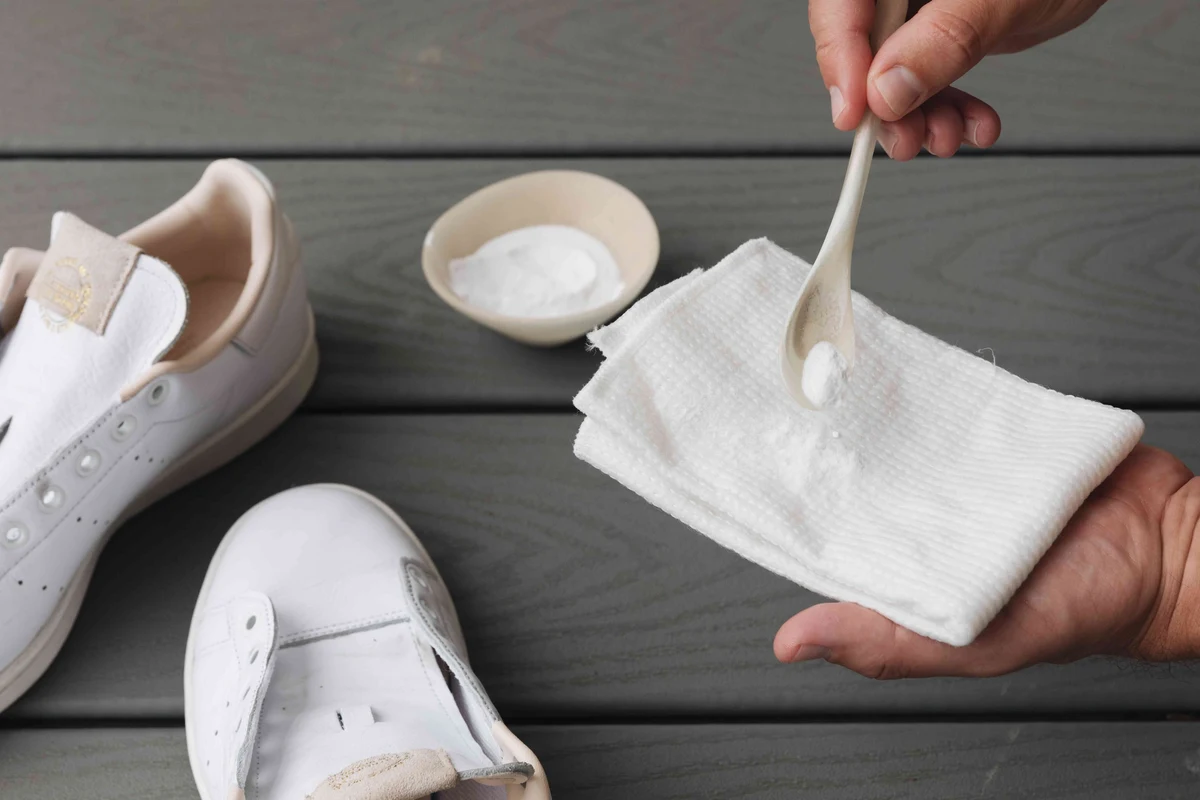
Baking soda is mildly alkaline and slightly abrasive, which makes it useful for loosening surface grime without the harshness of many stronger cleaners. It can also help absorb odors, which is why it shows up in so many laundry and deodorizing uses, including baking soda laundry benefits and other cleaning routines.
How baking soda helps lift surface stains and neutralize odors
On white shoes, baking soda works best on dirt that sits on the surface: dust, dried mud, light food marks, and general dullness. When mixed with a little water, it forms a paste that clings to the shoe long enough to loosen grime so you can wipe or brush it away.
Its odor-fighting effect is helpful for insoles and fabric linings, especially after wear in warm weather. That said, baking soda does not truly “bleach” material back to a factory-white finish, so it is better at cleaning than restoring severe discoloration.
When baking soda is enough and when you need a stronger cleaner
If the shoe is mostly dirty from everyday use, baking soda is often enough. It is a sensible first choice for light staining, minor yellowing on the surface, and general freshening when you want to avoid aggressive products.
If the stain is deep, oily, set in, or caused by dye transfer, you may need a specialty sneaker cleaner or a material-specific product. For stubborn yellowing or bleach-related marks, it can help to compare methods before scrubbing harder, such as the approach discussed in baking soda for yellow stains.
- Low cost and easy to find
- Useful for light surface grime and odors
- Works well on many fabric shoes
- Not ideal for delicate finishes
- May leave residue if not wiped well
- Not strong enough for every stain
Best Shoe Materials for Baking Soda Cleaning in 2026
Material matters more than most people expect. A cleaner that works nicely on canvas can cause dullness, texture changes, or residue on leather and suede, so it is worth checking the shoe type before you start.
Canvas, mesh, and knit shoes
Canvas is usually the easiest place to start because it tolerates light paste cleaning and gentle brushing. Mesh and knit uppers can also respond well, but they need a softer touch because the fibers can snag or flatten if you scrub too hard.
These materials often collect dust in seams and around the toe box, where a paste can help lift the gray film that plain wiping misses. A soft brush and careful drying make a bigger difference than using a stronger chemical.
Leather, faux leather, and suede: where to avoid or limit baking soda
Smooth leather and faux leather can sometimes be wiped with a very small amount of baking soda paste, but it should be used sparingly and removed quickly. Too much moisture can leave a cloudy look, especially if the finish is coated or polished.
Suede is the material most people should avoid treating with a wet baking soda paste. The texture can become patchy or stiff, and once the nap is disturbed, it is difficult to restore without a suede-specific brush or cleaner.
Checking manufacturer care labels before you start
Always check the care label or brand instructions first. Some shoes are machine washable, some are spot-clean only, and some have glued components or specialty finishes that react badly to water or abrasion.
If the manufacturer warns against soaking, bleaching, or abrasive cleaning, follow that guidance. The safest method is the one the brand recommends for that exact shoe construction.
Supplies and Mixture Ratios for Safe White Shoe Cleaning
You do not need a long supply list to clean white shoes well. In most cases, a simple paste and a soft brush are enough, and that is usually safer than trying several products at once.
Basic baking soda paste: ideal measurements for most shoes
A practical starting ratio is about 2 tablespoons of baking soda mixed with 1 tablespoon of water. You want a spreadable paste, not a runny slurry, so adjust slowly until it clings to the shoe without dripping.
For larger shoes or heavier buildup, you can make a little more paste using the same ratio. If you are cleaning only a small scuff, a teaspoon-sized amount may be enough.
Optional helpers: mild dish soap, white vinegar, soft brush, microfiber cloth
A drop of mild dish soap can help break up greasy residue, especially on midsoles and toe caps. A microfiber cloth is useful for wiping away paste cleanly, and a soft brush helps work the cleaner into textured rubber without roughing up the upper.
Some people like to pair baking soda with vinegar because the reaction looks dramatic, but for shoe cleaning, that fizz is not the main cleaning action. If you want to understand that reaction better, see baking soda and vinegar reaction explained simply and use it carefully rather than assuming more fizz means more cleaning.
What to avoid: bleach, abrasive scrubbers, and overly wet cleaning methods
Bleach can weaken fibers, damage glue, and sometimes make white materials look more yellow over time. Abrasive scrubbers can rough up mesh, scratch faux leather, and strip protective coatings from midsoles.
Use good ventilation if you mix cleaners, and never combine products unless the label says it is safe. For shoes, a gentler method is usually safer and more predictable than a stronger one.
Step-by-Step Method for Cleaning White Shoes with Baking Soda
The cleanest results usually come from a simple, controlled process. Think of it like careful prep in baking: the right order matters more than force.
Dry prep: removing laces, loose dirt, and surface dust
Take out the laces if possible and tap the shoes together outdoors to knock off loose dirt. Use a dry brush or cloth to remove dust from seams, soles, and the tongue before adding any moisture.
This step matters because wet dirt spreads easily. If you skip it, the paste can turn muddy and smear the stain deeper into the fabric.
- Check the shoe material and care label
- Remove laces and loose dirt
- Test a small hidden spot first
- Gather a soft brush and clean cloth
Applying the paste evenly without oversaturating the shoe
Dip the brush or cloth into the paste and apply a thin, even layer to the stained areas. Focus on the dirty zones rather than coating the entire shoe in a thick layer, which only makes rinsing harder.
Work in small sections so the paste does not dry before you can brush it in. A thin coat is usually enough to loosen dirt and keep the finish from looking chalky.
Brushing technique for midsoles, uppers, and textured soles
Use light circular motions on canvas and mesh, and keep your pressure gentle enough that the fabric does not stretch. On midsoles and rubber soles, you can use a little more pressure, especially around grooves where grime collects.
For textured soles, a soft-bristle brush can reach the edges of the pattern without damaging the surface. If a stain remains after one pass, it is better to repeat a mild cleaning than to attack it with force.
Rinsing, wiping, and air-drying for a bright finish
Wipe away the paste with a clean damp cloth, then follow with a second cloth lightly dampened with plain water if residue remains. The goal is to remove the cleaner without soaking the shoe.
Stuff the shoes with paper towels or plain white paper to help them hold shape while they dry. Let them air-dry at room temperature, away from direct heat, because high heat can warp materials and weaken adhesives.
Baking soda is often used in cleaning because it can help with both odor control and mild scrubbing. That makes it useful for shoes that need freshness as well as visible brightening.
How to Handle Common Stains on White Shoes
Different stains behave differently. Mud lifts better when dried first, grass can leave pigment behind, and salt marks often need more than a single wipe because the minerals can dry into the surface.
Grass, mud, food spills, and everyday scuffs
Let mud dry before brushing it off, because wet mud tends to spread. For grass or food marks, apply the paste, let it sit briefly, then brush gently and wipe clean.
Everyday scuffs on midsoles often respond well to a slightly firmer brush and a second pass. If the scuff is only on the rubber edge, a small amount of paste can make a noticeable difference without treating the whole shoe.
Yellowing, salt marks, and stubborn edge stains
Yellowing can come from age, heat, residue, or previous cleaning products, so it is not always a simple dirt issue. Salt marks from winter roads or sweat need prompt cleaning because they can dry into a crust that is harder to remove later.
For edge stains, use a damp cloth first to soften the buildup, then apply paste only where needed. If you see recurring yellowing after cleaning, the problem may be drying conditions or leftover cleaner rather than the stain itself.
Spot-cleaning laces and insoles without damaging them
Laces can usually be soaked separately in a bowl with mild soap and a small amount of baking soda, then rinsed well and air-dried. If they are very delicate or elastic, keep the treatment light so they do not fray.
Insoles should be cleaned carefully because too much water can break them down or cause odor to linger inside the foam. A lightly damp cloth with a small amount of paste is safer than soaking.
Common Mistakes That Can Make White Shoes Look Worse
Most cleaning problems come from rushing. Too much water, rough scrubbing, or poor drying can leave shoes looking duller than before you started.
Using too much water or leaving residue behind
Excess water can push dirt deeper into fabric and leave tide lines as it dries. Baking soda residue can also create a powdery film that makes white shoes look dusty if you do not wipe thoroughly.
Use only enough moisture to make the paste workable and to remove it afterward. If the shoe feels wet rather than simply damp, you are probably using too much.
Scrubbing too hard and fraying fabric or stripping finish
Hard scrubbing can fuzz canvas, thin knit fibers, and wear down glossy finishes. On shoes with glued overlays, aggressive brushing can also lift edges over time.
Gentle repetition is safer than force. If one round does not finish the job, let the shoe dry and try again with a lighter touch.
Skipping a patch test on delicate materials
A hidden spot test helps you see whether the material darkens, roughens, or changes color. This is especially important on faux leather, dyed trim, and mixed-material shoes.
Even when a shoe is labeled white, the trim, glue, and finish may react differently from the main upper. A small test spot can prevent a larger problem.
Drying in direct sunlight and causing yellowing
Direct sun can help some fabrics dry faster, but it can also contribute to yellowing on certain materials and leave the shoe unevenly faded. Strong heat from radiators, dryers, or vents can create similar issues.
Air-drying in a shaded, well-ventilated area is the safer choice. It takes longer, but it usually gives a cleaner-looking result.
Drying, Storage, and Ongoing White Shoe Maintenance
Keeping white shoes bright is easier when cleaning is part of a routine. Small habits prevent the kind of buildup that turns a light touch-up into a major project.
Proper air-drying methods and shape retention tips
After cleaning, reshape the shoes with paper towels, shoe trees, or clean tissue paper so the upper dries in its normal form. Replace damp stuffing if needed, especially in thicker canvas shoes that hold moisture longer.
Do not stack shoes while they are drying, because trapped moisture can leave odors or uneven marks. Good airflow matters more than speed.
How often to clean white shoes to keep them bright
There is no single schedule that fits every pair. Shoes worn often in wet or dusty conditions may need light cleaning more regularly, while occasional wear may only need spot treatment.
A good rule is to wipe off fresh dirt as soon as you notice it and do a deeper baking soda clean when the shoes start to look dull, not after the stains have fully set.
Simple storage habits that reduce future staining
Store white shoes in a dry place away from direct sun and heavy dust. If you keep them in a closet, a breathable bag or the original box can help protect them between wears.
It also helps to avoid putting white shoes away while they are still damp. Moisture trapped in storage can lead to odor, mildew, and discoloration.
Choosing the Right Cleaning Approach for Your Shoes: Final Recap
Cleaning white shoes with baking soda is a smart, low-cost method when you are dealing with light dirt, mild odors, and fabric or rubber surfaces that can handle gentle cleaning. It is not a cure-all, but it is often the best first move before trying stronger products.
When baking soda is the best low-cost option
Choose baking soda when the shoes are made of canvas, mesh, or similar washable materials and the stain is mostly surface-level. It works especially well when you want a simple method that does not require special equipment.
When to switch to specialty cleaners or professional care
Move to a material-specific cleaner if the shoes are suede, heavily dyed, coated, or expensive enough that a mistake would be costly. If the stain is deep, oily, or caused by chemical discoloration, a stronger product or professional cleaning may be the safer route.
Practical decision guide for keeping white shoes bright longer
Start with a patch test, use a thin paste, brush gently, and let the shoes dry fully in the shade. That simple routine is often enough to keep white shoes looking cleaner for longer without risking damage.
If you like practical cleaning methods that rely on simple ingredients, you may also find it helpful to read about baking soda vinegar cleaning ovens and baking soda tricks that actually work, since the same idea applies: match the method to the surface, use less product than you think, and finish with careful wiping.
For shoes with special finishes, manufacturer instructions should always override general cleaning advice. If a pair is valuable, delicate, or already damaged, start conservatively and stop if the material changes texture or color.
Frequently Asked Questions
A common starting mix is 2 tablespoons of baking soda with 1 tablespoon of water. Adjust slowly until you get a spreadable paste that does not drip.
You can use it very sparingly on some smooth leather or faux leather shoes, but patch test first. Avoid soaking the material, and do not use it on suede.
It can help with light surface yellowing, but it will not fix every cause of discoloration. Deep yellowing may need a specialty cleaner or a different approach.
Yes, wipe away the paste with a damp cloth and follow with plain water if residue remains. Leaving baking soda behind can make shoes look chalky.
It is better to air-dry them in the shade. Direct sunlight can contribute to yellowing or uneven fading on some materials.
Clean them whenever they start to look dull or pick up visible dirt, rather than waiting for stains to set. Light spot cleaning after wear can reduce the need for deeper cleaning.