
Cleaning White Shoes with Baking Soda Easy Step by Step

Baking soda is a simple way to clean many white shoes because it helps lift light stains, reduce odors, and brighten rubber and canvas. It works best with gentle scrubbing, careful wiping, and full air-drying.
Cleaning white shoes with baking soda is a simple, low-cost method that can help lift surface stains, reduce odors, and brighten rubber and canvas. Used the right way, it works well for everyday grime without needing harsh chemicals.
- Best materials: Canvas, mesh, and rubber soles respond well to a mild baking soda paste.
- Main limit: Suede and untreated leather need extra caution or a different cleaner.
- Cleaning method: Use a thick paste, scrub lightly, then wipe away residue carefully.
- Damage prevention: Test a hidden spot and avoid soaking the shoe.
- Maintenance: Air-dry fully and clean small marks early to prevent buildup.
Why Baking Soda Works for Cleaning White Shoes
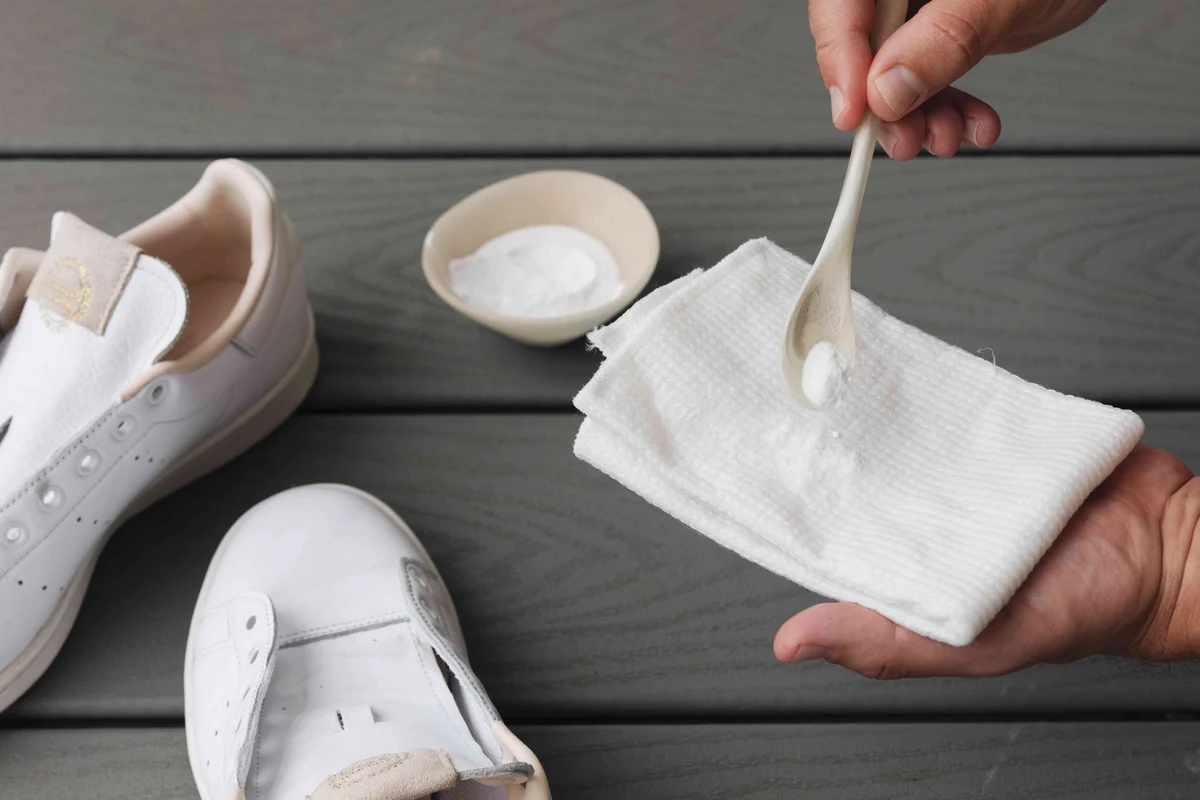
Baking soda helps in three practical ways: it acts as a mild abrasive, it can absorb odors, and it helps loosen dirt that sits on the surface of fabric and rubber. That is why it is often used in the same household cleaning routines as laundry refreshers and odor control, including baking soda in laundry benefits and other gentle cleaning jobs.
How baking soda lifts stains, deodorizes, and helps brighten rubber and canvas
When mixed with a little water, baking soda forms a paste that clings to scuffs and grime. The paste gives you light scrubbing power, which is useful on rubber soles and textured canvas, where dirt tends to settle into small grooves. It also helps neutralize some odor-causing compounds, which is why it is often chosen for shoes that have been worn frequently.
Because baking soda is alkaline, it can help break down some oily residue and everyday dirt. It is not a bleach, so it will not magically restore very old discoloration, but it can improve the look of shoes that are only moderately dirty.
When baking soda is most effective: canvas, mesh, rubber soles, and light scuffs
This method is best for white canvas sneakers, mesh trainers, rubber midsoles, and small scuff marks. It works especially well when the shoe is dirty from dust, street grime, or light yellowing on the sole.
It is less reliable on deep stains, dyed materials, or shoes with delicate finishes. For stubborn discoloration, you may need a stronger cleaner or a different method, such as a sneaker-safe product or a mild peroxide-based paste, depending on the material.
Baking soda works best as a gentle cleaner, not a heavy-duty stain remover. If the shoe material is delicate or coated, start with the least aggressive method first.
What You Need Before You Start
Before cleaning, gather the basics and check the shoe material. A few minutes of preparation can prevent water marks, fraying, or damage to glue and printed logos.
Recommended supplies: baking soda, water, soft brush, microfiber cloth, bowl, and optional vinegar or laundry detergent
A soft toothbrush or shoe brush is usually enough for the job. A microfiber cloth helps remove paste cleanly without leaving lint behind. If you need extra cleaning power, a small amount of mild laundry detergent can help, and a vinegar rinse is sometimes used for very specific stains, though it should be used carefully and only when the shoe material allows it.
If you want to understand the baking soda and vinegar reaction before using both in cleaning, see our guide on the baking soda and vinegar reaction explained simply. For shoe cleaning, that reaction can create fizz, but fizz alone does not mean better cleaning.
Choosing the right cleaning method for leather, suede, knit, or fabric shoes
Canvas and fabric shoes are the easiest candidates for baking soda paste. Mesh and knit shoes can also be cleaned this way, but they need a lighter touch and less moisture. Rubber soles are very forgiving and usually handle gentle scrubbing well.
Leather, especially untreated leather, is a different story. Suede is even more delicate and should not be treated with a wet baking soda paste unless the manufacturer specifically says it is safe. If your shoes are leather or suede, follow the brand’s care instructions first.
Safety checks: testing a hidden spot and protecting laces, glue, and logos
Test the paste on a hidden spot, such as the inside edge of the tongue or a low seam. Wait for it to dry so you can check for discoloration, residue, or texture changes.
Protect glued sections, printed logos, and decorative patches. These areas can lift, fade, or smear if they are scrubbed too hard or soaked too long. Remove the laces before cleaning so you can work more evenly around the shoe.
Do not use a wet baking soda paste on suede or untreated leather unless the care label confirms it is safe. Always check the shoe manufacturer’s instructions first.
Step-by-Step Method for Cleaning White Shoes with Baking Soda
This basic method is designed for beginner-friendly shoe care. Keep the paste mild, use gentle pressure, and let the cleaner do most of the work.
Step 1: Remove loose dirt and take out the laces
Tap the shoes together outside, then brush off dry mud, dust, and grit. Taking out the laces gives you better access to the tongue and eyelets and helps prevent muddy streaks from spreading.
Mix baking soda with a small amount of water until it looks like a spreadable paste, similar to thick frosting. You want it to cling to the shoe, not run off like a thin slurry.
Use a soft brush or cloth to work the paste into the dirty areas in small circles. Focus on scuffs, seams, and the edges of the sole instead of scrubbing the whole shoe aggressively.
Leave the paste on for a short period so it can loosen grime, but do not let it dry into a thick chalk layer. Over-drying can make removal harder and may leave a film behind.
Wipe away the paste with a damp microfiber cloth, then check the results. If a stain remains, repeat only on that area rather than redoing the whole shoe.
Step 2: Mix the baking soda paste at the right consistency
The paste should be thick enough to stay where you put it. If it is too watery, it will spread into fabric and may leave marks. If it is too dry, it will drag across the shoe and can scratch delicate finishes.
A good rule is to start with a small amount of water and add more only as needed. This is one of the most common places where people go wrong, because too much liquid can saturate the shoe and make drying slower.
Step 3: Apply the paste and scrub gently in circles
Apply a thin layer rather than a heavy coat. Use small circular motions with light pressure, especially on canvas and mesh, where aggressive scrubbing can flatten fibers or create fuzzy patches.
If you are cleaning rubber soles, you can use slightly firmer pressure, but still avoid digging into the material. Gentle, repeated passes usually work better than one hard scrub.
Step 4: Let the shoes sit without over-drying the material
Let the paste rest just long enough to loosen grime. In most cases, a short wait is enough; leaving it on too long can make the residue harder to remove and may leave white dust in seams.
If you are also cleaning odors, remember that baking soda is useful for freshening shoes, but it is not a substitute for full drying. For odor-focused cleaning ideas, our guide on baking soda for smoke odors shows how baking soda works as a deodorizer in other settings too.
Step 5: Wipe, rinse carefully, and repeat only where needed
Use a damp cloth to remove the paste. Do not soak the shoe under running water unless the material is clearly washable and the manufacturer allows it.
Check the shoe under natural light so you can spot leftover haze, streaks, or missed scuffs. If needed, repeat only on the problem areas. That limits wear and helps preserve the shoe’s shape.
Baking soda is mildly abrasive, which is why it can help remove surface grime. That same quality also means it should be used carefully on soft or coated materials.
How to Clean Different Parts of the Shoe
Different parts of a shoe need different levels of moisture and pressure. The sole can usually take more attention than the upper, while laces and stitched edges need a lighter touch.
White soles and midsoles: tackling yellowing, scuffs, and grime buildup
The sole is usually the easiest place to see improvement. Baking soda paste can help lift black scuffs, dust, and buildup along the edge where the upper meets the sole.
For yellowing, results vary. Some yellowing is surface grime, which may improve. Other yellowing comes from material aging or oxidation, which baking soda cannot fully reverse. If you are trying to remove yellow stains on other surfaces, our article on baking soda for yellow stains explains why some discoloration responds better than others.
Canvas and fabric uppers: avoiding water saturation and residue
Canvas and fabric can absorb too much moisture if you overdo the water. That can lead to water rings, slow drying, or a chalky finish after the paste dries.
Work in small sections and use a lightly damp cloth to remove residue. If the upper is heavily stained, a second gentle pass is safer than soaking the whole shoe at once.
Laces, tongues, and stitched edges: cleaning small details without fraying
Laces can often be cleaned separately in a bowl with mild detergent and water, then rinsed and air-dried. If the laces are very delicate, hand-clean them instead of rubbing them against a brush.
For tongues and stitched edges, use the tip of a cloth or a soft brush and avoid pressing paste into the stitching. These areas can trap residue, so wipe them carefully after cleaning.
- Check the shoe material and care label.
- Test a hidden spot first.
- Remove laces and loose dirt.
- Keep water use light and controlled.
- Prepare a clean towel or drying area.
Common Mistakes That Can Damage White Shoes
Most shoe-cleaning problems come from using too much product, too much water, or too much force. A careful approach gives better results and protects the shoe’s structure.
Using too much baking soda and leaving a chalky film
Heavy paste can dry into a powdery layer that is hard to wipe away. That film may make the shoe look even duller, especially on fabric.
Use enough paste to cover the stain, not enough to bury the shoe. If residue remains after wiping, use a clean damp cloth and a second light pass rather than adding more paste.
Scrubbing too hard on delicate materials
Hard scrubbing can rough up canvas, fray knit fibers, and wear down rubber edges. It can also push dirt deeper into seams instead of lifting it out.
Think of this like cleaning a delicate pastry surface: steady and gentle usually works better than force. Let the paste sit briefly, then use controlled strokes.
Applying baking soda to suede or untreated leather without checking compatibility
Suede can stain, stiffen, or lose its texture when treated with a wet paste. Untreated leather may darken or dry unevenly.
If you are not sure about the material, skip the paste and use the manufacturer’s recommended cleaner. When in doubt, material safety matters more than a quick brightening effect.
Skipping drying time and causing odor, stiffness, or water marks
Even a light cleaning can leave moisture in seams and padding. If the shoes are put away damp, odors may return and the material may stiffen as it dries unevenly.
Air-dry the shoes fully before wearing them again. Good drying is part of the cleaning process, not an optional final step.
- Use a soft brush and mild paste.
- Clean in small sections.
- Dry shoes completely after wiping.
- Do not soak shoes unless the label allows it.
- Do not scrub delicate materials aggressively.
- Do not leave thick residue on the shoe.
When Baking Soda Needs Backup: Stubborn Stains and Odors
Baking soda is a helpful first step, but it is not always enough. Deep stains, old grime, and heavy odors may need an additional cleaner.
Best add-ons for tough marks: mild soap, hydrogen peroxide, or a sneaker-safe cleaner
For many shoes, a small amount of mild soap mixed with water can improve cleaning without being harsh. Hydrogen peroxide is sometimes used on white shoes for tougher stains, but it should be tested carefully because it can affect color, glue, or finish.
A sneaker-safe cleaner is often the most predictable option for difficult marks because it is designed for shoe materials. If you want a broader look at combining cleaning ingredients, our guide on hydrogen peroxide and baking soda uses explains why this mix can be useful in some household cleaning situations.
How to handle grass stains, salt stains, mud, and sweat odor
Grass stains often need a pre-treatment because the green pigment can cling to fibers. Salt stains usually improve when the shoe is brushed dry first and then wiped with a lightly damp cloth before any paste is used.
Mud should be allowed to dry before brushing, because wet mud spreads. For sweat odor, baking soda can help freshen the inside of the shoe, but fully drying the shoes and rotating pairs matters just as much.
What not to mix with baking soda on shoes and why
Avoid mixing baking soda with strong bleach or random household chemicals. That can damage materials and create unsafe fumes or unpredictable reactions.
Also avoid overdoing vinegar. While vinegar can react with baking soda, the fizz is mostly a chemical reaction, not proof of better cleaning. For shoe care, simple and controlled is usually safer than dramatic.
Use cleaning products in a ventilated area and keep them away from children and pets. Never mix unknown chemicals on shoes just to make the mixture foam more.
Drying, Storage, and Ongoing White Shoe Maintenance
Once the shoes are clean, the next goal is to keep them from getting dirty again too quickly. Good drying and regular maintenance make the biggest difference over time.
Air-drying correctly to preserve shape and prevent discoloration
Air-dry shoes at room temperature in a shaded, well-ventilated area. Direct heat from a radiator, dryer, or intense sun can warp materials, weaken glue, or cause uneven discoloration.
Stuffing the shoes lightly with clean paper can help them hold shape and absorb extra moisture. Replace the paper if it becomes damp.
How often to clean white shoes to keep them looking fresh in 2026
Cleaning frequency depends on how often you wear the shoes, where you wear them, and what material they are made from. As a general approach, spot-clean after visible dirt appears and do a deeper clean when buildup starts to dull the shoe.
If you wear white shoes often, light maintenance every week or two may be enough to prevent major staining. If they are occasional shoes, clean them before storage and after any noticeable stain.
Simple maintenance habits that reduce deep-cleaning needs
Brush off dirt soon after wearing the shoes. Wipe small marks before they settle into the material, and store the shoes in a dry place away from dust.
Using a protective spray that is safe for the shoe material can also help, but always follow the product label. If you are comparing cleaning habits across the home, our article on whether baking soda expires is a useful reminder that fresh ingredients perform more reliably.
White shoes stay brighter when you treat small marks early. Waiting until the entire shoe is gray makes cleaning slower and less predictable.
Final Recap: Is Baking Soda the Best Way to Clean White Shoes?
Baking soda is one of the best first-line options for cleaning white shoes when the goal is to remove light grime, freshen odor, and brighten rubber or canvas. It is affordable, easy to mix, and gentle when used correctly.
Best-use cases, limitations, and when to choose a different cleaning method
It works best on white canvas, mesh, and rubber soles with surface dirt or light scuffs. It is less effective on deep stains, old yellowing caused by aging, suede, and untreated leather.
If the shoe is delicate, coated, or expensive, a material-specific cleaner may be the safer choice. The right method depends on the shoe’s construction, not just the color.
Practical decision guide for keeping white shoes bright, safe, and wearable
Choose baking soda when you want a gentle, low-cost clean and the shoe material can handle a light paste. Choose a specialty cleaner when the stain is stubborn, the material is delicate, or the manufacturer gives different care instructions.
For most everyday white sneakers, baking soda is a smart place to start. Used patiently, it can restore a fresher look without overcomplicating the process.
Many shoe-cleaning problems are really drying problems. If moisture stays in the shoe too long, odors and marks often return even after the visible stain is gone.
Frequently Asked Questions
Yes, baking soda can clean many white canvas, mesh, and rubber shoes when used as a mild paste. It should be tested on a hidden spot first, and it is not recommended for suede or untreated leather without checking the care label.
Mix baking soda with a small amount of water until it forms a thick, spreadable paste. It should cling to the shoe without running off or becoming too dry and chalky.
You can use vinegar in some cleaning situations, but the fizz does not automatically clean better. Use it carefully, only when the shoe material allows it, and never mix it with bleach or other unknown cleaners.
Usually only long enough to loosen surface grime, not long enough to dry into a thick film. Short contact time followed by careful wiping is safer for most shoe materials.
Baking soda works best on light scuffs, everyday dirt, rubber sole grime, and some odor buildup. Deep grass stains, salt stains, and old yellowing may need an additional cleaner.
Air-dry them at room temperature in a shaded, well-ventilated area. Avoid direct heat, and let them dry fully before wearing or storing them.