
Honey and Baking Soda Trick Benefits You Need to Know

The honey and baking soda trick can improve browning, softness, and texture in the right baking recipe. It works best as part of a balanced formula, not as a universal shortcut or health remedy.
The honey and baking soda trick gets a lot of attention because it sounds simple, cheap, and useful in the kitchen. In baking, it can help with browning, softness, and texture, but only when it is used in the right kind of recipe and in the right balance.
- Best use: Works well in cookies, quick breads, and other recipes that already have some acidity.
- Main benefit: Honey adds moisture and browning, while baking soda helps with lift and color.
- Biggest risk: Too much baking soda can leave a soapy or metallic taste.
- Recipe rule: Honey changes sweetness and moisture, so formulas often need adjustments.
- Safety note: Do not treat this mixture as a medical solution or use it for infants.
What the Honey and Baking Soda Trick Is and Why People Still Search for It in 2026
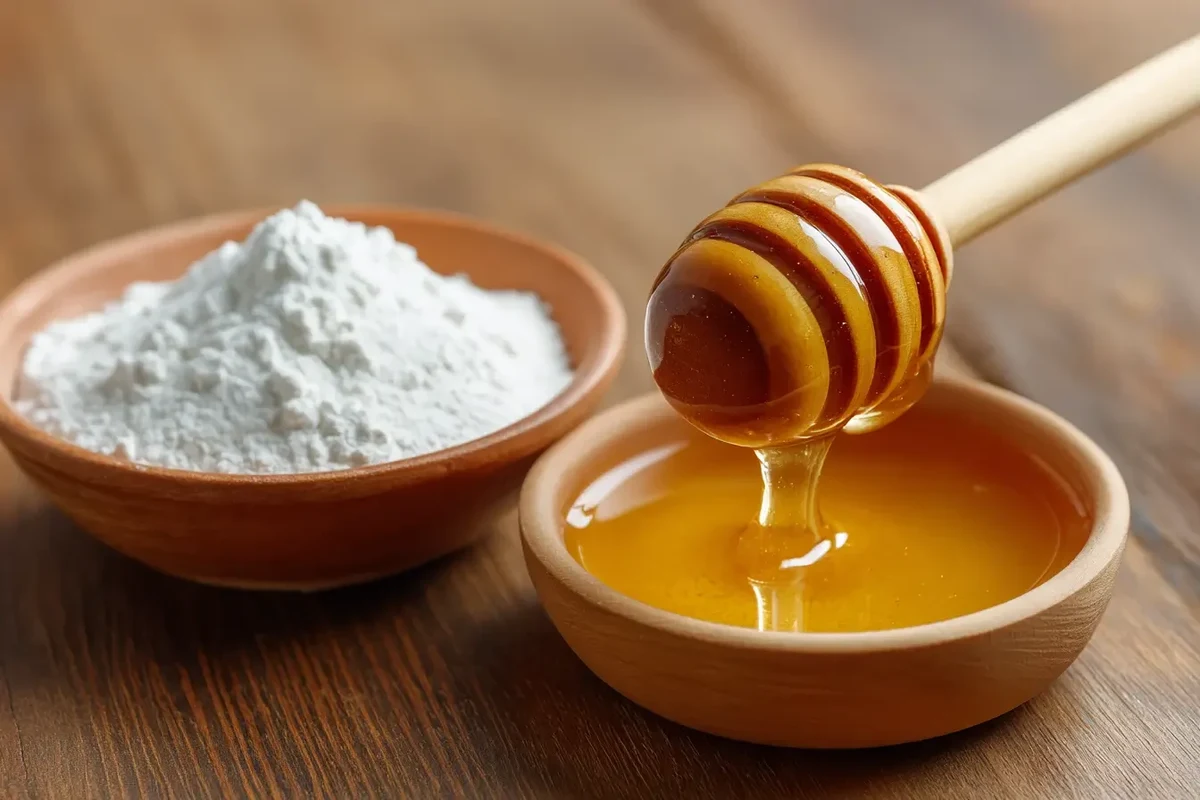
The phrase usually refers to mixing honey with baking soda for baking, home remedies, or general kitchen use. Online, it is often described as a fast fix for better texture, a natural helper, or a multipurpose household trick.
That broad search interest is part of the problem. Some people want a baking shortcut, others are looking for wellness claims, and some are trying to solve a recipe issue without understanding how the ingredients actually work. If you are comparing baking uses with other soda-based methods, it may help to read our guide on the safe baking soda versus baking powder difference.
How the trick is usually described online
Most versions say honey and baking soda can be stirred together and used to improve flavor, rise, or softness. In some posts, the mixture is also presented as a wellness remedy, which is where misinformation becomes a risk.
In baking, the idea is less mysterious: honey brings moisture, sweetness, and browning, while baking soda changes pH and helps with lift when acids are present. That is a real kitchen effect, but it is not a universal fix.
What people expect it to do for baking, wellness, and household use
In baking, people often expect a softer crumb, faster browning, or a more tender texture. In wellness content, the expectation is usually broader and less reliable, because those claims are not the same as recipe science.
For household cleaning, some people assume the mixture will work like other baking soda combinations. That is not always true, because honey is sticky, sugary, and not a general cleaning ingredient. If you want to understand how baking soda behaves in a different non-food setting, see our article on baking soda in laundry benefits.
Why search intent is mixed: home remedy, baking hack, and misinformation risk
Searches for this trick often blend food science with health advice. That mix can be confusing, especially when a post uses the same ingredients to suggest both a recipe improvement and a medical benefit.
For Baking Pastry Schools readers, the safest approach is to treat the honey and baking soda trick as a baking topic first. Anything beyond food use should be checked against trusted guidance from recognized health or food safety sources, not social media summaries.
How Honey and Baking Soda Actually Behave in Baking and Cooking
The key to understanding this trick is chemistry, not hype. Honey is naturally acidic to mildly acidic depending on variety, while baking soda is alkaline. When a recipe includes both, they can influence color, flavor, spread, and rise.
Honey’s role as a sweetener, humectant, and browning agent
Honey does more than sweeten. It holds onto moisture, which helps baked goods stay soft longer, and it encourages browning because of its sugars and water content.
That moisture can be helpful in cakes, muffins, and cookies, but it also changes the structure of the batter or dough. Recipes often need a little less liquid or a small adjustment in flour when honey replaces some of the sugar.
Baking soda’s role as a leavener and alkaline ingredient
Baking soda is sodium bicarbonate, a chemical leavener that needs acid and moisture to produce carbon dioxide gas. That gas helps batter rise and can create a lighter crumb.
It also raises pH, which can deepen browning and reduce the sharpness of acidic flavors. Used well, that can improve a recipe. Used poorly, it can leave an unpleasant soapy or metallic taste.
What happens when acidic and alkaline ingredients are not balanced
If there is not enough acid in the recipe, baking soda may not fully react. That can leave extra alkaline residue in the finished bake, which affects taste and color.
If there is too much acid and not enough soda, the batter may taste too sharp or the rise may be weak. In other words, the trick only works when the recipe is built around balance, not when the ingredients are tossed together randomly.
Why the combination can change texture, color, and flavor in baked goods
Honey can make baked goods more tender and moist, while baking soda can help them spread and brown. Together, they can create a softer cookie edge, a deeper golden crust, or a lighter bite in quick breads.
That said, the outcome depends on the full formula: flour type, fat level, egg amount, oven temperature, and pan size all matter. Even small differences in ingredient brand or measuring method can change the result.
Honey is hygroscopic, which means it attracts and holds moisture. That is one reason honey-based bakes can stay soft longer than recipes made with dry sugar alone.
When the Honey and Baking Soda Trick Can Be Useful in the Kitchen
This pairing is most useful when you already have a recipe that needs gentle browning, a softer crumb, or a bit of extra spread. It is not a universal substitute for leavening or sweetening.
Practical baking examples where the pairing may improve results
Honey and baking soda can work well in cookies, quick breads, spice cakes, and some breakfast bakes. These recipes often have enough moisture and enough natural acidity from ingredients like honey, yogurt, buttermilk, molasses, cocoa, or brown sugar to support the soda.
They can also be useful in recipes where a warm, rounded sweetness is preferred over a plain sugar profile. That is why the pairing often shows up in ginger cookies, bran muffins, and darker loaves.
Situations where it helps with browning, softness, or spread
Browning improves because honey sugars caramelize and promote color development. Softness improves because honey retains moisture and slows staling.
Spread can increase in cookies because the dough may loosen slightly and the soda can encourage expansion. That is helpful when a cookie recipe is meant to be thin and tender, but not when you want a tall, structured cookie.
When it is better used as part of a formula rather than a standalone trick
The best results come from a full recipe built around the ingredients, not from a spoonful of honey and a pinch of soda added at the end. In good formulas, the leavener, flour, fat, and liquid are all adjusted together.
If you are still learning how baking soda behaves in recipes, our article on a baking soda trick that actually works explains the ingredient’s role in a more general baking context.
Honey is sweeter than granulated sugar and adds liquid to the batter. When replacing sugar with honey, recipes often need small adjustments in flour, baking time, or oven temperature.
How to Measure and Mix Honey and Baking Soda Correctly
There is no single perfect ratio for every recipe. The right amount depends on how much acid is already in the formula, how sweet you want the result, and whether the recipe is a cookie, loaf, cake, or muffin.
Typical ratio patterns used in home baking formulas
In home baking, baking soda is usually measured in small amounts relative to the acid present. Honey is often used as part of the sweetener base, not as the only sweetener.
A practical approach is to follow a tested recipe rather than inventing a ratio from scratch. If you are adjusting an existing recipe, make one change at a time so you can see what the honey and soda are doing.
Adjusting for honey’s moisture and sweetness
Because honey is liquid, it can thin batter. You may need slightly less other liquid or a bit more flour, depending on the recipe style.
Honey also tastes sweeter than the same volume of granulated sugar, so a direct swap can make a recipe overly sweet. That matters especially in cookies and quick breads where flavor balance is important.
Mixing method to avoid clumping or uneven leavening
To prevent clumps, whisk the baking soda into the dry ingredients before adding wet ingredients. If the recipe uses honey in the wet mixture, stir it in thoroughly so it disperses evenly.
Uneven mixing can create pockets of strong soda flavor or uneven browning. A smooth batter or evenly moistened dough usually gives a more reliable result.
Signs the batter or dough is properly balanced before baking
The mixture should look evenly blended, not streaky or grainy. Honey should be fully dispersed, and the batter should not smell sharply soapy or overly alkaline.
For doughs and batters that use soda correctly, you may notice a lightening of texture after mixing, but not a dramatic foaming action unless another acid ingredient is present.
Common Mistakes That Make the Trick Fail
Most failures come from balance problems, not from the ingredients themselves. Too much soda, too much honey, or the wrong recipe structure can all lead to disappointing results.
The baked good tastes soapy, bitter, or metallic.
Too much baking soda is the most likely cause. Reduce the amount and make sure the recipe contains enough acidic ingredients to neutralize it.
Using too much baking soda and creating a soapy or metallic taste
This is one of the most common problems. Baking soda is powerful, and even a small excess can affect flavor.
If a recipe already contains acidic ingredients, adding extra soda without adjusting the rest of the formula can push the batter too alkaline. That often shows up as a strange aftertaste and darker, sometimes uneven, browning.
Assuming honey can replace all sugar without recipe changes
Honey is not a one-to-one stand-in for sugar in every recipe. It changes moisture, sweetness, and browning, which means the recipe may need other adjustments.
In some baked goods, replacing all sugar with honey can make the product denser or too dark before the center is done. That is especially important in larger loaves and cakes.
Ignoring acidity, salt, and fat in the recipe structure
Acidity controls how well baking soda reacts. Salt sharpens flavor and helps balance sweetness. Fat affects tenderness and spread.
If you ignore those parts of the formula, the honey and baking soda trick can feel inconsistent. The recipe may rise poorly, taste flat, or brown too quickly on the outside.
Overmixing, underbaking, or using the wrong pan size
Overmixing can develop too much gluten in flour-based batters, making the crumb tougher. Underbaking leaves extra moisture in the center, which can hide whether the soda actually worked.
Pan size matters too. A shallow pan increases surface browning, while a deeper pan may need more time for the center to set. Oven calibration and rack position also affect the final result.
Do not use homemade honey-and-baking-soda mixtures as medical treatment. For any health-related use, check with qualified professionals and rely on recognized safety guidance, not social media claims.
Safety, Storage, and When Not to Use This Combination
In baking, the main safety concerns are food quality, ingredient handling, and proper storage. Honey and baking soda are common pantry items, but that does not mean every use is appropriate.
Food safety concerns with homemade wellness claims and unverified uses
Honey should never be given to infants under 12 months because of the risk of infant botulism, according to standard food safety guidance. That rule matters even if honey is mixed with other ingredients.
If a recipe or post presents the mixture as a cure or treatment, treat that claim cautiously. Baking Pastry Schools recommends checking official public health or food safety sources when a claim moves beyond cooking.
Storage limits for honey-based mixtures and baked goods
Finished baked goods with honey usually stay moist, but they can also spoil or mold if stored too long at room temperature. Storage time depends on the recipe, humidity, and whether the item is wrapped well.
Use clean utensils, cool baked goods fully before storing, and follow the storage guidance for the specific recipe. If the item contains dairy, eggs, or other perishable ingredients, refrigeration may be needed.
When baking soda should not be used as a substitute for baking powder
Baking soda is not the same as baking powder. Baking powder contains its own acid, while baking soda needs acid from the recipe to work properly.
If you swap soda for powder without adjusting the formula, the bake may fail. For a deeper breakdown, see our guide on whether baking soda and baking powder are the same.
Situations where the trick is not appropriate for children, sensitive diets, or medical use
For children, the biggest concern is not the baking itself but the misleading health claims that sometimes surround this trick. For sensitive diets, honey may not fit vegan or certain low-sugar plans, and baking soda can be an issue if sodium intake is being watched closely.
Anyone with medical questions should ask a qualified professional. This article is for baking education, not health treatment.
Always cool baked goods on a rack before packing them away. Trapped steam can make the crumb gummy and shorten storage life.
How Baking Pastry Students and Home Bakers Can Test the Trick Responsibly
The safest way to learn from this trick is to test it in small batches. Side-by-side comparison shows whether the honey and baking soda are improving the recipe or just changing it.
Simple side-by-side test batches to compare flavor, rise, and crumb
Make one control batch using the original recipe and one test batch with a measured honey-and-soda adjustment. Keep everything else the same: same flour, same pan, same oven rack, same mixing method.
If possible, test only one variable at a time. That makes it much easier to tell whether honey improved softness or whether soda changed the rise.
Use the original recipe exactly as written so you have a baseline for color, texture, and flavor.
Add honey or baking soda in a measured way, but keep all other ingredients and methods the same.
Judge the result only after the item is fully cooled, since some textures change as steam escapes.
What to record: color, spread, moisture, and aftertaste
Write down whether the bake browned faster, spread more, or stayed softer the next day. Also note whether the crumb felt tender, sticky, dry, or dense.
Aftertaste matters a lot with baking soda. A mild alkaline taste usually means the balance needs adjustment.
How to troubleshoot results like dense texture, excess browning, or flat baked goods
If the texture is dense, the recipe may need more lift, less mixing, or a better flour-to-liquid balance. If the outside browns too quickly, lower the oven temperature slightly or move the pan to a different rack.
If the bake is flat, the batter may have been too loose, the soda may have been under-measured, or the recipe may not have enough acid to activate the leavener. In that case, the trick is usually not the answer by itself; the whole formula needs review.
The baked goods are flat or heavy.
Check freshness of baking soda, confirm measuring accuracy, and make sure the recipe includes enough acidic ingredients to activate it.
Final Verdict: Is the Honey and Baking Soda Trick Worth Using?
Yes, but only as a recipe tool, not as a magic shortcut. When used in the right formula, honey and baking soda can improve browning, softness, and flavor in cookies, quick breads, and other simple bakes.
Best-use scenarios for cookies, quick breads, and simple home formulas
This pairing is most useful in recipes that already have moisture, some acidity, and a goal of tender texture. It can be a smart choice for home bakers who want a softer crumb and a warmer sweetness.
It is also helpful when you want to understand how ingredient balance shapes the final bake. That is a core skill in pastry and baking, not just a one-time trick.
When the trick is more myth than method
It becomes myth when people claim it works the same way for every recipe or use it as a cure-all. Honey and baking soda do not fix a poorly balanced formula, and they do not replace proper leavening science.
If a post promises dramatic results without mentioning acidity, moisture, or recipe structure, be skeptical. Good baking is usually about small, controlled adjustments.
What bakers should remember before relying on it in 2026
Start with the recipe, not the trick. Check whether the formula already has enough acid, whether honey changes the moisture balance, and whether baking soda is the correct leavener for the job.
For students and home bakers alike, the best outcome comes from understanding why the ingredients work. That knowledge makes the honey and baking soda trick useful, repeatable, and much less likely to fail.
The honey and baking soda trick is worth using when it is built into a balanced baking formula, especially for cookies and quick breads. It is not a universal hack, and it should never replace careful measuring, proper leavening, or food safety judgment.
Frequently Asked Questions
There is no single ratio that fits every recipe. The right amount depends on the recipe’s acidity, sweetness, and moisture level, so a tested formula is usually the safest choice.
Not always. Honey adds liquid and changes sweetness, so the recipe may need less added liquid, a little more flour, or a different leavening balance.
That usually means there was too much baking soda or not enough acid to balance it. Reducing the soda and checking the full recipe structure usually helps.
Yes, often it does, because honey holds moisture and can slow staling. The effect depends on the recipe, storage method, and how much honey you use.
No. Baking soda needs acid in the recipe to work correctly, while baking powder already contains acid. If the formula is not balanced, the bake may fail.
This article covers baking, not medical treatment. For any health-related use, check trusted official guidance and speak with a qualified professional.