
Baking Soda to Whiten Clothes Easy Laundry Tips That Work

Baking soda can help whiten clothes a little by reducing odor, dullness, and light surface grime. It works best with detergent, but it will not replace bleach for deep yellowing or stubborn stains.
Baking soda can help clothes look cleaner and fresher, but it is not a miracle whitener. Used the right way, it can support your regular laundry routine by reducing odor, softening wash water a little, and helping dingy whites look brighter.
- Best use: Use baking soda as a laundry booster for freshening and light brightening.
- Limits: It will not restore deeply yellowed or permanently discolored fabric.
- Best pairing: Regular detergent does most of the cleaning; baking soda supports it.
- Fabric matters: Cotton handles it best, while delicates need extra caution.
- Biggest mistake: Overloading the washer or expecting one product to fix every stain.
Can Baking Soda Really Whiten Clothes? What Laundry Searchers Actually Want to Know
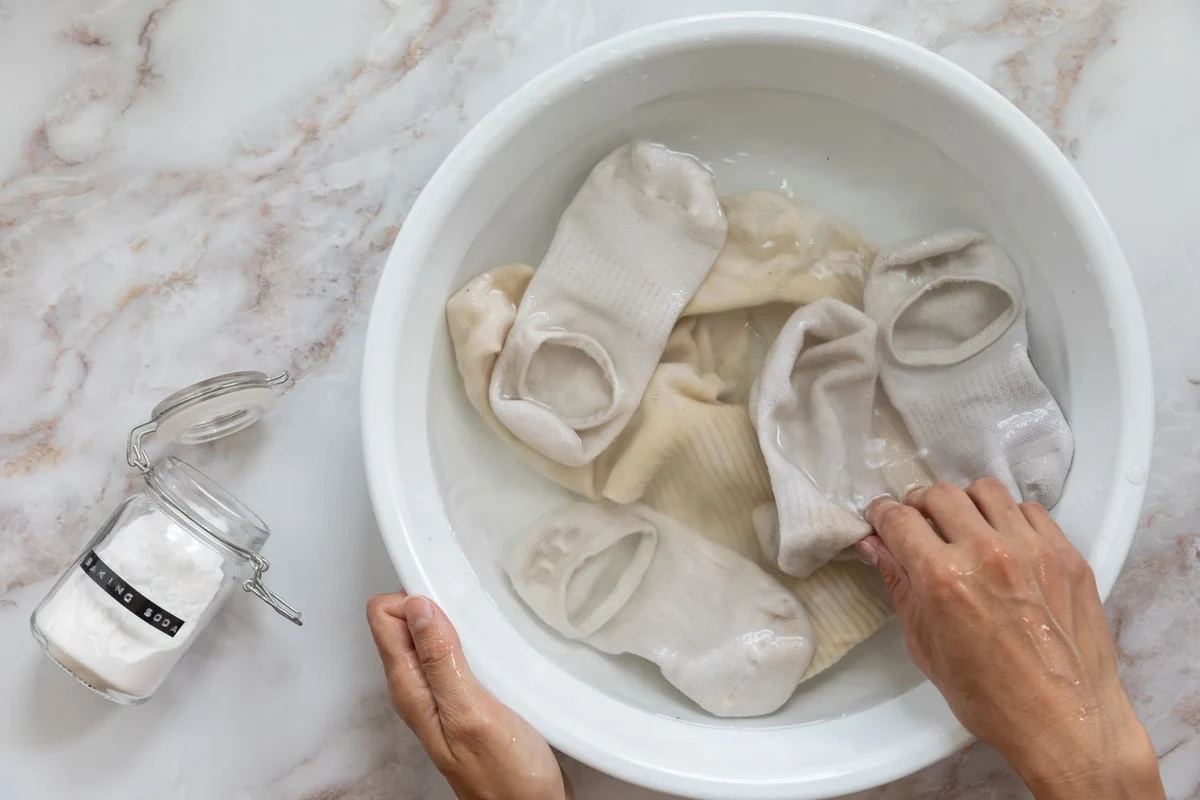
The short answer is yes, but with limits. Baking soda helps whiten clothes mainly by improving the wash environment, not by acting like bleach.
It is especially useful when whites look dull from sweat, body oils, detergent residue, or everyday odor. For a broader look at how it fits into everyday laundry care, you can also read our guide on baking soda in laundry benefits.
How baking soda helps with odor, dullness, and light surface stains
Baking soda is mildly alkaline, which can help loosen some grime and reduce acidic odors. That is why it often works well on T-shirts, socks, towels, and gym clothes that smell clean but still look tired.
It can also help detergent perform a little better by balancing the wash water. In practice, that may make whites look less gray and help fresh stains lift more easily in a normal cycle.
Baking soda is most effective on surface dullness and odor, not on deep fiber discoloration. If the fabric itself has yellowed from age, heat, or repeated wear, the result is usually modest.
What it cannot do: set-in discoloration, bleach-level whitening, or fabric restoration
Baking soda does not bleach fabric the way chlorine bleach does, and it will not reverse every type of yellowing. It also cannot restore fibers that have worn thin, frayed, or permanently aged.
If a white shirt has old armpit stains, yellow collar buildup, or rust marks, baking soda alone may not be enough. In those cases, a stronger whitening method or stain treatment is usually needed.
How to Use Baking Soda to Whiten Clothes in a Standard Wash
The easiest method is to use baking soda as a laundry booster with your regular detergent. That keeps the process simple and avoids overcomplicating the wash.
Recommended amounts for top-loaders and front-loaders
For a standard load, many people use about 1/2 cup of baking soda in a top-loader or 1/4 to 1/2 cup in a front-loader, depending on load size and machine capacity. That is a practical range, not a fixed rule, because washer design and water level matter.
If you are unsure, start smaller. Too much powder can leave residue if the load is small or if the machine uses very little water.
Best way to add it: detergent drawer, drum, or pre-soak basin
For most washers, adding baking soda directly to the drum with the clothes is the simplest option. You can also place it in the detergent drawer if your machine manual allows powdered additives there.
A pre-soak basin works well for dingy whites or towel odor. Dissolve the baking soda in warm water first, then soak the items before washing them normally.
Always check your washer manual before adding any laundry additive to the drawer. Some machines have specific instructions for powdered boosters, and using the wrong compartment can leave residue or affect dispensing.
Example wash routine for white T-shirts, socks, and towels
Sort the load so whites are washed together. Use your usual detergent plus the baking soda booster, then choose the water temperature based on fabric care labels.
For cotton T-shirts and towels, a warm or hot cycle often helps remove body oils better than cold water. For socks with heavy soil, a pre-soak can make the next wash more effective.
Separate true whites from light colors and check for stains that need spot treatment first.
Use normal detergent, then add the baking soda directly to the drum or approved dispenser.
Run the cycle, then dry completely so damp fabric does not hold odors or mildew.
Best Laundry Combinations: Baking Soda With Detergent, Vinegar, or Hydrogen Peroxide
Baking soda is usually best as a helper, not the main cleaner. In laundry, it tends to work best when paired with the right product for the job.
When baking soda works best alongside regular detergent
Detergent removes dirt and oils; baking soda can support that process by improving odor control and helping the wash feel fresher. That makes the pairing useful for routine white maintenance.
If you are already using enough detergent for your water hardness and load size, baking soda may give a modest boost without changing the whole routine. For a deeper breakdown of this pairing, see baking soda with laundry detergent.
Why vinegar is not the same as whitening bleach and when to avoid mixing products
Vinegar can help with some odors and mineral buildup, but it is not whitening bleach. It does not brighten fabric in the same way oxygen bleach or chlorine bleach can.
Do not mix vinegar with bleach products, and avoid combining cleaners unless the label says it is safe. If you want to understand the chemistry better, our article on baking soda and vinegar reaction explains why this mix is often more dramatic than useful.
Vinegar and baking soda can cancel each other out if used together in the same step. For laundry, it is usually better to use one at a time for a specific purpose rather than combining them in the wash.
Safe use of hydrogen peroxide for brighter whites
Hydrogen peroxide is often a better whitening partner than vinegar when the goal is brighter whites. It is commonly used as an oxygen-based stain helper, but the correct concentration and fabric compatibility still matter.
Use only laundry-safe products and follow the label directions. For persistent dinginess, peroxide-based products often work better than baking soda alone, especially on cotton whites that have absorbed body oils over time.
Our guide on hydrogen peroxide and baking soda uses covers how these ingredients are often used separately and why that matters.
Fabric Types, Water Temperature, and Load Conditions That Affect Whitening Results
Whitening results depend as much on fabric and wash conditions as on the product itself. Two loads treated the same way can still look different after drying.
Cotton, blends, synthetics, and delicate fabrics
Cotton usually responds best because it tolerates more aggressive washing and absorbs cleaning agents well. Towels, undershirts, and socks are common candidates for baking soda laundry care.
Synthetics and blends may show less dramatic brightening because they hold oils differently and can trap odor in the fibers. Delicates like wool and silk need extra caution, since alkaline additives can affect texture or finish.
- Check the care label before using any booster.
- Test on a hidden area if the fabric is delicate or dyed.
- Using baking soda on wool or silk without label guidance.
- Assuming all white fabrics can handle the same wash routine.
Hot, warm, and cold water: which improves whitening and which protects fabric
Warm or hot water often helps remove oils and grime from durable whites, which can improve the look of the load. That said, hotter water is not always better if the care label calls for cooler washing or if shrinkage is a concern.
Cold water protects many fabrics and helps prevent color bleed, but it may not lift heavy body soil as well. The best choice depends on the garment, not just the stain.
Hard water, heavily soiled loads, and overstuffed washers
Hard water can reduce cleaning performance by interfering with detergent. In that situation, baking soda may help a little, but it will not fully solve mineral-related dullness.
Heavily soiled loads need room to move. If the washer is packed too tightly, water and detergent cannot circulate, and whites often come out looking grayer than expected.
Use laundry products only as directed and keep them away from food-prep areas. If you store baking soda in both the kitchen and laundry room, label the containers clearly so the wrong box does not end up in the wrong place.
Common Laundry Mistakes That Make Whites Look Grayer Instead of Cleaner
Most whitening problems come from routine mistakes, not from one bad wash. Small errors add up over time and make whites look tired even when they are technically clean.
Using too much baking soda or too little detergent
More baking soda is not always better. Excess powder can leave a film, especially in small loads or low-water machines.
At the same time, using too little detergent means the actual dirt never fully leaves the fabric. Baking soda is a helper, but detergent still does most of the cleaning work.
Mixing incompatible cleaners or expecting instant stain removal
Some stains need oxidation, some need enzymes, and some need pretreatment. Baking soda is not an instant fix for every mark on white clothing.
If you expect one wash to solve old yellowing, deep armpit stains, or rust, you may end up disappointed. A better approach is to identify the stain type first, then choose the right cleaner.
Letting sweat, deodorant, and body oils build up over time
Yellowing often starts with repeated exposure to sweat and deodorant. Once those residues build up in the collar or underarm area, they are harder to remove.
Washing white items promptly, especially after warm-weather wear or workouts, can keep them brighter for longer. This is one reason maintenance matters more than rescue cleaning.
Step-by-Step Troubleshooting for Dingy Whites, Yellowing, and Odor
If your whites are already dingy, do not jump straight to the strongest product. Start with the least aggressive method that still makes sense for the fabric.
Pre-soaking methods for lightly dingy clothing
For lightly dull shirts or pillowcases, dissolve baking soda in a basin of warm water and soak the items before washing. This can help loosen surface grime and make the main wash more effective.
If the fabric is sturdy, a longer soak may help more than a second quick cycle. If the item is delicate, keep the soak short and follow the care label.
Targeting armpit stains, collar grime, and towel odor
Armpit stains and collar grime usually need pretreatment before the main wash. A small amount of laundry-safe stain remover often works better than extra baking soda alone.
Towel odor can come from detergent buildup, body oils, or slow drying. If towels still smell after washing, rewash them with the right amount of detergent and a baking soda booster, then dry them thoroughly.
If deodorant residue is the main issue, our article on remove baking soda deodorant stains fast can help you think through residue problems from another angle.
When repeated washing is not enough and a stronger product is needed
If a garment still looks yellow after several careful washes, the discoloration may be permanent or may need an oxygen bleach treatment. Some stains simply sit too deep in the fibers for baking soda to handle alone.
At that point, check the garment label and choose a stronger method that is still safe for the fabric. For very valuable or delicate items, professional cleaning may be the safest route.
Safety, Storage, and Smart Buying Tips for Laundry-Grade Baking Soda in 2026
Plain baking soda is simple, but storage and product choice still matter. A dry, clean box works better than a clumpy one that has absorbed moisture and odors.
How to store baking soda so it stays effective and dry
Keep baking soda sealed tightly in a dry place. Moisture can cause clumping, and a box that has absorbed strong odors may be less pleasant to use for laundry.
If you buy in bulk, transfer it to a clean, airtight container and label it clearly. That helps avoid confusion with kitchen ingredients or other household powders.
Choosing plain baking soda versus scented or specialty laundry boosters
Plain baking soda is usually the best choice for laundry because it is predictable and easy to measure. Scented versions and specialty boosters may contain extra ingredients that are not necessary for basic whitening support.
If your goal is simply to brighten whites and reduce odor, start with the plain version. Specialty products can make sense later if you need a stronger or more targeted result.
Safety notes for colored fabrics, wool, silk, and skin sensitivity
Baking soda is generally gentler than bleach, but it is still smart to test it on colored fabrics first. Some dyes and finishes can react unpredictably, especially on older garments.
For wool, silk, and other delicate fibers, follow the care label closely. If you have sensitive skin, rinse thoroughly and avoid overusing any additive that leaves residue behind.
Serious allergy or skin-reaction questions should be handled with product-label checks and qualified medical guidance. Laundry ingredients can irritate some people even when they are common household products.
When Baking Soda Is Worth It and When to Choose Another Whitening Method
Baking soda is worth using when you want a low-cost, easy maintenance booster for routine laundry. It is especially helpful for freshening whites that are clean but not as bright as they used to be.
Best use cases for everyday whitening maintenance
Use baking soda for white T-shirts, socks, towels, gym clothes, and bedding that need odor help and a little brightening. It is also useful when you want a simple option that works alongside normal detergent.
For readers who like practical household fixes, it is similar in spirit to other simple pantry uses such as this baking soda trick that actually works: useful, but best when matched to the right problem.
Situations where oxygen bleach or professional cleaning is the better choice
If the fabric is deeply yellowed, heavily stained, or vintage, oxygen bleach is often the better whitening method. It is more suitable when you need stronger stain removal without the harshness of chlorine bleach.
Professional cleaning may be the safest choice for fragile garments, heirloom textiles, structured pieces, or anything with uncertain care instructions. When in doubt, the label and fiber type should guide the decision.
Final recap: the most practical way to use baking soda to whiten clothes
The most practical approach is simple: use baking soda as a laundry booster, not as a stand-alone miracle whitener. Pair it with the right detergent, use the right water temperature for the fabric, and do not overload the machine.
That routine can help whites stay fresher, brighter, and less odor-prone over time. For the best results, treat baking soda as part of a good laundry system rather than the whole solution.
- Helps reduce odor and surface dullness
- Easy to use with regular detergent
- Gentler than bleach for routine laundry
- Will not bleach deep yellowing
- Can leave residue if overused
- Not ideal for every fabric type
Frequently Asked Questions
A common starting point is about 1/2 cup for a top-loader or 1/4 to 1/2 cup for a front-loader. The best amount depends on load size, washer type, and how much water the machine uses.
No. Baking soda can help reduce odor and surface dullness, but it does not bleach fabric or reverse deep yellowing the way oxygen bleach or chlorine bleach can.
It usually works best with detergent, not by itself. Detergent removes dirt and oils, while baking soda can help freshen the load and support cleaning.
You can use them in separate steps, but they are not ideal together in the same wash step because they can cancel each other out. Vinegar is also not whitening bleach.
It is generally fine for many everyday laundry loads, but delicate fabrics like wool and silk need extra caution. Always check the care label and test colored items first.
Common causes include too little detergent, hard water, an overstuffed washer, or buildup from sweat and body oils. Some yellowing and graying are permanent or need a stronger whitening method.